
Emptying a compost toilet might initially seem like a daunting and unpleasant task, but it isn’t necessarily so. Much depends on the specific type of composting toilet you have, as there are many different models and systems available. From self-contained units to central composting systems, each has its own method for handling waste and its subsequent removal. This diversity means that the process can be much simpler and more sanitary than one might imagine, especially with modern advancements in compost toilet design.
In this article, we will explore the processes involved in maintaining and emptying different types of composting toilets, beginning with those of smaller capacity. These compact units are common in personal or low-use settings, and their maintenance routines are straightforward yet crucial for optimal operation. Next, we’ll delve into batch composting toilets, which involve segregating waste into different compartments for decomposition. Finally, we’ll examine continuous composting toilets, where waste is continuously added and decomposed, requiring a unique approach to emptying and maintenance. By understanding these systems, users can manage their compost toilets efficiently and hygienically.
Please note that in this article, we may use the term “compost toilet” even though a more precise terminology might be “collection toilet” or “composting toilet”. In this article, we refer to a “compost toilet” as a toilet that is designed to collect human waste for composting, while a “composting toilet” refers to the waterless toilet designed not only to collected but also to turn the waste into ready compost.
How to Empty a Compost Toilet of Small Size
When it comes to small-sized waterless toilets, all contents are typically contained within a self-contained unit. Accessing these contents usually involves removing a lid on top of the toilet to reach the inner containers. The design of the toilet determines the number of containers inside: urine-diverting dry toilets often feature two separate containersβone for solids and another for urineβwhile some other compost toilets have a single bin. For urine-diverting toilets, each container is accessed and emptied separately. In the case of a single-bin system, the bin is removed from the toilet and taken to a designated emptying site, typically an outdoor compost area designed to accommodate larger volumes of compostable waste.
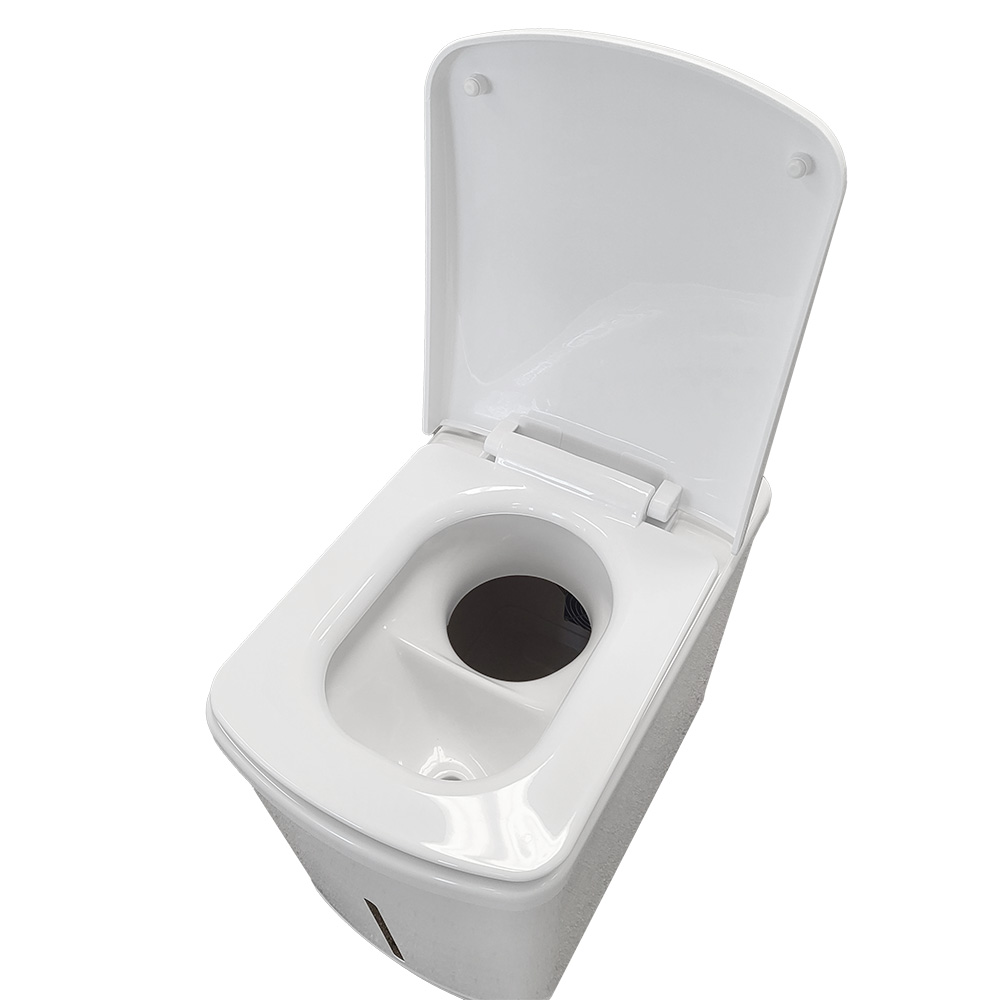
RV-Pod is an example of a small-size dry toilet that separates urine already in the seat into two distinct compartments. The correct term for this type of a toilet is a urine-diverting collection toilet.
How Batch Composting Toilets are emptied
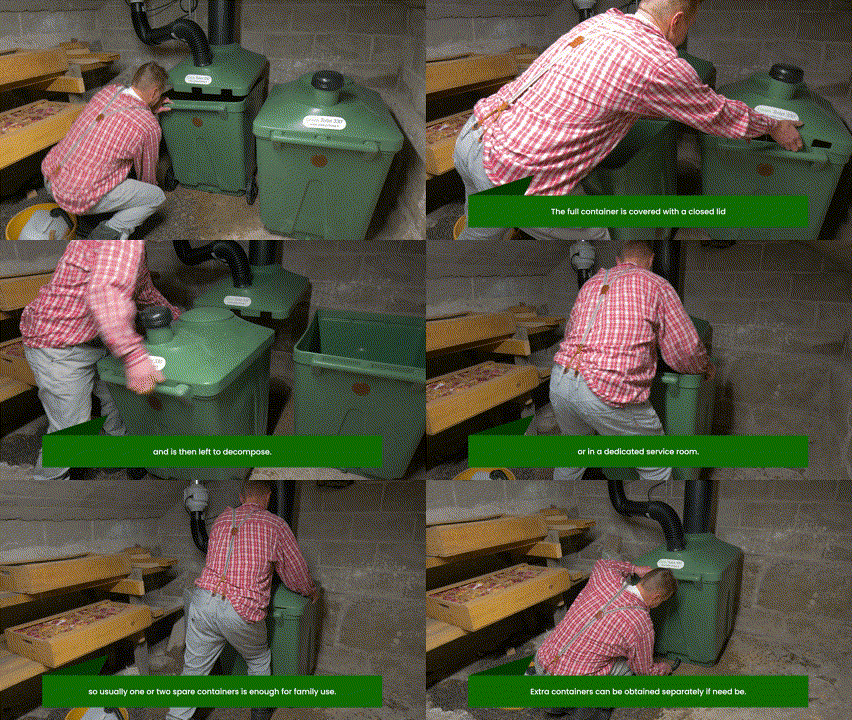
Batch composting toilets utilize two or more composting containers. At any given time, one container is actively used for waste collection and composting inside the toilet, while the other(s) are left outside to undergo further composting process. When the container in use fills up, it is sealed with a closed lid and taken outdoors to continue composting. The other composting container(s), which has now matured and is ready for use, is emptied of its contentsβoften utilized as fertilizer e.g. in gardens βand then placed back into the toilet to replace the recently filled container. This cyclical process ensures continuous use without interruption, as there is always one container ready to switch places with the full one, maintaining an efficient and sustainable cycle of waste management.
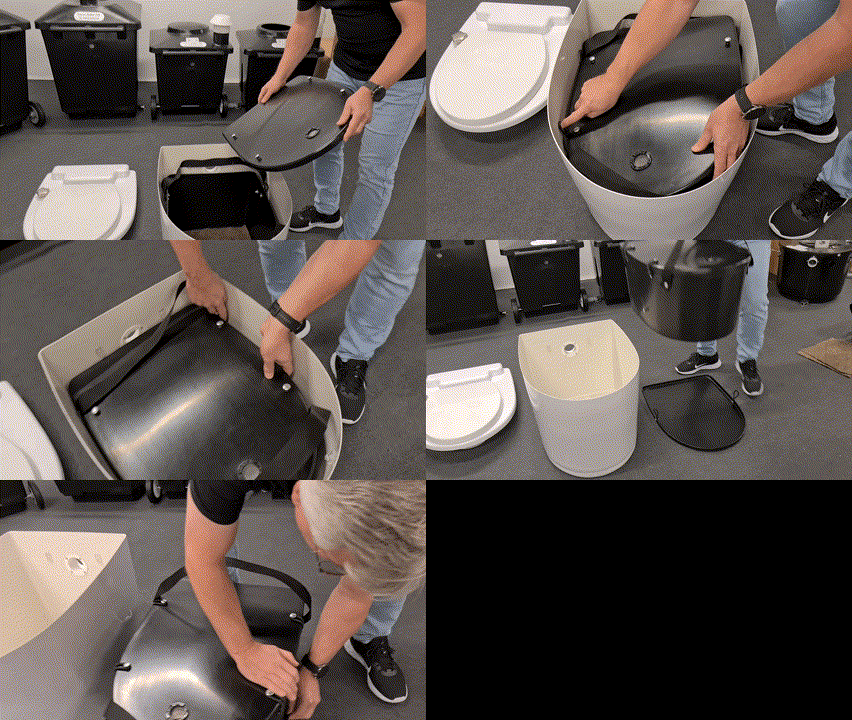
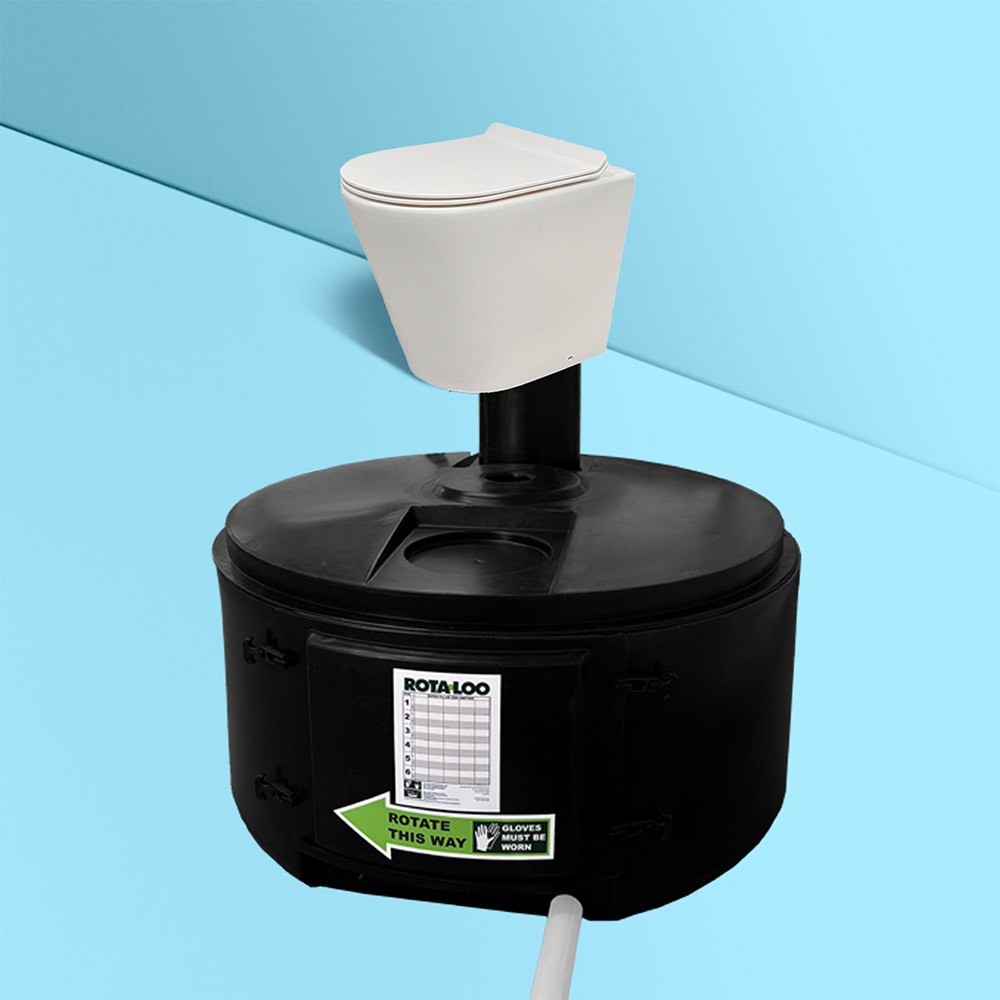
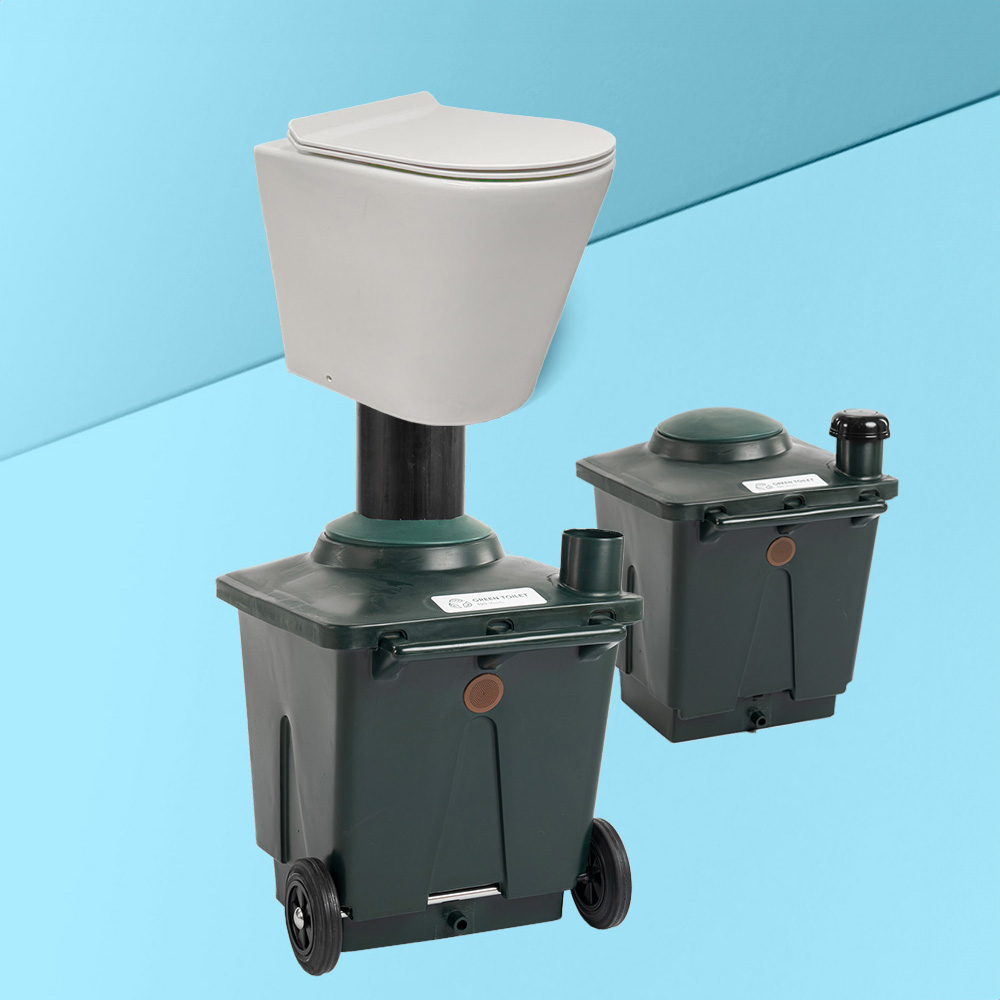
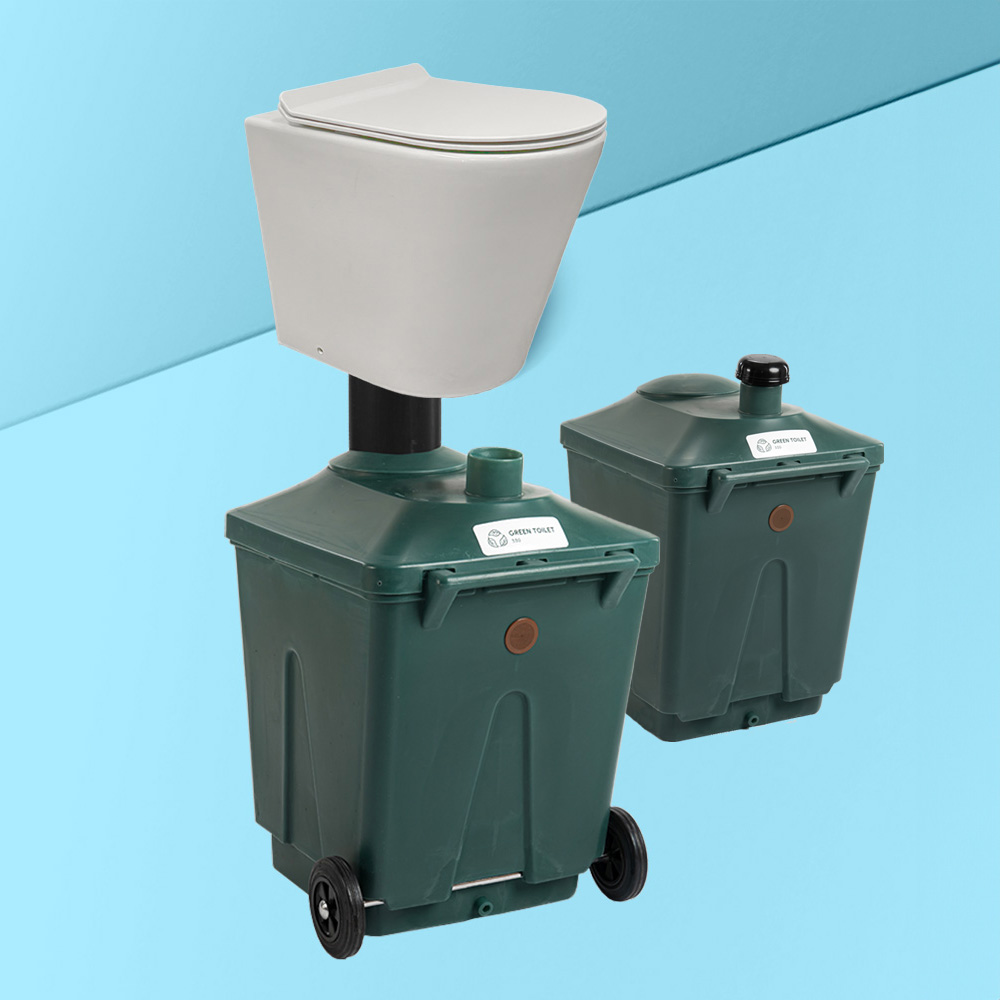
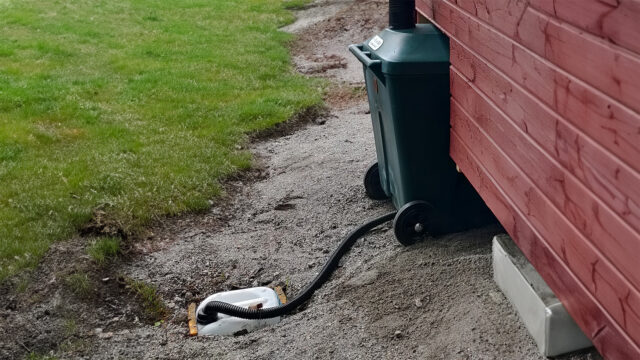
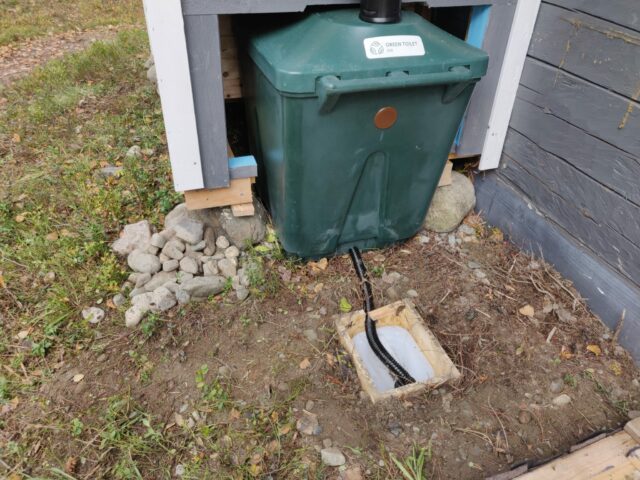
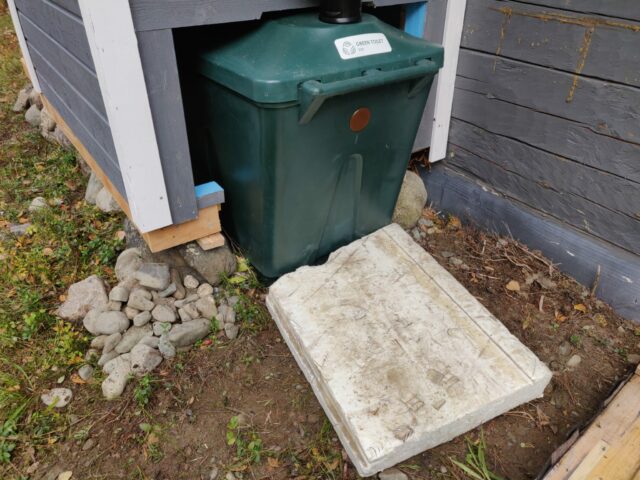
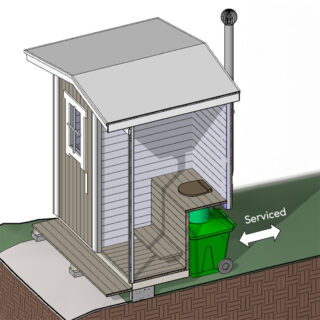
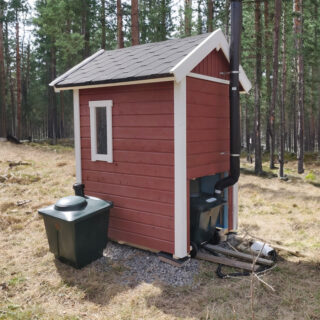
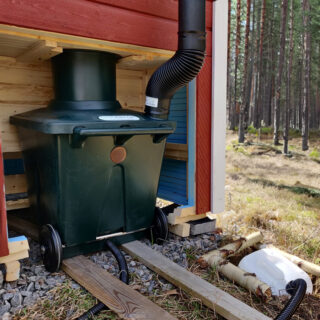
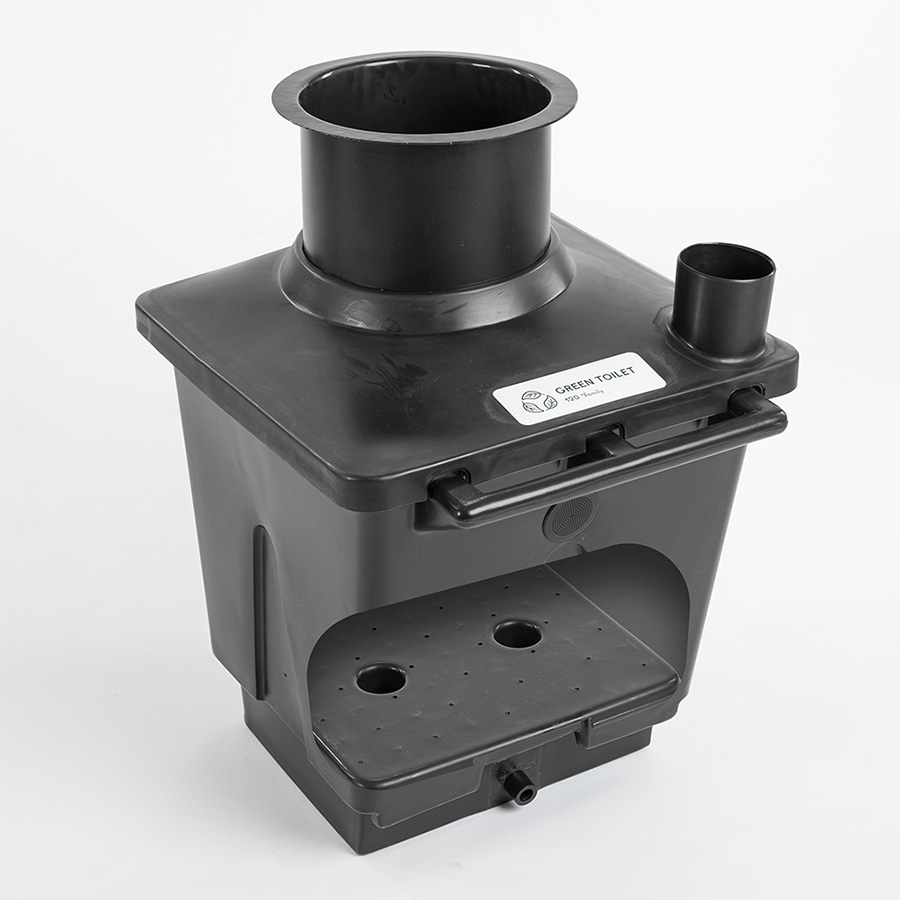
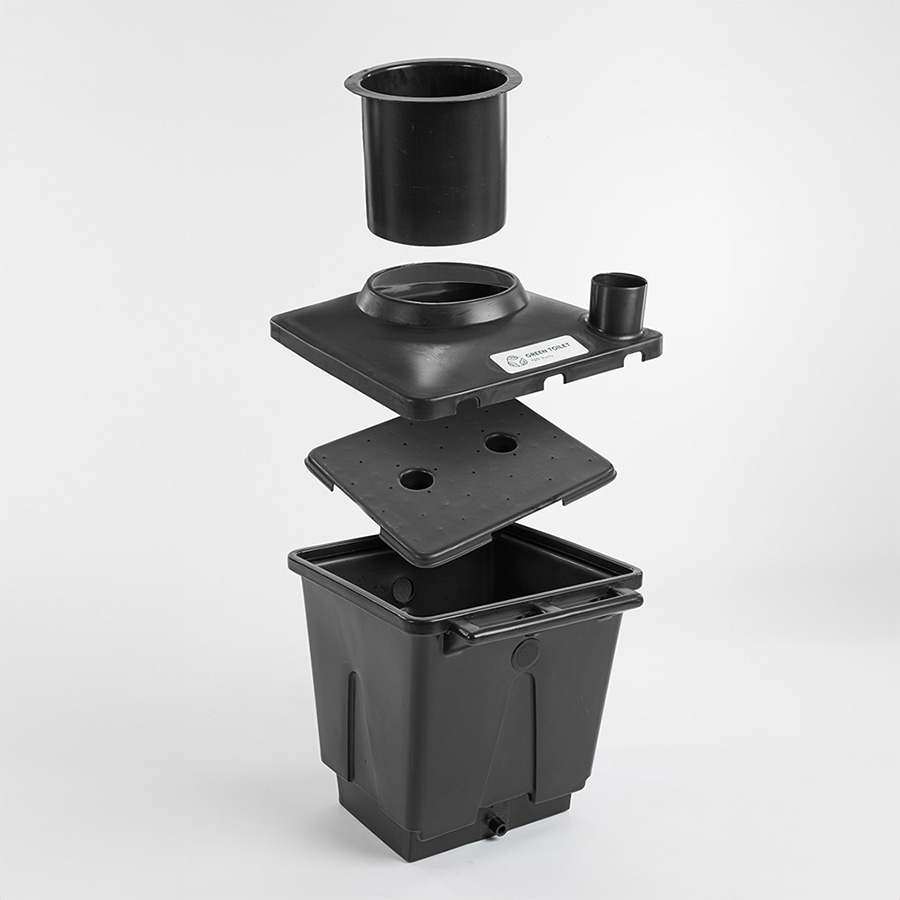
Above on the left side you see how a self-contained batch composting toilet called the Oz-e-Pod is emptied. On the right-side, you see how a split-system batch composting toilet called the Green Toilet Lux 330 is serviced.
Example: How Green Toilet 120 composting toilet is emptied
The following short video shows how a Green Toilet 120 (and 330 in principle) are emptied. The Green Toilet is a batch composting toilet. This means that the package comes with a spare container that is put in use once the other container fills up. This way, there are two (or sometimes more) composting toilet containers that switch place between being in use and outside finishing up composting process. This methodology is called batch composting and the term comes from one batch on of composting coming up while the other(s) is finishing.
Emptying a Continuous Composting Toilet
Continuous composting toilets are designed with a large composting container located below floor-level, separate from the toilet seat. These toilets are emptied usually through a hatch, located at the side of the composting unit. The composting container typically contains layers of waste: fresh waste at the top, partially composted material in the middle, and fully composted, ready-to-use fertilizer at the bottom. To empty the toilet, one uses a shovel to remove the mature compost from the bottom through the hatch, while leaving the less decomposed material above to continue composting. This method allows for gradual and ongoing removal of compost, ensuring that the system is continuously operational. If the toilet has not been used for an extended period, and all the contents have fully decomposed, the entire contents can be safely emptied and used as fertilizer.
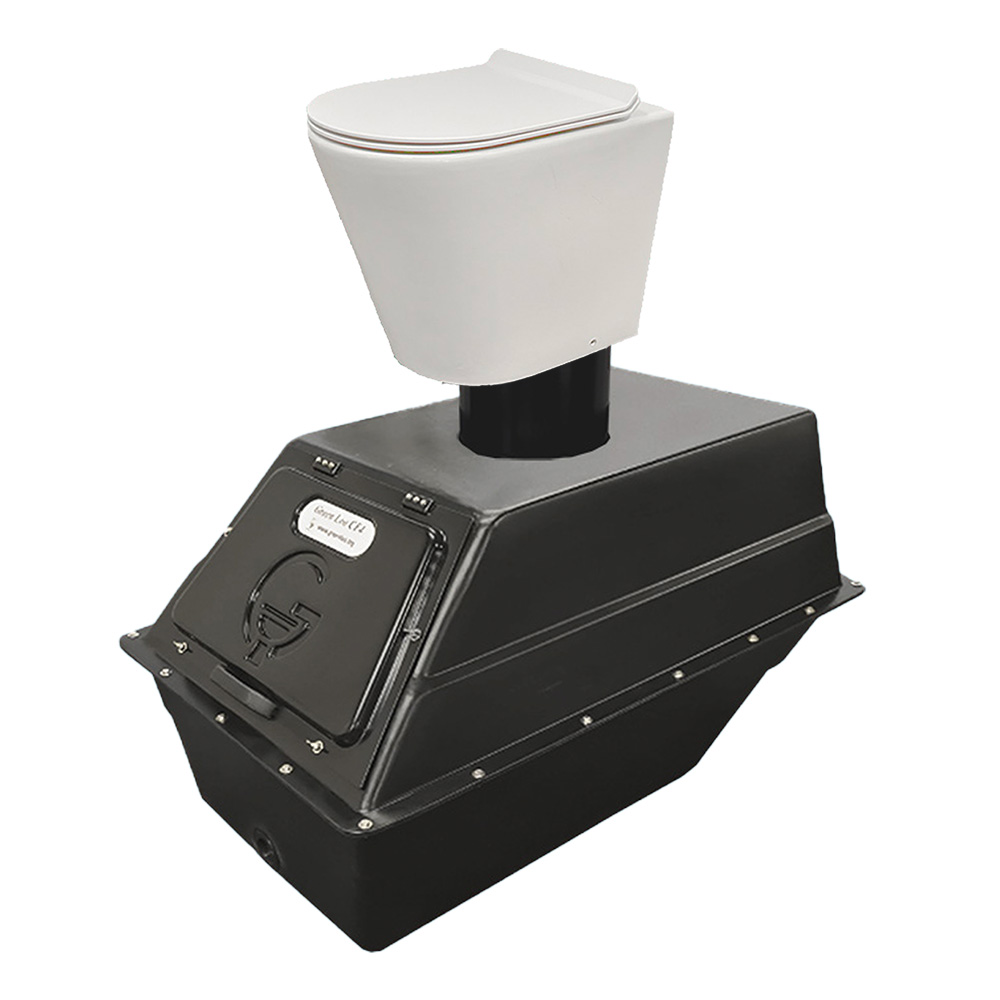
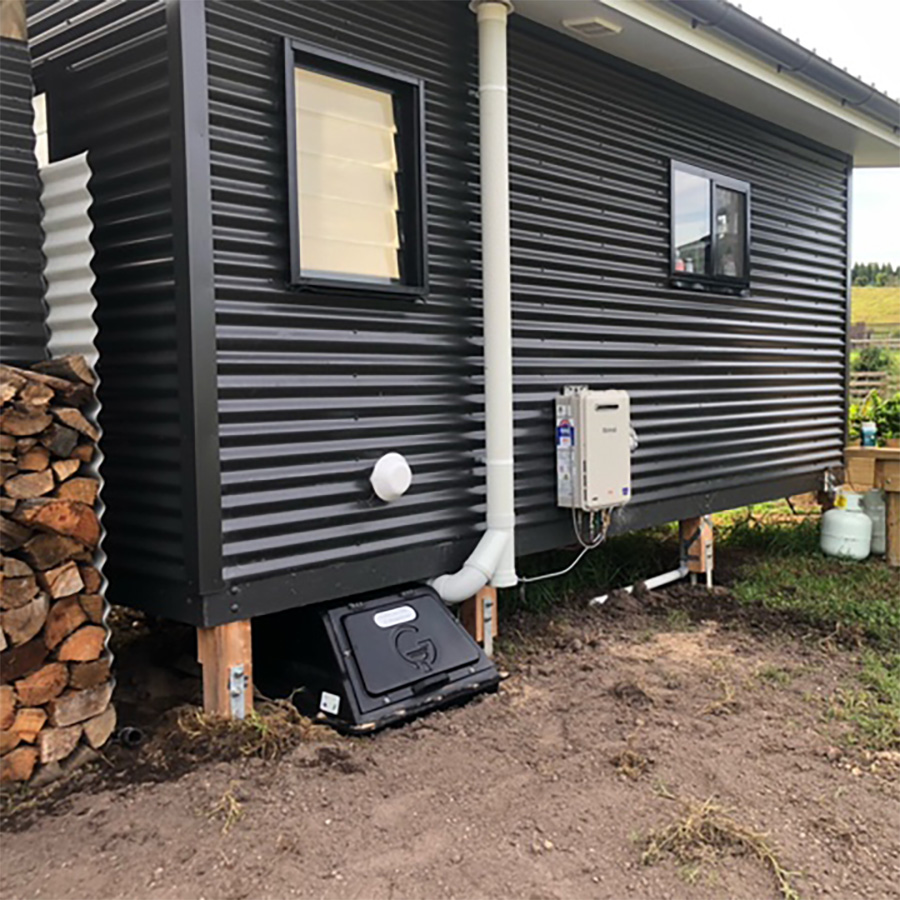
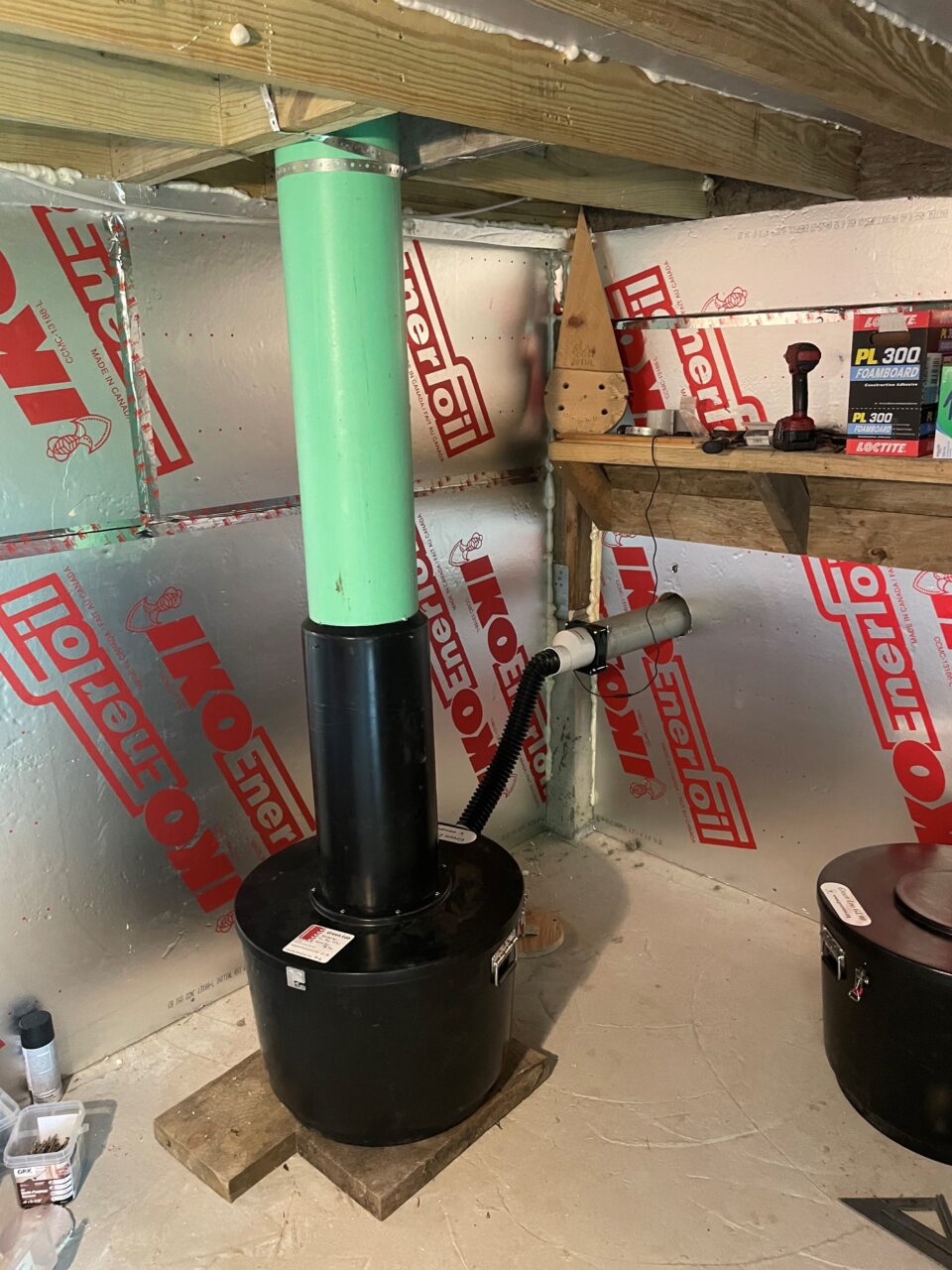
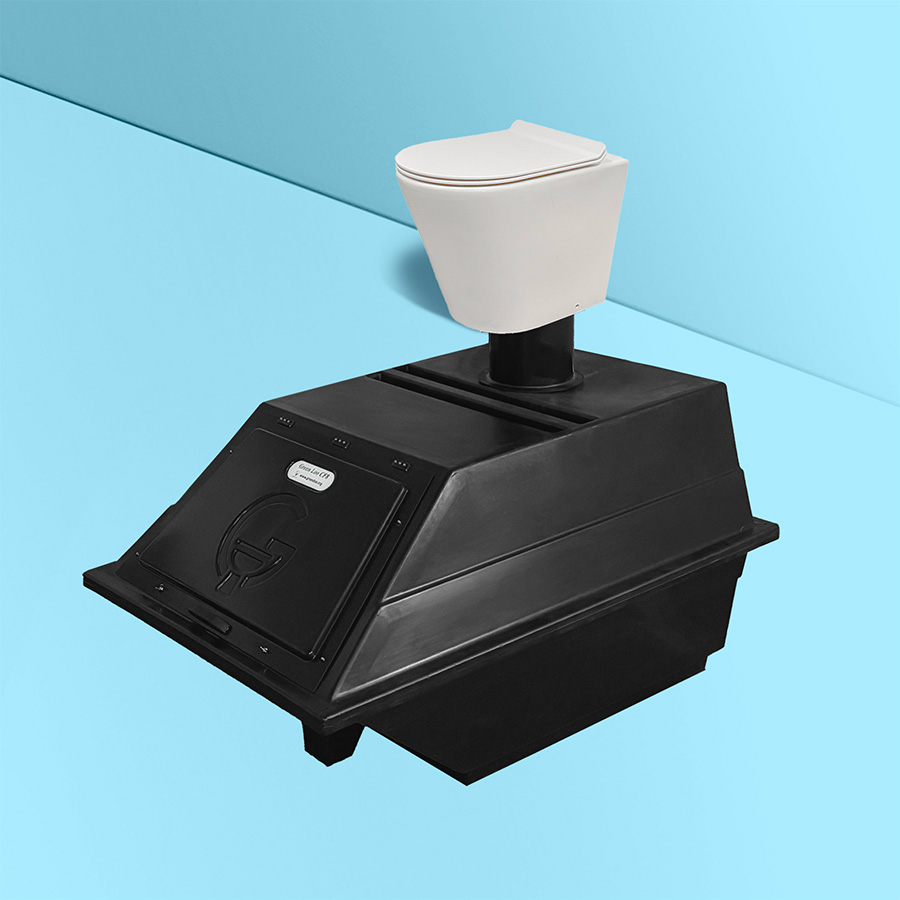
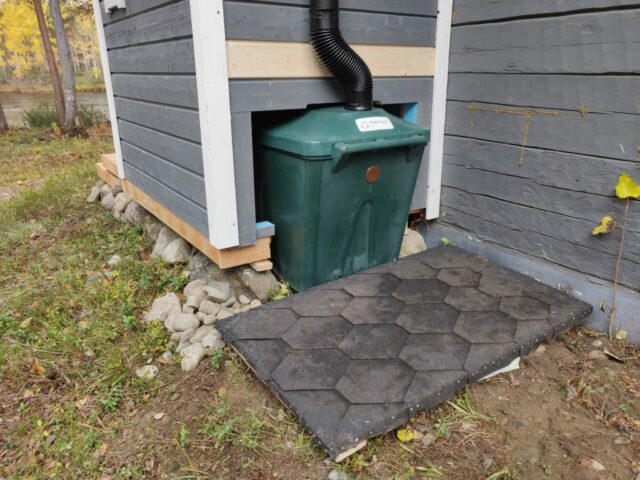
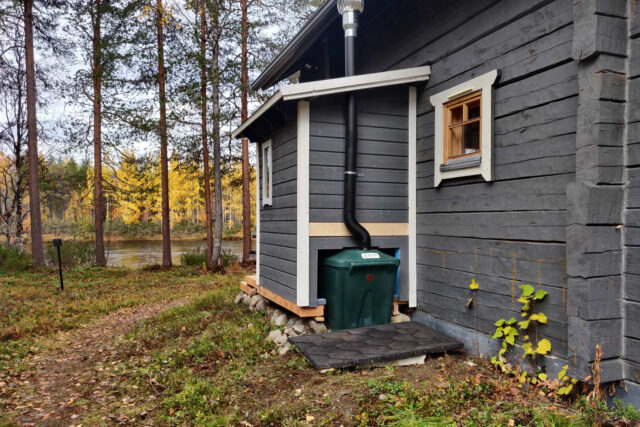
CF 4 composting toilet installed under a tiny house. The composting unit is half-buried.
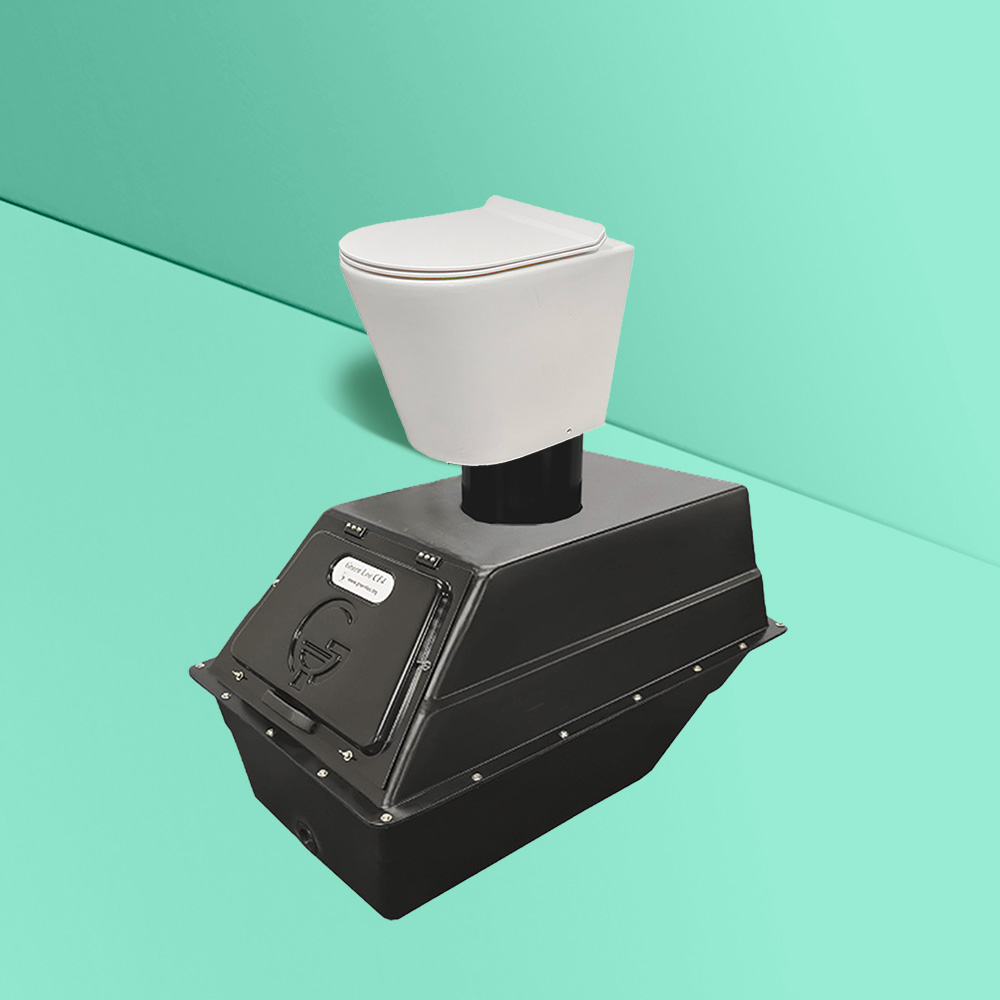
CF 4 compost toilet (seen above) is an example of a continuous composting toilet that is emptied through a hatch at the backside of the composting unit.
Summary
This article has explored the various methods for emptying different types of composting toilets, ensuring efficient and hygienic management of waste. We began by discussing the straightforward process for small-sized, self-contained compost toilets, which may have one or two containers depending on their design. Next, we examined batch composting toilets, which use a system of multiple containers to manage waste, allowing for continuous use and easy swapping of full for empty containers as they mature. Finally, we covered continuous composting toilets, which are emptied through a hatch that allows for the selective removal of fully composted material while leaving fresher waste to continue decomposing. Each system offers a sustainable approach to waste management, turning human waste into usable compost and highlighting the practical benefits of modern compost toilet systems.
If you need help planning or installing a new waterless toilet, don’t hesitate to contact us at the Waterless Toilet Shop. Our team is ready to assist you with expert advice and support to find the perfect solution for your needs.
+1 (702) 328 0689
info@waterlesstoiletshop.com

Leave a call request
Leave a contact request
Who We Are
At Waterless Toilet Shop we are a dedicated team of dry toilet experts based in Henderson, Nevada. As a family-owned company with deep roots in Scandinavia and Australia, we bring a blend of global insights and local expertise to every product we create.
At Waterless Toilet Shop, we do more than just design and manufacture innovative composting toilets; we also use them daily. This hands-on experience allows us to continuously improve our products and ensure they meet the high standards of functionality and sustainability that our customers expect.
We are committed to living the eco-friendly principles we teach, making our solutions not just part of our business, but a part of our lives. Join us in embracing a more sustainable future, one flush at a time.
Our customer service team is currently on holiday for Thanksgiving and will return on Monday, December 1st.
Please leave us a message or email and we will get back to you as soon as weβre back. Thank you for your patience and have a wonderful holiday!
Waterless Toilet Shop β Black Friday & Cyber Monday Campaign Terms and Conditions
Campaign Period
This Black Friday & Cyber Monday promotion (βCampaignβ) runs from November 17, 2025 through December 1, 2025 (Cyber Monday). All qualifying orders must be placed during this period. No retroactive discounts will be applied to orders placed before or after the Campaign Period.
Eligibility
The offers are valid only for purchases made on waterlesstoiletshop.com or through direct communication with Waterless Toilet Shop during the Campaign Period. Discounts apply to new orders only.
Campaign Offers
The following products include fixed discounts during the Campaign Period:
$100 OFF all Green Toilet Lux composting toilet packages
$100 OFF CF 4 composting toilet systems
$100 OFF Oz-e-Pod composting toilets
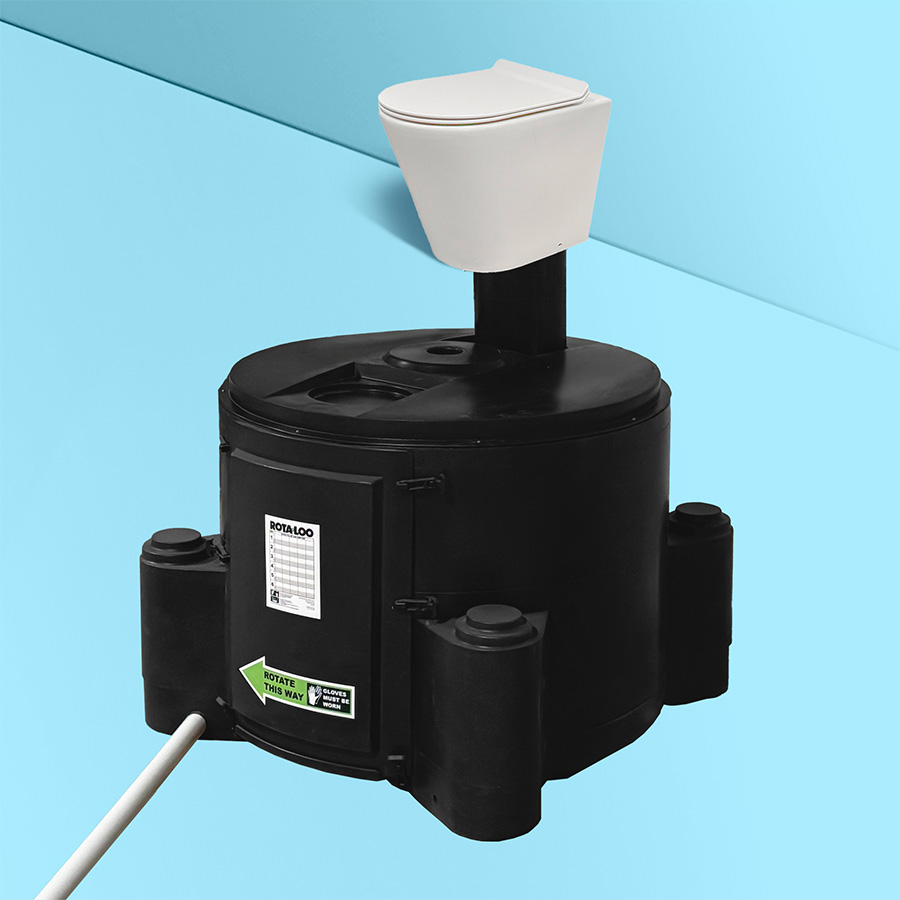
$1000 OFF Rota Loo 650 composting toilets
All other products: price reductions may be available. Customers must request a quote during the Campaign Period to receive the best possible offer.
Discounts are automatically applied to listed sale prices or will be reflected in quoted pricing (as applicable).
Limitations
Discounts cannot be combined with any other promotions, coupons, or discount codes unless explicitly stated.
Discounted pricing applies per product, not per order.
Limited inventory: discounts apply only while stock remains available. Some products may have extended lead times.
Shipping costs are not discounted unless otherwise stated.
Request-A-Quote Items
Products requiring a custom quotation must be requested during the Campaign Period. Quotes provided as part of the Campaign will remain valid for 7 days unless otherwise specified.
Payment & Order Completion
To secure the campaign pricing, full payment or an agreed deposit must be received within the quote validity period. Waterless Toilet Shop reserves the right to void quotes not paid within the specified timeframe.
Cancellations & Returns
Standard return and cancellation policies apply. The campaign discount is non-refundable and will not be βreappliedβ to replacement orders outside the Campaign Period.
General
Waterless Toilet Shop reserves the right to:
modify or withdraw this Campaign at any time,
correct pricing errors,
limit quantities per customer,
decline requests that do not meet eligibility criteria.
By placing an order during the Campaign Period, customers agree to these Terms and Conditions.
Our phone customer service is closed today.
Email customer service remains available β please contact us at info@waterlesstoiletshop.com
, and weβll get back to you as soon as possible.
Thank you for your understanding.
Pay with Klarna
Weβre excited to now offer Klarna as a payment option at Waterless Toilet Shop!
Choose how you want to pay β all at once or with flexible installments that fit your budget.
πΈ Pay in 4 β Interest-Free
Split your composting toilet purchase into four equal payments every two weeks.
No interest, no hidden fees β just a smarter way to pay over time.
Other Flexible Options
Klarna also offers monthly financing with 6β24-month plans and transparent APR rates based on your credit.
Youβll see all available payment options instantly when you select Klarna at checkout.
Klarna financing is issued by WebBank and available to eligible U.S. residents in most states.
Missed payments may incur late fees. For California residents, loans are made or arranged pursuant to a California Financing Law license. Review Klarnaβs terms.
The CF 8 is a continuous composting toilet system featuring a single large 250-gallon container. Like the CF 4, it is designed for gradual emptying rather than batch-style use. Solids are typically removed in thirds or sections, allowing earlier deposits time to fully compost inside the tank.
This setup allows for either:
Year-round use with gradual emptying, or
Seasonal use (e.g., 4β5 months/year) with full emptying once per year
π Continuous Use: Gradual Emptying in Thirds
When used year-round, the CF 8 is typically emptied one-third at a time, effectively composting in three rotating βpilesβ within the container.
Because the CF 8 is more than twice as large as the CF 4, each pile can hold approximately 480β960 poops, depending on composting conditions and how much bulking material is used.
Service Interval (per pile)
Estimated #2 Visits per Day
30 days (1 month)
~17β32 visits/day
60 days (2 months)
~8β16 visits/day
90 days (3 months)
~5β11 visits/day
180 days (6 months)
~3β5 visits/day
365 days (1 year)
~1.2β2.6 visits/day
π‘ These figures assume that one-third of the tank is in active use at a time, with older waste given time to compost before removal.
π€ Seasonal Use: Full-Tank Emptying After Inactive Period
For cabins, cottages, or other sites used seasonally, the CF 8 can be used for a few months and then left idle to allow full composting. In such cases, the entire tank may be emptied once a year.
Full-tank capacity estimate: ~1,440β2,880 poops
Example: 120 days of use (approx. 4 months): β ~12β24 solid visits per day on average
β οΈ Disclaimer
These numbers are rough estimates based on typical use and conditions. Actual capacity will vary depending on:
Climate (temperature and humidity)
Ventilation and air flow
How much dry bulking material is added
User behavior and emptying practices
For best performance, ensure proper aeration, regular bulking material use, and consistent emptying of composted portions.
π‘ Want to Maximize Capacity? Consider a Urine-Diverting Toilet β With Some Important Considerations
If you’re looking to maximize the capacity of the CF 8 system β aiming for 960+ poops per composting βpileβ β we recommend using aurine-diverting (UD) toilet pedestal.
β Benefits of Urine Separation:
Reduces or eliminates the need for dry bulking material, which frees up valuable space in the composting unit
Helps keep the compost drier, more aerated, and better suited for natural decomposition
Increases the total capacity of the composting container
Can lead to faster and more efficient composting, especially in high-use environments
By diverting urine out of the solids container, the volume taken up by absorbent material (like peat or wood shavings) is significantly reduced. This can make a big difference in how often the system needs to be emptied.
β οΈ Downsides to Consider:
Urine-diverting toilets can take some time to get used to. Users need to sit or aim correctly to ensure proper separation, which might not happen consistently without experience or guidance.
For this reason, UD toilets are generally not ideal for public or commercial settings where the toilet is used by guests, tourists, or other first-time users. In these cases, misuse can reduce the effectiveness of the system and may even lead to unpleasant maintenance issues.
In short: A UD toilet is an excellent choice for maximizing capacity in private or family use, but for guest or public access composting toilets, a standard non-diverting model may be more practical and user-friendly.
π $100 OFF Shipping Cost β Green Toilet 330 Composting Toilets
No promo codes, no extra steps β the discount is automatically applied at checkout.
If you experience any technical issue and the discount does not apply automatically, you can manually enter
the coupon code 100OFFSHIPPING during checkout to receive the offer.
The Green Toilet 330 and Green Toilet Lux 330 are ideal for cabins, cottages, off-grid homes, and other locations where
reliable, low-maintenance, and environmentally friendly waste management is a priority. Their batch composting design
makes servicing simple and hygienic, with a spare container included to keep the system running without interruption.
Campaign details:
Offer valid until August 31, 2025 or while stock lasts
Discount applies only to Green Toilet 330 and Green Toilet Lux 330 composting toilet orders
Automatically applied at checkout β or use coupon code 100OFFSHIPPING if needed
Applies to orders shipped within the Lower 48 states only
Upgrade your off-grid toilet system now and save on shipping while supplies last.
Green Toilet 100 Easy β Estimated Daily Capacity
The Green Toilet 100 Easyis a compact and user-friendly batch composting toilet with a 26-gallon composting container. Its design makes it well-suited for outhouses, cabins, and even indoor use. A spare containeris available to expand capacity and simplify servicing.
Note: Due to the shape and internal structure of the container, the actual composting capacity is slightly lower than its raw volume might suggest, if you compare with Green Toilet 120 Family composting toilet for example.
π Average Daily Capacity per Bin
Service Interval
Estimated #2 Visits per Day
30 days (1 month)
~6β7 visits/day
60 days (2 months)
~3β4 visits/day
90 days (3 months)
~2.2 visits/day
180 days (6 months)
~1.1 visits/day
365 days (1 year)
~0.5 visits/day
Notes & Recommendations:
For seasonal or weekend use, one container often lasts a full summer.
For more frequent use, we recommend the package with a spare container. This allows one bin to rest and compost while the other is in active use.
Donβt forget to add dry bulking material (like wood shavings or peat) regularly to maintain airflow and prevent odors.
β οΈ Disclaimer: These estimates are intended as general guidance. Real-world performance may vary depending on:
The CF 4 is a continuous composting toilet system featuring a single large 105-gallon container. Unlike batch composting systems (such as the Green Toilet models), the CF 4 is designed for gradual emptying β solids are typically removed in thirds or sections, allowing earlier deposits time to fully compost inside the tank.
This setup allows for either:
Year-round use with gradual emptying, or
Seasonal use (e.g. 4β5 months/year) with full emptying once per year
π Continuous Use: Gradual Emptying in Thirds
When used year-round, the CF 4 is typically emptied one-third at a time, effectively composting in three rotating βpilesβ within the container. Depending on composting conditions and how much bulking material is used, each pile can hold approximately 200β400 poops.
Service Interval (per pile)
Estimated #2 Visits per Day
30 days (1 month)
~7β13 visits/day
60 days (2 months)
~3β7 visits/day
90 days (3 months)
~2β4 visits/day
180 days (6 months)
~1β2 visits/day
365 days (1 year)
~0.5β1.1 visits/day
π‘ These figures assume that one third of the tank is in active use at a time, with older waste given time to compost before removal.
π€ Seasonal Use: Full-Tank Emptying After Inactive Period
For cabins, cottages, or other sites used seasonally, the CF 4 can be used for a few months and then left idle to allow full composting. In such cases, the entire tank may be emptied once a year.
Full-tank capacity estimate: ~600β1,200 poops
Example: 120 days of use (approx. 4 months): β ~5β10 solid visits per day on average
β οΈ Disclaimer
These numbers are rough estimates based on typical use and conditions. Actual capacity will vary depending on:
Climate (temperature and humidity)
Ventilation and air flow
How much dry bulking material is added
User behavior and emptying practices
For best performance, ensure proper aeration, regular bulking material use, and consistent emptying of composted portions.
π‘ Want to Maximize Capacity? Consider a Urine-Diverting Toilet β With Some Important Considerations
If you’re looking to maximize the capacity of the CF 4 system β aiming for 400+ poops per composting βpileβ β we recommend using a urine-diverting (UD) toilet pedestal.
β Benefits of Urine Separation:
Reduces or eliminates the need for dry bulking material, which frees up valuable space in the composting unit
Helps keep the compost drier, more aerated, and better suited for natural decomposition
Increases the total capacity of the composting container
Can lead to faster and more efficient composting, especially in high-use environments
By diverting urine out of the solids container, the volume taken up by absorbent material (like peat or wood shavings) is significantly reduced. This can make a noticeable difference in how often the system needs to be emptied.
β οΈ Downsides to Consider:
Urine-diverting toilets can take some time to get used to. Users need to sit or aim correctly to ensure proper separation, which might not happen consistently without experience or guidance.
For this reason, UD toilets are generally not ideal for public or commercial settings where the toilet is used by guests, tourists, or other first-time users. In these cases, misuse can reduce the effectiveness of the system and may even lead to unpleasant maintenance issues.
In short: A UD toilet is an excellent choice for maximizing capacity in private or family use, but for guest or public access composting toilets, a standard non-diverting model may be more practical and user-friendly.
(Based on approx. 356 uses involving a #2 β i.e., poop) – only the solids count!
Service Interval
#2 Visits per Day (involving a #2)
30 days (1 month)
~11.9 visits/day
60 days (2 months)
~5.9 visits/day
90 days (3 months)
~4.0 visits/day
180 days (6 months)
~2.0 visits/day
365 days (1 year)
~1.0 visits/day
π’ What counts as a β#2 visitβ? Only visits that involve pooping (i.e., going number two) β urine-only visits donβt contribute to filling the composting bin and are not included in the estimate.
β οΈ Disclaimer: These estimates are approximations. The actual number of solid uses per bin may vary significantly depending on climate, temperature, ventilation, user habits, and the amount of dry bulking material (e.g., wood shavings or peat) added after each use.
(Based on approx. 1,000 uses involving a #2 β i.e., poop) – only the solids count!
Service Interval
#2 Visits per Day (involving pooping)
30 days (1 month)
~33 visits/day
60 days (2 months)
~17 visits/day
90 days (3 months)
~11 visits/day
180 days (6 months)
~5.6 visits/day
365 days (1 year)
~2.7 visits/day
π’ What counts as a β#2 visitβ? Only visits that involve defecation (pooping) β urine-only visits donβt fill up the composting bin and are not included in the 1,000-use estimate.
β οΈ Disclaimer: These estimates are based on typical, steady use. The actual number of solid uses a composting bin can handle may vary significantly depending on climate, temperature, humidity, ventilation, and how much dry bulking material (like wood shavings) is added after each use.
π§ Liquid waste (urine) estimate
Average person produces about:
0.4 gallons of urine per day (β1.5 liters β 1.6 quarts)
So for 100 people:
0.4 gallons Γ 100 = 40 gallons of urine per day
π½ Flush water use estimate
Average flush volume in the U.S. is about:
1.5 gallons per flush
Average person flushes ~5 times per day, so:
1.5 gallons Γ 5 = 7.5 gallons/person/day
So for 100 people:
7.5 gallons Γ 100 = 750 gallons of flush water per day