
Best Composting Toilets for Off-Grid Cabins in 2026
For many cabin owners, having a reliable and odor-free toilet is an important part of ensuring comfort and sustainability. Selecting the right composting toilet can be a challenge due to the variety of models available. With each model offering different features, finding the perfect fit requires careful consideration of your specific usage and needs. In this article, we’ll guide you through multiple different composting toilet options available for your off-grid cabin, helping you make a more informed decision. We will discuss the following non-flush toilet alternatives in this order:
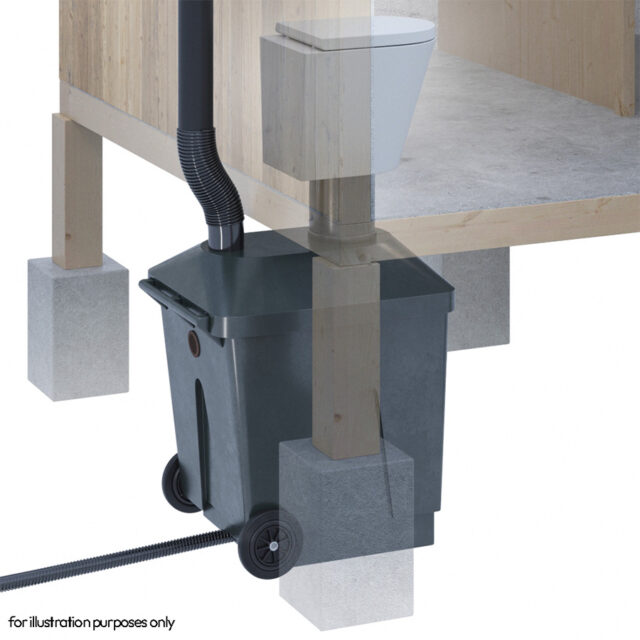
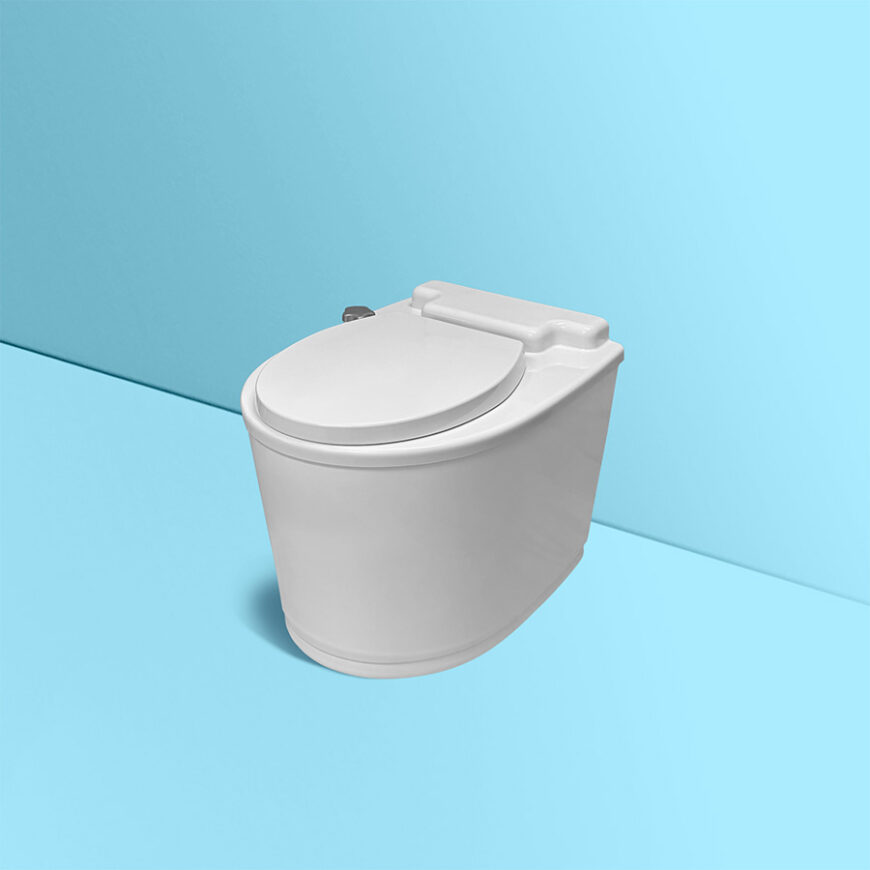
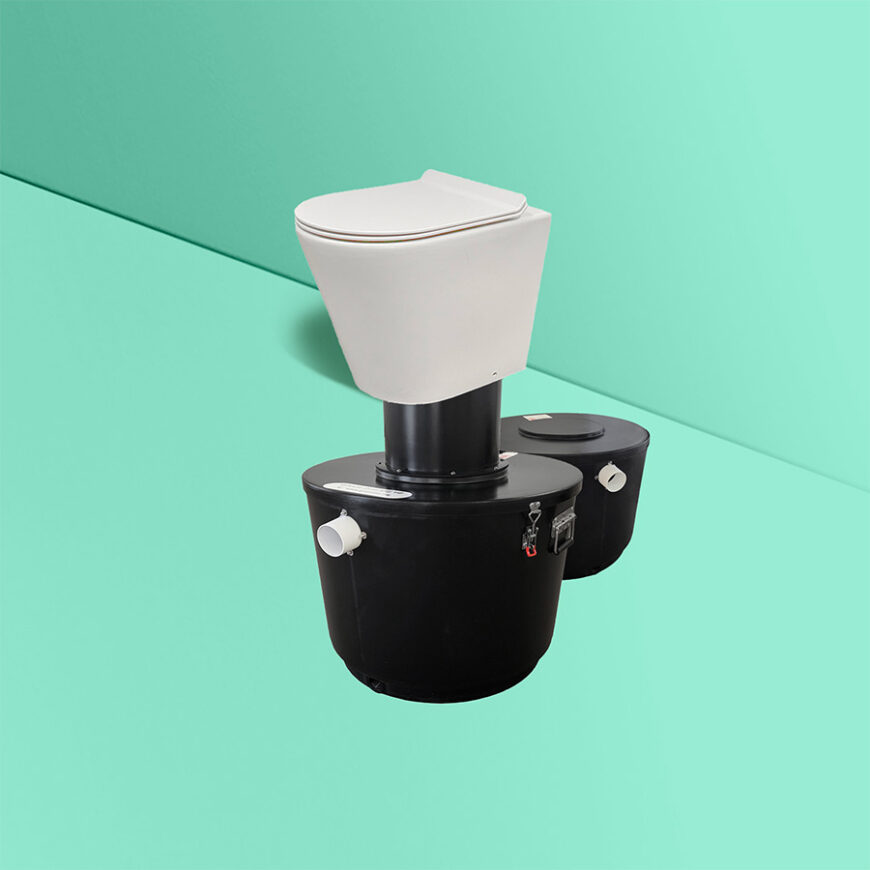
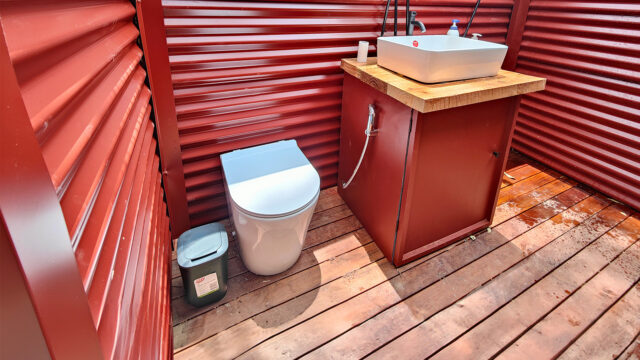
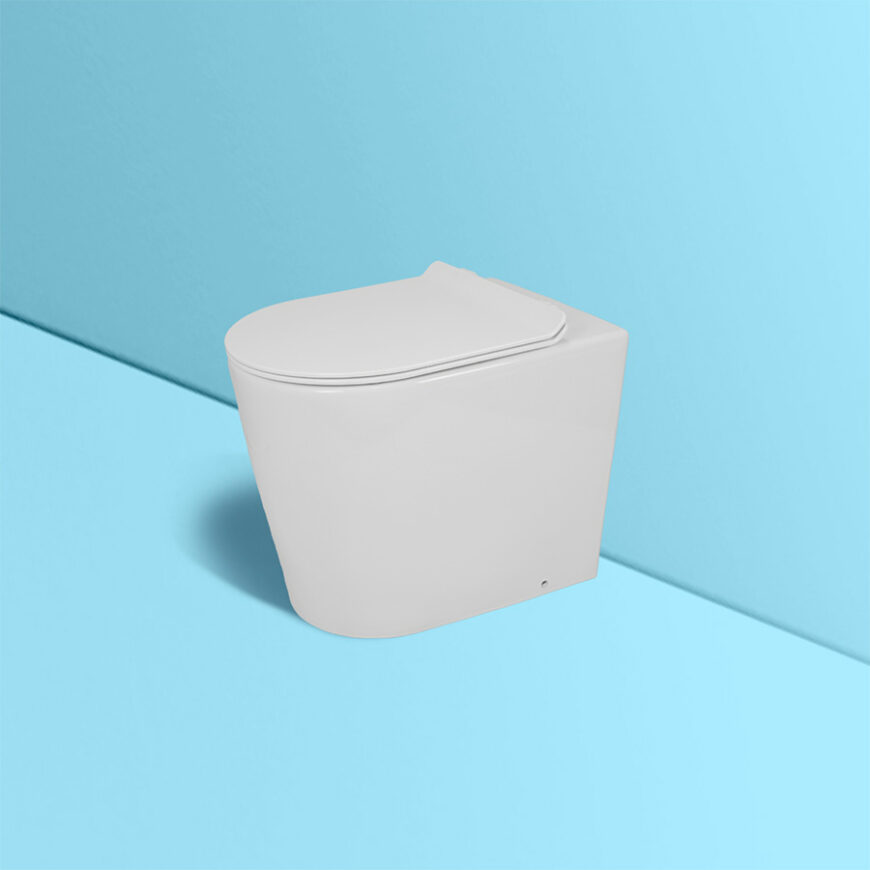
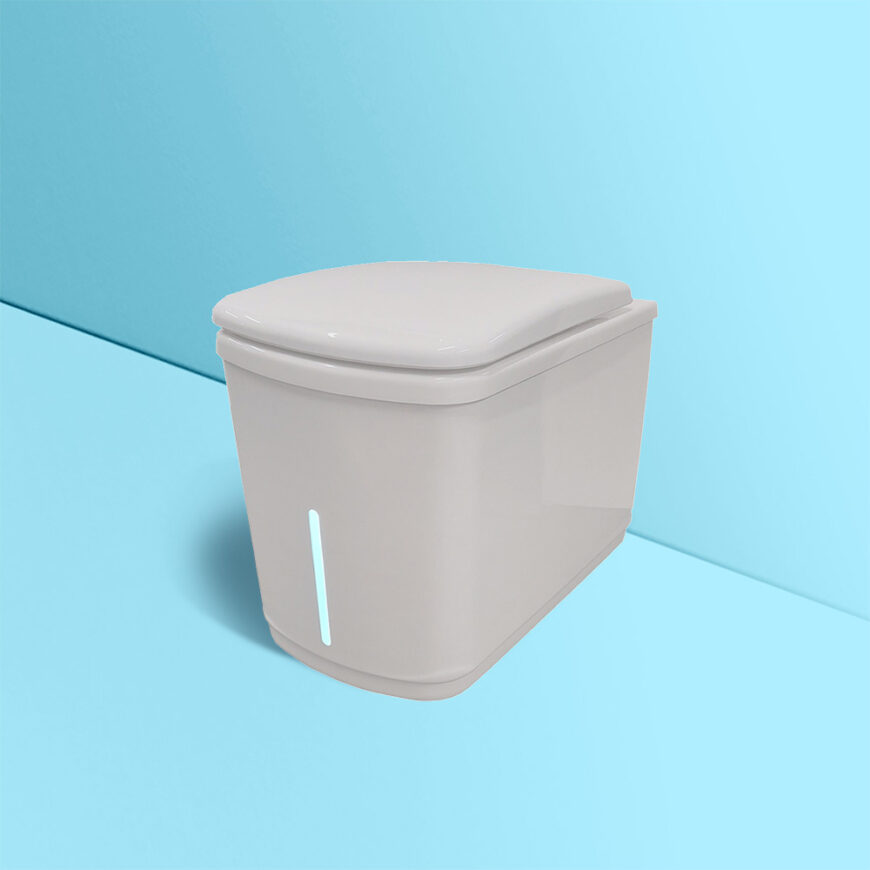
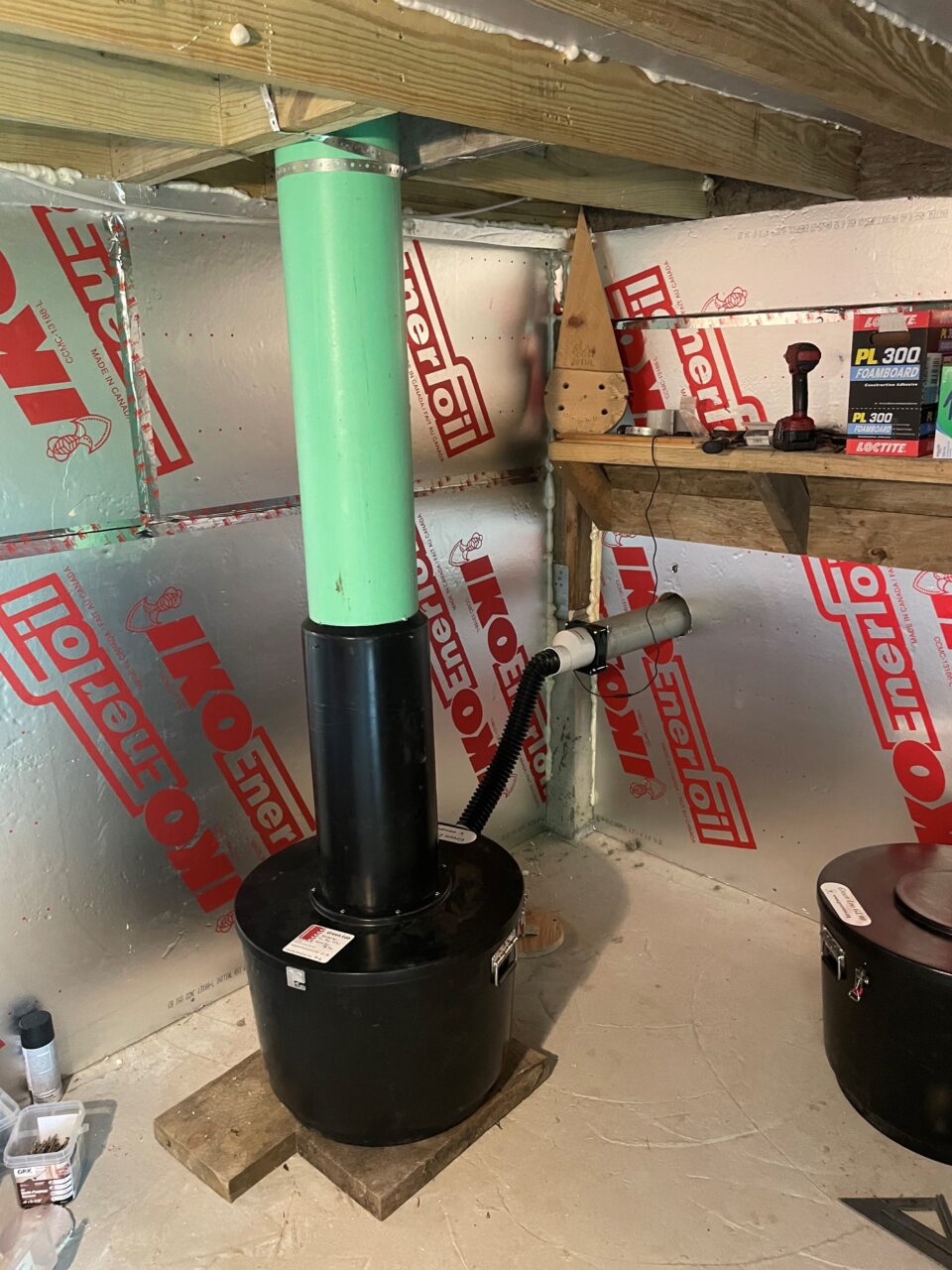
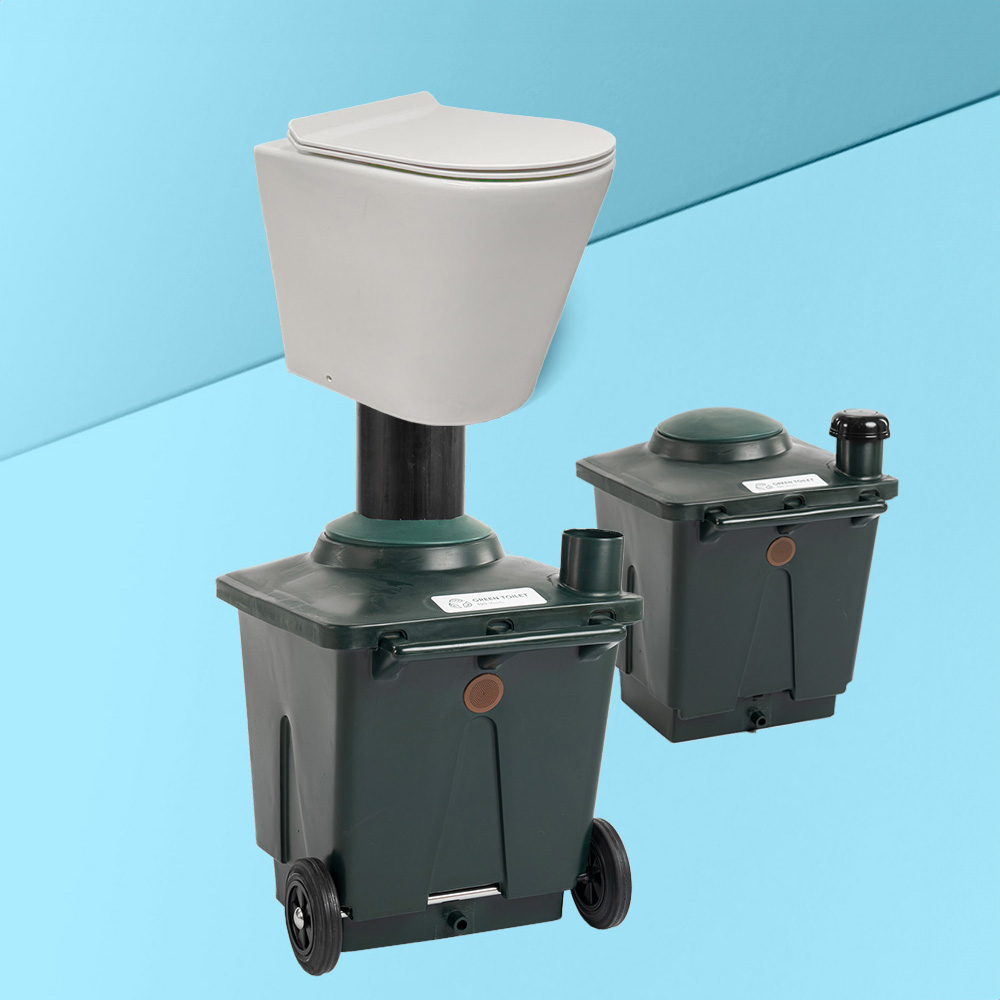
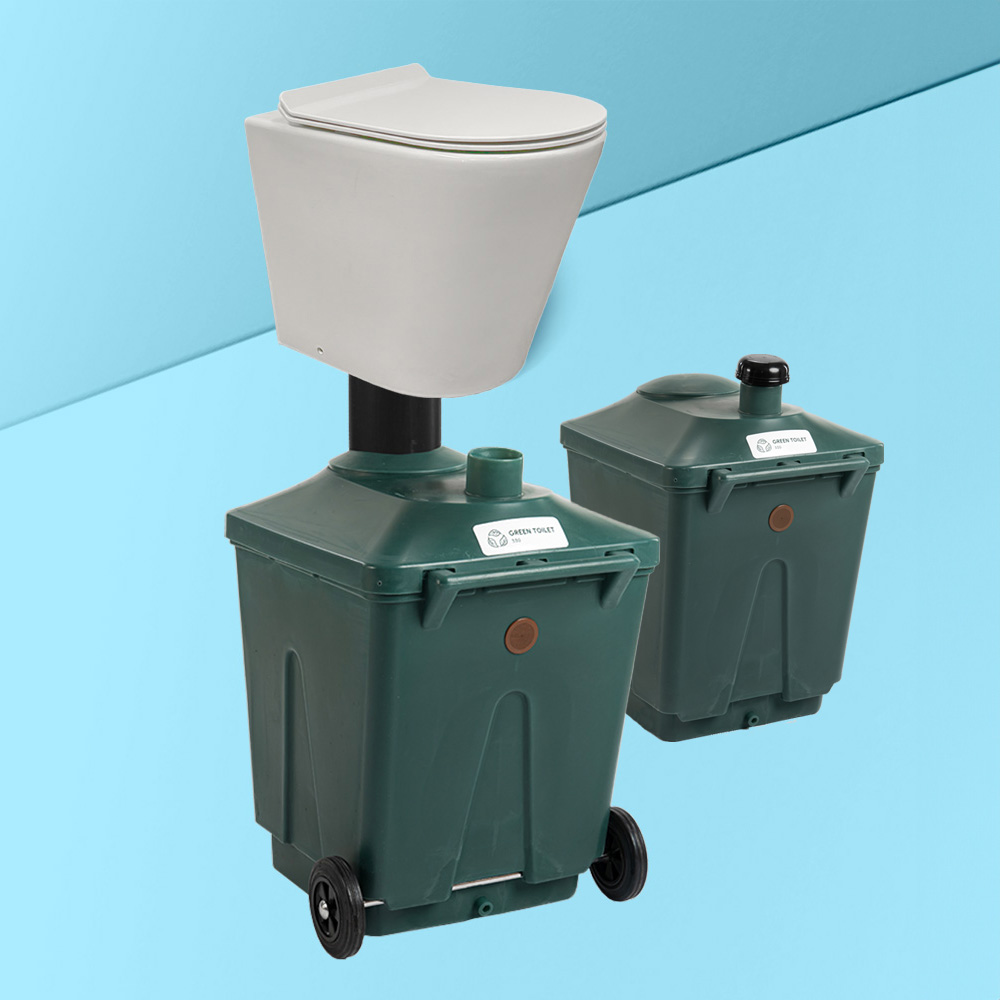
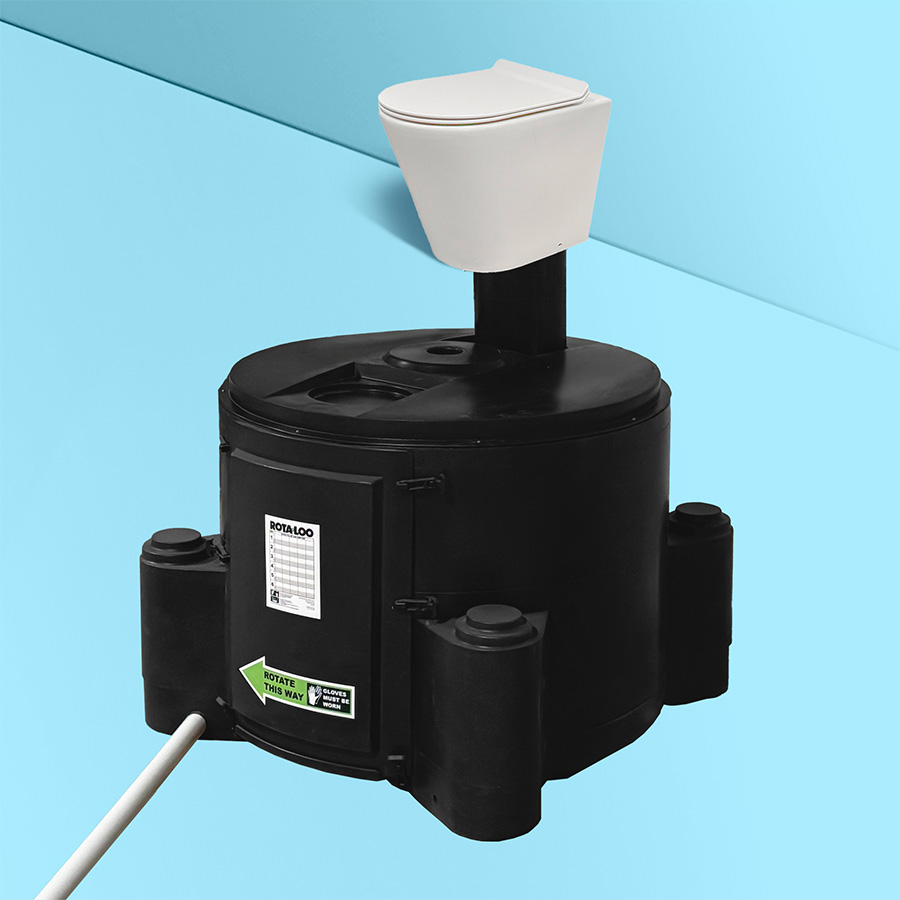
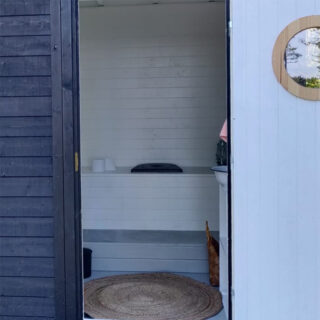
An indoor composting toilet is specifically designed for indoor use. Modern composting toilet are totally odor-free and pleasant to use. Typically, an indoor composting toilet consists of two main parts: a porcelain toilet pedestal installed inside the restroom and a composting chamber located underneath it. Indoor composting toilets offer several advantages not found in other types of no-flush toilets. Unlike many urine-diverting toilets, for example, indoor composting toilets generally have a large capacity, which allows for extended maintenance intervals. Moreover, indoor composting toilets are among the most reliable and can last for decades with proper use.
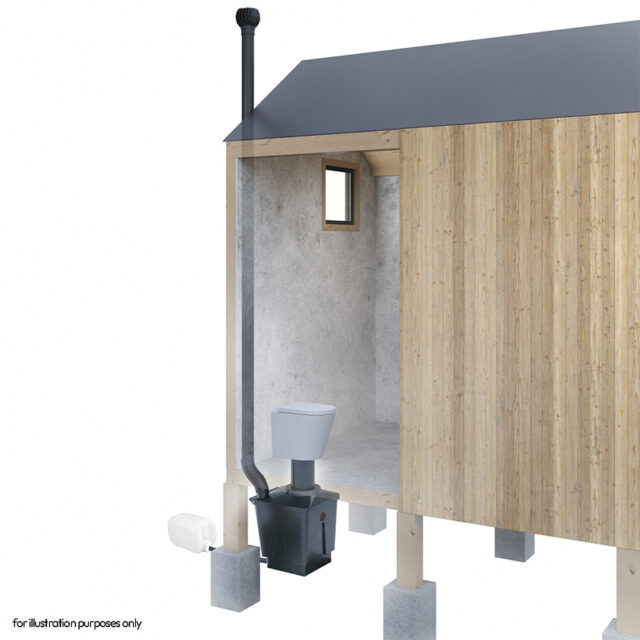
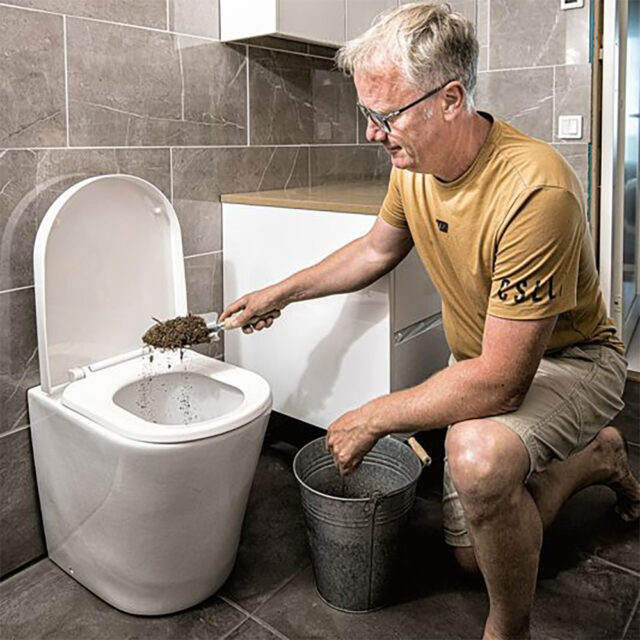
Indoor composting toiletsfunction similarly to conventional flush toilets but without the need for flushing. Most indoor composting toilets utilize dry materials, such as hempor peat, not only to enhance the composting process but also to cover the waste, reducing odors and shielding it from direct view. This method effectively facilitates the breakdown of waste into nutrient-rich compost, aligning with sustainable living practices. Dry material can be added after every use or alternatively more at once for example once a week, depending on use.
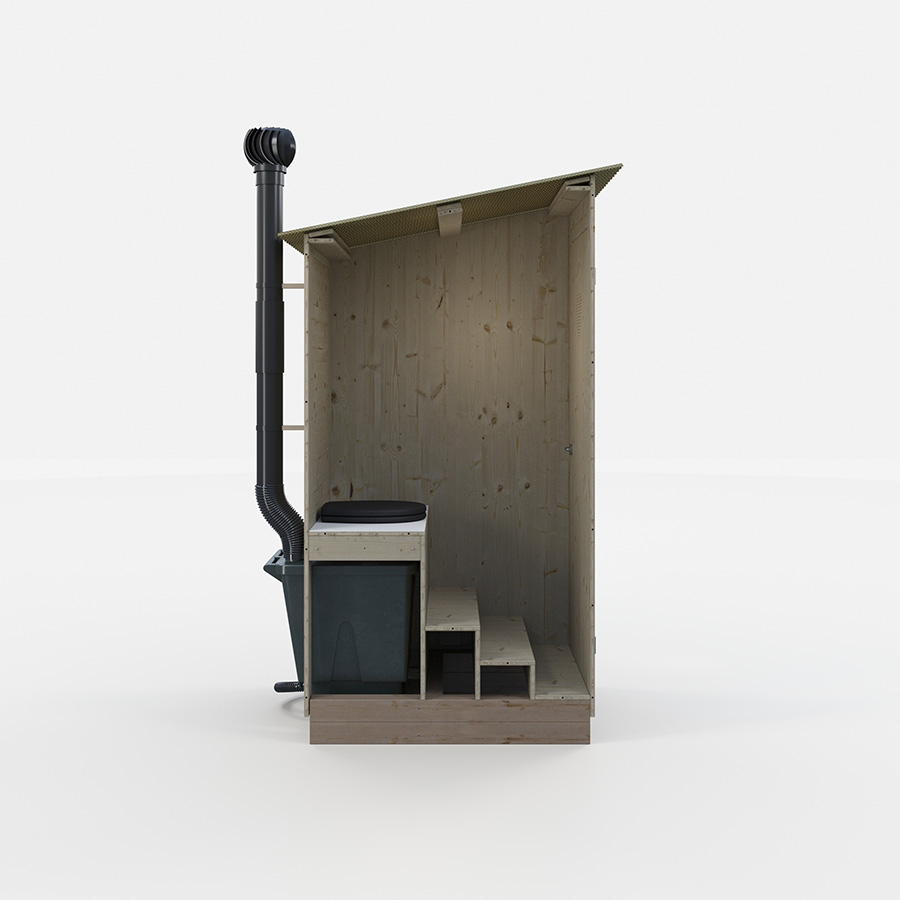
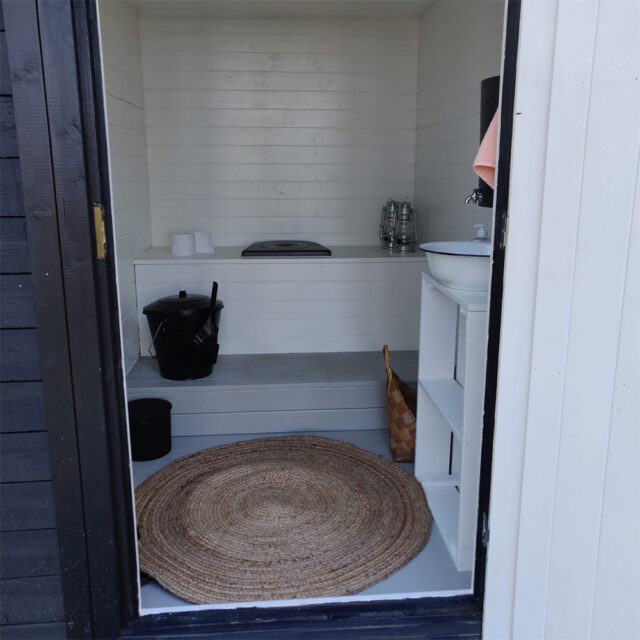
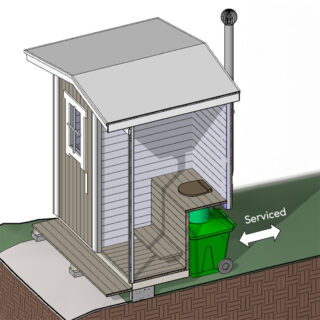
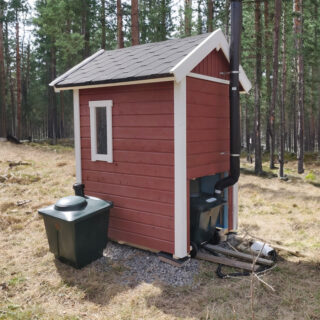
Composting toilets are well-known and widely used in outdoor outhouses. An outhouse can be almost any outdoor structure that provides privacy and basic shelter for toilet use. Depending on the design and construction of the outhouse, it can accommodate different types of composting toilets.
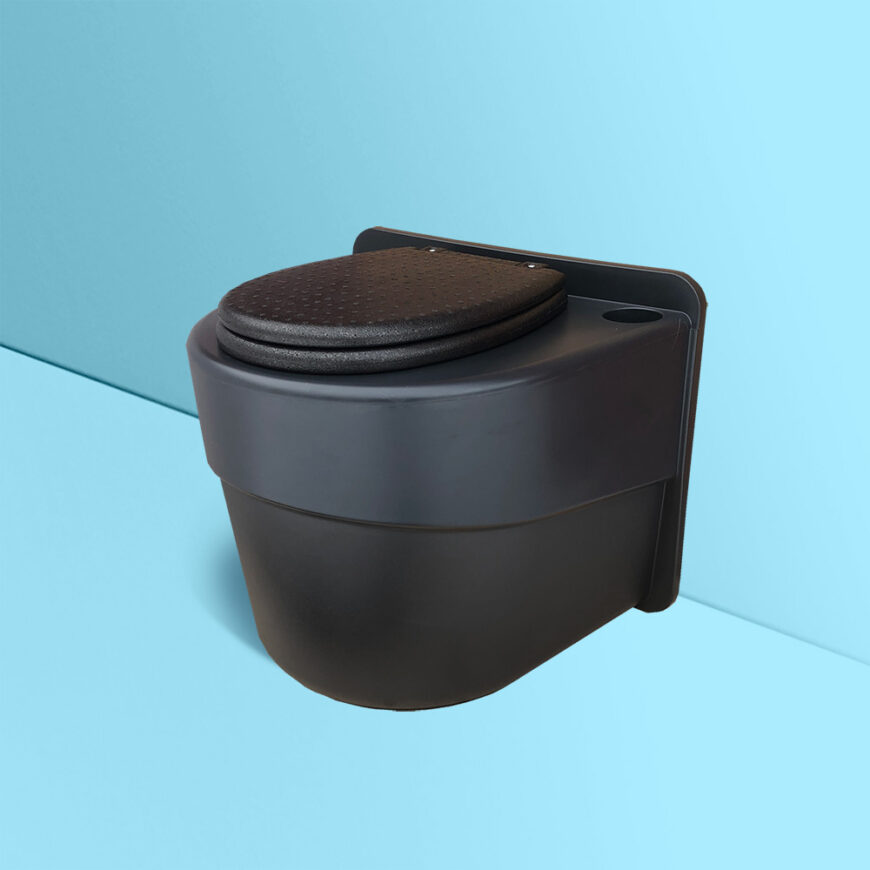
The simplest solution is typically an outhouse with a flat floor and a floor-mounted, self-contained composting toilet. However, outhouses come in many forms, and alternative designs can support other composting toilet systems as well.
A well-functioning composting toilet is completely odor-free and pleasant to use and maintain, perhaps needing attention only once during the cabin season. When choosing a composting toilet, it’s important to consider features like liquid separation and ventilation. Effective composting requires excess liquid to be drained from the compost. Additionally, robust ventilation aids in evaporating the liquid and maintaining an odor-free environment.
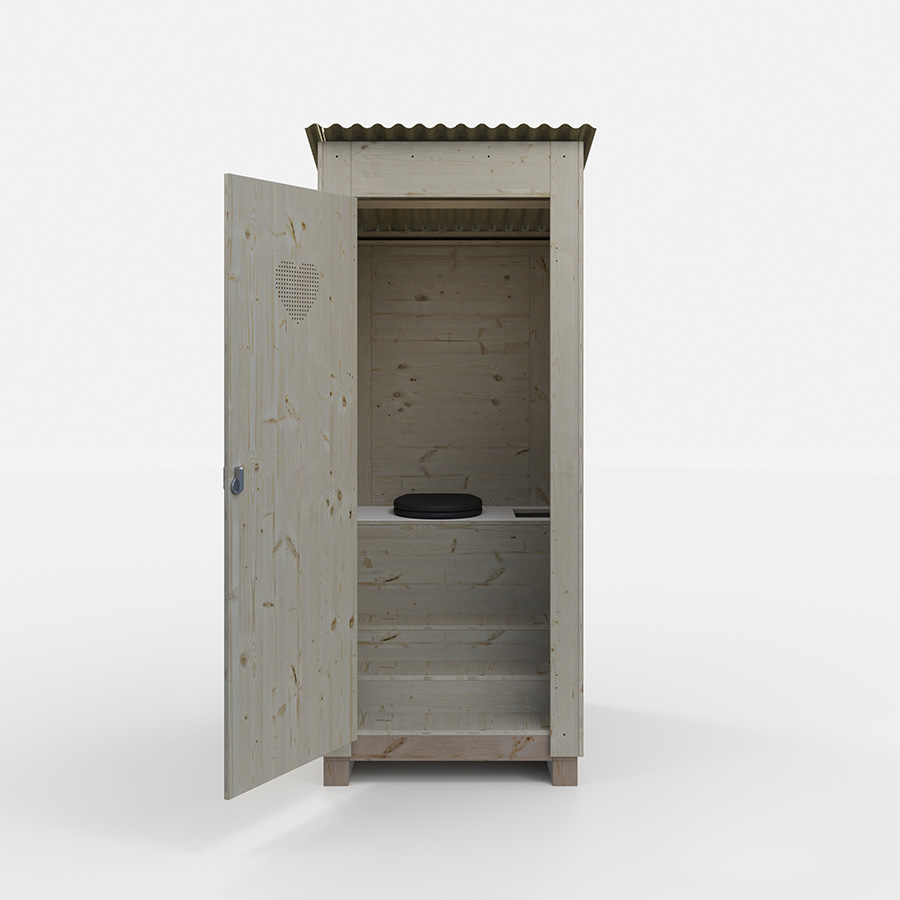
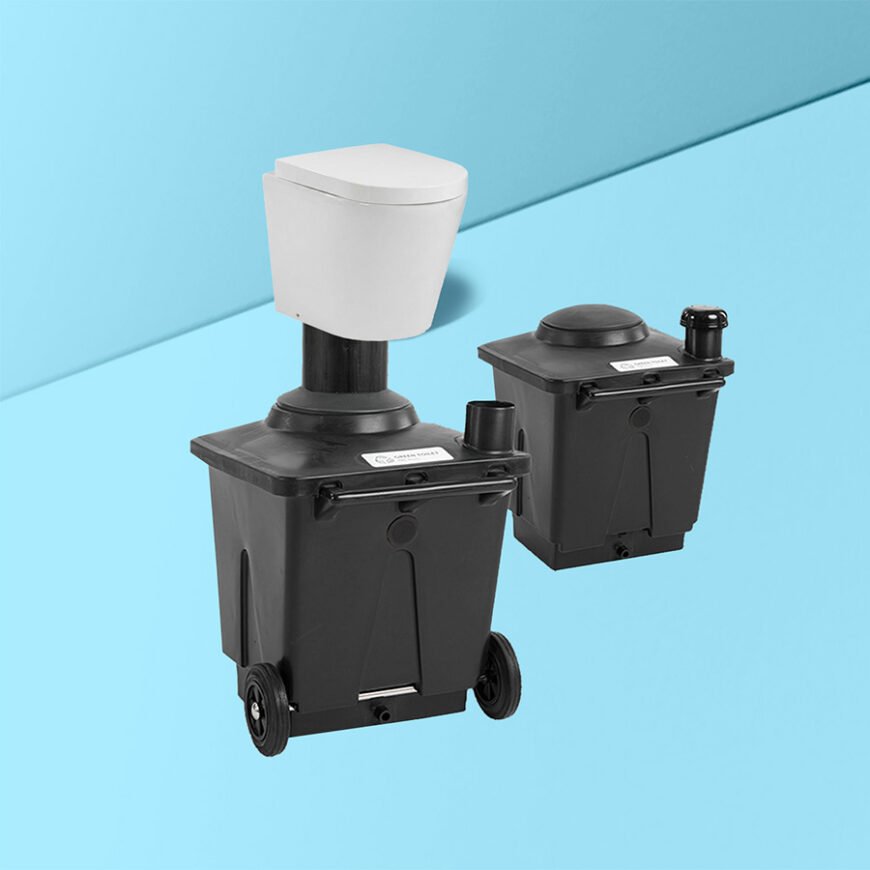
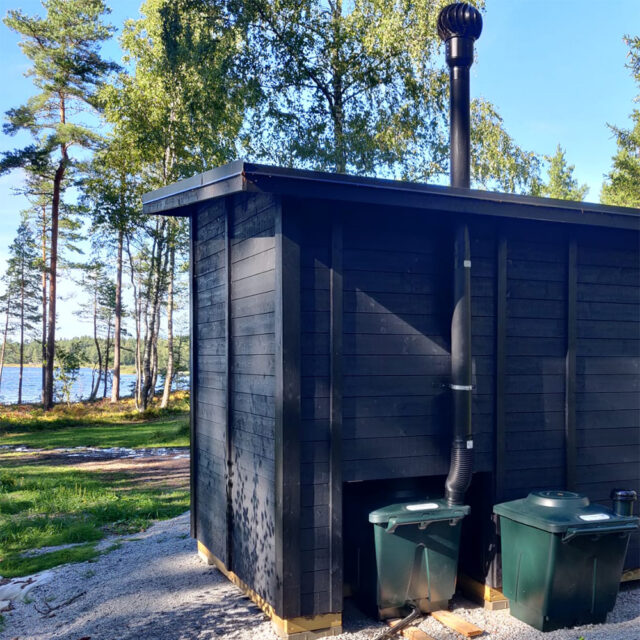
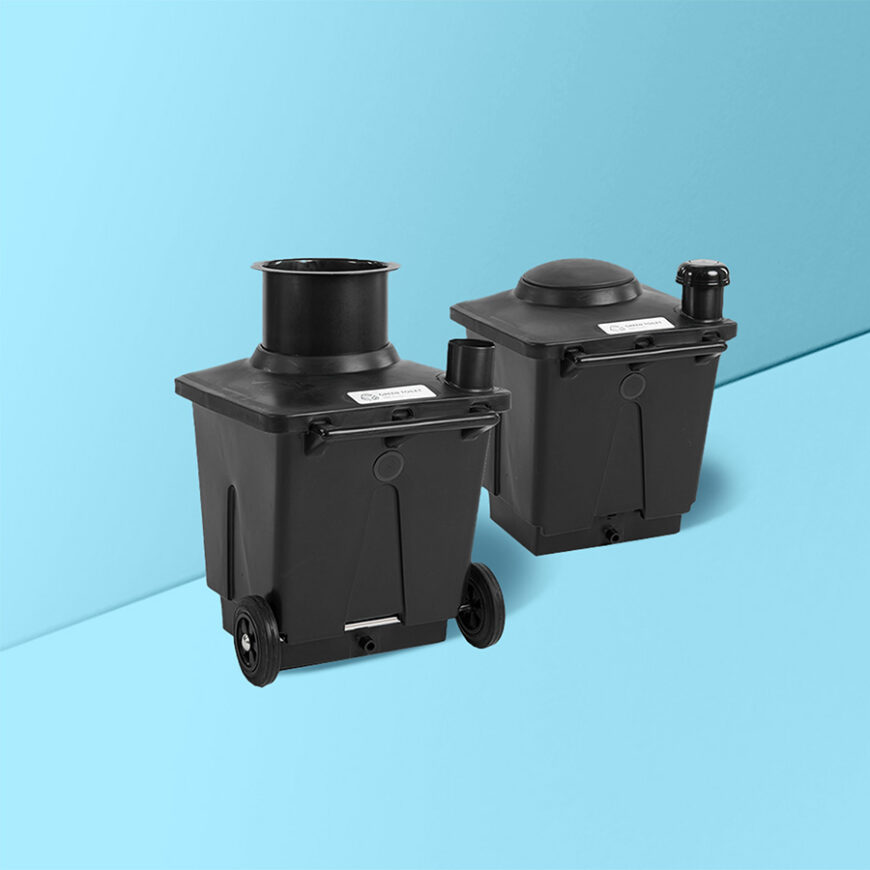
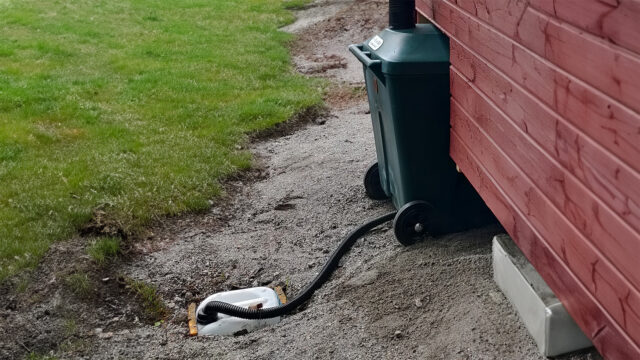
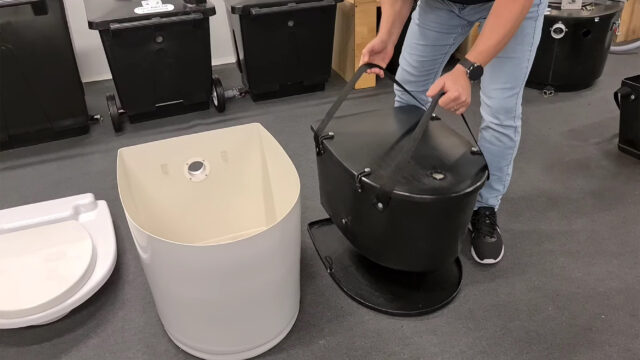
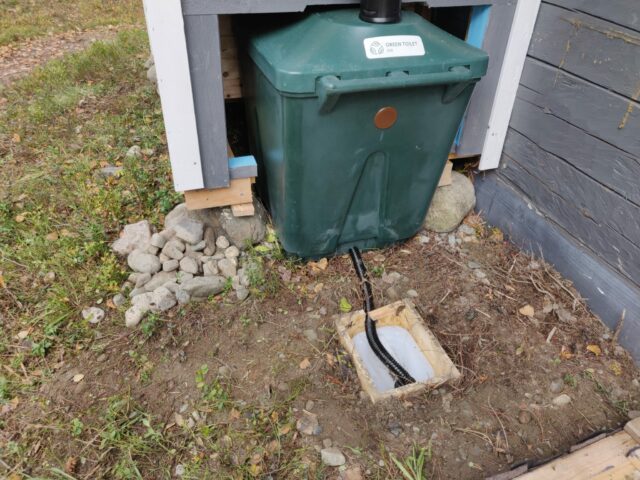
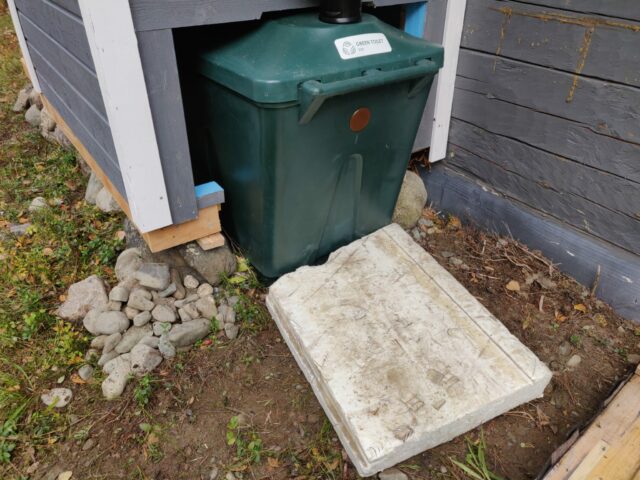
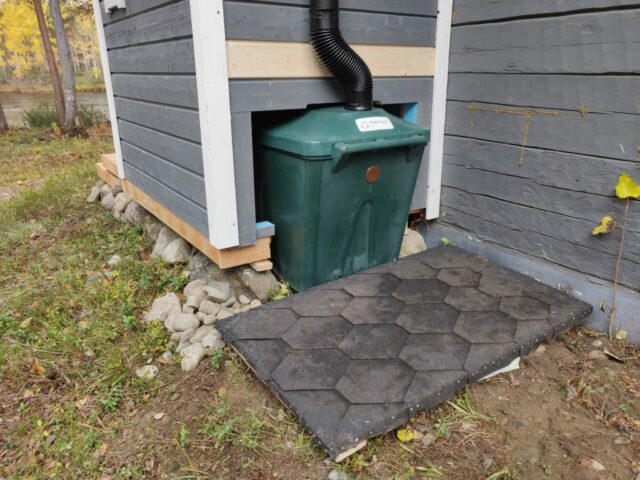
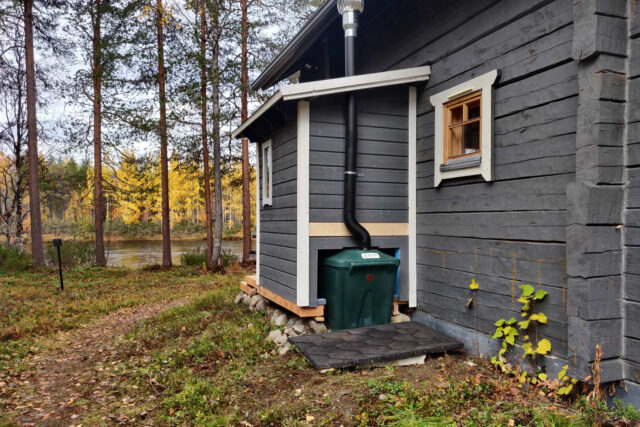
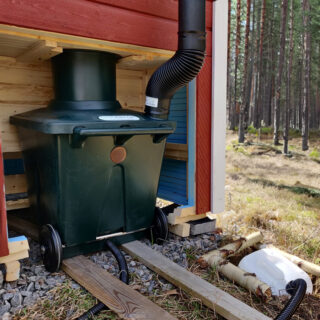
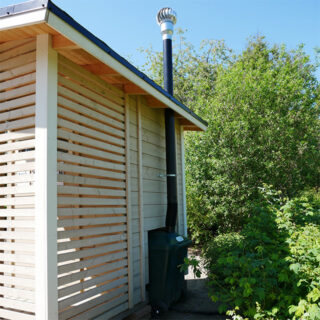
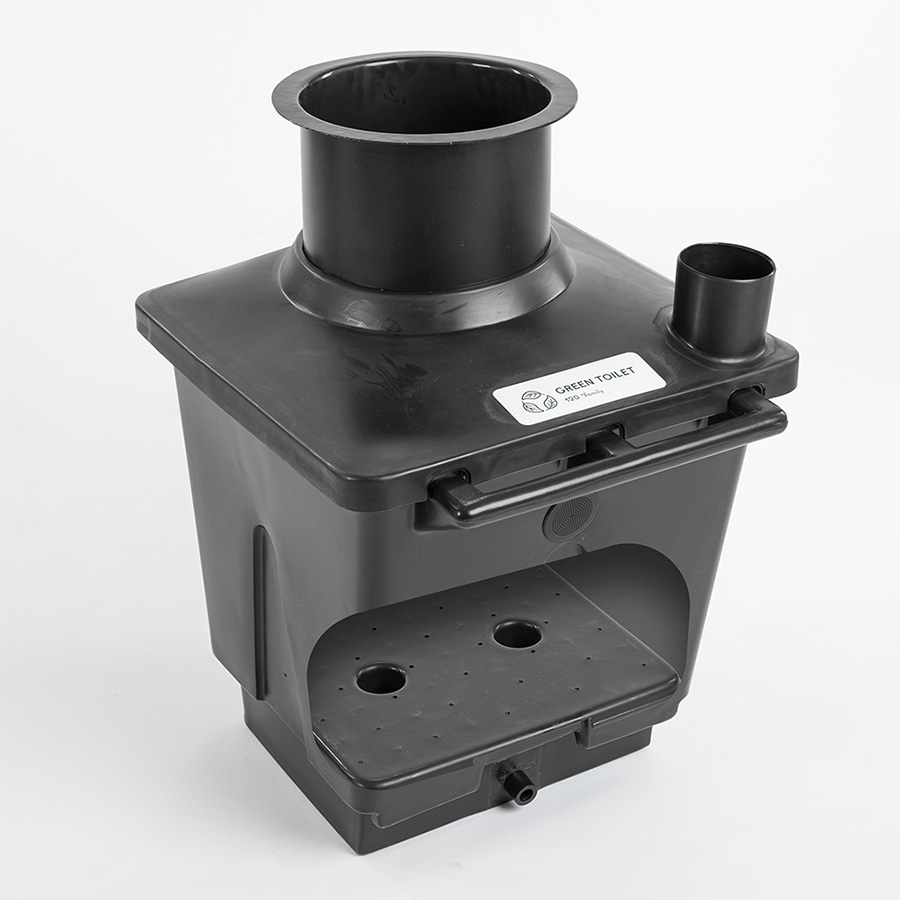
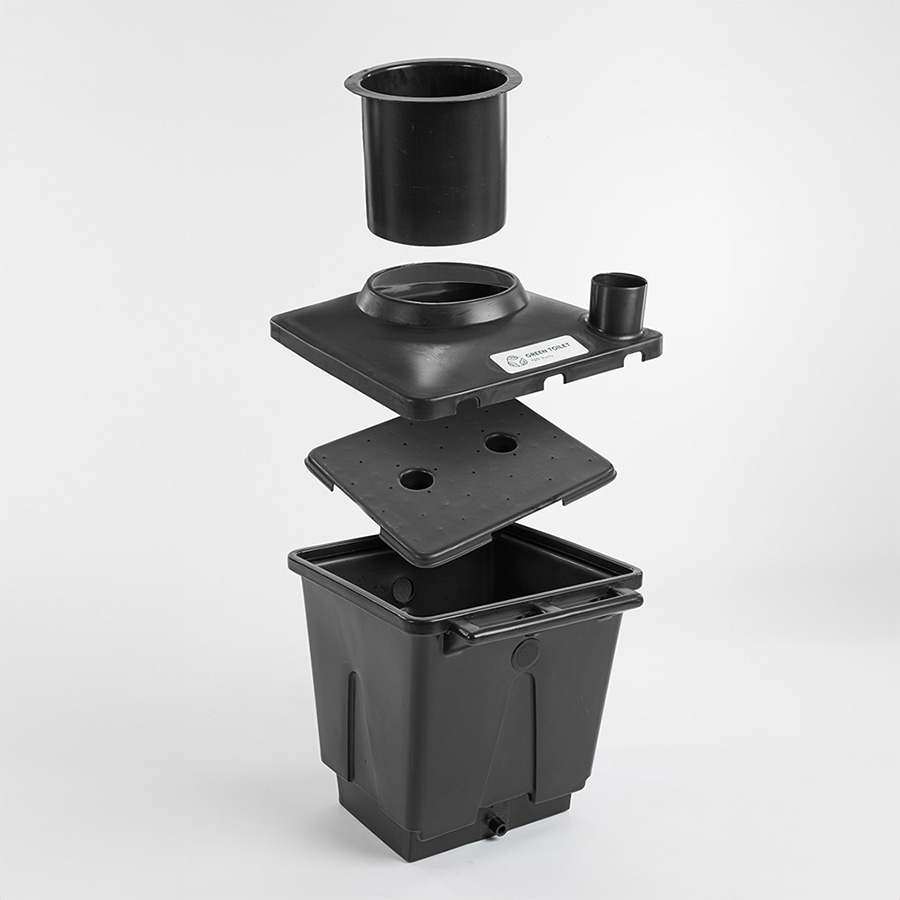
Green Toilet 120 Family composting toilet in an outhouse. There is also the spare GT 120 composting container see in the photo.
Often, a composting toilet is the best solution for a cabin’s primary restroom. In addition to a composting toilet, a cabin might also have a smaller compost toilet indoors, which is convenient for use at night or in bad weather. One of the main strengths of composting toilets is their high capacity, which means they can be used hundreds of times before needing maintenance.
If there is a need to replace the entire outhouse, consider the size and location of the new structure. A very small outhouse located far from the edge of the property often proves to be impractical. Opt for a slightly larger than average outhouse and try to position it as close to the cabin as possible. Additionally, an existing, usable outhouse structure can be updated to modern standards by fitting it with a new toilet system.
The most common question we at Waterless Toilet Shop encounter is: “Does it smell?” There are even phrases ingrained in the language from the days when old-time outhouses, especially in the summer heat, were notorious for their odors, leading to the saying about going to “the far end of the yard” for toilet due to the necessity to place the outhouse as far away as possible.
Fortunately, times have changed for the better. A composting toilet can actually be more odor-free than a traditional flush toilet. It’s now feasible to place a composting toilet close to other buildings or even inside. Proper planning is crucial so that the design, configuration, and installation meet the specific usage needs.
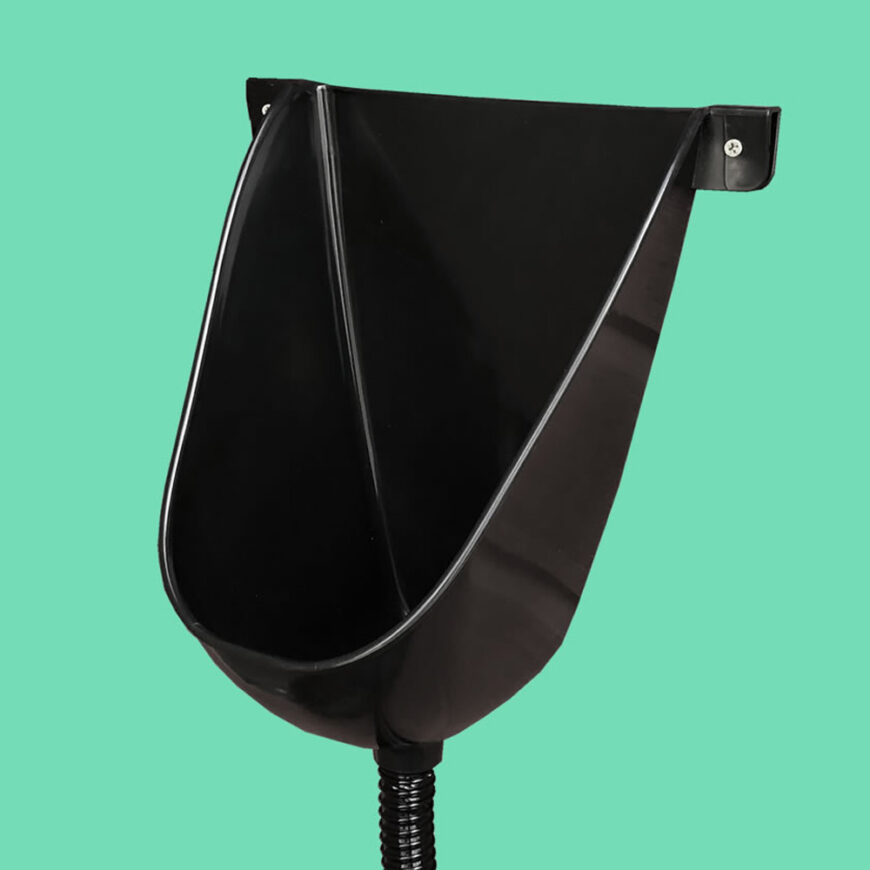
While all our composting toilets separate excess liquid within the unit, some waterless toilets handle this directly at the seat, thus producing two outputs: pure urine and a small amount of solid waste. These types of toilets are commonly referred to as urine-diverting toilets, though this term might seem misleading since composting toilets also separate fluids, just by a different method. Urine separation makes the toilet essentially odorless, as neither solid waste nor urine alone have much of an odor. It is important to plan how to collect and recycle the liquid urine beforehand. Clean urine is highly nutrient-rich, so it should not overload the soil or enter waterways. It’s advisable to have a separate, covered composter for solid waste at the cabin.
Urine-diverting toilets are versatile and can be used in various settings. At a cabin, a urine-diverting dry toilet can be installed either in an outdoor outhouse or inside the cabin. If installed indoors, it’s beneficial to equip the toilet with an electric fan.
Incinerating toilets operate by burning waste within the unit. These toilets consume a considerable amount of electricity after each use. Although incinerating toilets are sometimes marketed as eco-friendly options, in reality, burning waste is harmful to the environment.
Conclusion
Which Dry Toilet is Best for Your Cabin?
There are many models and solutions for dry toilets, as there are various uses and needs. No single solution fits everyone. When purchasing a dry toilet for your cabin, consider the following:
Want to receive a personalized recommendation from a real expert?
Fill the form and we will get back to you with a personalized recommendation!
In our natural business you will always get reply from natural, realΒ humanΒ being.
Who We Are
At Waterless Toilet Shop we are a dedicated team of dry toilet experts based in Henderson, Nevada. As a family-owned company with deep roots in Scandinavia and Australia, we bring a blend of global insights and local expertise to every product we create.
At Waterless Toilet Shop, we do more than just design and manufacture innovative composting toilets; we also use them daily. This hands-on experience allows us to continuously improve our products and ensure they meet the high standards of functionality and sustainability that our customers expect.
We are committed to living the eco-friendly principles we teach, making our solutions not just part of our business, but a part of our lives. Join us in embracing a more sustainable future, one flush at a time.
Our Customer Service team is currently on holiday until January 5th, 2026.
In urgent matters, please email us at info@waterlesstoiletshop.com
Thank you for your patience and support. Happy New Year 2026!
Waterless Toilet Shop β Black Friday & Cyber Monday Campaign Terms and Conditions
Campaign Period
This Black Friday & Cyber Monday promotion (βCampaignβ) runs from November 17, 2025 through December 1, 2025 (Cyber Monday). All qualifying orders must be placed during this period. No retroactive discounts will be applied to orders placed before or after the Campaign Period.
Eligibility
The offers are valid only for purchases made on waterlesstoiletshop.com or through direct communication with Waterless Toilet Shop during the Campaign Period. Discounts apply to new orders only.
Campaign Offers
The following products include fixed discounts during the Campaign Period:
$100 OFF all Green Toilet Lux composting toilet packages
$100 OFF CF 4 composting toilet systems
$100 OFF Oz-e-Pod composting toilets
$1000 OFF Rota Loo 650 composting toilets
All other products: price reductions may be available. Customers must request a quote during the Campaign Period to receive the best possible offer.
Discounts are automatically applied to listed sale prices or will be reflected in quoted pricing (as applicable).
Limitations
Discounts cannot be combined with any other promotions, coupons, or discount codes unless explicitly stated.
Discounted pricing applies per product, not per order.
Limited inventory: discounts apply only while stock remains available. Some products may have extended lead times.
Shipping costs are not discounted unless otherwise stated.
Request-A-Quote Items
Products requiring a custom quotation must be requested during the Campaign Period. Quotes provided as part of the Campaign will remain valid for 7 days unless otherwise specified.
Payment & Order Completion
To secure the campaign pricing, full payment or an agreed deposit must be received within the quote validity period. Waterless Toilet Shop reserves the right to void quotes not paid within the specified timeframe.
Cancellations & Returns
Standard return and cancellation policies apply. The campaign discount is non-refundable and will not be βreappliedβ to replacement orders outside the Campaign Period.
General
Waterless Toilet Shop reserves the right to:
modify or withdraw this Campaign at any time,
correct pricing errors,
limit quantities per customer,
decline requests that do not meet eligibility criteria.
By placing an order during the Campaign Period, customers agree to these Terms and Conditions.
Our phone customer service is closed today.
Email customer service remains available β please contact us at info@waterlesstoiletshop.com
, and weβll get back to you as soon as possible.
Thank you for your understanding.
Pay with Klarna
Weβre excited to now offer Klarna as a payment option at Waterless Toilet Shop!
Choose how you want to pay β all at once or with flexible installments that fit your budget.
πΈ Pay in 4 β Interest-Free
Split your composting toilet purchase into four equal payments every two weeks.
No interest, no hidden fees β just a smarter way to pay over time.
Other Flexible Options
Klarna also offers monthly financing with 6β24-month plans and transparent APR rates based on your credit.
Youβll see all available payment options instantly when you select Klarna at checkout.
Klarna financing is issued by WebBank and available to eligible U.S. residents in most states.
Missed payments may incur late fees. For California residents, loans are made or arranged pursuant to a California Financing Law license. Review Klarnaβs terms.
The CF 8 is a continuous composting toilet system featuring a single large 250-gallon container. Like the CF 4, it is designed for gradual emptying rather than batch-style use. Solids are typically removed in thirds or sections, allowing earlier deposits time to fully compost inside the tank.
This setup allows for either:
Year-round use with gradual emptying, or
Seasonal use (e.g., 4β5 months/year) with full emptying once per year
π Continuous Use: Gradual Emptying in Thirds
When used year-round, the CF 8 is typically emptied one-third at a time, effectively composting in three rotating βpilesβ within the container.
Because the CF 8 is more than twice as large as the CF 4, each pile can hold approximately 480β960 poops, depending on composting conditions and how much bulking material is used.
Service Interval (per pile)
Estimated #2 Visits per Day
30 days (1 month)
~17β32 visits/day
60 days (2 months)
~8β16 visits/day
90 days (3 months)
~5β11 visits/day
180 days (6 months)
~3β5 visits/day
365 days (1 year)
~1.2β2.6 visits/day
π‘ These figures assume that one-third of the tank is in active use at a time, with older waste given time to compost before removal.
π€ Seasonal Use: Full-Tank Emptying After Inactive Period
For cabins, cottages, or other sites used seasonally, the CF 8 can be used for a few months and then left idle to allow full composting. In such cases, the entire tank may be emptied once a year.
Full-tank capacity estimate: ~1,440β2,880 poops
Example: 120 days of use (approx. 4 months): β ~12β24 solid visits per day on average
β οΈ Disclaimer
These numbers are rough estimates based on typical use and conditions. Actual capacity will vary depending on:
Climate (temperature and humidity)
Ventilation and air flow
How much dry bulking material is added
User behavior and emptying practices
For best performance, ensure proper aeration, regular bulking material use, and consistent emptying of composted portions.
π‘ Want to Maximize Capacity? Consider a Urine-Diverting Toilet β With Some Important Considerations
If you’re looking to maximize the capacity of the CF 8 system β aiming for 960+ poops per composting βpileβ β we recommend using aurine-diverting (UD) toilet pedestal.
β Benefits of Urine Separation:
Reduces or eliminates the need for dry bulking material, which frees up valuable space in the composting unit
Helps keep the compost drier, more aerated, and better suited for natural decomposition
Increases the total capacity of the composting container
Can lead to faster and more efficient composting, especially in high-use environments
By diverting urine out of the solids container, the volume taken up by absorbent material (like peat or wood shavings) is significantly reduced. This can make a big difference in how often the system needs to be emptied.
β οΈ Downsides to Consider:
Urine-diverting toilets can take some time to get used to. Users need to sit or aim correctly to ensure proper separation, which might not happen consistently without experience or guidance.
For this reason, UD toilets are generally not ideal for public or commercial settings where the toilet is used by guests, tourists, or other first-time users. In these cases, misuse can reduce the effectiveness of the system and may even lead to unpleasant maintenance issues.
In short: A UD toilet is an excellent choice for maximizing capacity in private or family use, but for guest or public access composting toilets, a standard non-diverting model may be more practical and user-friendly.
π $100 OFF Shipping Cost β Green Toilet 330 Composting Toilets
No promo codes, no extra steps β the discount is automatically applied at checkout.
If you experience any technical issue and the discount does not apply automatically, you can manually enter
the coupon code 100OFFSHIPPING during checkout to receive the offer.
The Green Toilet 330 and Green Toilet Lux 330 are ideal for cabins, cottages, off-grid homes, and other locations where
reliable, low-maintenance, and environmentally friendly waste management is a priority. Their batch composting design
makes servicing simple and hygienic, with a spare container included to keep the system running without interruption.
Campaign details:
Offer valid until August 31, 2025 or while stock lasts
Discount applies only to Green Toilet 330 and Green Toilet Lux 330 composting toilet orders
Automatically applied at checkout β or use coupon code 100OFFSHIPPING if needed
Applies to orders shipped within the Lower 48 states only
Upgrade your off-grid toilet system now and save on shipping while supplies last.
Green Toilet 100 Easy β Estimated Daily Capacity
The Green Toilet 100 Easyis a compact and user-friendly batch composting toilet with a 26-gallon composting container. Its design makes it well-suited for outhouses, cabins, and even indoor use. A spare containeris available to expand capacity and simplify servicing.
Note: Due to the shape and internal structure of the container, the actual composting capacity is slightly lower than its raw volume might suggest, if you compare with Green Toilet 120 Family composting toilet for example.
π Average Daily Capacity per Bin
Service Interval
Estimated #2 Visits per Day
30 days (1 month)
~6β7 visits/day
60 days (2 months)
~3β4 visits/day
90 days (3 months)
~2.2 visits/day
180 days (6 months)
~1.1 visits/day
365 days (1 year)
~0.5 visits/day
Notes & Recommendations:
For seasonal or weekend use, one container often lasts a full summer.
For more frequent use, we recommend the package with a spare container. This allows one bin to rest and compost while the other is in active use.
Donβt forget to add dry bulking material (like wood shavings or peat) regularly to maintain airflow and prevent odors.
β οΈ Disclaimer: These estimates are intended as general guidance. Real-world performance may vary depending on:
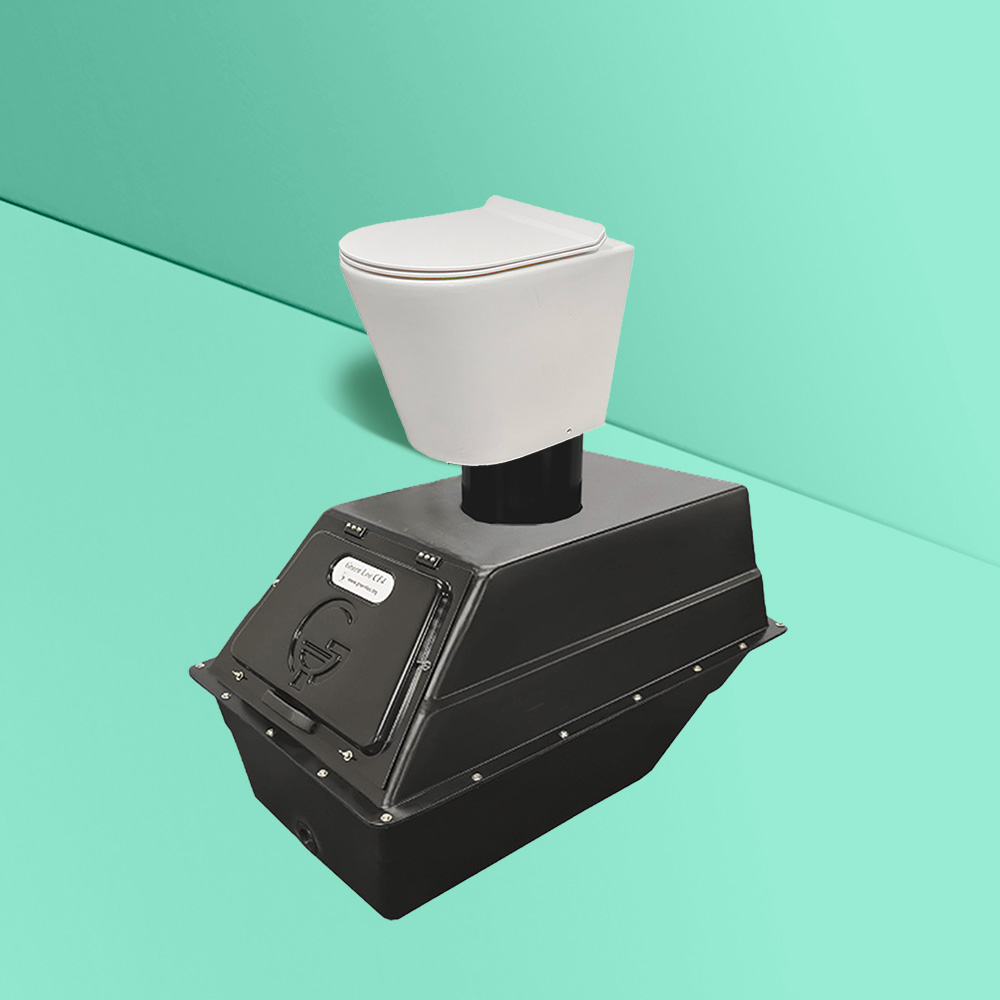
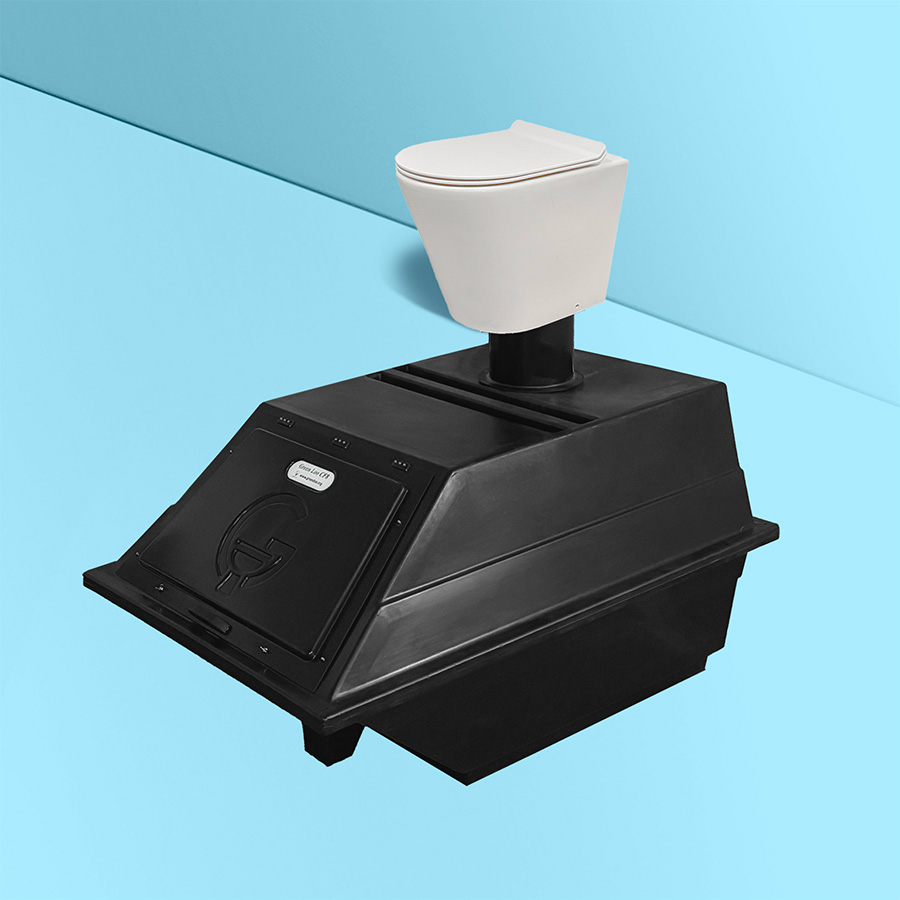
The CF 4 is a continuous composting toilet system featuring a single large 105-gallon container. Unlike batch composting systems (such as the Green Toilet models), the CF 4 is designed for gradual emptying β solids are typically removed in thirds or sections, allowing earlier deposits time to fully compost inside the tank.
This setup allows for either:
Year-round use with gradual emptying, or
Seasonal use (e.g. 4β5 months/year) with full emptying once per year
π Continuous Use: Gradual Emptying in Thirds
When used year-round, the CF 4 is typically emptied one-third at a time, effectively composting in three rotating βpilesβ within the container. Depending on composting conditions and how much bulking material is used, each pile can hold approximately 200β400 poops.
Service Interval (per pile)
Estimated #2 Visits per Day
30 days (1 month)
~7β13 visits/day
60 days (2 months)
~3β7 visits/day
90 days (3 months)
~2β4 visits/day
180 days (6 months)
~1β2 visits/day
365 days (1 year)
~0.5β1.1 visits/day
π‘ These figures assume that one third of the tank is in active use at a time, with older waste given time to compost before removal.
π€ Seasonal Use: Full-Tank Emptying After Inactive Period
For cabins, cottages, or other sites used seasonally, the CF 4 can be used for a few months and then left idle to allow full composting. In such cases, the entire tank may be emptied once a year.
Full-tank capacity estimate: ~600β1,200 poops
Example: 120 days of use (approx. 4 months): β ~5β10 solid visits per day on average
β οΈ Disclaimer
These numbers are rough estimates based on typical use and conditions. Actual capacity will vary depending on:
Climate (temperature and humidity)
Ventilation and air flow
How much dry bulking material is added
User behavior and emptying practices
For best performance, ensure proper aeration, regular bulking material use, and consistent emptying of composted portions.
π‘ Want to Maximize Capacity? Consider a Urine-Diverting Toilet β With Some Important Considerations
If you’re looking to maximize the capacity of the CF 4 system β aiming for 400+ poops per composting βpileβ β we recommend using a urine-diverting (UD) toilet pedestal.
β Benefits of Urine Separation:
Reduces or eliminates the need for dry bulking material, which frees up valuable space in the composting unit
Helps keep the compost drier, more aerated, and better suited for natural decomposition
Increases the total capacity of the composting container
Can lead to faster and more efficient composting, especially in high-use environments
By diverting urine out of the solids container, the volume taken up by absorbent material (like peat or wood shavings) is significantly reduced. This can make a noticeable difference in how often the system needs to be emptied.
β οΈ Downsides to Consider:
Urine-diverting toilets can take some time to get used to. Users need to sit or aim correctly to ensure proper separation, which might not happen consistently without experience or guidance.
For this reason, UD toilets are generally not ideal for public or commercial settings where the toilet is used by guests, tourists, or other first-time users. In these cases, misuse can reduce the effectiveness of the system and may even lead to unpleasant maintenance issues.
In short: A UD toilet is an excellent choice for maximizing capacity in private or family use, but for guest or public access composting toilets, a standard non-diverting model may be more practical and user-friendly.
(Based on approx. 356 uses involving a #2 β i.e., poop) – only the solids count!
Service Interval
#2 Visits per Day (involving a #2)
30 days (1 month)
~11.9 visits/day
60 days (2 months)
~5.9 visits/day
90 days (3 months)
~4.0 visits/day
180 days (6 months)
~2.0 visits/day
365 days (1 year)
~1.0 visits/day
π’ What counts as a β#2 visitβ? Only visits that involve pooping (i.e., going number two) β urine-only visits donβt contribute to filling the composting bin and are not included in the estimate.
β οΈ Disclaimer: These estimates are approximations. The actual number of solid uses per bin may vary significantly depending on climate, temperature, ventilation, user habits, and the amount of dry bulking material (e.g., wood shavings or peat) added after each use.
(Based on approx. 1,000 uses involving a #2 β i.e., poop) – only the solids count!
Service Interval
#2 Visits per Day (involving pooping)
30 days (1 month)
~33 visits/day
60 days (2 months)
~17 visits/day
90 days (3 months)
~11 visits/day
180 days (6 months)
~5.6 visits/day
365 days (1 year)
~2.7 visits/day
π’ What counts as a β#2 visitβ? Only visits that involve defecation (pooping) β urine-only visits donβt fill up the composting bin and are not included in the 1,000-use estimate.
β οΈ Disclaimer: These estimates are based on typical, steady use. The actual number of solid uses a composting bin can handle may vary significantly depending on climate, temperature, humidity, ventilation, and how much dry bulking material (like wood shavings) is added after each use.
π§ Liquid waste (urine) estimate
Average person produces about:
0.4 gallons of urine per day (β1.5 liters β 1.6 quarts)
So for 100 people:
0.4 gallons Γ 100 = 40 gallons of urine per day
π½ Flush water use estimate
Average flush volume in the U.S. is about:
1.5 gallons per flush
Average person flushes ~5 times per day, so:
1.5 gallons Γ 5 = 7.5 gallons/person/day
So for 100 people:
7.5 gallons Γ 100 = 750 gallons of flush water per day