
 Composting
 Off-Grid
 Indoors
 Floor-standing
 Tiny House
 ADU
ADU Urine-diverting
 Year-around
 Luxurious
 Cabins
 RVs
RVs Large capacity
 Cold climate
 Glamping
 Outhouses
 Public use
 Single-chamber
 Toilet Pedestals
 Accessories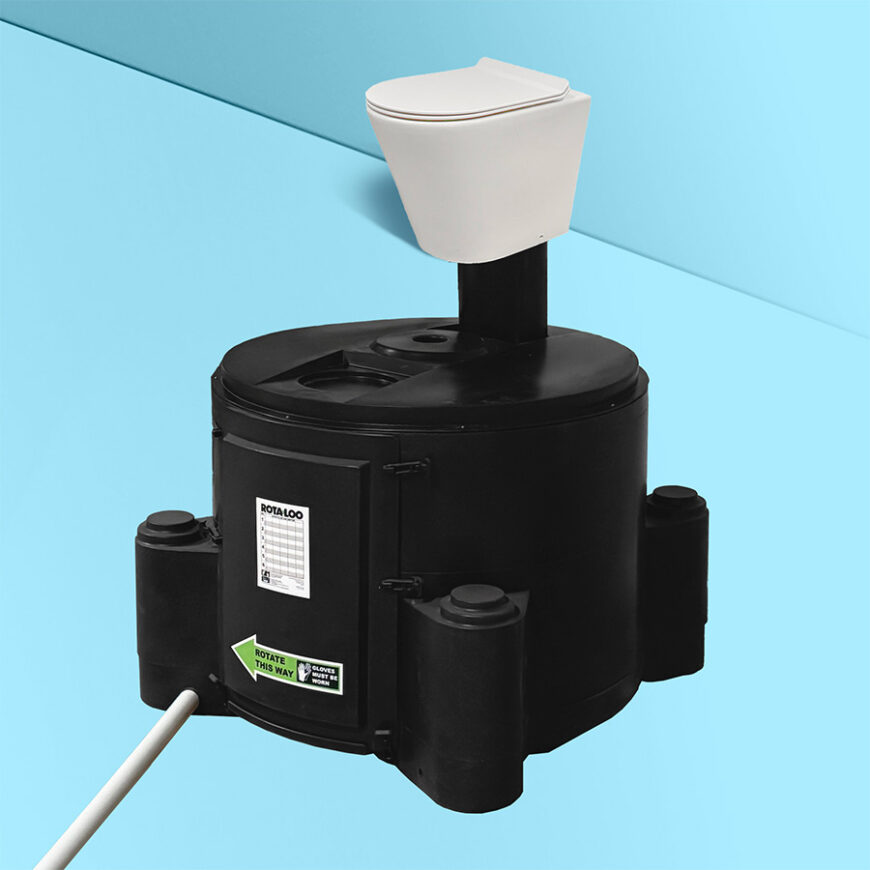
Rota Loo 950
Rotating Bin System
$5,980.00
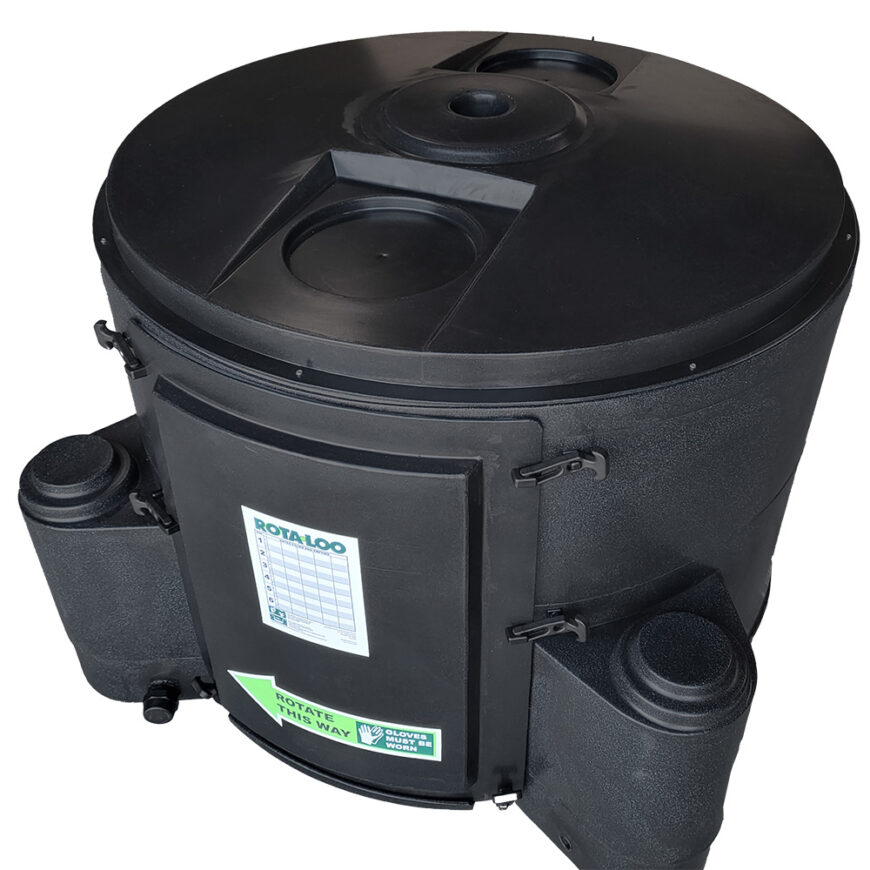
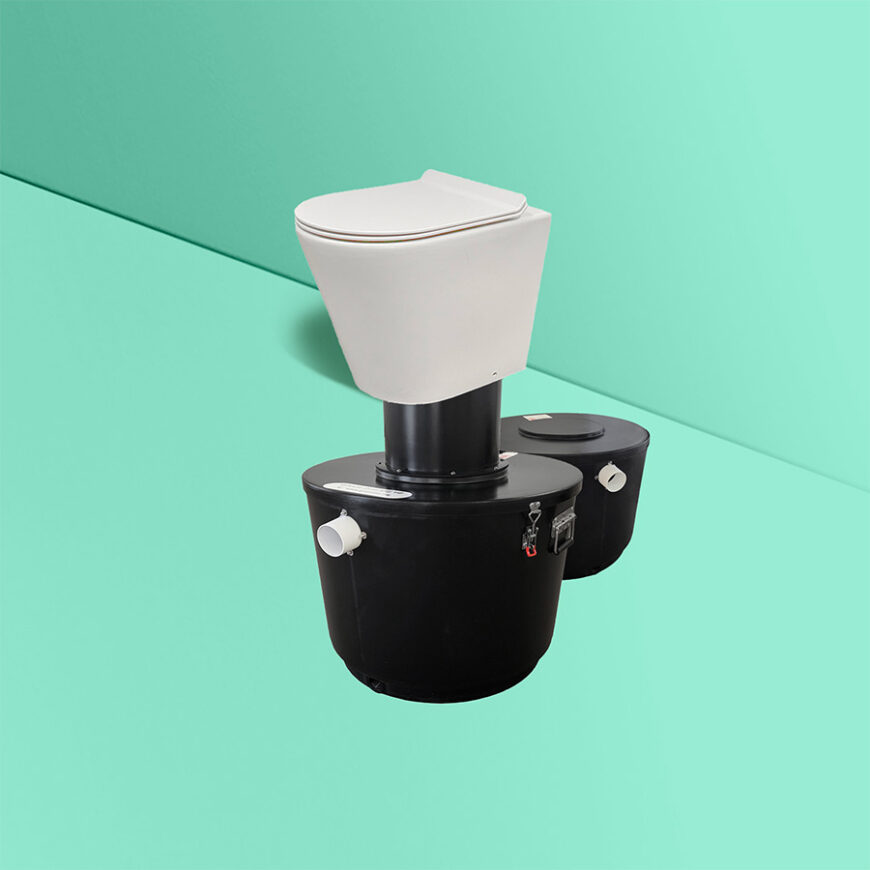
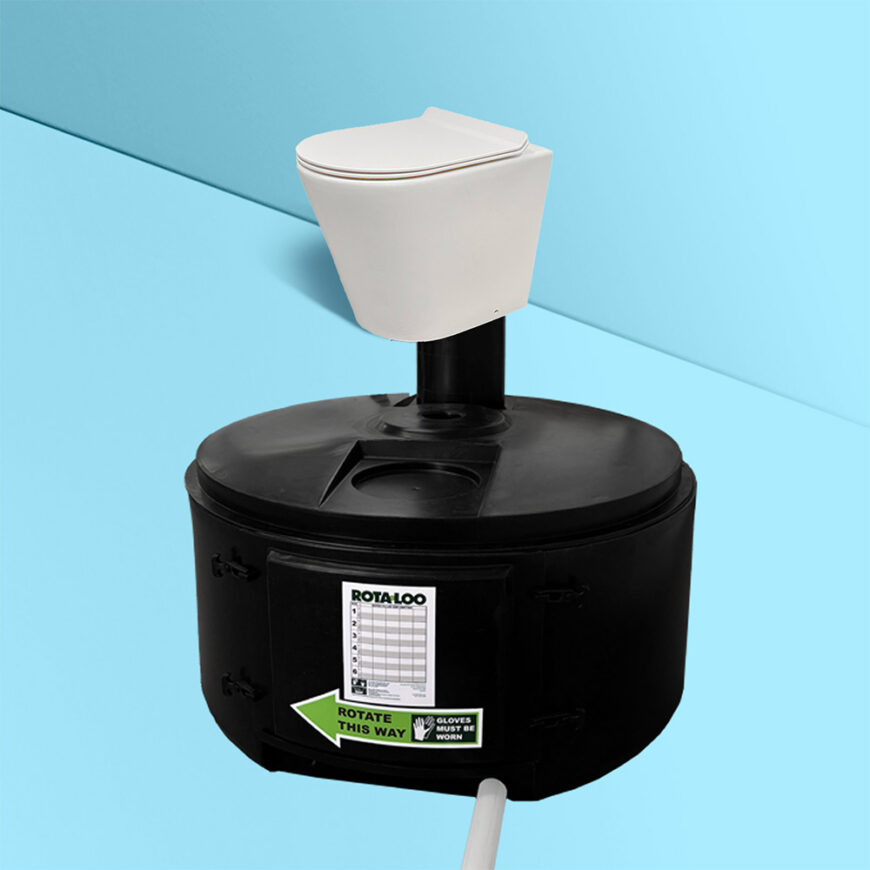
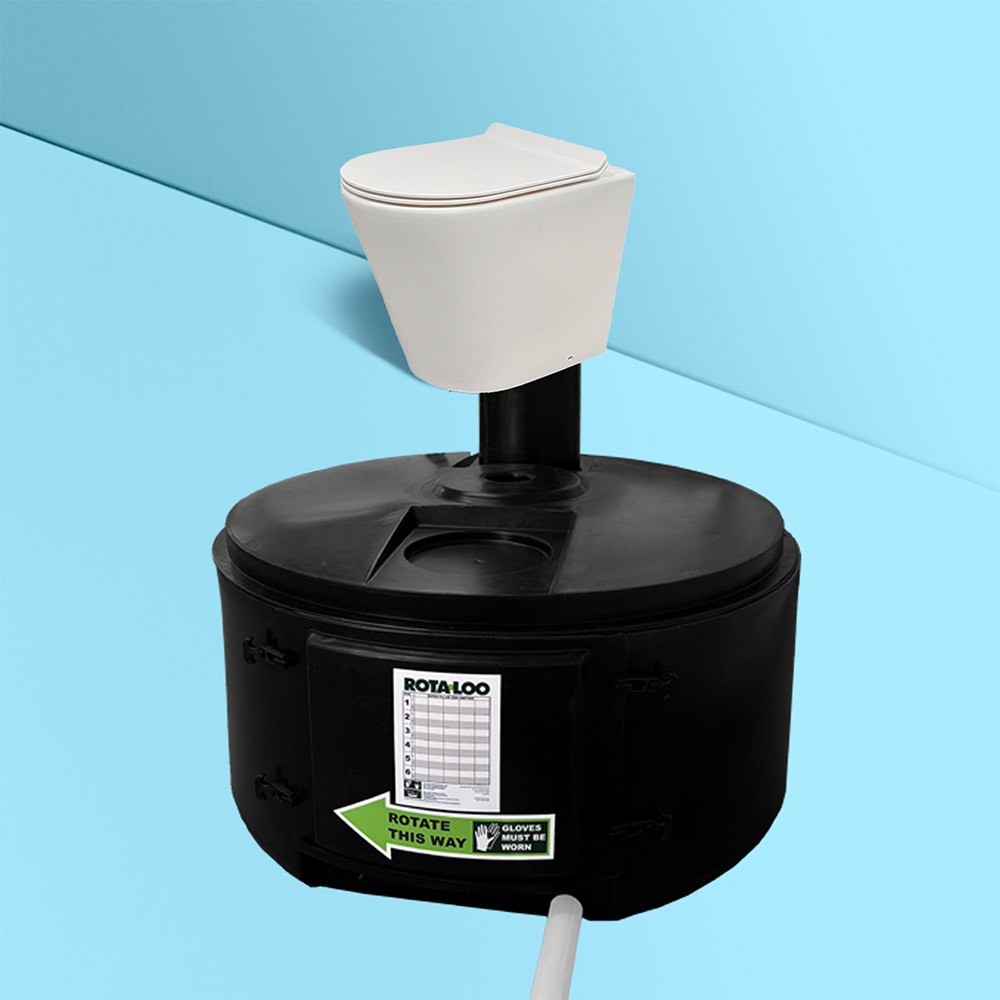
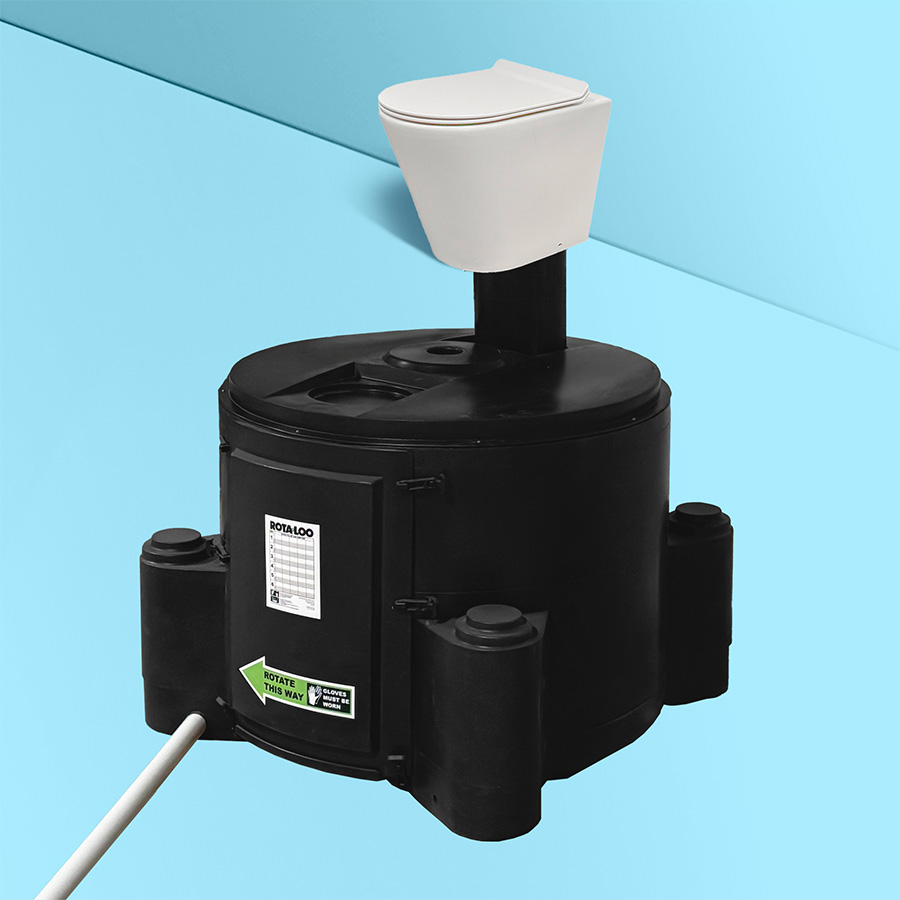
The Rota-Loo 950 is a premium rotating bin system for larger households, public use and other areas with high usage, supporting up to 8 full-time users.
Unique to this model is its ability to connect two toilet pedestals to a single unit. Rota Loo rotating bin systems employ a rotating mechanism where each bin can be used for roughly two-three months before transitioning to the next, offering an annual composting cycle that yields nutrient rich compost that can safely be used e.g. as a natural fertilizer.

38" Below clearance required

6 x composting bins

Available in USA
Rota Loo 950
The Rota-Loo 950 is a unique rotating bin system (also known as batch composting) for larger households or high-usage areas, accommodating up to 8 full-time users. This model is capable of connecting two toilet pedestals to a single composting unit, making it the preferred choice for families seeking an effective and sustainable waste management system.
The larger Rota-Loo 950 requires 38 inches of clear space below the toilet floor level. If you lack sufficient space, you might consider the smaller Rota-Loo 650 or for example the GL 90 premium waterless toilets, which are similar to the Rota-Loo 950 but require significantly less room below floor level. For situations where there is no space available beneath the floor, our floor-standing waterless toilets may be a suitable option.
Key Features
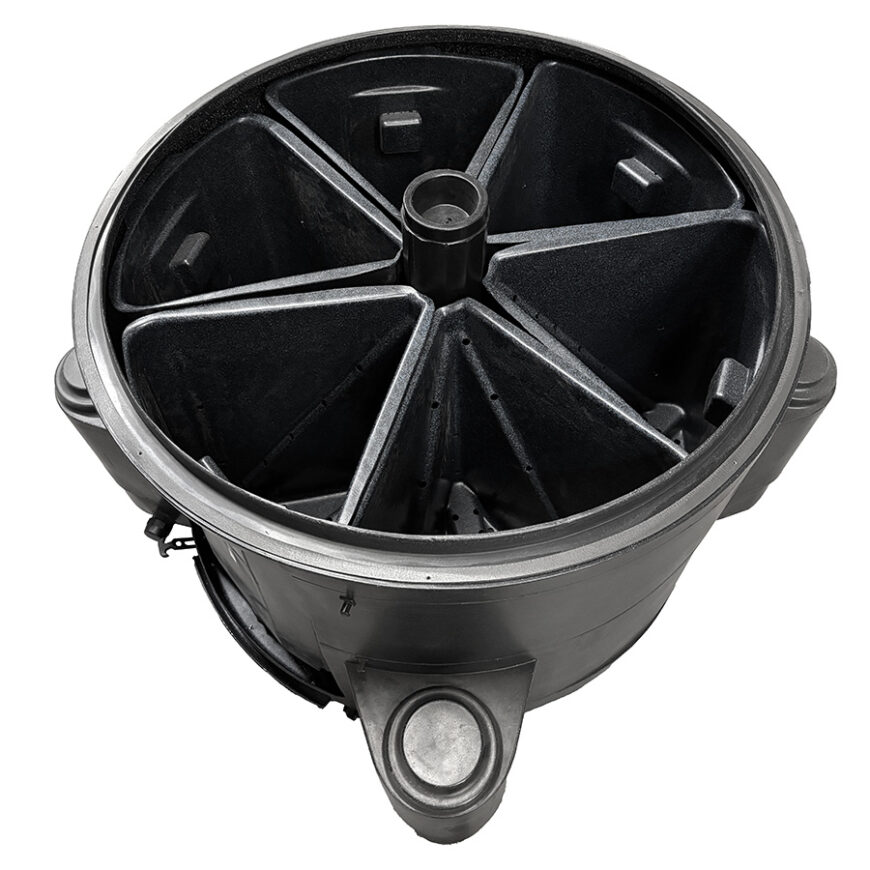
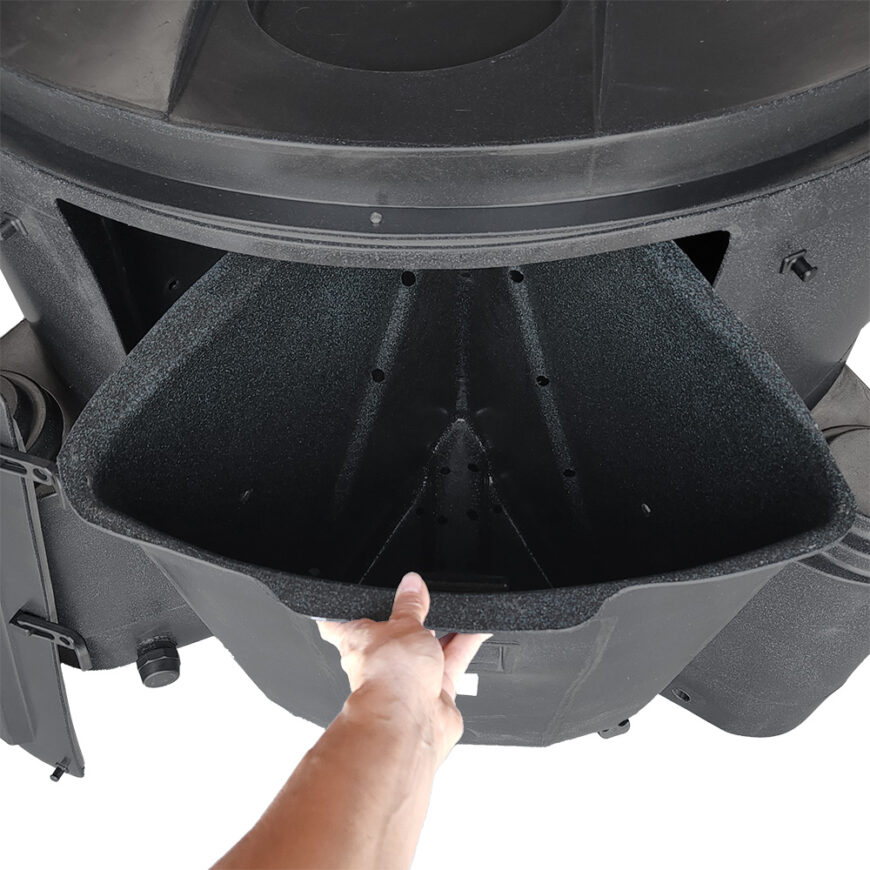
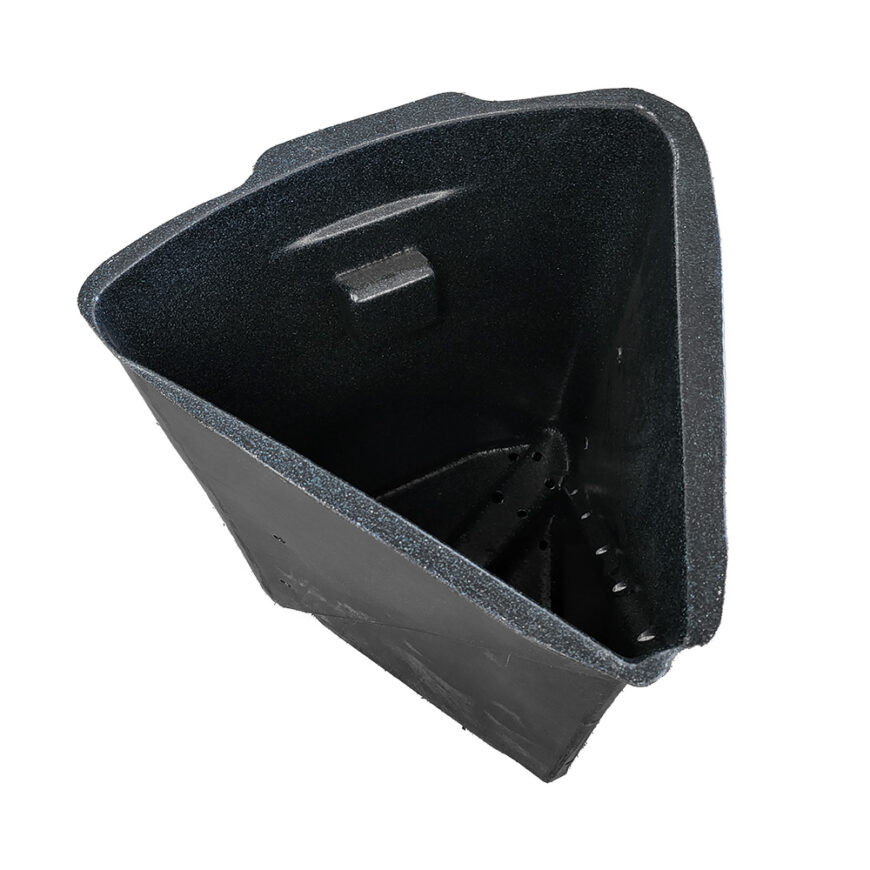
- Rotating Design: The Rota-Loo composting toilet features a large composting container divided into multiple inner composting bins/compartments. A single bin is connected to a porcelain waterless toilet pedestal at any one time. When a bin fills up, the internal structure is rotated clockwise to bring a new empty bin into use, while the full bin remains inside to continue composting. This results in batches of compost being processed simultaneously within the unit.
- Enhanced Capacity: Designed to serve a large family, the 950 model can efficiently cater to the needs of up to 8 individuals, ensuring reliable performance even under high demand.
- Dual Pedestal Compatibility: Unlike the smaller 650 model, the 950 can accommodate two toilet pedestals simultaneously, offering greater flexibility and convenience for domestic installations.
Operating on a rotating bin system, the Rota-Loo 950 facilitates an odorless, chemical-free process that converts human waste into nutrient-rich humus. This method aligns with eco-friendly practices by minimizing water usage and avoiding the environmental impact associated with traditional sanitation systems.

The Rota-Loo is a certified product Manufactured to: AS/NZS 1546.2:2008 - On-site domestic wastewater treatment units – Waterless composting toilets.
What is a rotating bin system?
A rotating bin system is a waterless toilet that processes human waste through composting in separate batches. Unlike continuous composting systems, which handle waste in a single, ongoing process, batch systems compartmentalize the composting activity into distinct containers or bins. Each bin is filled sequentially, then set aside to allow the waste to compost over time, typically several months, transforming it into nutrient-rich compost. Once a bin is full, it’s sealed and a new bin is used, minimizing handling and ensuring an odorless, chemical-free process. This method effectively reduces waste volume and recycles nutrients. Rotating bin systems are generally praised for their hands-off approach to the maintenance of waterless toilets.
Rota-Loos are exemplary models of a rotating bin system. This innovative design incorporates multiple bins within a single large container, each acting as a separate batch unit. As one bin is connected to a waterless toilet pedestal and fills up with human waste, it follows the fundamental principles of a rotating bin system by isolating the waste. Once the bin reaches capacity, the internal mechanism of the Rota-Loo allows for the rotation of the container, positioning a new empty bin under the waste chute.
The full bin, now disconnected from the toilet, remains within the unit, where the composting process continues undisturbed. Over several months, the waste in this bin breaks down into nutrient-rich compost. This system minimizes manual handling of raw toilet waste and maintains an efficient, odorless operation throughout its cycle.
How Rota Loo works?
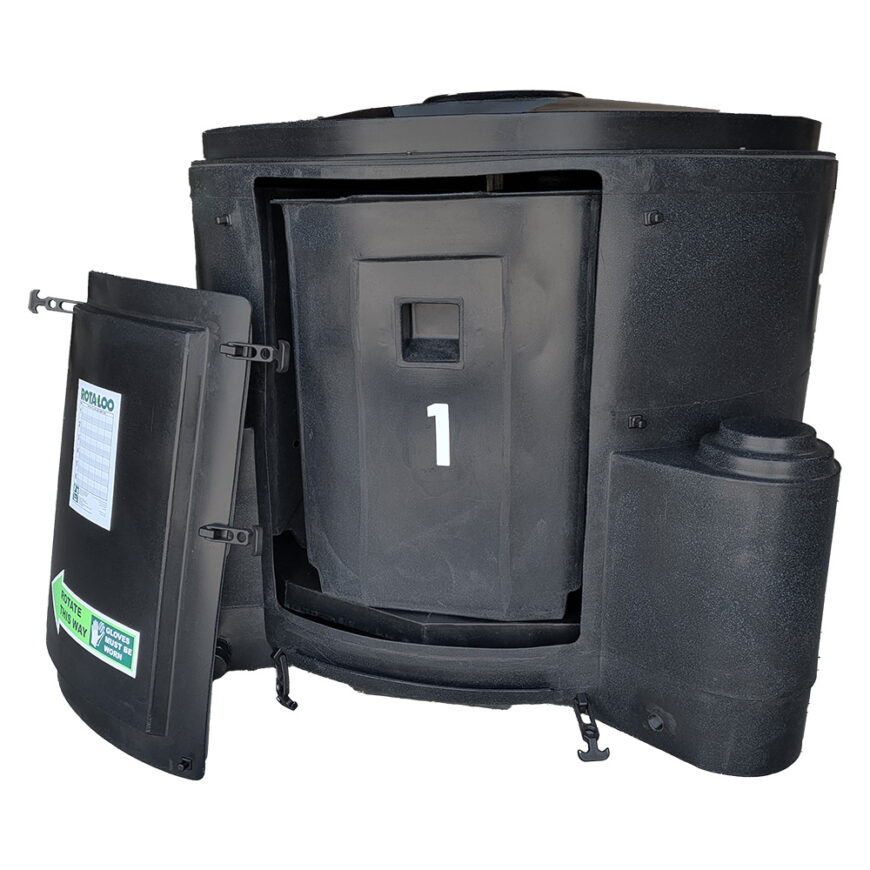
The Rota-Loo functions much like a rotating clock. Picture it with multiple bins, starting with Bin 1 positioned at what would be 12 o’clock. This bin is used initially and typically fills up over the course of two to three months. Once Bin 1 is full, you simply rotate the Rota-Loo system clockwise to bring the next bin into the primary position at 12 o’clock for use.
This rotation process is repeated as each bin fills. By the time Bin 1 comes full circle back to the 12 o’clock position, usually about a year later, its contents have transformed into a rich, nutrient-dense humus. This humus is not only safe but also beneficial for your garden, completing the eco-friendly cycle. The emptied bin is then ready to be put back into use, starting the process anew.
Installation
The Rota-Loo is designed to be installed with ease and is ideal for both residential and commercial settings. It is supplied as a comprehensive kit, which can be assembled using standard tools that are readily available at most hardware stores.
Space Requirement
The Rota Loo 950 is a premium waterless toilet system, meaning it requires a free clearance below the toilet floor level. Specifically, this model needs a minimum of 38 inches of space beneath the floor to function properly. Premium waterless toilets, by design, always necessitate some clearance below floor level.
If you don’t have enough space, you might want to look into the smaller Rota-Loo 650 or the GL 90 premium waterless toilets, which are comparable to the Rota-Loo 950 but need much less space below the floor level. In cases where there is no space below the floor, our floor-standing waterless toilets could be an ideal solution.
Installation Highlights:
- Site Preparation: A flat, level base should be ensured, shielded from the elements, with adequate space allocated for the unit and ventilation components, and convenient access for maintenance.
- Assembly: The toilet pedestal is to be positioned directly above the Rota-Loo unit to ensure a vertical drop.
- Ventilation Setup: A ventilation system must be installed to control odors and facilitate the composting process. This involves the fitting of ventilation pipes and a fan to ensure effective air flow.
- Service Access: Regular access to the compost bins should be planned, making them readily accessible for easy servicing approximately every two months.
- Power Requirements: The electrical setup for the fan should be prepared.
Before its use, final checks should be conducted to confirm that everything is installed correctly and functioning as expected. This straightforward setup process, coupled with routine maintenance, ensures that the Rota-Loo will be pleasant to use and service.
Service
Servicing the Rota-Loo is designed to be straightforward, ensuring continuous and efficient operation. Here’s a simple guide to servicing the system:
- Bin Rotation: When a bin becomes full (remaining no more than 4 inches below the top), it is rotated. The access door should be opened, and a mixture of compost starter and water, as specified by the compost starter instructions, should be added through the pedestal.
- Compost Covering: It is recommended that the compost be covered with about 1 inch of covering material to enhance decomposition.
- Advance the Bins: The bins are rotated one position clockwise. The bin now under the waste chute, filled with composted material unless it is the first use, should be emptied.
- Empty and Prepare: The composted material is to be emptied safely. The jute liner, which decomposes more slowly, can also be composted. A new jute liner should be placed in the emptied bin, covered with 2 inches of covering material, and the bin returned to the Rota-Loo. The door is then closed, preparing it for reuse.
- Record Keeping: The Bin Rotation Diary is to be used to record when bins are turned and emptied. This diary should be kept either on the door of the Rota-Loo or in a nearby accessible location.
These steps ensure that the Rota-Loo is maintained properly, supporting the natural composting process, minimizing maintenance efforts and keeping the toilet pleasant to use.
Specifications
| Feature | Specification |
|---|---|
| Product | Rota Loo 950 |
| Recommended For | – |
| Capacity | Up to 8 full-time users |
| Average Daily Visits | – |
| Container Length | – |
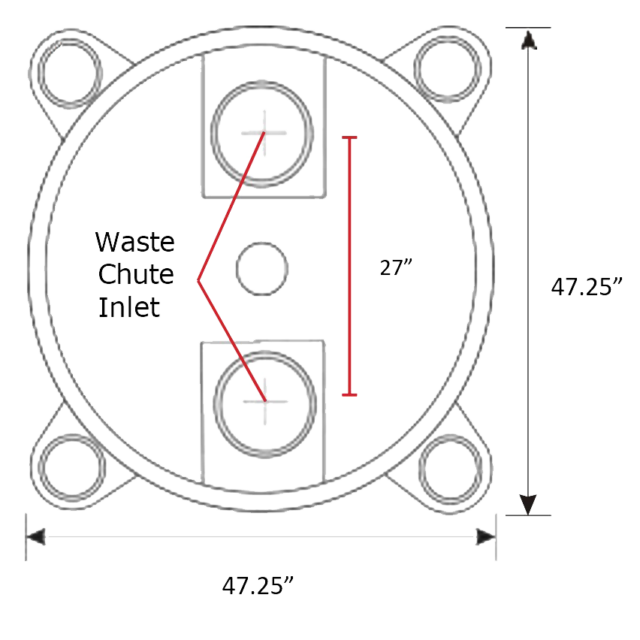
| Container Width | 47.25″ |
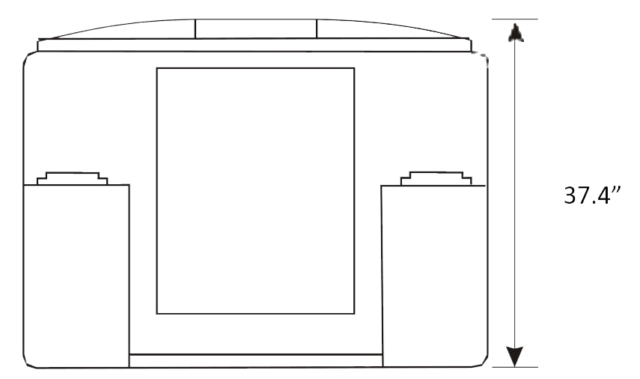
| Container Height | 37.4″ |
| Container Depth | 47.25″ |
| Minimum Under Floor Space Requirement | 38″ |
| Volume Per Container | 103 Gallons |
| Container Weight (Empty) | – |
| Toilet Weight | ~60 lbs |
| Total System Shipping Weight | – |
Delivery Contents
- 1 x RL950 with 6 x bins
- 1 x Non-separating Porcelain Waterless Toilet Pedestal
- 1 x RL650 / 950 Filter Pack of 6 filters
- 1 x Air Inlet Filter
- 1 x Inlet Pod Connector (300mm)
- 1 x Outlet Pod Connector (100mm)
- 1 x Fan Housing and Fan
- 1 x Waste Chute
- 1 x Wind Turbine Sewer Vent
- 1 x Wind Turbine Adaptor
- 1 x 1L Bottle Biostimulant
- 1 x RL950 Document Pack
Rota Loo 950
The Rota-Loo 950 is a unique rotating bin system (also known as batch composting) for larger households or high-usage areas, accommodating up to 8 full-time users. This model is capable of connecting two toilet pedestals to a single composting unit, making it the preferred choice for families seeking an effective and sustainable waste management system.
The larger Rota-Loo 950 requires 38 inches of clear space below the toilet floor level. If you lack sufficient space, you might consider the smaller Rota-Loo 650 or for example the GL 90 premium waterless toilets, which are similar to the Rota-Loo 950 but require significantly less room below floor level. For situations where there is no space available beneath the floor, our floor-standing waterless toilets may be a suitable option.
Key Features
- Rotating Design: The Rota-Loo composting toilet features a large composting container divided into multiple inner composting bins/compartments. A single bin is connected to a porcelain waterless toilet pedestal at any one time. When a bin fills up, the internal structure is rotated clockwise to bring a new empty bin into use, while the full bin remains inside to continue composting. This results in batches of compost being processed simultaneously within the unit.
- Enhanced Capacity: Designed to serve a large family, the 950 model can efficiently cater to the needs of up to 8 individuals, ensuring reliable performance even under high demand.
- Dual Pedestal Compatibility: Unlike the smaller 650 model, the 950 can accommodate two toilet pedestals simultaneously, offering greater flexibility and convenience for domestic installations.
Operating on a rotating bin system, the Rota-Loo 950 facilitates an odorless, chemical-free process that converts human waste into nutrient-rich humus. This method aligns with eco-friendly practices by minimizing water usage and avoiding the environmental impact associated with traditional sanitation systems.
The Rota-Loo is a certified product Manufactured to: AS/NZS 1546.2:2008 - On-site domestic wastewater treatment units – Waterless composting toilets.
What is a rotating bin system?
A rotating bin system is a waterless toilet that processes human waste through composting in separate batches. Unlike continuous composting systems, which handle waste in a single, ongoing process, batch systems compartmentalize the composting activity into distinct containers or bins. Each bin is filled sequentially, then set aside to allow the waste to compost over time, typically several months, transforming it into nutrient-rich compost. Once a bin is full, it’s sealed and a new bin is used, minimizing handling and ensuring an odorless, chemical-free process. This method effectively reduces waste volume and recycles nutrients. Rotating bin systems are generally praised for their hands-off approach to the maintenance of waterless toilets.
Rota-Loos are exemplary models of a rotating bin system. This innovative design incorporates multiple bins within a single large container, each acting as a separate batch unit. As one bin is connected to a waterless toilet pedestal and fills up with human waste, it follows the fundamental principles of a rotating bin system by isolating the waste. Once the bin reaches capacity, the internal mechanism of the Rota-Loo allows for the rotation of the container, positioning a new empty bin under the waste chute.
The full bin, now disconnected from the toilet, remains within the unit, where the composting process continues undisturbed. Over several months, the waste in this bin breaks down into nutrient-rich compost. This system minimizes manual handling of raw toilet waste and maintains an efficient, odorless operation throughout its cycle.
How Rota Loo works?
The Rota-Loo functions much like a rotating clock. Picture it with multiple bins, starting with Bin 1 positioned at what would be 12 o’clock. This bin is used initially and typically fills up over the course of two to three months. Once Bin 1 is full, you simply rotate the Rota-Loo system clockwise to bring the next bin into the primary position at 12 o’clock for use.
This rotation process is repeated as each bin fills. By the time Bin 1 comes full circle back to the 12 o’clock position, usually about a year later, its contents have transformed into a rich, nutrient-dense humus. This humus is not only safe but also beneficial for your garden, completing the eco-friendly cycle. The emptied bin is then ready to be put back into use, starting the process anew.
Installation
The Rota-Loo is designed to be installed with ease and is ideal for both residential and commercial settings. It is supplied as a comprehensive kit, which can be assembled using standard tools that are readily available at most hardware stores.
Space Requirement
The Rota Loo 950 is a premium waterless toilet system, meaning it requires a free clearance below the toilet floor level. Specifically, this model needs a minimum of 38 inches of space beneath the floor to function properly. Premium waterless toilets, by design, always necessitate some clearance below floor level.
If you don’t have enough space, you might want to look into the smaller Rota-Loo 650 or the GL 90 premium waterless toilets, which are comparable to the Rota-Loo 950 but need much less space below the floor level. In cases where there is no space below the floor, our floor-standing waterless toilets could be an ideal solution.
Installation Highlights:
- Site Preparation: A flat, level base should be ensured, shielded from the elements, with adequate space allocated for the unit and ventilation components, and convenient access for maintenance.
- Assembly: The toilet pedestal is to be positioned directly above the Rota-Loo unit to ensure a vertical drop.
- Ventilation Setup: A ventilation system must be installed to control odors and facilitate the composting process. This involves the fitting of ventilation pipes and a fan to ensure effective air flow.
- Service Access: Regular access to the compost bins should be planned, making them readily accessible for easy servicing approximately every two months.
- Power Requirements: The electrical setup for the fan should be prepared.
Before its use, final checks should be conducted to confirm that everything is installed correctly and functioning as expected. This straightforward setup process, coupled with routine maintenance, ensures that the Rota-Loo will be pleasant to use and service.
Service
Servicing the Rota-Loo is designed to be straightforward, ensuring continuous and efficient operation. Here’s a simple guide to servicing the system:
- Bin Rotation: When a bin becomes full (remaining no more than 4 inches below the top), it is rotated. The access door should be opened, and a mixture of compost starter and water, as specified by the compost starter instructions, should be added through the pedestal.
- Compost Covering: It is recommended that the compost be covered with about 1 inch of covering material to enhance decomposition.
- Advance the Bins: The bins are rotated one position clockwise. The bin now under the waste chute, filled with composted material unless it is the first use, should be emptied.
- Empty and Prepare: The composted material is to be emptied safely. The jute liner, which decomposes more slowly, can also be composted. A new jute liner should be placed in the emptied bin, covered with 2 inches of covering material, and the bin returned to the Rota-Loo. The door is then closed, preparing it for reuse.
- Record Keeping: The Bin Rotation Diary is to be used to record when bins are turned and emptied. This diary should be kept either on the door of the Rota-Loo or in a nearby accessible location.
These steps ensure that the Rota-Loo is maintained properly, supporting the natural composting process, minimizing maintenance efforts and keeping the toilet pleasant to use.
Specifications
| Feature | Specification |
|---|---|
| Product | Rota Loo 950 |
| Recommended For | – |
| Capacity | Up to 8 full-time users |
| Average Daily Visits | – |
| Container Length | – |
| Container Width | 47.25″ |
| Container Height | 37.4″ |
| Container Depth | 47.25″ |
| Minimum Under Floor Space Requirement | 38″ |
| Volume Per Container | 103 Gallons |
| Container Weight (Empty) | – |
| Toilet Weight | ~60 lbs |
| Total System Shipping Weight | – |
Delivery Contents
- 1 x RL950 with 6 x bins
- 1 x Non-separating Porcelain Waterless Toilet Pedestal
- 1 x RL650 / 950 Filter Pack of 6 filters
- 1 x Air Inlet Filter
- 1 x Inlet Pod Connector (300mm)
- 1 x Outlet Pod Connector (100mm)
- 1 x Fan Housing and Fan
- 1 x Waste Chute
- 1 x Wind Turbine Sewer Vent
- 1 x Wind Turbine Adaptor
- 1 x 1L Bottle Biostimulant
- 1 x RL950 Document Pack

Option: Upgrade to Urine-Separating Porcelain Pedestal
By default, all our premium waterless toilets, including the Rota Loo 950, come with a high-quality non-separating porcelain pedestal. For those who prefer, we offer the option to upgrade to a urine-diverting porcelain pedestal. This design separates urine from solids at the the toilet seat, reducing odors and need for additional dry cover materials.
Customer Reviews
 Rota Loo 950
Let our customers speak for us

 Verified owner
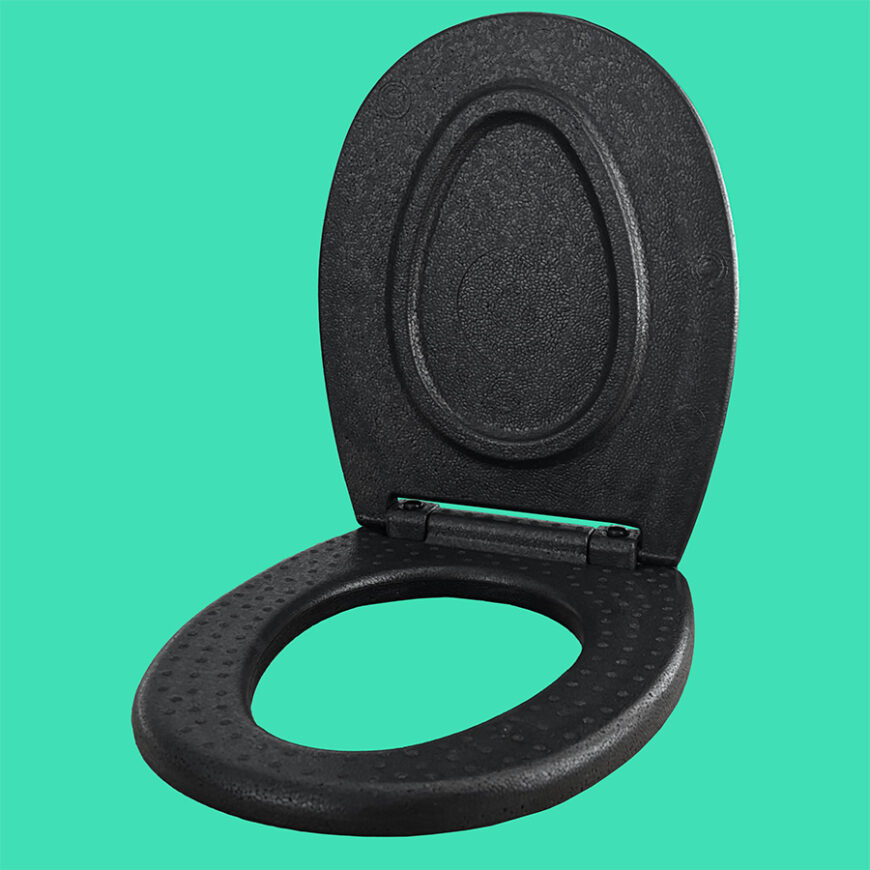
Seems well made, I havent christened it yet but am excited to see if it feels warm in ther cold weather.
 Verified owner
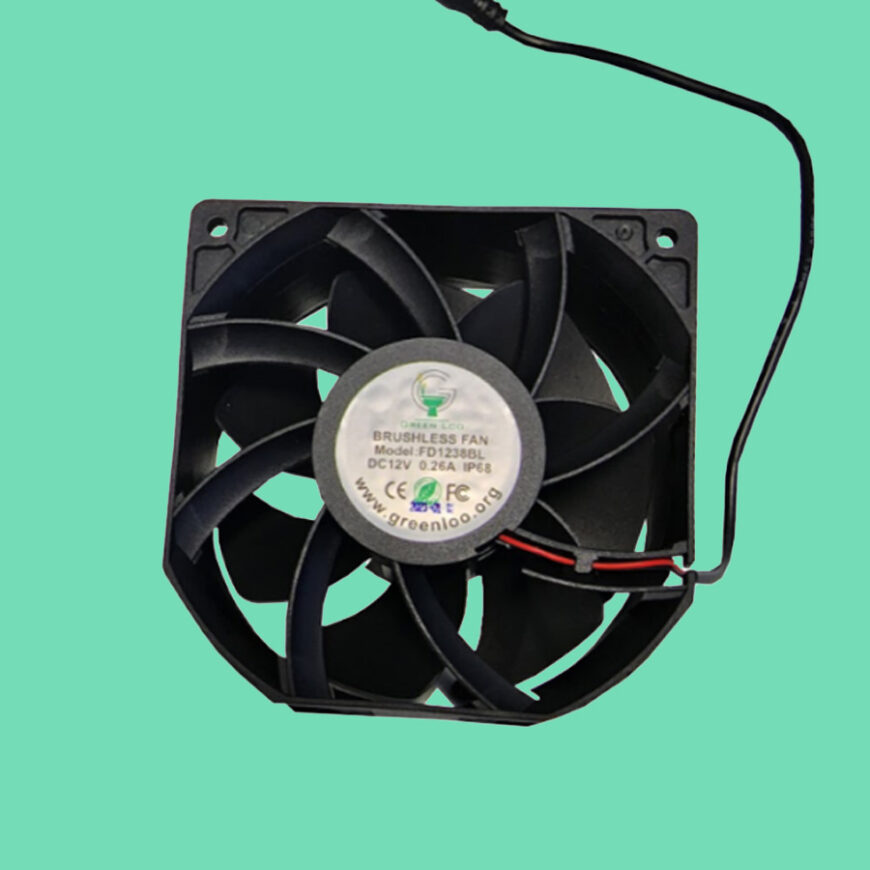
I purchased the replacement fan old 1 still working
 Verified owner
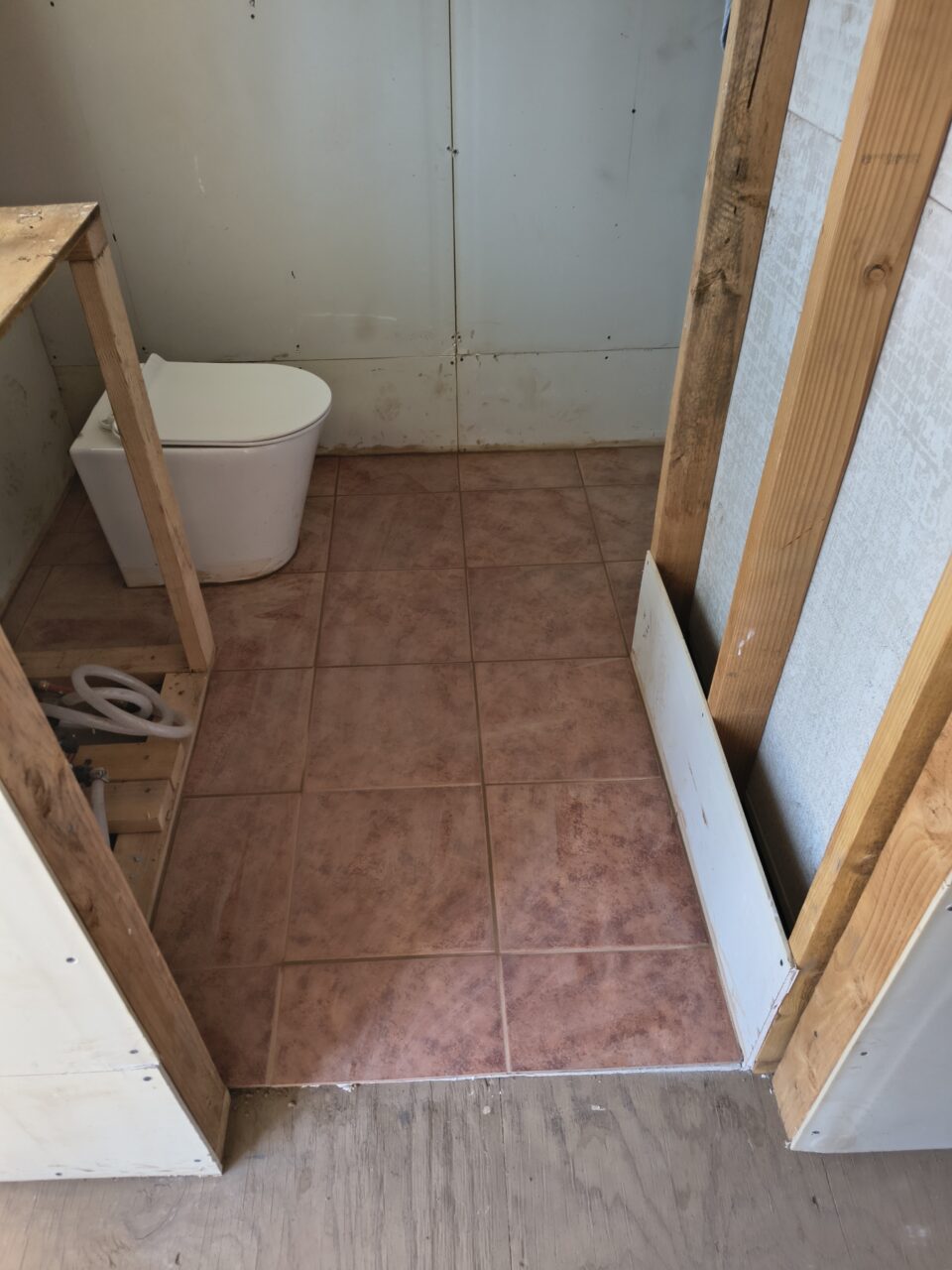
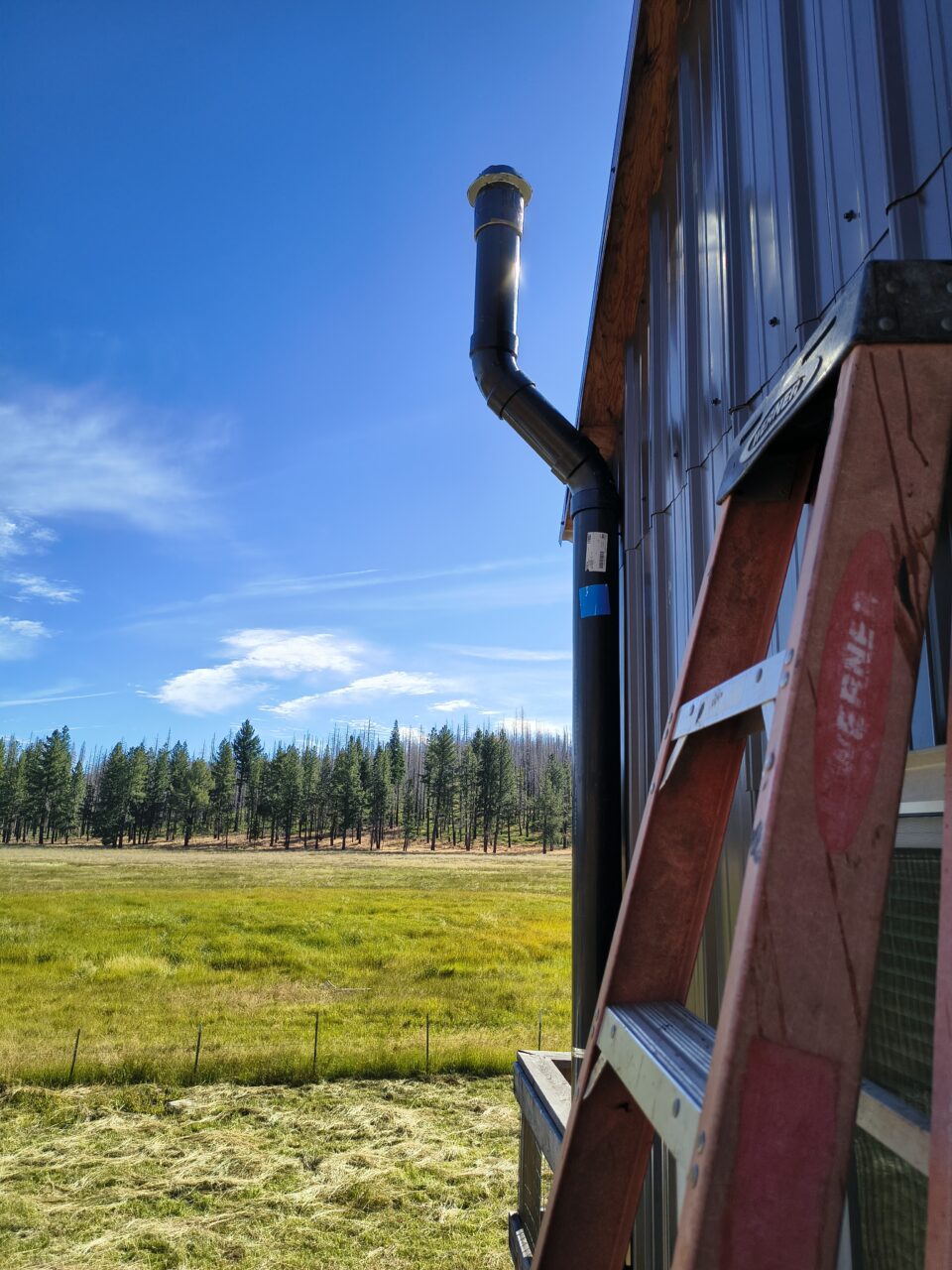
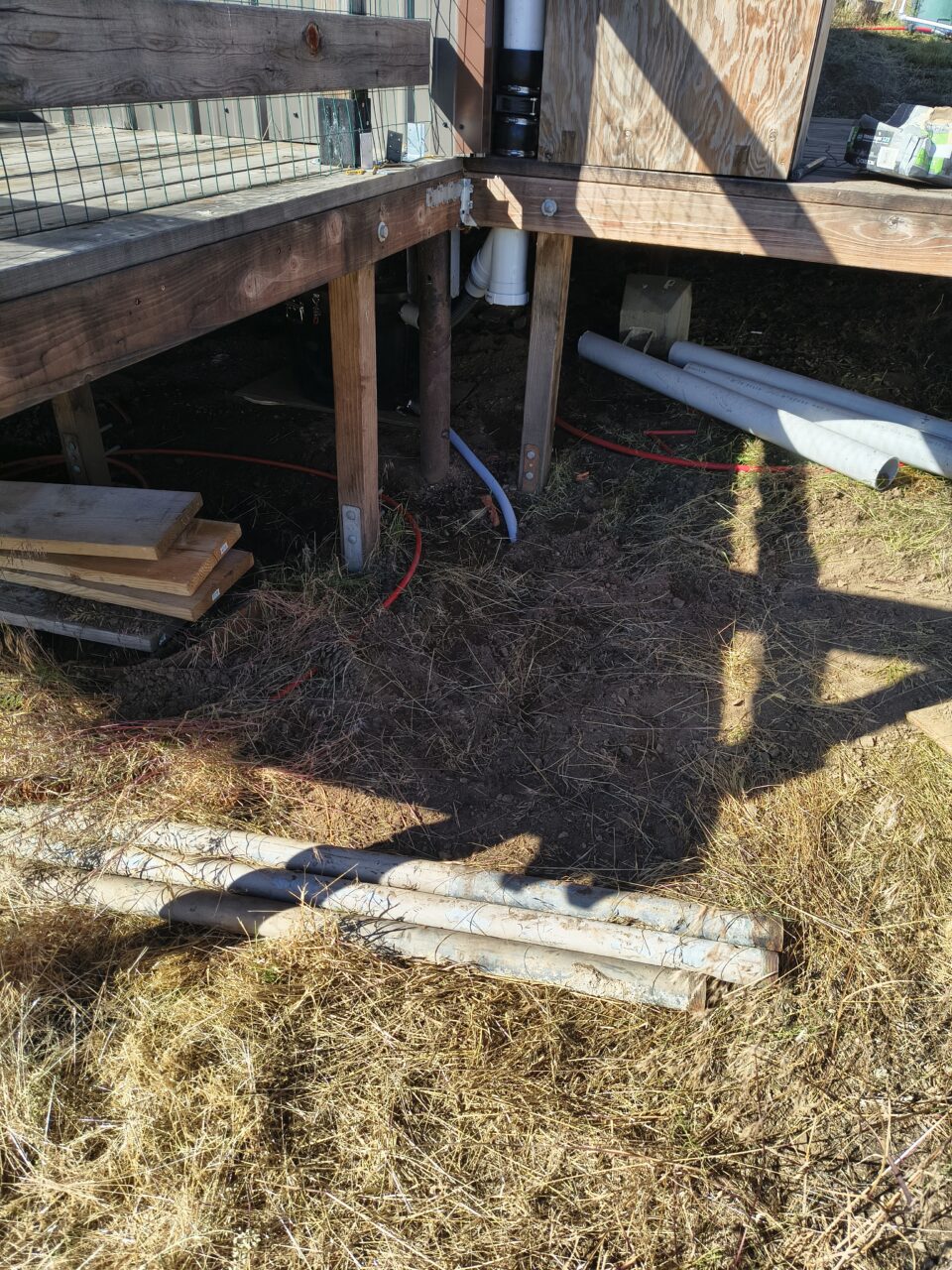
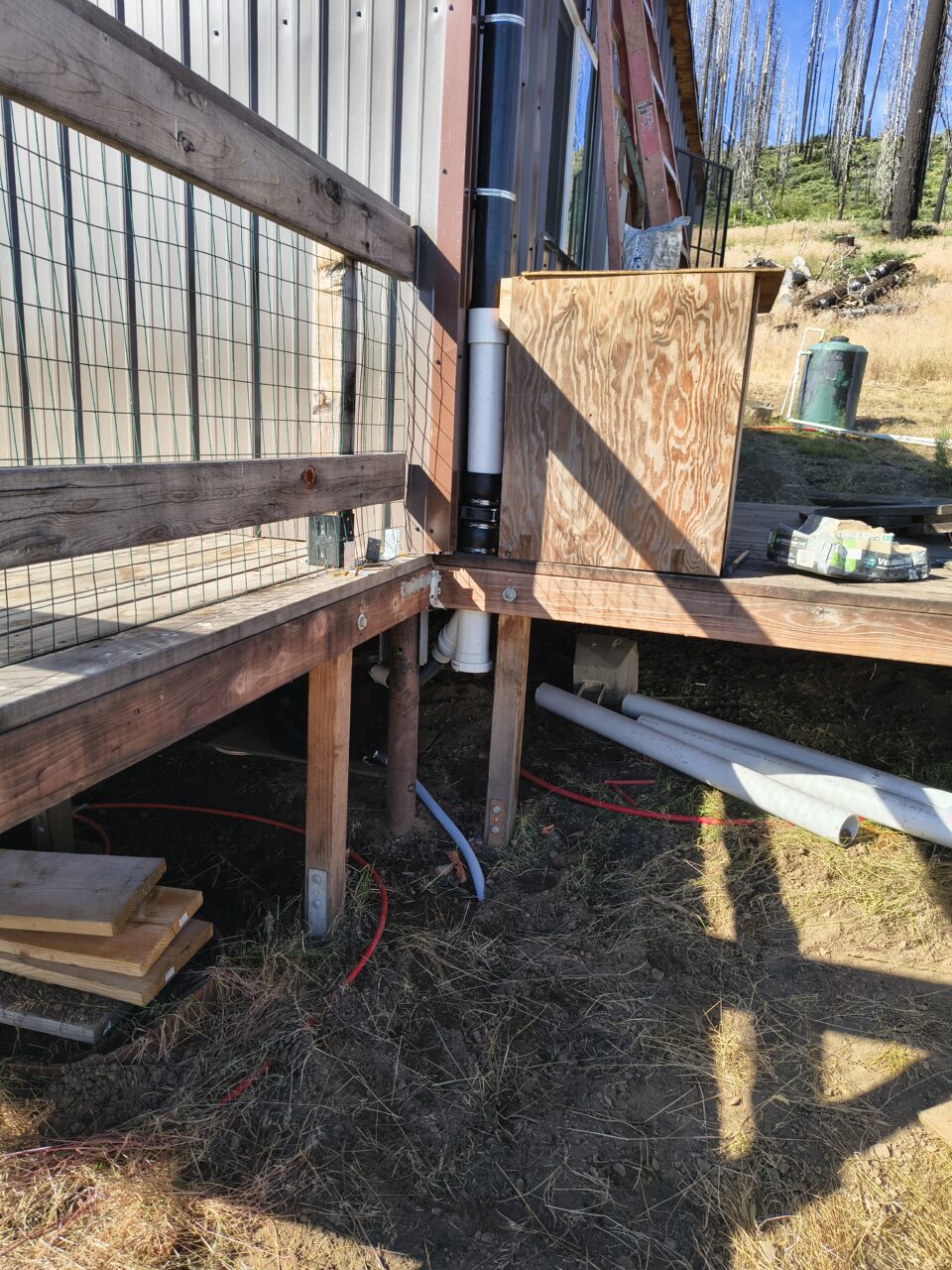
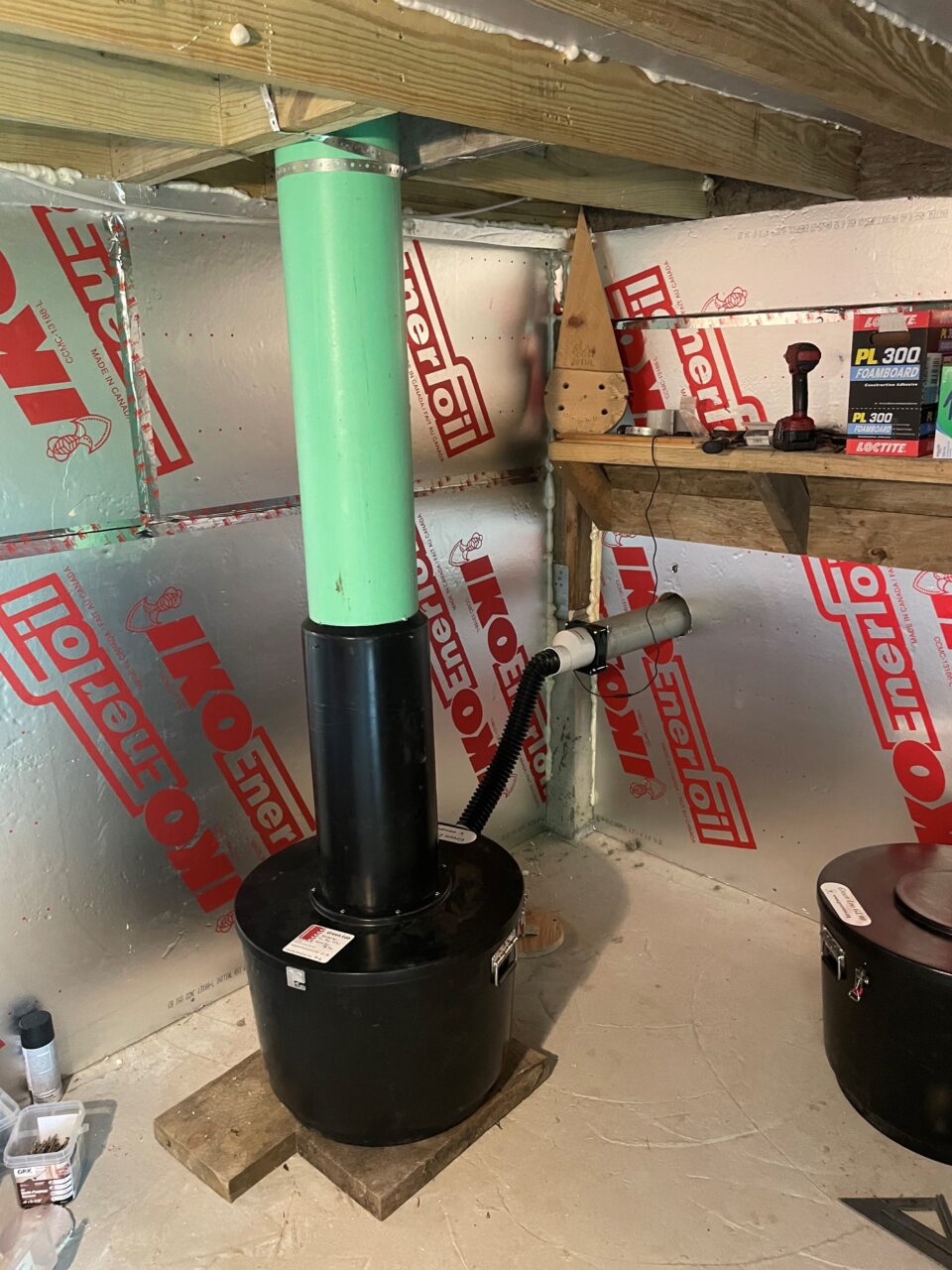
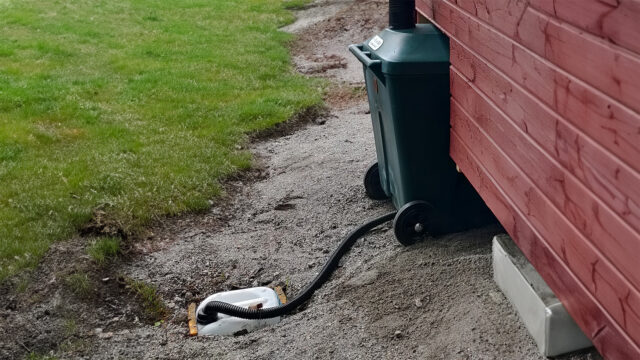
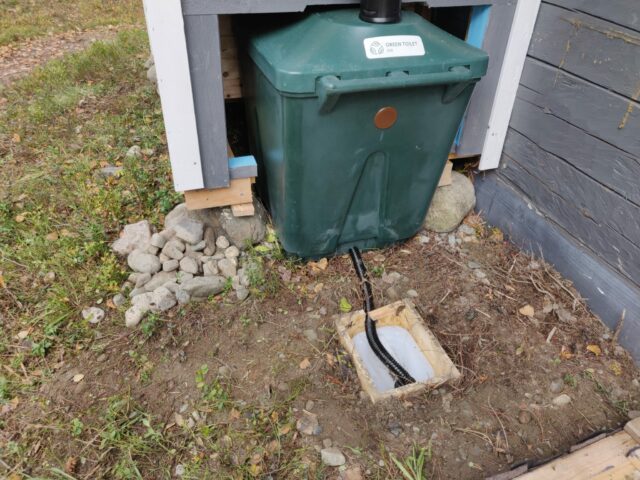
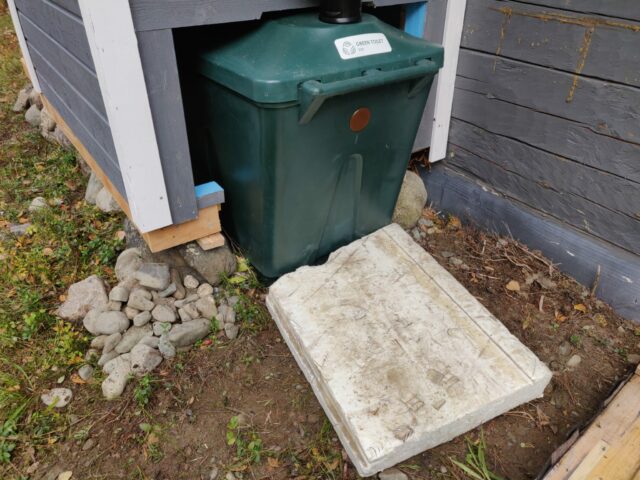
I was very pleased with the composting toilet system. It worked perfectly this whole summer. It was used for the cabin on our ranch. My son and I built the cabin so installing this was quite simple. The one concern I have would be for people who are not as adept as we are. It was with the instructions. There should be two different instructions sets for the different hole sizes of the toilet through the floor hole. The other suggestion would be to provide the cap to be in inches not mm. The 4 in pipe did not directly fit. I was 2 hours away from a store to get a rubber sleeve and cut slits in the 4 in pipe to fit the cap. It worked perfectly. I ordered the whirlybird in case I needed it but the fan worked just fine. All in all, I couldn't have been more pleased. Here are photos of the installation. The pod is under the cabin but you see where it comes into the piping.



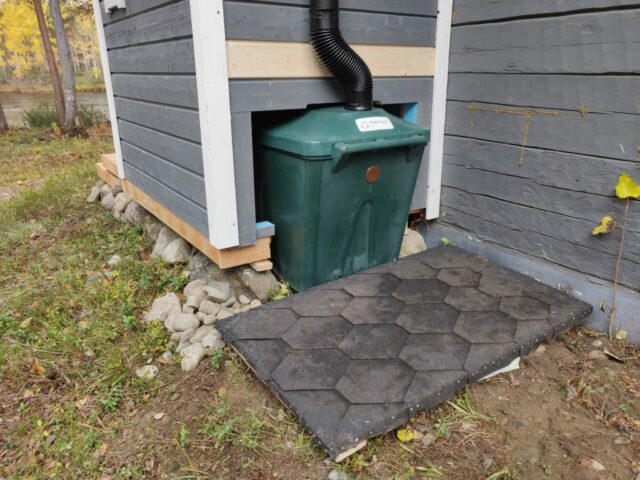

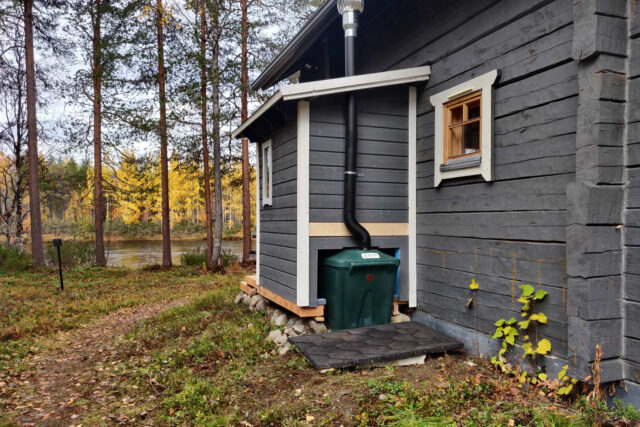
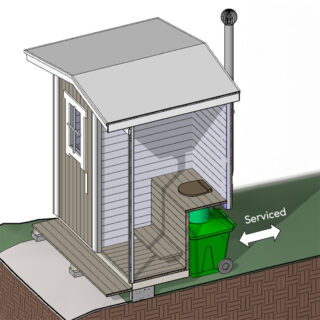

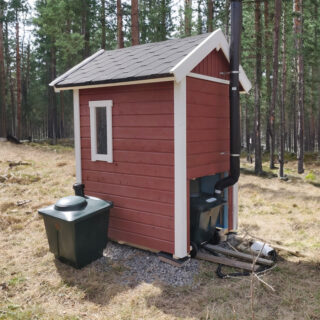
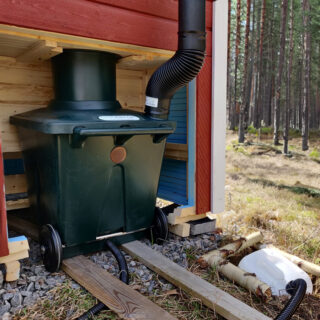
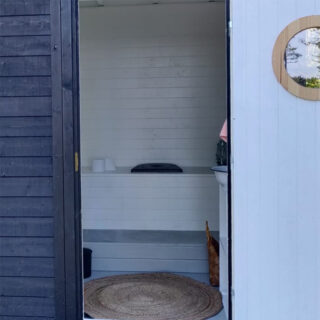
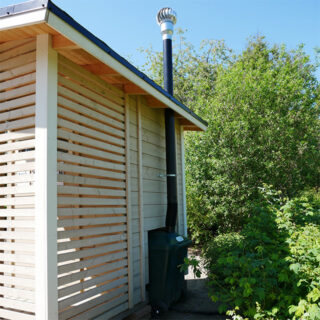
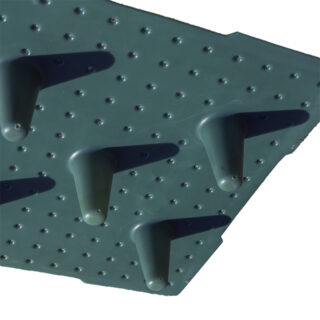
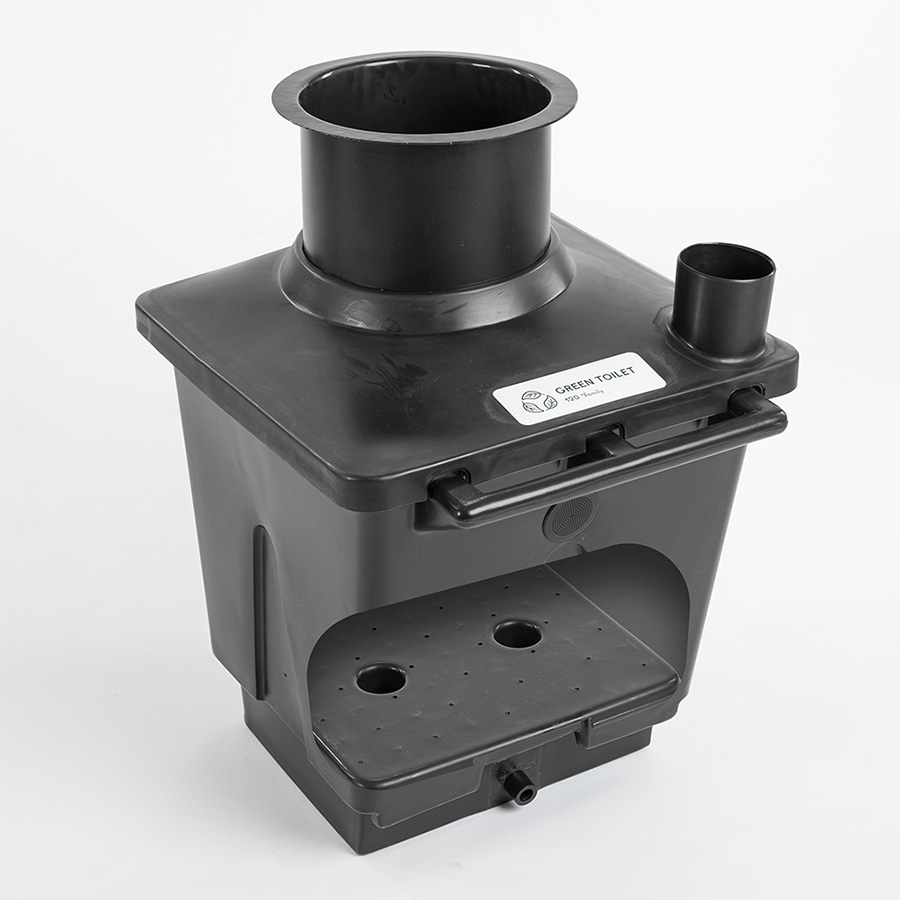
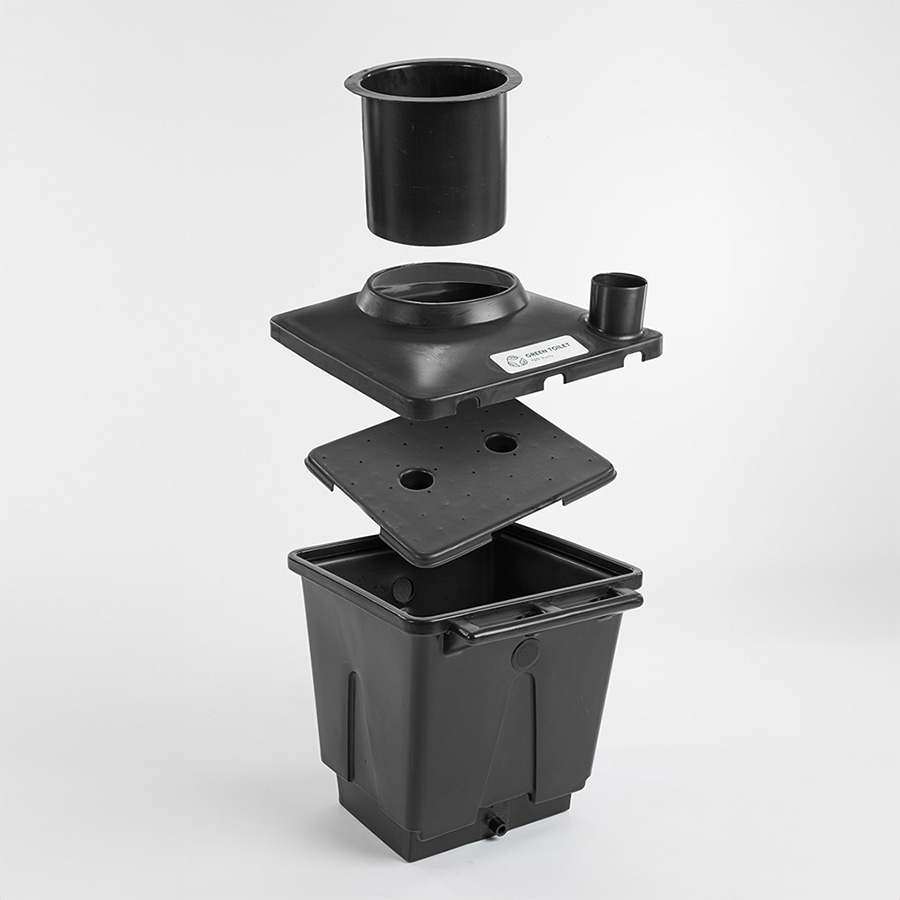
This is not our first composting toilet, but the first we’ve had with the below-deck composting compartment (ie. large scale). Although we imported directly from Australia some time ago, we’ve only just installed and started using the product for a few months. We’re very happy with the product’s simplicity and elegant (and more importantly easy-to-clean) porcelain pedestal. The only constructive criticism we have at this time was the lack of installation instructions for the system as a whole. While there was plenty of documentation on the composting bins themselves, instructions on how to fix the assembly to the building or even attaching the toilet seat lid (which seems to be backwards from North Americal standards) was lacking in both the physical manual that came with delivery and the electronic manual that was sent to us ahead of time while we awaited shipment. That said, when we did reach out for support were were provided with exactly the information we needed, including diagram, in less than an hour – FANTASTIC customer service!
Grateful to hear shipment is now available from North America (it was VERY expensive to import, although more cost effective than septic or holding tank which also requires costly maintenance). In 8-12 months, once we’ve been through an entire cycle of bins, if all goes well we plan on purchasing this item again for another off-grid project.