
 Composting
 Off-Grid
 Indoors
 Split-systems
 Self-contained
 Tiny House
 ADU
ADU Year-around
 Luxurious
 Cabins
 RVs
RVs Large capacity
 Cold climate
 Glamping
 Outhouses
 Batch toilets
 Public use
 Continuous
 Accessories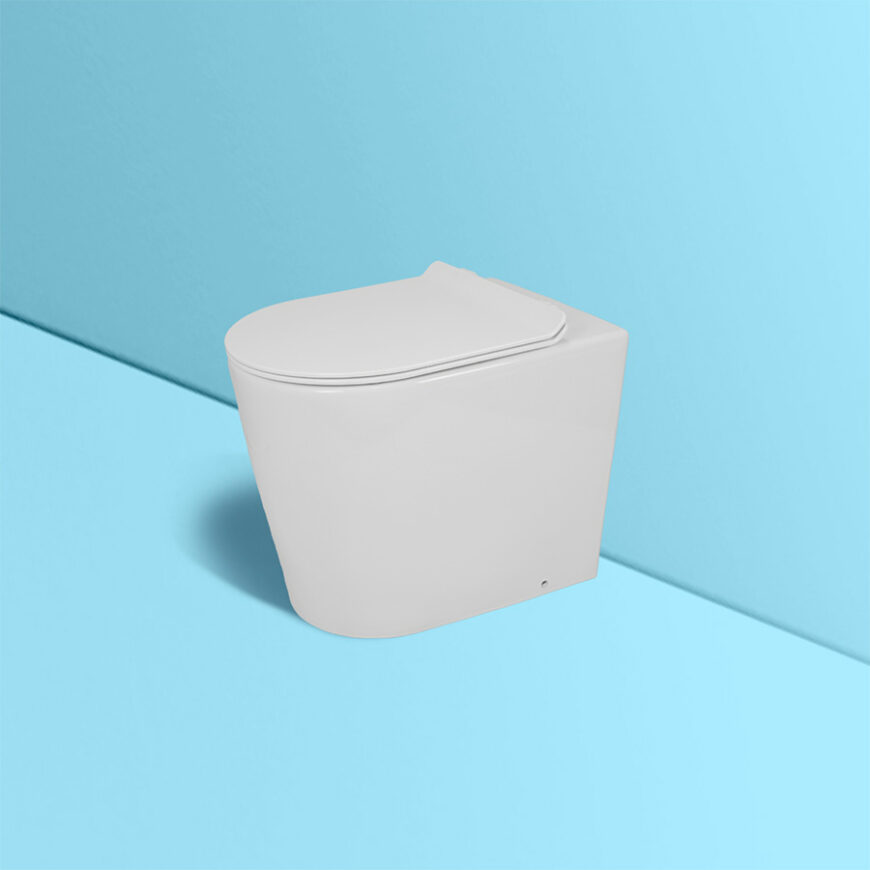
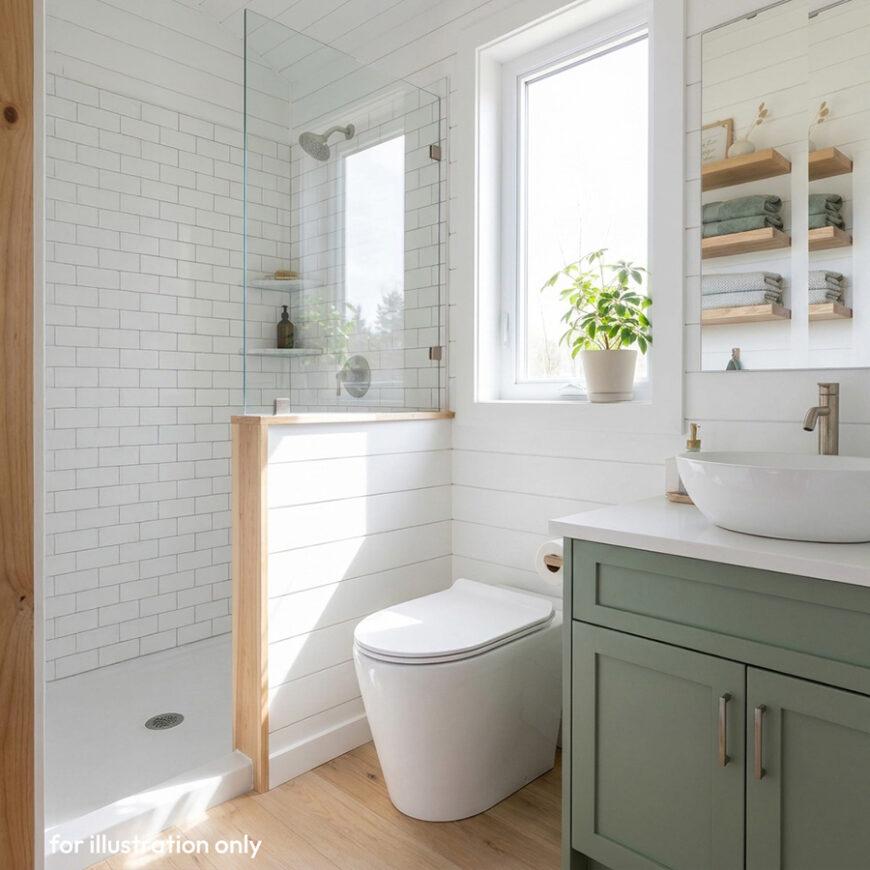

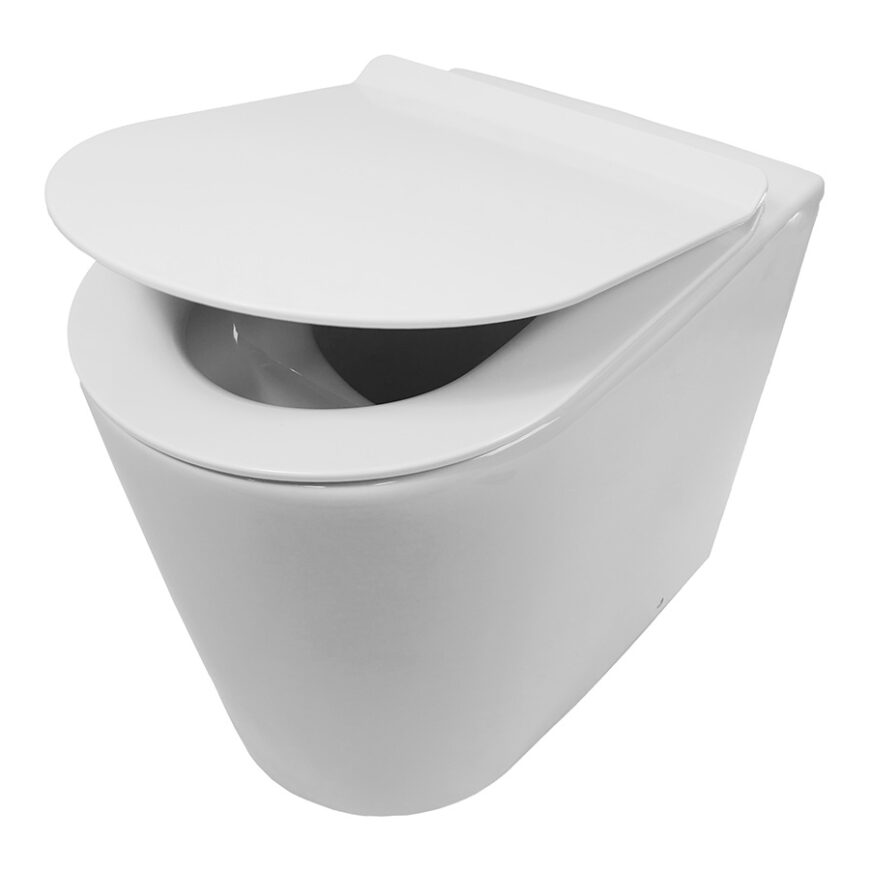
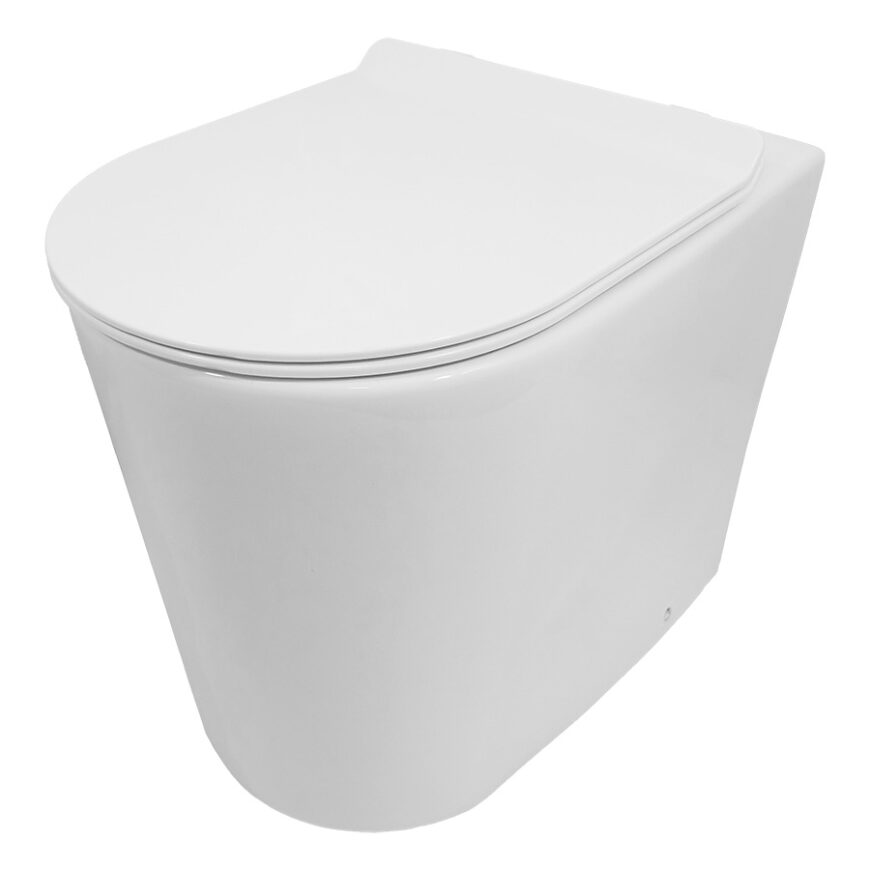


Urine-Diverting Porcelain Toilet Pedestal
$529.00
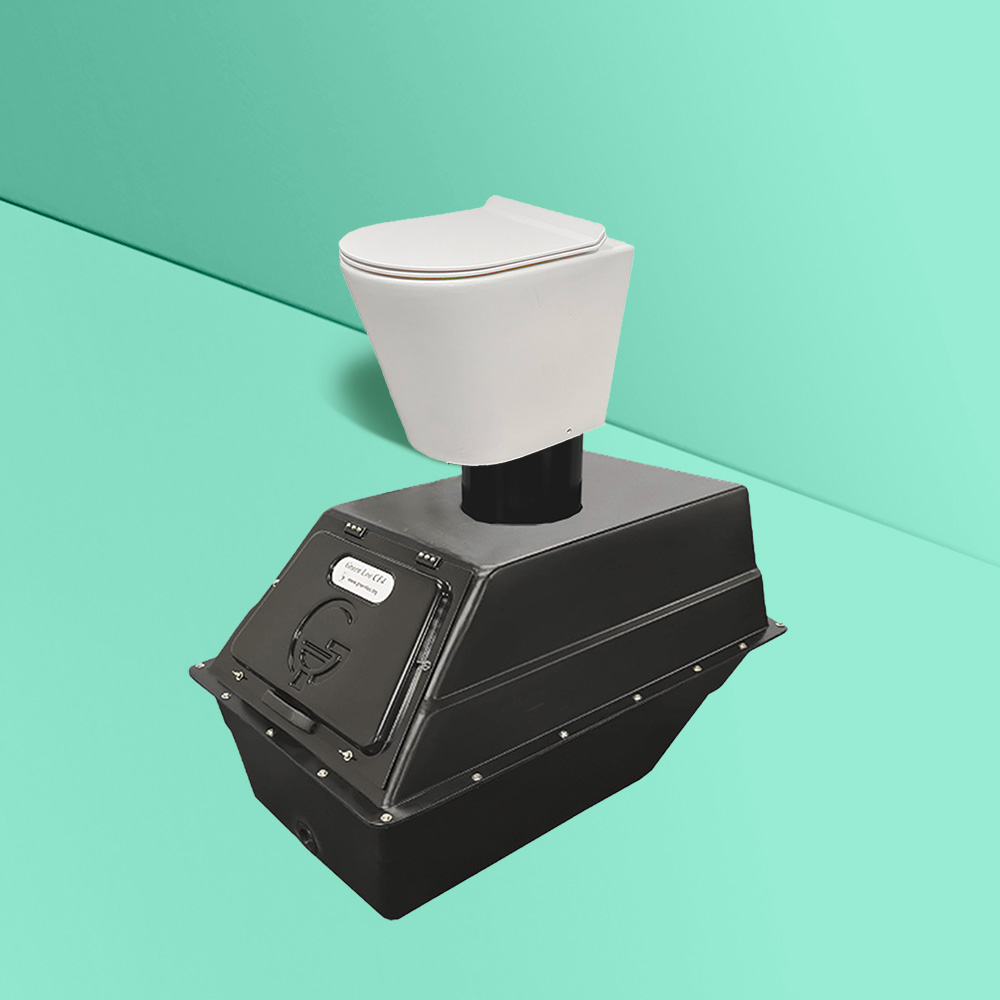
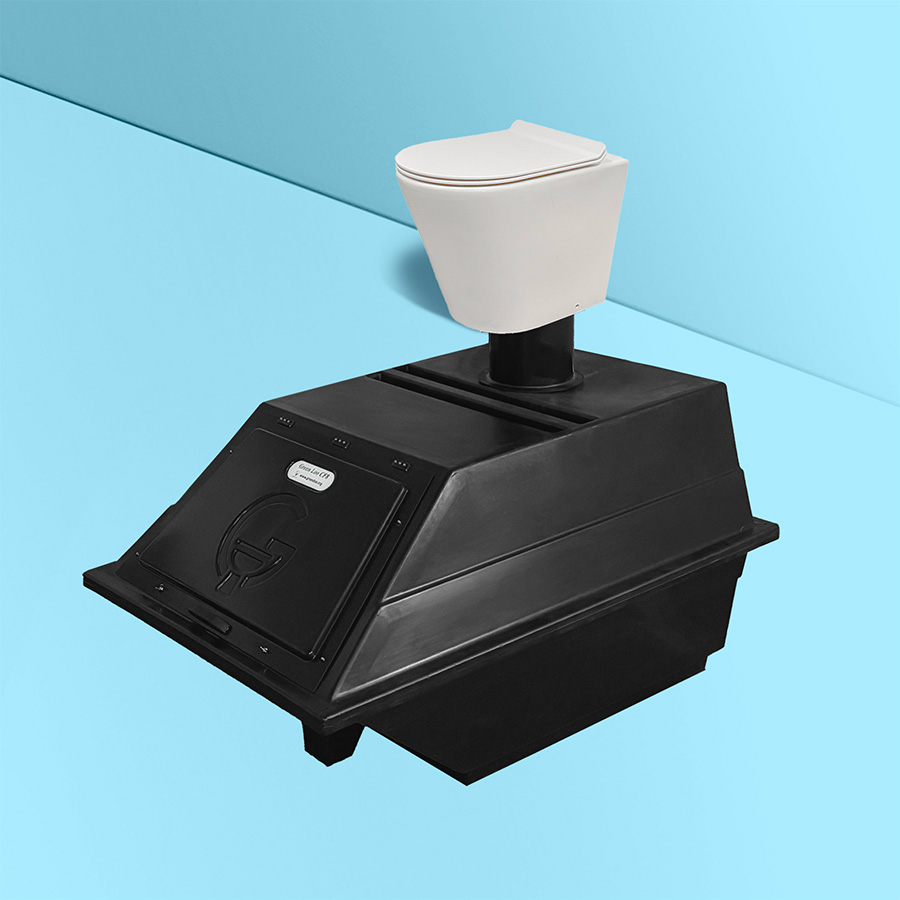
The porcelain-made urine-diverting toilet pedestal is designed to bring modern elegance and functionality to your waterless toilet system. Key features include:
- Odorless Operation: The integrated urine diversion in the seat ensures that urine and feces never mix, keeping your toilet odor-free.
- Modern Design: Its sleek ceramic design looks like a traditional toilet, making it ideal for tiny homes, off-grid cabins etc.
- Soft-Close Seat: Equipped with a soft-close seat for added elegance.
- Versatile Compatibility: Pairs with any of our split-system composting toilets at Waterless Toilet Shop.

Shipping from Nevada

Urine Diverting Design
In stock: over 15 pcs
Urine-Diverting Porcelain Toilet Pedestal
This porcelain toilet pedestal is urine-diverting. It is intended to be used either with one our split-system composting toilets or your own do-it-yourself waterless toilet.
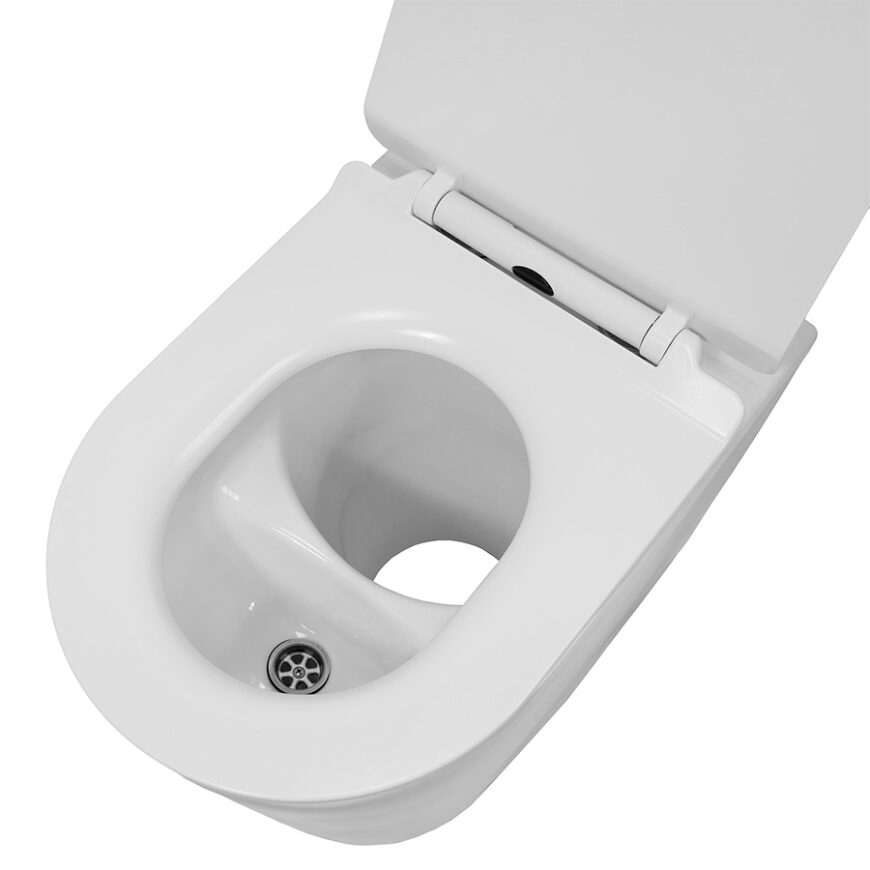
The porcelain pedestal has front bowl for urine. All solids (poop, toilet paper, potentially used bulking agents) fall through the back into to your composting toilet. The porcelain toilet is designed such that it fits natural human anatomy so that all waste directs into right place: urine into front, solids at the back. The toilet has to be used seated. Male users who prefer to urinate standing may consider purchasing our waterless urinal.
The urine-diverting porcelain toilet features a urine hose that is connected from below into the toilet front bowl. The urine hose comes out below of the porcelain toilet.
The solids drop is connected into your composting toilet with a vertically straight waste chute. All our split-system composting toilets include at least 2 feet long waste chute that I possible to cut or extend as per needed to fit your structure.
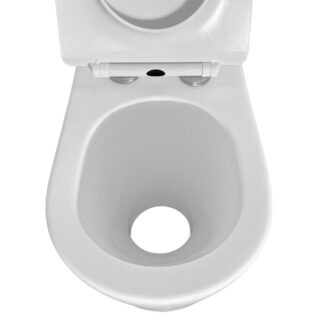
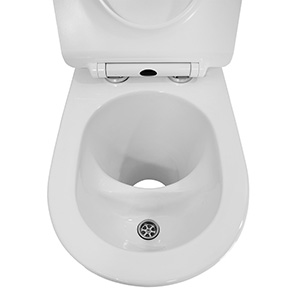
Liquid Separation: A Key Feature of Odor-Free Waterless Toilets
Urine separation is one of the most important features of an odor-free waterless toilet. There are two primary methods for separating urine from solids:
- Directly in the toilet seat, where urine is never mixed with solids.
- Within the toilet’s composting container, after urine and solids have been mixed.
The ideal method depends on several factors. Here are some aspects to consider:
Urine Volume and Maintenance
Most human waste is liquid urine, with an average person producing between 800 and 2,000 milliliters daily, typically in 6 to 7 instances. This means that if the urine is separated directly in the toilet seat and collected to a small container or a bottle, that container/bottle requires frequent emptying, which can become inconvenient in long run. The only exception is if the separated pure urine can be lead into a grey water system (depends on your grey water purifier, local regulations and surrounding environment).
If urine is mixed with solids and separated later in the composting container, the amount of liquid waste to manage is significantly reduced. This is because the compost absorbs much of the liquid, which eventually evaporates through the toilet’s ventilation system. The compost’s absorption and evaporation capacity depend on the climate and the amount of dry organic bulking agents used.
Advantages of Direct Urine Separation
Urine separation directly in the toilet seat reduces odor issues. With less moisture in the solid waste, the toilet is less likely to produce any odors. Additionally, these toilets typically require fewer dry organic bulking agents, which lowers operating costs and conserves space in the solids container. This means the container fills up less often, reducing the frequency of servicing.
Challenges of Urine Separation in the Seat
Despite its advantages, direct urine separation can take some getting used to, making these toilets less ideal for public or commercial settings. Young children may also find them challenging to use, making them less suitable for families with small children or for guest use. For these scenarios, a composting toilet that separates urine within the composting container is often a better choice.
Our Recommendation
Most composting toilet owners find systems that separate urine within the composting container to be highly satisfactory. For this reason, we include a non-separating porcelain pedestal as the default option for all our split-system composting toilets. This approach balances convenience, ease of use, and performance for a wide range of users.
The Urine-Diverting Porcelain Toilet provides a great alternative for everyone with a ready solution to treat the pure urine on-site for example through a grey water system. It may be also a safe choice for completely off-grid installations, in which case there is no power at all to boost the ventilation of a composting toilet. The Urine-Diverting Porcelain Toilet is also a great product for DIY composting toilets.
Download technical dimensions (PDF)
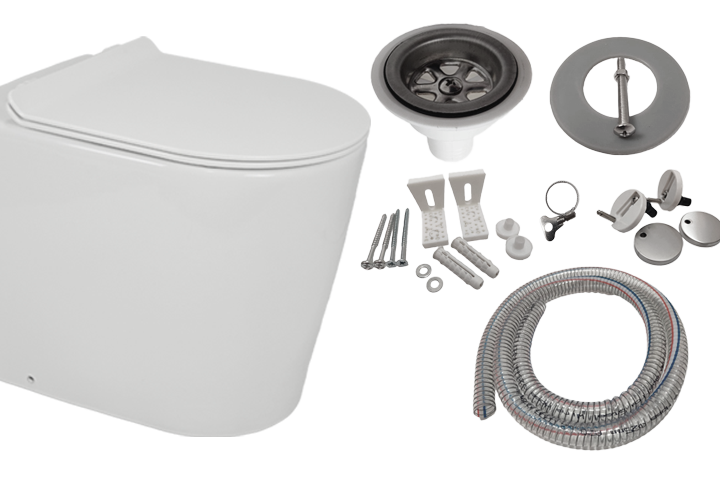
The delivery package includes:
- Urine-diverting Porcelain Toilet Pedestal
- Soft-close toilet seat
- Urine hose (1″ diameter, 78″ length)
- Fixtures
Urine-Diverting Porcelain Toilet Pedestal
This porcelain toilet pedestal is urine-diverting. It is intended to be used either with one our split-system composting toilets or your own do-it-yourself waterless toilet.
The porcelain pedestal has front bowl for urine. All solids (poop, toilet paper, potentially used bulking agents) fall through the back into to your composting toilet. The porcelain toilet is designed such that it fits natural human anatomy so that all waste directs into right place: urine into front, solids at the back. The toilet has to be used seated. Male users who prefer to urinate standing may consider purchasing our waterless urinal.
The urine-diverting porcelain toilet features a urine hose that is connected from below into the toilet front bowl. The urine hose comes out below of the porcelain toilet.
The solids drop is connected into your composting toilet with a vertically straight waste chute. All our split-system composting toilets include at least 2 feet long waste chute that I possible to cut or extend as per needed to fit your structure.
Liquid Separation: A Key Feature of Odor-Free Waterless Toilets
Urine separation is one of the most important features of an odor-free waterless toilet. There are two primary methods for separating urine from solids:
- Directly in the toilet seat, where urine is never mixed with solids.
- Within the toilet’s composting container, after urine and solids have been mixed.
The ideal method depends on several factors. Here are some aspects to consider:
Urine Volume and Maintenance
Most human waste is liquid urine, with an average person producing between 800 and 2,000 milliliters daily, typically in 6 to 7 instances. This means that if the urine is separated directly in the toilet seat and collected to a small container or a bottle, that container/bottle requires frequent emptying, which can become inconvenient in long run. The only exception is if the separated pure urine can be lead into a grey water system (depends on your grey water purifier, local regulations and surrounding environment).
If urine is mixed with solids and separated later in the composting container, the amount of liquid waste to manage is significantly reduced. This is because the compost absorbs much of the liquid, which eventually evaporates through the toilet’s ventilation system. The compost’s absorption and evaporation capacity depend on the climate and the amount of dry organic bulking agents used.
Advantages of Direct Urine Separation
Urine separation directly in the toilet seat reduces odor issues. With less moisture in the solid waste, the toilet is less likely to produce any odors. Additionally, these toilets typically require fewer dry organic bulking agents, which lowers operating costs and conserves space in the solids container. This means the container fills up less often, reducing the frequency of servicing.
Challenges of Urine Separation in the Seat
Despite its advantages, direct urine separation can take some getting used to, making these toilets less ideal for public or commercial settings. Young children may also find them challenging to use, making them less suitable for families with small children or for guest use. For these scenarios, a composting toilet that separates urine within the composting container is often a better choice.
Our Recommendation
Most composting toilet owners find systems that separate urine within the composting container to be highly satisfactory. For this reason, we include a non-separating porcelain pedestal as the default option for all our split-system composting toilets. This approach balances convenience, ease of use, and performance for a wide range of users.
The Urine-Diverting Porcelain Toilet provides a great alternative for everyone with a ready solution to treat the pure urine on-site for example through a grey water system. It may be also a safe choice for completely off-grid installations, in which case there is no power at all to boost the ventilation of a composting toilet. The Urine-Diverting Porcelain Toilet is also a great product for DIY composting toilets.
Download technical dimensions (PDF)
The delivery package includes:
- Urine-diverting Porcelain Toilet Pedestal
- Soft-close toilet seat
- Urine hose (1″ diameter, 78″ length)
- Fixtures
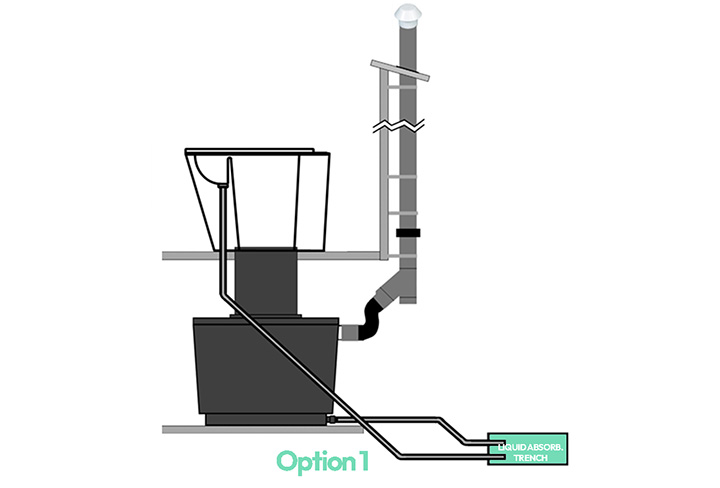
Installation option 1
There are two primary ways to install the urine-diverting toilet pedestal and treat the liquid waste. Option 1 is to lead both pure urine and compost liquid into the same absorption trench. This option is usually more convenient when it comes to servicing the composting toilet. However, not all states/counties in the U.S. allow direct discharge of urine/compost liquid into the environment. Contact us for the best solution into your case.
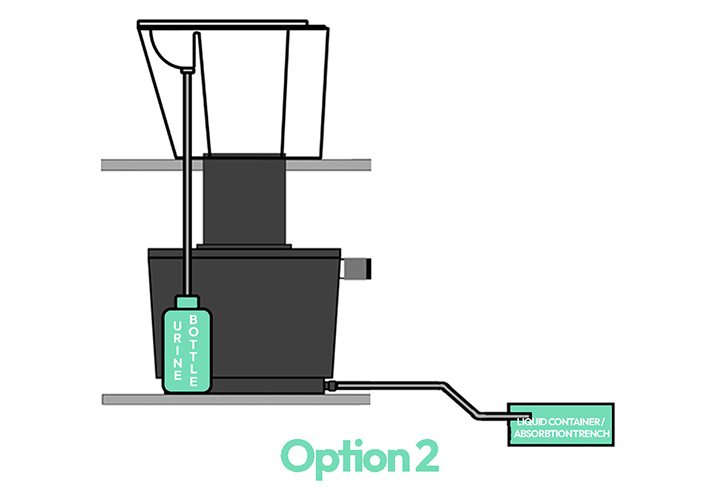
Installation option 2
The other option is to collect pure urine and compost liquid into separate containers/bottles. While this option may be the only one allowed by local regulations, it may require more frequent service of the toilet. Especially the urine bottle/container will likely fill up in matter of days if used by several people.
Customer Reviews
 Urine-Diverting Porcelain Toilet Pedestal
| 5 star | 100% | |
| 4 star | 0% | |
| 3 star | 0% | |
| 2 star | 0% | |
| 1 star | 0% |
Customer Images


Let our customers speak for us

I have been servicing and installing composting toilets for 17 years at a seasonal cottage community. Recently I installed two of the UD pedestals for a client, I was very impressed with the quality, as was my clients. The toilets are superior to any brand I've encountered, sunmar, envirolet, nature head, all use thin plastic components. These sturdy porcelain like youd fine in a real bathroom and clean better and dont stain like the plastic ones.
Love the ability to move where the waste pipe and exhaust pipe are installed on the unit, it allows for many options when installing so you can optimize the functionality of the unit. Other units you have to compromise constantly because of the hard mounted penetrations.


 Verified owner
We are very pleased with the experience of the GL90. Everything was of good quality and mostly easy to install. The porcelain throne is very high quality and looks very nice. There is absolutely no odor. We had to turn off the power to the fan a couple of times, and there was only a faint smell of fresh pine shavings and hemp. We also inadvertently discovered that the hemp shavings are far superior to pine in the absorption factor. We see now that is explained on the website. We are temporarily using a 5 gallon plastic bottle for liquid containment until our leachate system is complete. At first we were using the supplied hemp and had little to no liquid in the bottle. When we ran out of hemp, we used some local pine shavings and noticed the bottle filled up much more quickly. I'm thinking that using hemp will allow the moisture to remain in the pile longer and allow the fan to evaporate more liquids. Hence, making for less emptying of the liquids container until leachate system and filter is installed. It did take a few return trips to town to get the 4 in vent plumbing that I could make work with supplied fittings. I would suggest giving specific instructions and materials for the type of pipe and fittings that will actually work to save people the time and effort. Fernco fittings saved the day. It was more of a challenge than I anticipated with the various 4 in pipe available on the market. AI wasn't totally accurate either because of the metric to imperial conversion. I'll post pics in the near future for reference of what worked for me. The other small details of installing the porcelain toilet: the measurements for placing the toilet mounts seemed to be a bit off and I had to screw in at an angle to get it to work. I measured several times. Also, one of the screws that secure the mounts to the floor broke as well as i was driving it in. I found a more stout screw for that. With those small details the system still rates a 5 in our experience. Service and product are exactly what we had hoped for. Thank you Nicholas.
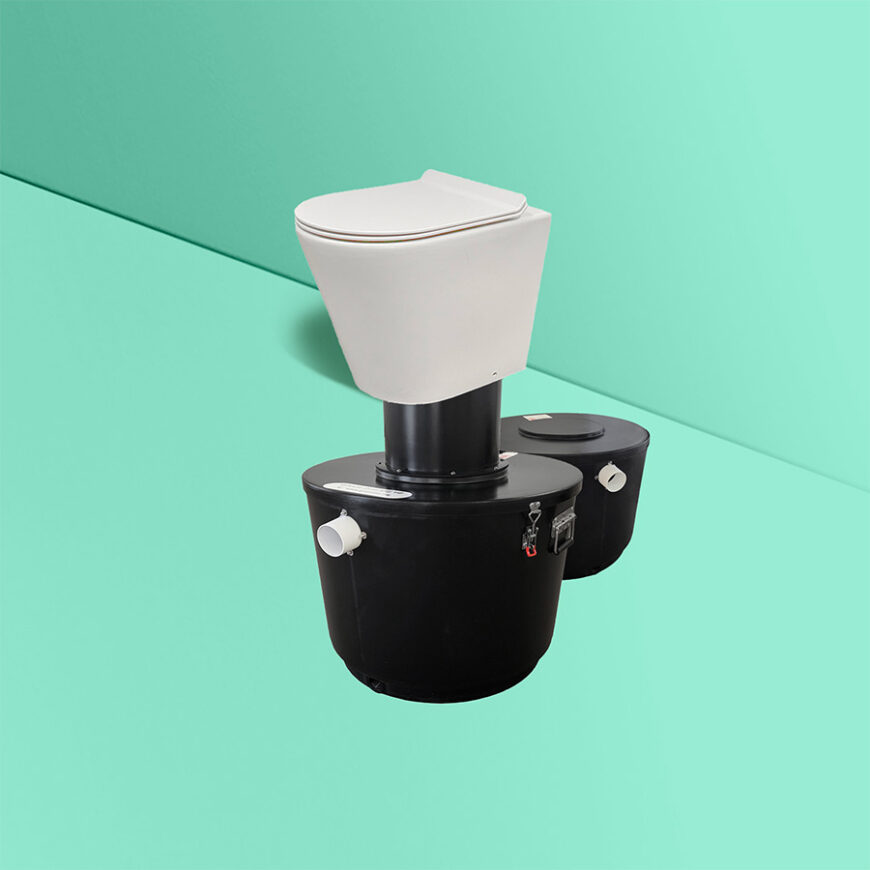


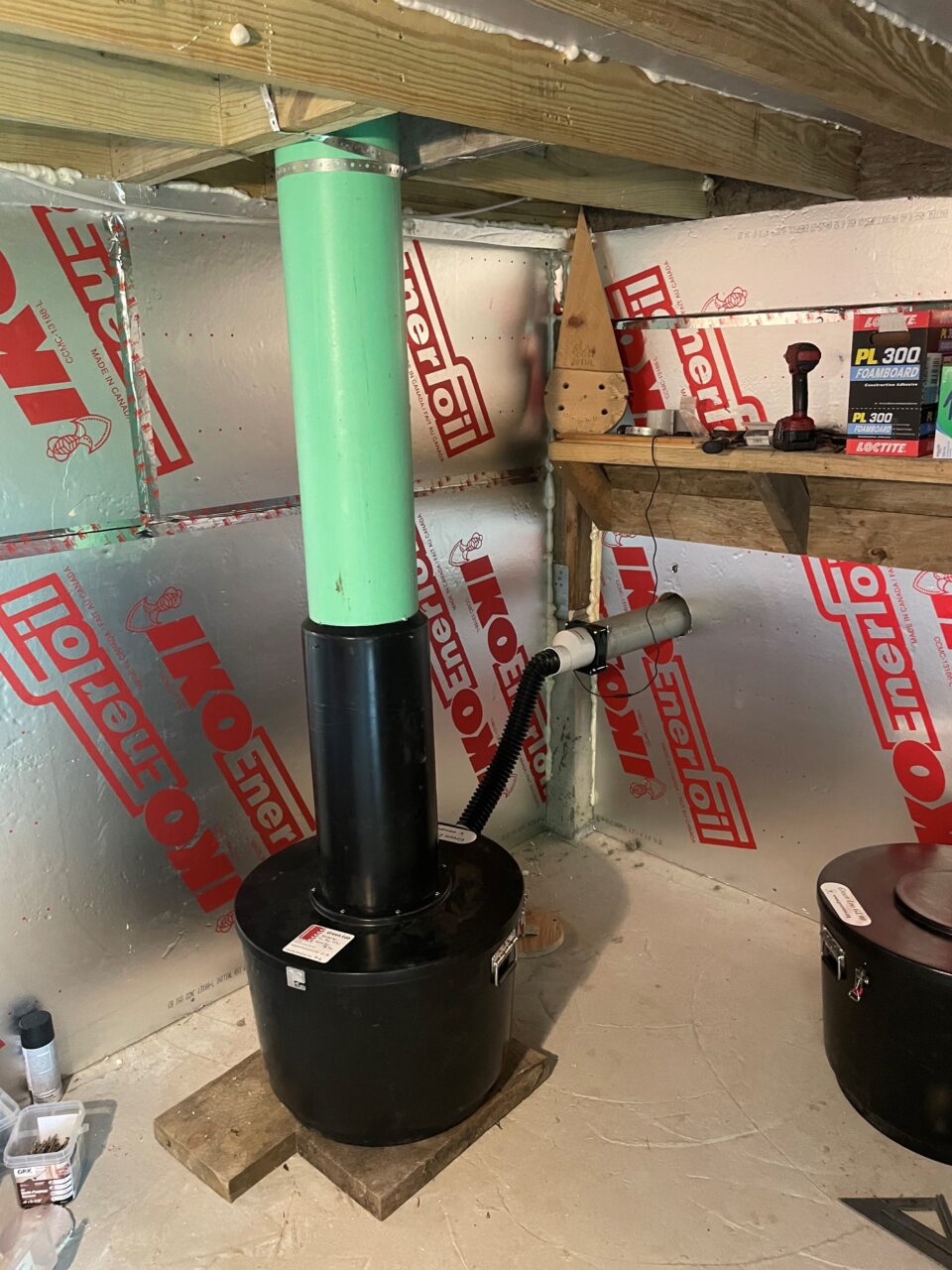
Our GL90 is up and running; we just swapped out the container for the first time. I really love how small the composting container is, and bought an extra container in case it requires removal more often than projected.
Our situation had a number of odd wrinkles:
❖ This is an elevated house; the living area including the bathroom is 8' off the ground. The area below the house is unenclosed, so we didn't have typical space constraints.
❖ We were replacing an original "Carousel" compost toilet from the early 1980s, so we had to line the GL90 up with the original chute, and find a way to connect it to the original vent pipe.
❖ One complication is that the old Carousel was destroyed by flooding from Hurricane Milton. It was raised less than a foot above ground, and the roaring floodwaters came up about 3 feet. So wanted the replacement composting container to be elevated as high as possible. My solution was to hang it from the ceiling below the house, to avoid any structure under the container that could get washed away if we get another flood like that (even if the container itself was above the flood level).
❖ Another complication, this one self-inflicted, was that I was also reinstalling the fire sprinkler system and the water heater, both of which were also destroyed by flooding, and needed to be elevated as well -- and for various reasons needed to be in almost the exact location where the toilet needed to go, and needed to be protected from wind-driven rain.
I did have a few technical problems with the GL90:
❖ I was aware that the hose and vent fittings on the GL90 were metric, but I hadn't realized that the nominal metric sizes used in Australia are different than nominal metric sizes for hose and pipe made everywhere else in the world! After numerous false starts and then deep research, I finally figured out ways to make everything work -- but that wrinkle alone took this project way beyond the DIY world. Good thing I love a challenge, and have technical and research skills...
❖ We had a serious fly problem shortly after we began using the GL90. I still am not sure exactly why, but I did notice that the lid doesn't fit tightly on the container. The three clamps just aren't enough to keep even marginally fly-proof. My solution has been decidedly low tech: a brick on the lid between each pair of lid clamps. It's also possible that the exhaust fan is too weak; I've purchased a replacement that should move twice as much air.
❖ I still haven't figured out how to keep the toilet seat on straight. It keeps moving off center, and I'm afraid to tighten the connecting screws any further; they don't seem that robust. The brackets hold the toilet to the floor don't seem that robust either, but the toilet has stayed in place, so I don't want to argue with success (and I'm managing to avoid permanently fastening the toilet to the beautiful terra-cotta tile floor in the bathroom).


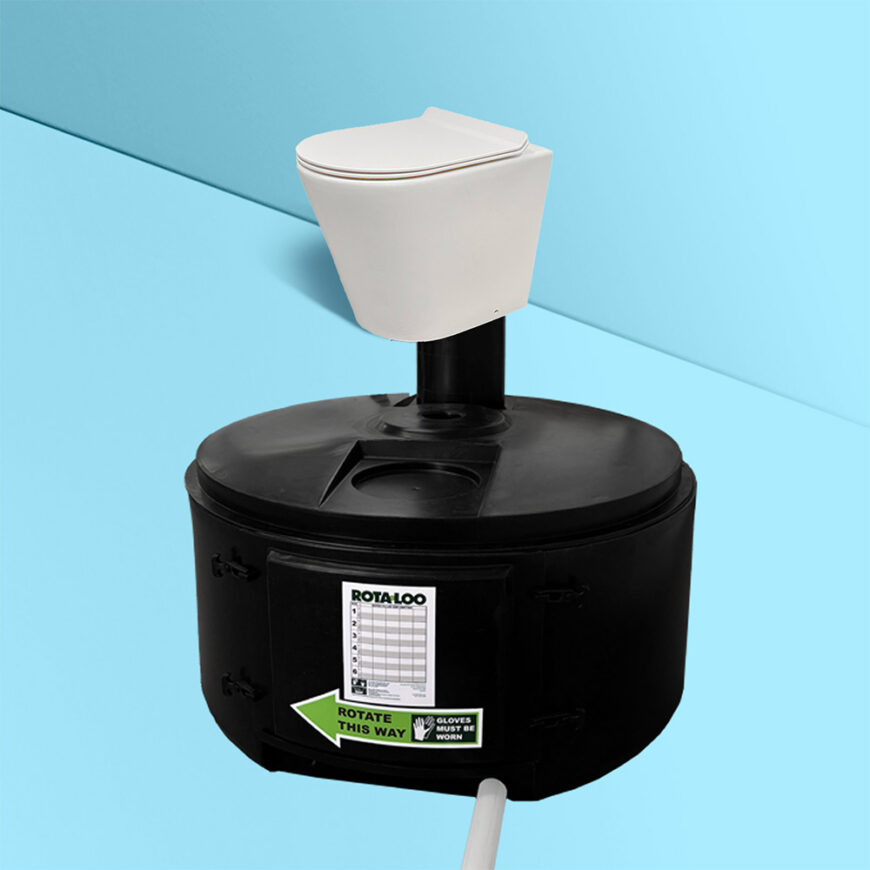


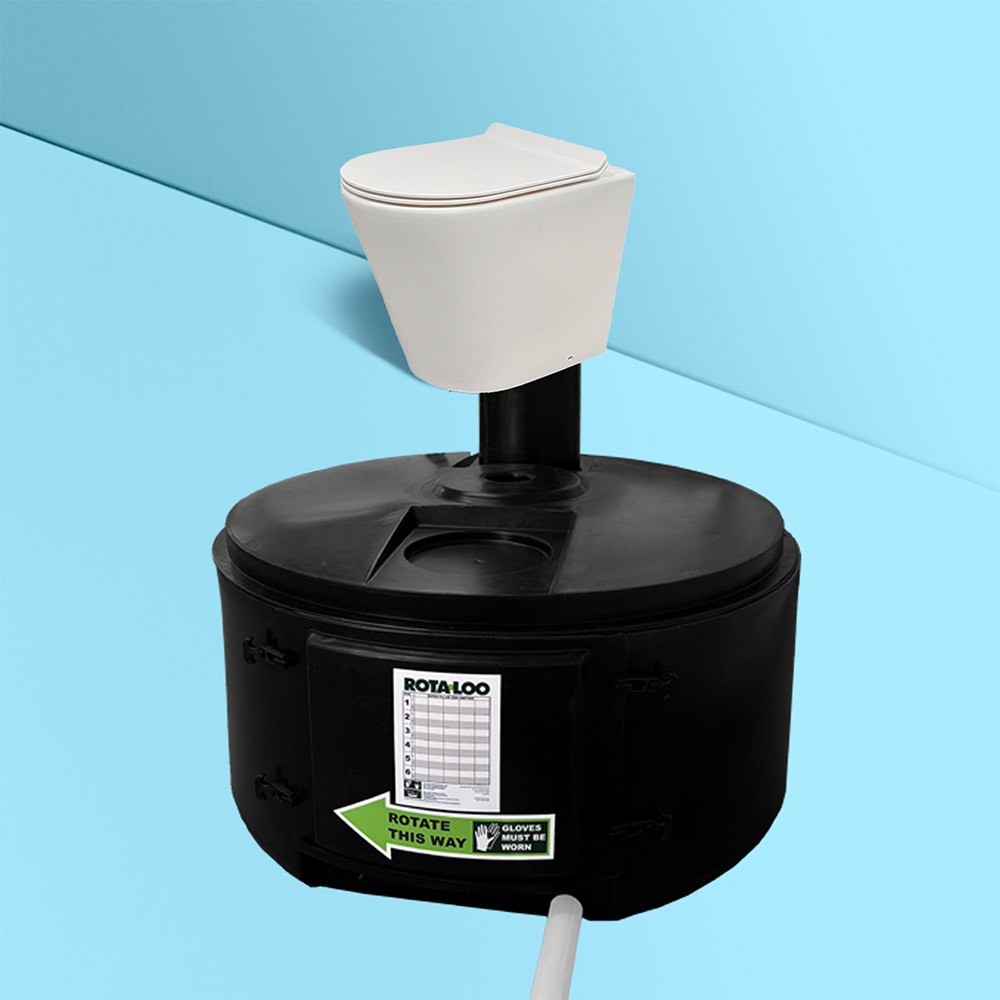
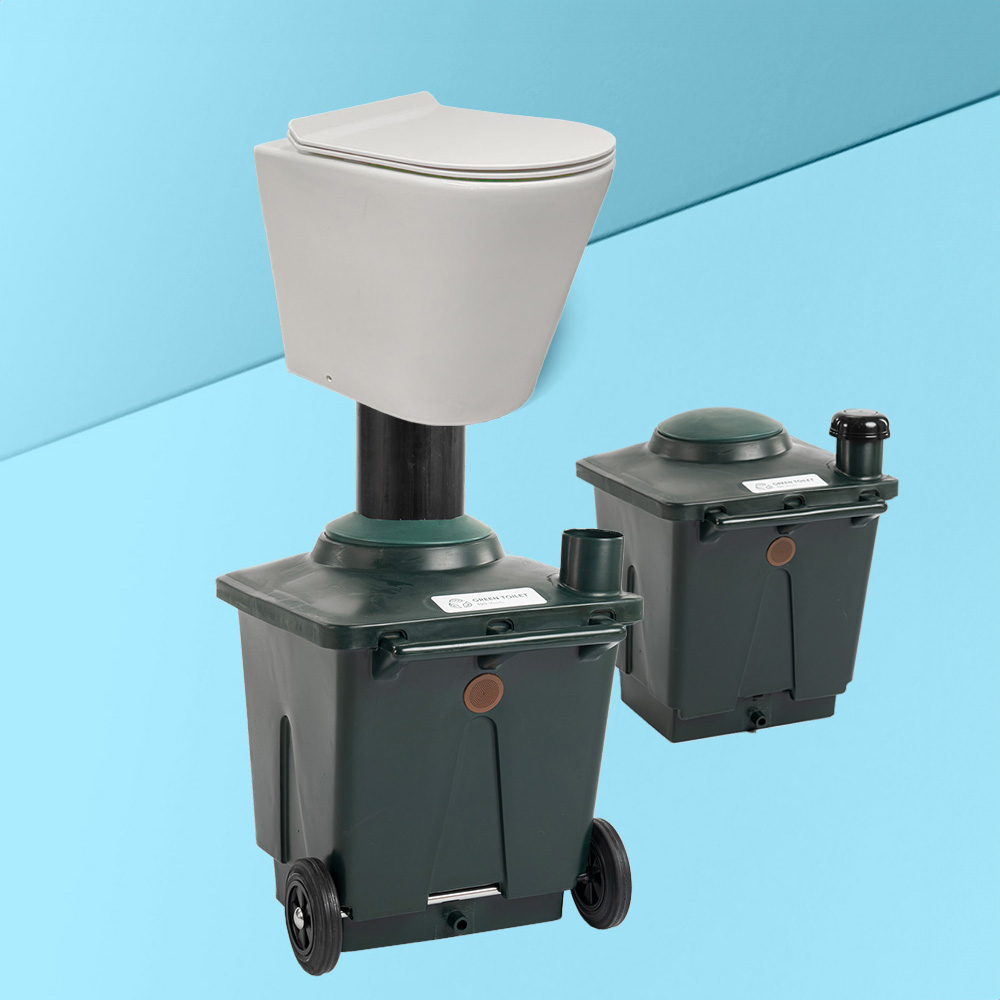
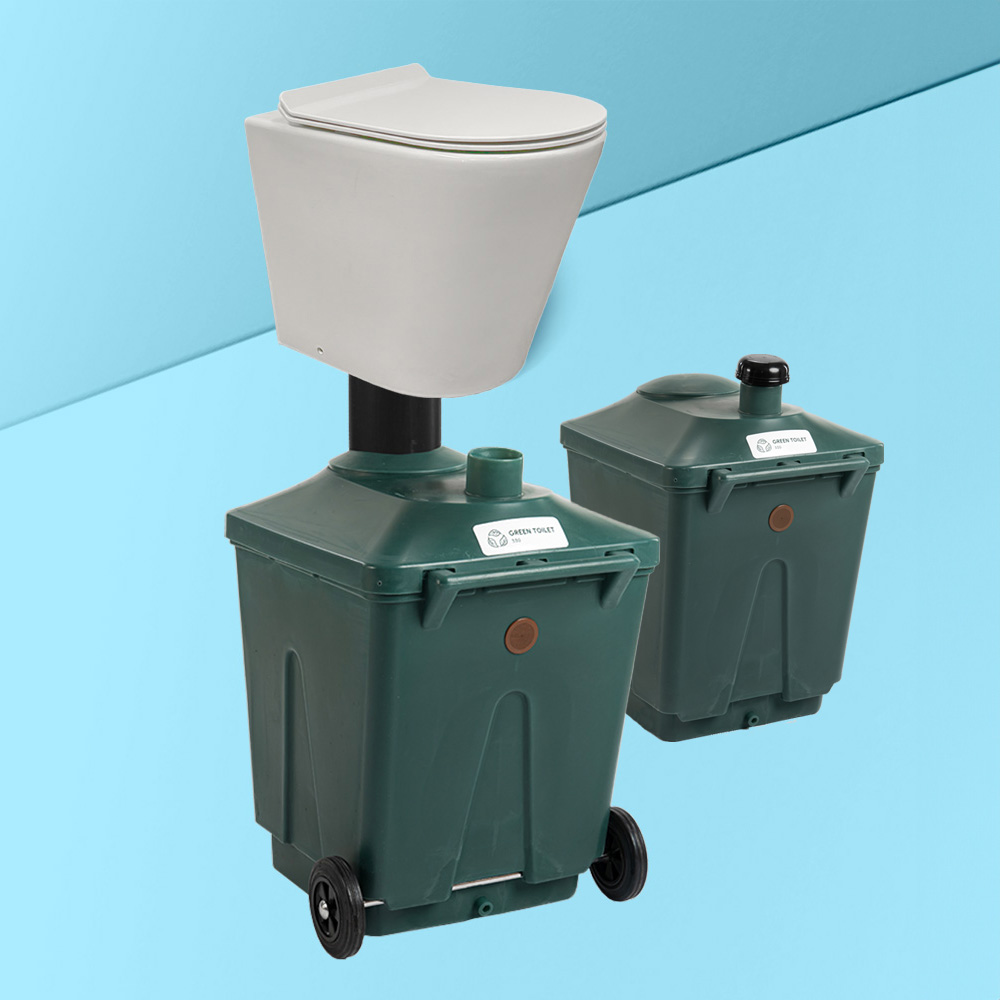
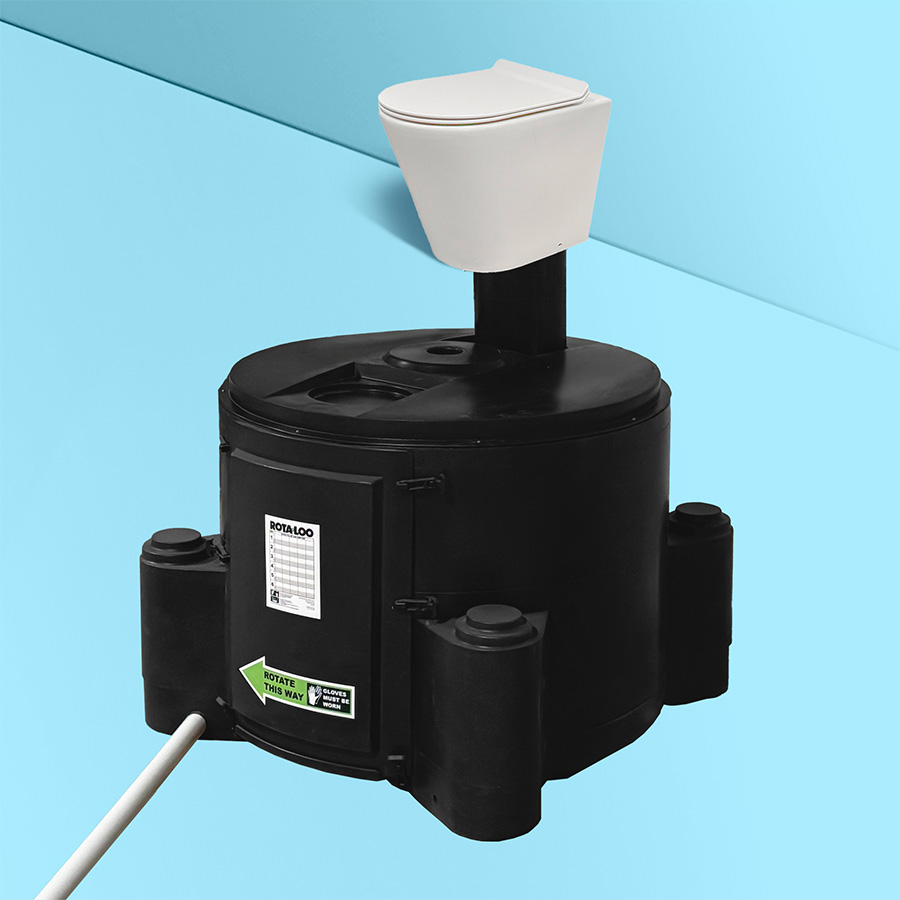

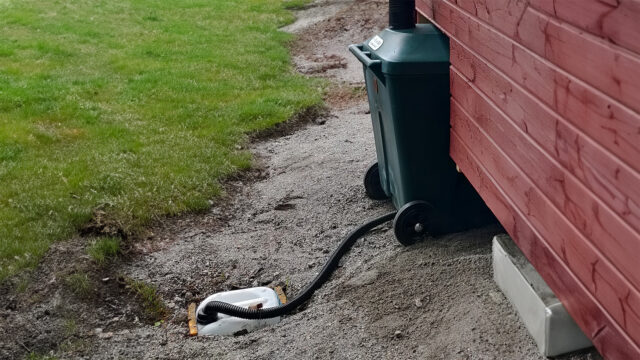
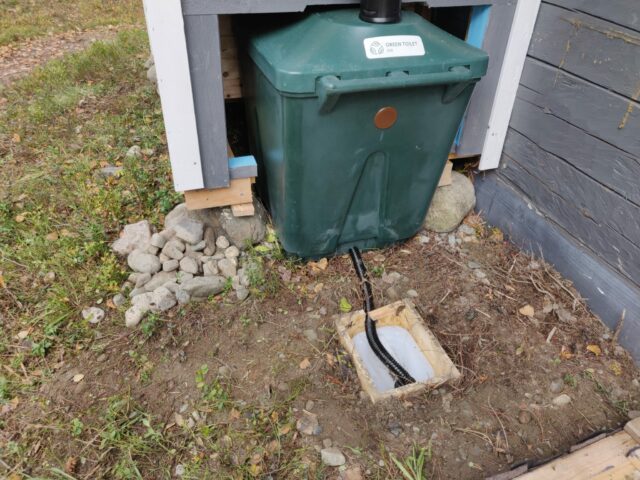
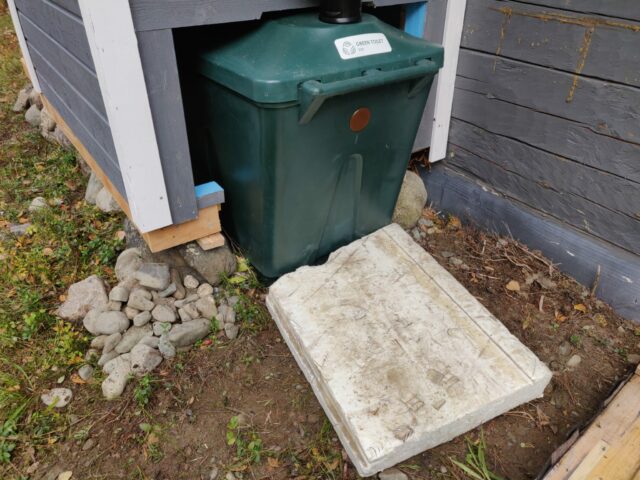
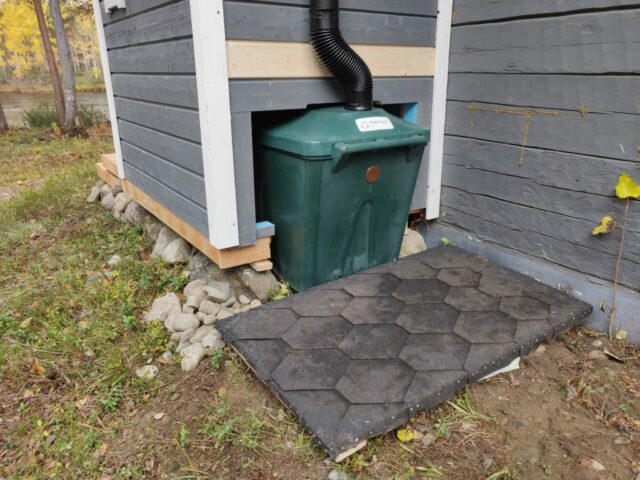


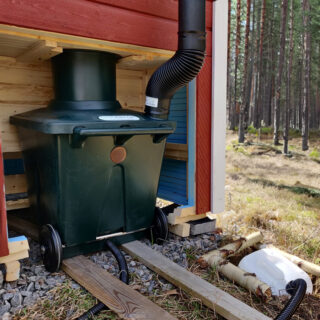
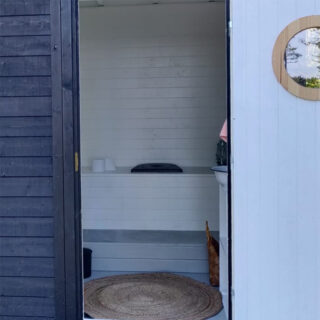
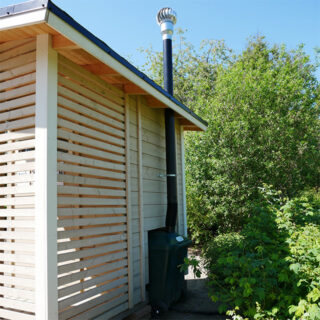
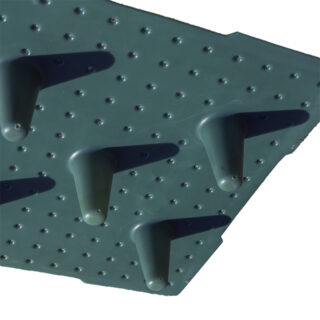
Arrived quick! The seat itself (not the pedestal which seems the more likely) was cracked on arrival. It was a bummer but the customer service is on point, sent not one but TWO replacements because the first redo was cracked too! Crazy. Anyway.. Gorgeous throne, 5/5 will poop again.