

Articles Can You Flush a Toilet When the Power Is Out? Wells, Grinder Pumps and Septic
Eemeli profile picture waterless toilet shop

Eemeli Palo

Waterless Toilet Expert
📱(702) 328 0689
✉ info@waterlesstoiletshop.com

Can You Flush a Toilet When the Power Is Out? Wells, Grinder Pumps and Septic

Whether your toilet still flushes in a power outage comes down to one question: is there an electric pump between it and the water, or between it and the sewer?
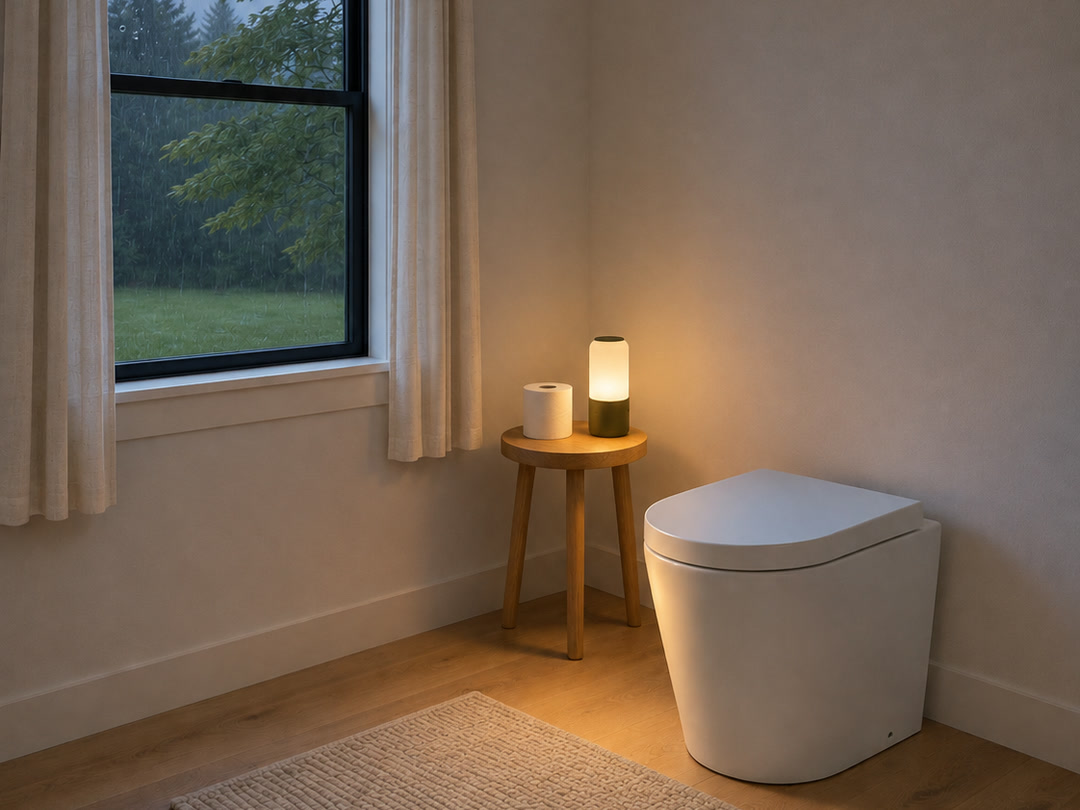
A white porcelain waterless toilet in a small bathroom on a rainy evening, lit by a battery lantern on a wooden stool, rain on the window
Storm outside, power out, and the bathroom works as usual: a waterless toilet has no flush, so it needs no water and no pump. AI-generated illustration.

The short answer

A normal toilet does not use electricity at all. The flush is gravity: water from the tank drops into the bowl and carries everything down the drain. What needs electricity is whatever fills the tank and whatever moves the waste away afterwards. In a town on city water and a gravity sewer, the utility does both, and a power cut at your house usually changes nothing.

Out in the country it is different. If your water comes from your own well, or your waste leaves the house through a pump, the toilet works exactly as long as the power does. Here is how it plays out for each kind of house.

Your house When the power goes out What it means for the toilet
City water, gravity sewer Water keeps coming from the utility Flushes normally, unless the water system itself fails
Private well The well pump stops; only the water already in the pressure tank is left A few flushes, then flushing means carrying water
Grinder-pump sewer The pump stops; the small basin under it fills up Utilities ask you to stop using water
Septic with a pump (mound, drip, pressure or aerobic system) Effluent stops moving to the drain field Use as little water as you can
Gravity septic on city water Nothing changes Flushes normally

On a private well

Tens of millions of Americans drink water from their own well — the U.S. Geological Survey puts it at more than 43 million people, about 15% of the population.[1] The water comes up from the well by an electric pump.

When the power goes, the pump stops, and you are left with what is already stored in the pressure tank. A county health department puts it plainly: your system “may have several gallons of water in storage.”[2] That is a handful of flushes, and then the tank stays empty.

What you can do: the bucket flush

A gravity toilet will still flush if you supply the water yourself. Pour about a gallon of water quickly into the bowl — not the tank — from a foot or two above it, and the siphon does the rest.[3] Rainwater, melted snow or water from a pond all work for this; it does not need to be drinkable.

It works. It is also how you will spend the outage: carrying water, a gallon at a time, every time someone uses the bathroom.

On a grinder pump

Some homes, often on lakeshores and hilly lots, are on a low-pressure sewer: each house has a grinder pump in a small underground basin that pushes waste up to the main line. Without power, the basin simply fills. One city’s guidance to its residents: “without power the pump basin can only hold 5 to 10 toilet flushes.”[4]

Here the bucket flush is no help, because the problem is not getting water in, it is getting waste out. Utilities ask grinder-pump households to keep water use to a minimum until the power is back.

On a septic system with a pump

A conventional gravity septic system needs no power: waste flows downhill to the tank and on to the drain field. Many systems are not built that way. Mound systems, pressure-dosed and drip fields, and aerobic treatment units all rely on a pump or a blower, and on a lot with poor soil they are often the only kind the county will permit.

When the pump stops, the reserve in the pump tank is all you have. Texas A&M’s extension service is blunt about longer outages: “If you expect the power to be out for an extended time: Stop all water use.”[5] If your home is on a well and a pumped septic system, both problems arrive at once.

And sometimes the city water stops too

City water is not a guarantee either. After Hurricane Helene in 2024, Asheville, North Carolina lost its water system. Residents were told to use pool water or creek water to flush their toilets,[6] and drinkable water did not return to every customer until November 18, about seven weeks after the storm.[7]

Outages are getting longer. In the first half of 2025, 45% of U.S. electric customers had at least one outage, and the average outage ran 12.8 hours, up from 8.1 hours in 2022. In the South, outages caused by extreme weather averaged 95.2 hours — about four days.[8] In 2024, major events alone accounted for nearly nine of the 11 hours the average American spent without power.[9]

A toilet with nothing to lose

A waterless toilet has no flush. Waste drops into a container where it is kept dry and composts, so there is no water to pump in and no sewage to pump out. No water. No sewer. No septic tank. And nothing that stops when the grid does: none of our toilets needs electricity to work, and if the power goes out you simply keep using it.
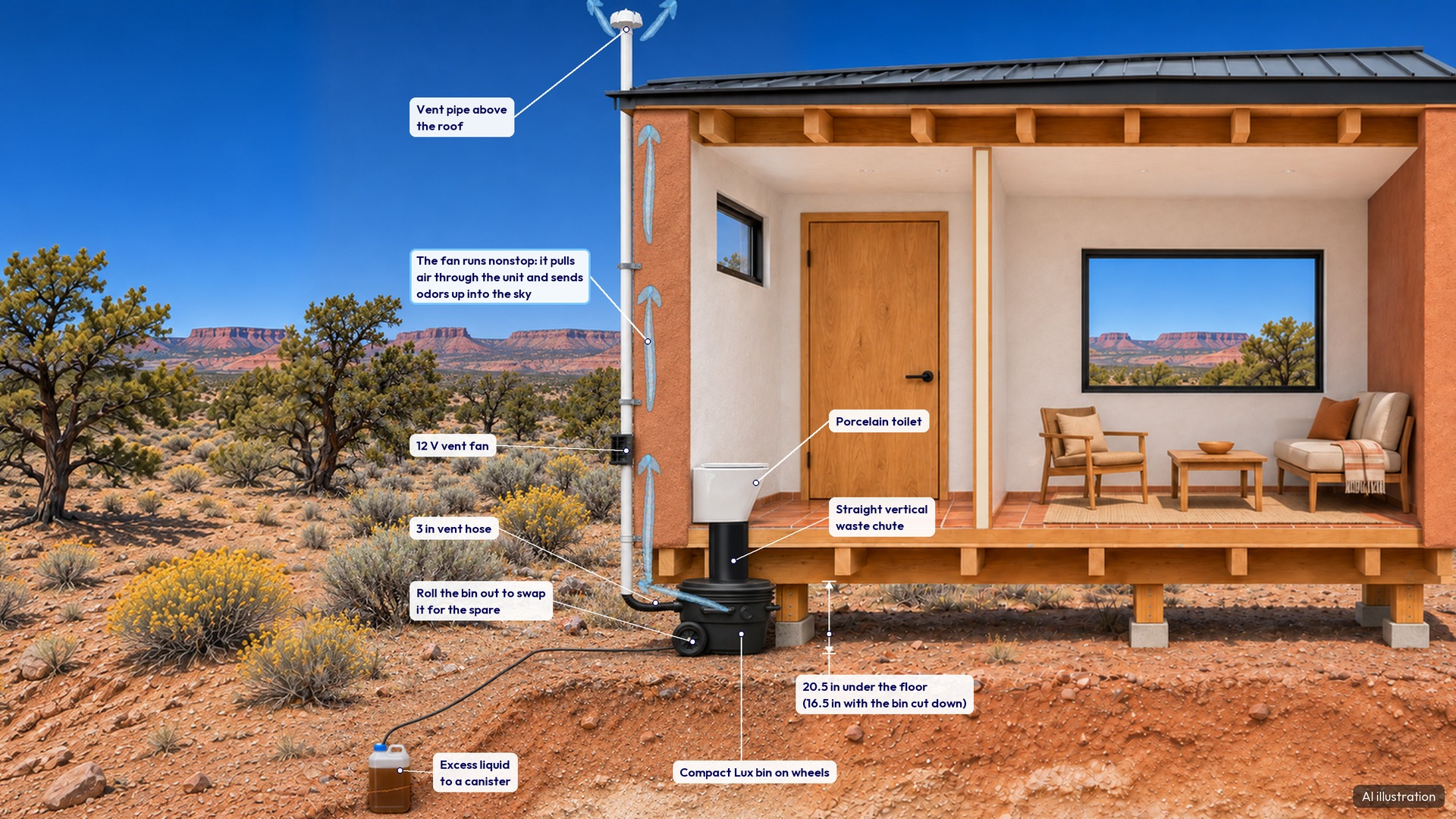
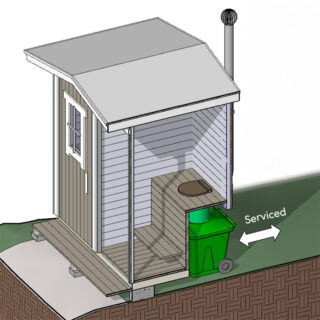
Labelled cutaway of a desert cabin: porcelain toilet, chute to the Compact Lux bin on wheels, 3 in vent hose and fan pipe, liquid to a canister
A porcelain toilet above, the bin on wheels below, a vent above the roof. No supply line, no drain, no pump. AI-generated illustration.

Most of our models do run a small 12V fan that keeps air moving through the container. It draws roughly 3W — little enough to run from a modest solar setup or a battery. For zero power at all, a Whirlybird wind-driven ventilator vents passively. More on power in our FAQ.

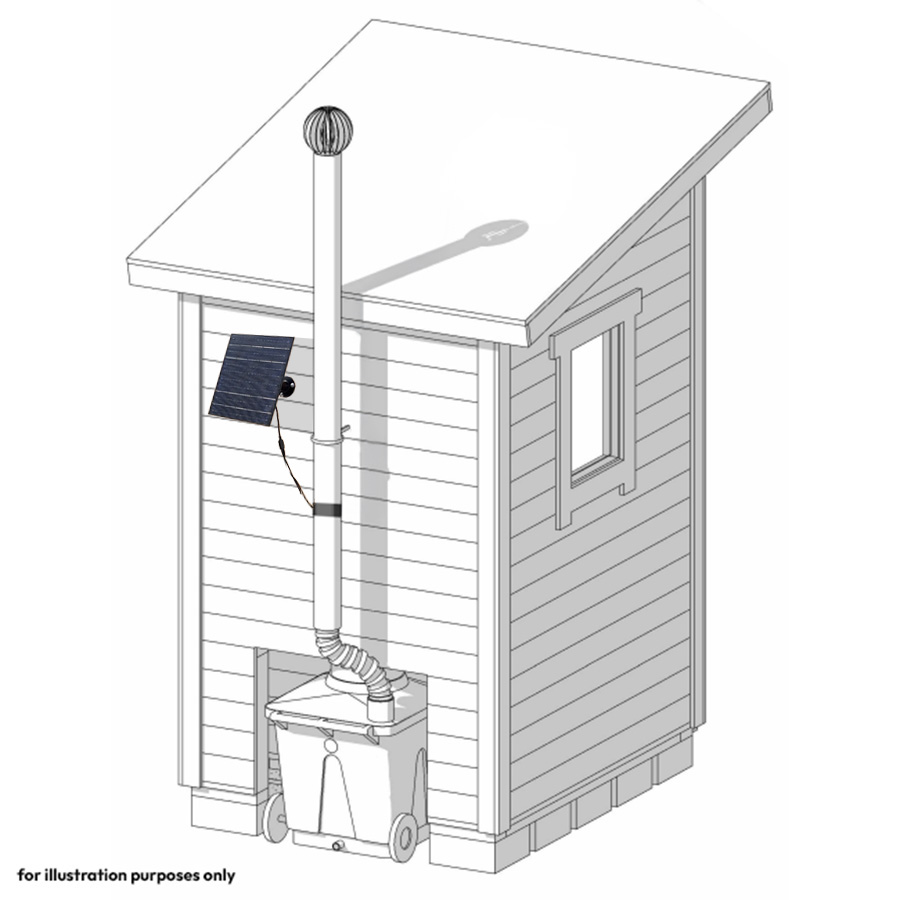
A small black solar panel of the Solar Power Kit mounted on a wooden wall

Line illustration of an outhouse with a solar panel on its wall powering the toilet's vent fan, the bin visible below the seat

An everyday toilet, not emergency gear

For one night without power, a bucket does the job, and it costs a lot less than any toilet we sell. That is not what this is about. A waterless toilet earns its place by being used every day: in the garage, the workshop, a basement with no drain, a guest room, an ADU or the outhouse by the garden. Every use is one flush the well and the septic tank never see. Then the storm comes through, the pump goes quiet, and that bathroom carries on exactly as it did the day before.
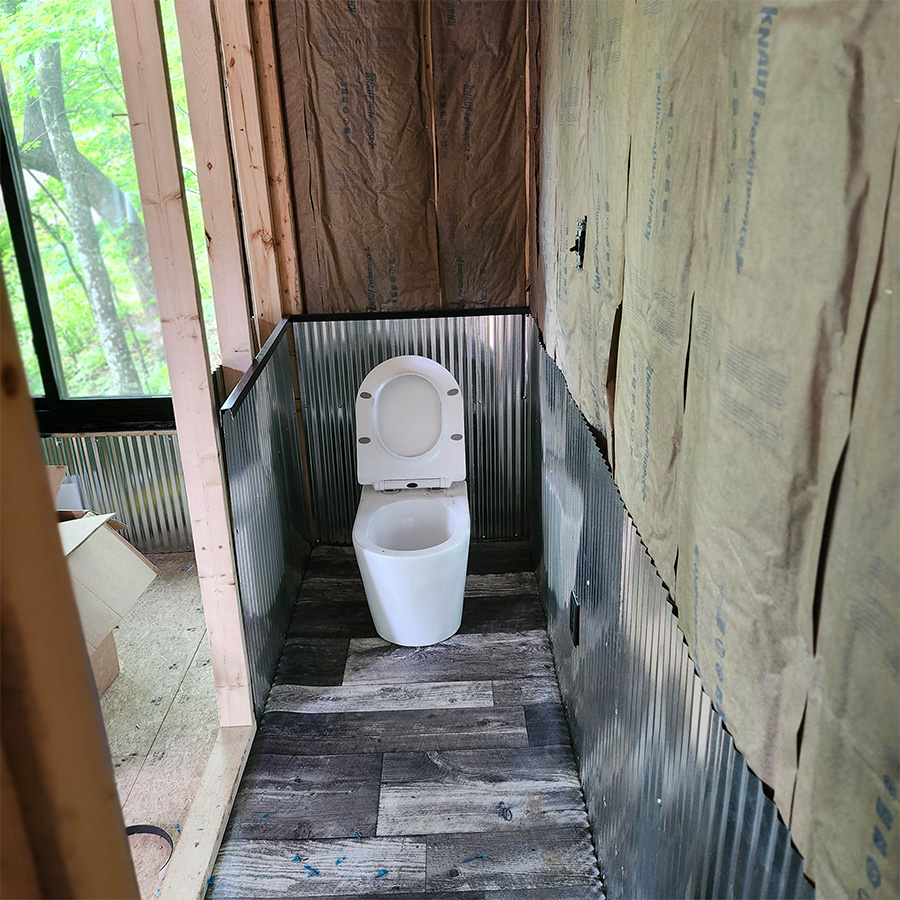
A white porcelain waterless toilet in a customer's cabin bathroom with corrugated metal walls and a plank floor

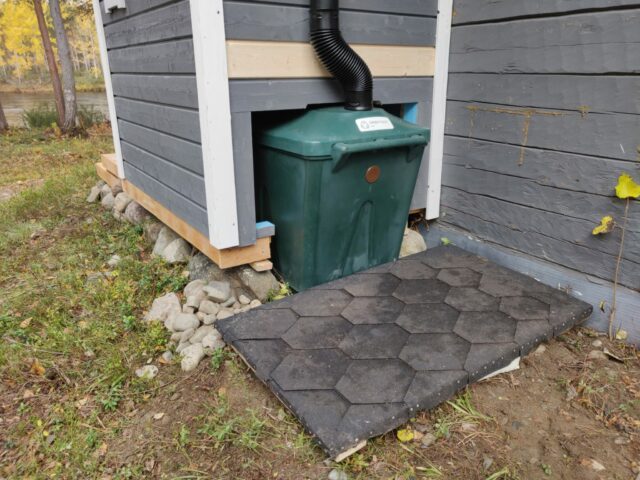
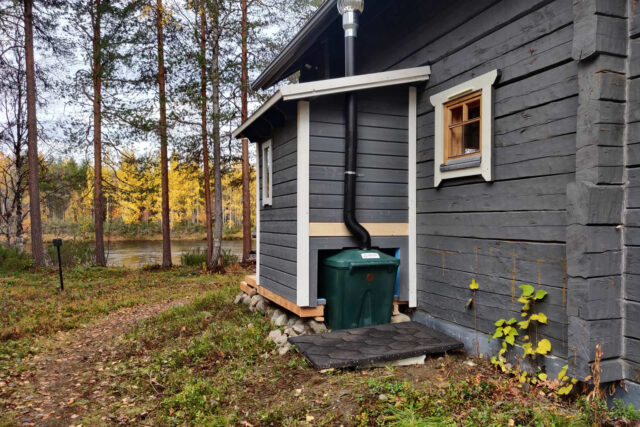
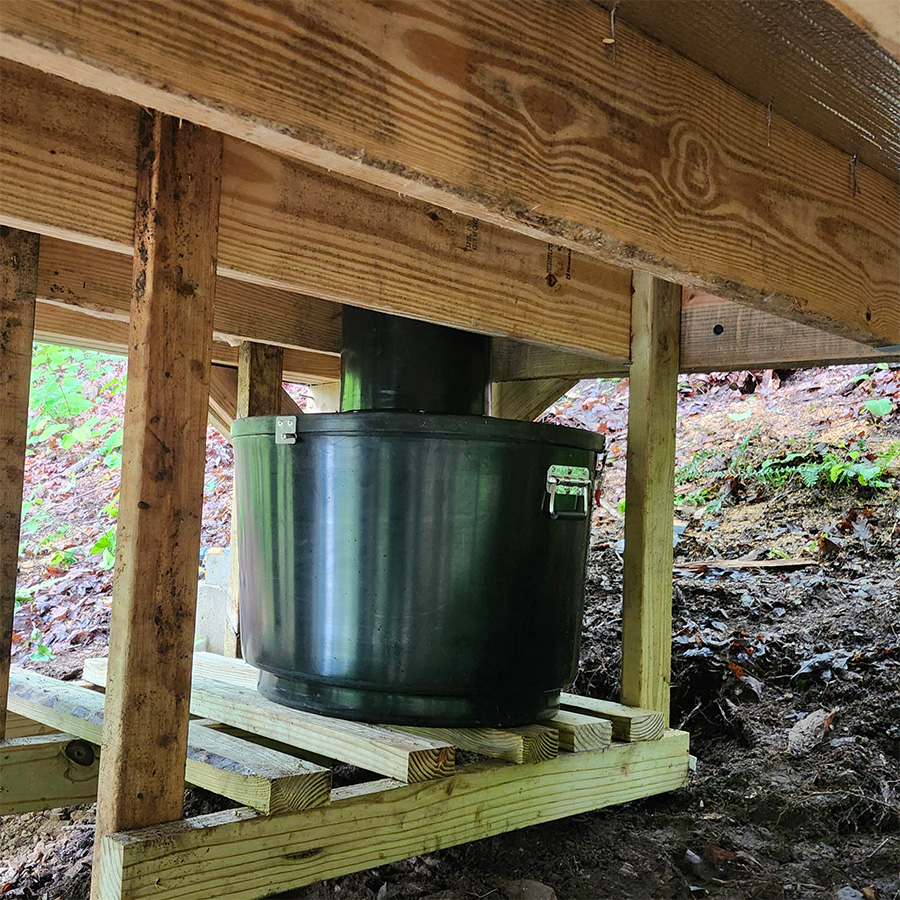
The black GL 90 composting bin standing on a pallet under the same cabin

A customer’s cabin: the porcelain toilet in the bathroom, the bin below the floor. Nothing in it needs the grid.
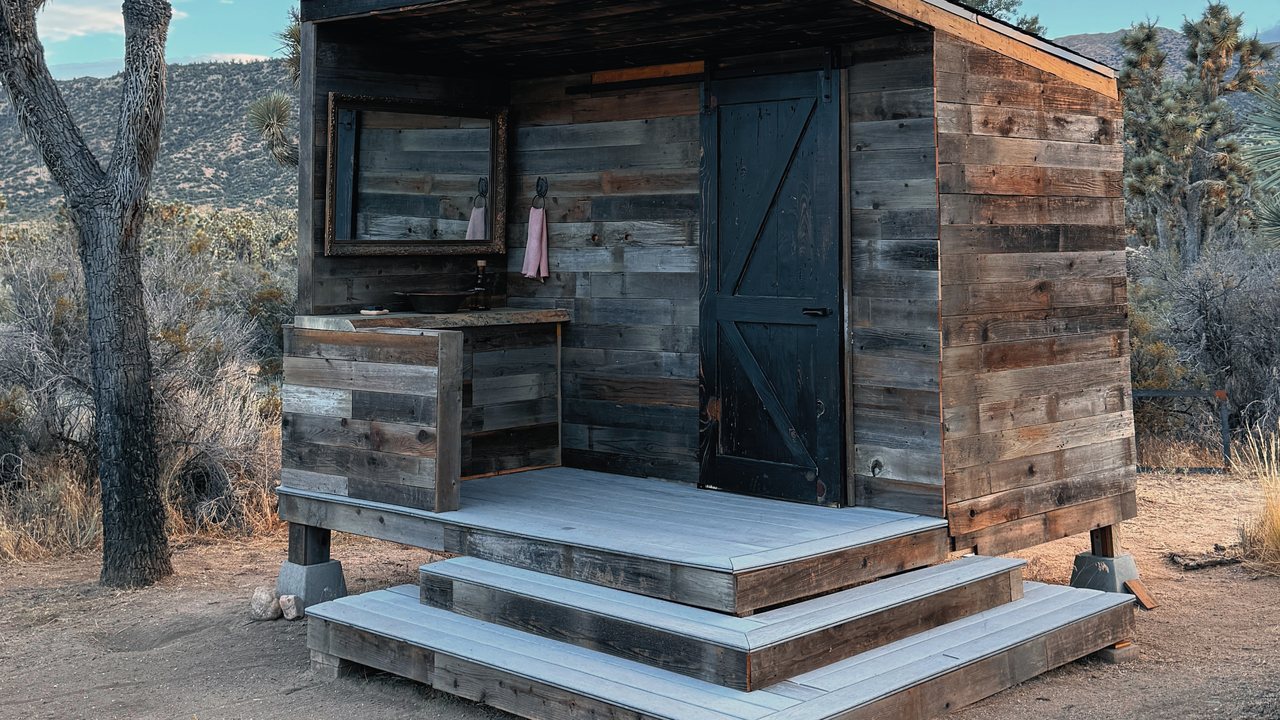
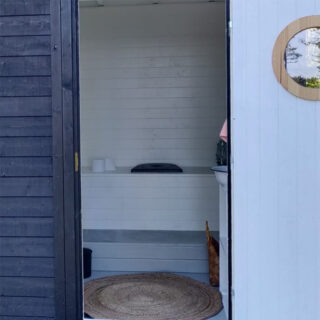
Front view of a reclaimed-wood outhouse with a black barn door, outdoor vanity and gray deck steps in the desert
A customer-built outhouse in the California high desert. Photo: Scott

Which one fits your house

Answer a few questions about your building and how the toilet will be used, and you will see the toilets that fit.

Looking for a new waterless toilet?

Answer a few questions and we will show you the ones that suit you.

How many people would use the toilet?

A rough estimate of people using it per day. Occasional guests do not need counting if it is for private use.

* Choose "Public use" if you are providing off-grid restroom facilities for other than your own private use, or if more than ten people use it per day.

How will the toilet be used?

Year-round living puts far more through a toilet than weekends and holidays do.

Is the toilet used indoors or outdoors?
Is there clear space between the bathroom floor and the ground below?

Premium toilet systems put the composting container below the floor, so they need somewhere for it to sit - a crawl space, a basement, or an open space under a raised cabin.

Do you have electricity available at the site?

No toilet is ruled out by this. It decides whether you need a whirlybird or a solar kit to ventilate off-grid.

Where will the toilet be used?

This does not change the recommendation. It tells us how to answer you properly if you ask for a follow-up.

When do you need your toilet?

This does not change the recommendation. It helps us answer you at the right time.

Where will the toilet be located?

A ZIP code or a county is enough.

We collect location information to better understand regional trends, climate-specific needs, and preferences related to composting toilets. This helps us tailor our offerings, improve our support services, and advocate for sustainable solutions in different parts of the country. Your input contributes to valuable insights while remaining completely anonymous.

Would you like a personalised recommendation?

One of us reads your answers and replies with a specific suggestion. One message about this enquiry — no mailing list, no spam, never shared.

If you would rather ask a person, get in touch.

Working on emergency preparedness? If you run or plan a preparedness pilot, or work for an organization that trains for outages and disasters — county emergency management, a utility, a relief organization, a school district or a campground — we would like to hear from you. We are happy to work together on a pilot site, an exercise or a trial. Get in touch.

Two things this article is not about

Floods. Everything above is about power and water outages. A flooded room or a flooded well is a different problem and a health matter; follow your county health department’s advice.

Permits. A second toilet still has to follow local rules, and those vary from county to county. Our FAQ explains how permitting usually works.

Some do, some don’t — and where they do, it is a very small amount. Most of our composting models run a small 12V extractor fan that keeps air moving and waste drying. It draws roughly 3W — little enough to run continuously off a modest solar setup or leisure battery without you ever noticing it on your power budget. Because the fan runs on low-voltage DC, it pairs naturally with our Solar Power Bank Kit. If you want zero power, our Whirlybird wind-driven ventilator vents passively and needs no electricity at all. Full answer in the FAQ.

Set up correctly, no — and usually far less than the conventional flush toilet you’re used to. Two things do the heavy lifting: keeping the solids dry enough to compost, by separating or draining away the liquid, and continuous airflow, which draws air out of the composting bin through a vent so any smell is pulled away from the unit. Full answer in the FAQ.

Almost anywhere a conventional toilet is impractical, too expensive, or simply not permitted: cabins and rural homes, off-grid homes and tiny houses, glamping and short-term rentals, parks and campgrounds. They also solve smaller problems neatly: an ADU or garden room, a basement or workshop with no drain, or a reliable backup for when mains water or sewage isn’t available. Full answer in the FAQ.

Usually dramatically cheaper. A complete composting toilet typically costs $1,500–2,500, compared with $20,000–$100,000 or more for a new septic system. Running costs are very low: a little bulking material, the occasional replacement part, and — on powered models — a tiny amount of electricity for the fan. One honest caveat: sink and shower water (greywater) usually still needs its own simple disposal path. Full answer in the FAQ.

In most of the U.S. waterless toilets are legal, but the rules are set locally and vary from one county to the next, so a quick check with your local authority is always recommended before you install. (General guidance, not legal advice.) Full answer in the FAQ.

[1] U.S. Geological Survey, Domestic (Private) Supply Wells. www.usgs.gov/mission-areas/water-resources/science/domestic-private-supply-wells
[2] Chester County Health Department (PA), Well Water and Power Outages. www.chesco.org/2629/Well-Water-and-Power-Outages
[3] Alameda County Water District (CA), water shutoff tips. www.acwd.org/DocumentCenter/View/7996
[4] City of Bainbridge Island (WA), Grinder Pump customer information pamphlet, 2019. www.bainbridgewa.gov/DocumentCenter/View/12686
[5] Texas A&M AgriLife Extension, Onsite Wastewater Treatment Systems: Responding to Electrical Power Outages and Floods (ER-001), 2013. texashelp.tamu.edu/wp-content/uploads/2016/02/waste-systems-blackouts-floods-1.pdf
[6] NPR, In Asheville, N.C., many residents may be without drinking water for weeks, October 3, 2024.
[7] Associated Press, Western North Carolina’s water system is finally back online after Helene, November 19, 2024.
[8] Utility Dive, Power outages getting longer as extreme weather takes larger toll, report says (J.D. Power data), November 17, 2025. www.utilitydive.com/news/power-outages-extreme-weather-jd-power/805658/
[9] U.S. Energy Information Administration, Today in Energy, December 1, 2025. www.eia.gov/todayinenergy/detail.php?id=66744
No Black Friday games

We don’t run Black Friday sales. We’d rather price our toilets fairly all year than mark them up in the fall and “discount” them in November.

So there’s no need to wait — order when it suits your project.

Find the right toilet →  |  Ask us a question

Green Toilet Compact Lux

Average Daily Capacity per 26-Gallon Composting Bin

(Based on approx. 150 uses involving a #2 — i.e., poop) – only the solids count!

Service Interval #2 Visits per Day (involving a #2)
30 days (1 month) ~5.0 visits/day
60 days (2 months) ~2.5 visits/day
90 days (3 months) ~1.7 visits/day
180 days (6 months) ~0.8 visits/day
365 days (1 year) ~0.4 visits/day

👥 Roughly how often will I service a bin?

Full-Time Users Time Before a Bin Swap
1 person about 4–5 months
2 people about 2–3 months
3 people about 1.5–2 months
4 people about 1–2 months

🟢 What counts as a “#2 visit”?

Only visits that involve pooping (i.e., going number two) — urine-only visits don’t contribute to filling the composting bin and are not included in the estimate.

🔄 Why two bins?

The Green Toilet Compact Lux comes with two composting bins. The figures above are per bin: when one fills up you swap in the empty one, and the full bin is left to compost undisturbed until you next need it. The second bin doesn’t make the interval longer — it means you never have to empty a bin in a hurry. Additional bins can be added at any time.

⚠️ Disclaimer: These estimates are approximations. The actual number of solid uses per bin may vary significantly depending on climate, temperature, ventilation, user habits, and the amount of dry bulking material (e.g., wood shavings or peat) added after each use.

Klarna_Payment_Badge png

Pay with Klarna

We’re excited to now offer Klarna as a payment option at Waterless Toilet Shop!
Choose how you want to pay — all at once or with flexible installments that fit your budget.

💸 Pay in 4 — Interest-Free

Split your composting toilet purchase into four equal payments every two weeks.
No interest, no hidden fees — just a smarter way to pay over time.

Other Flexible Options

Klarna also offers monthly financing with 6–24-month plans and transparent APR rates based on your credit.
You’ll see all available payment options instantly when you select Klarna at checkout.

Klarna financing is issued by WebBank and available to eligible U.S. residents in most states.
Missed payments may incur late fees. For California residents, loans are made or arranged pursuant to a California Financing Law license. Review Klarna’s terms.

CF 8 Composting Toilet – Estimated Daily Capacity

The CF 8 is a continuous composting toilet system featuring a single large 250-gallon container. Like the CF 4, it is designed for gradual emptying rather than batch-style use. Solids are typically removed in thirds or sections, allowing earlier deposits time to fully compost inside the tank.

This setup allows for either:


🔁 Continuous Use: Gradual Emptying in Thirds

When used year-round, the CF 8 is typically emptied one-third at a time, effectively composting in three rotating “piles” within the container.

Because the CF 8 is more than twice as large as the CF 4, each pile can hold approximately 480–960 poops, depending on composting conditions and how much bulking material is used.

Service Interval (per pile) Estimated #2 Visits per Day
30 days (1 month) ~17–32 visits/day
60 days (2 months) ~8–16 visits/day
90 days (3 months) ~5–11 visits/day
180 days (6 months) ~3–5 visits/day
365 days (1 year) ~1.2–2.6 visits/day

💡 These figures assume that one-third of the tank is in active use at a time, with older waste given time to compost before removal.


🌤 Seasonal Use: Full-Tank Emptying After Inactive Period

For cabins, cottages, or other sites used seasonally, the CF 8 can be used for a few months and then left idle to allow full composting. In such cases, the entire tank may be emptied once a year.

Full-tank capacity estimate: ~1,440–2,880 poops

Example: 120 days of use (approx. 4 months):
→ ~12–24 solid visits per day on average


⚠️ Disclaimer

These numbers are rough estimates based on typical use and conditions. Actual capacity will vary depending on:

For best performance, ensure proper aeration, regular bulking material use, and consistent emptying of composted portions.


💡 Want to Maximize Capacity? Consider a Urine-Diverting Toilet — With Some Important Considerations

upgrade to a urine diverting toilet pedestal

If you’re looking to maximize the capacity of the CF 8 system — aiming for 960+ poops per composting “pile” — we recommend using a urine-diverting (UD) toilet pedestal.

✅ Benefits of Urine Separation:

By diverting urine out of the solids container, the volume taken up by absorbent material (like peat or wood shavings) is significantly reduced. This can make a big difference in how often the system needs to be emptied.


⚠️ Downsides to Consider:

Urine-diverting toilets can take some time to get used to. Users need to sit or aim correctly to ensure proper separation, which might not happen consistently without experience or guidance.

For this reason, UD toilets are generally not ideal for public or commercial settings where the toilet is used by guests, tourists, or other first-time users. In these cases, misuse can reduce the effectiveness of the system and may even lead to unpleasant maintenance issues.


In short: A UD toilet is an excellent choice for maximizing capacity in private or family use, but for guest or public access composting toilets, a standard non-diverting model may be more practical and user-friendly.

Green Toilet 100 Easy – Estimated Daily Capacity

The Green Toilet 100 Easy is a compact and user-friendly batch composting toilet with a 26-gallon composting container. Its design makes it well-suited for outhouses, cabins, and even indoor use. A spare container is available to expand capacity and simplify servicing.


🔢 Estimated Solid-Waste Capacity per Bin:

Note: Due to the shape and internal structure of the container, the actual composting capacity is slightly lower than its raw volume might suggest, if you compare with Green Toilet 120 Family composting toilet for example.


📆 Average Daily Capacity per Bin

Service Interval Estimated #2 Visits per Day
30 days (1 month) ~6–7 visits/day
60 days (2 months) ~3–4 visits/day
90 days (3 months) ~2.2 visits/day
180 days (6 months) ~1.1 visits/day
365 days (1 year) ~0.5 visits/day

Notes & Recommendations:


⚠️ Disclaimer:
These estimates are intended as general guidance. Real-world performance may vary depending on:

CF 4 Composting Toilet – Estimated Daily Capacity

The CF 4 is a continuous composting toilet system featuring a single large 105-gallon container. Unlike batch composting systems (such as the Green Toilet models), the CF 4 is designed for gradual emptying — solids are typically removed in thirds or sections, allowing earlier deposits time to fully compost inside the tank.

This setup allows for either:


🔁 Continuous Use: Gradual Emptying in Thirds

When used year-round, the CF 4 is typically emptied one-third at a time, effectively composting in three rotating “piles” within the container. Depending on composting conditions and how much bulking material is used, each pile can hold approximately 200–400 poops.

Service Interval (per pile) Estimated #2 Visits per Day
30 days (1 month) ~7–13 visits/day
60 days (2 months) ~3–7 visits/day
90 days (3 months) ~2–4 visits/day
180 days (6 months) ~1–2 visits/day
365 days (1 year) ~0.5–1.1 visits/day

💡 These figures assume that one third of the tank is in active use at a time, with older waste given time to compost before removal.


🌤 Seasonal Use: Full-Tank Emptying After Inactive Period

For cabins, cottages, or other sites used seasonally, the CF 4 can be used for a few months and then left idle to allow full composting. In such cases, the entire tank may be emptied once a year.


⚠️ Disclaimer

These numbers are rough estimates based on typical use and conditions. Actual capacity will vary depending on:

For best performance, ensure proper aeration, regular bulking material use, and consistent emptying of composted portions.


💡 Want to Maximize Capacity? Consider a Urine-Diverting Toilet — With Some Important Considerations

upgrade to a urine diverting toilet pedestal

If you’re looking to maximize the capacity of the CF 4 system — aiming for 400+ poops per composting “pile” — we recommend using a urine-diverting (UD) toilet pedestal.

✅ Benefits of Urine Separation:

By diverting urine out of the solids container, the volume taken up by absorbent material (like peat or wood shavings) is significantly reduced. This can make a noticeable difference in how often the system needs to be emptied.

⚠️ Downsides to Consider:


In short: A UD toilet is an excellent choice for maximizing capacity in private or family use, but for guest or public access composting toilets, a standard non-diverting model may be more practical and user-friendly.

Green Toilet 120 Family

💩 Average Daily Capacity per 31-Gallon Composting Bin

(Based on approx. 356 uses involving a #2 — i.e., poop) – only the solids count!

Service Interval #2 Visits per Day (involving a #2)
30 days (1 month) ~11.9 visits/day
60 days (2 months) ~5.9 visits/day
90 days (3 months) ~4.0 visits/day
180 days (6 months) ~2.0 visits/day
365 days (1 year) ~1.0 visits/day

🟢 What counts as a “#2 visit”?
Only visits that involve pooping (i.e., going number two) — urine-only visits don’t contribute to filling the composting bin and are not included in the estimate.

⚠️ Disclaimer:
These estimates are approximations. The actual number of solid uses per bin may vary significantly depending on climate, temperature, ventilation, user habits, and the amount of dry bulking material (e.g., wood shavings or peat) added after each use.

Green Toilet 330

💩 Average Daily Capacity per 87-Gallon Composting Bin

(Based on approx. 1,000 uses involving a #2 — i.e., poop) – only the solids count!

Service Interval #2 Visits per Day (involving pooping)
30 days (1 month) ~33 visits/day
60 days (2 months) ~17 visits/day
90 days (3 months) ~11 visits/day
180 days (6 months) ~5.6 visits/day
365 days (1 year) ~2.7 visits/day

🟢 What counts as a “#2 visit”?
Only visits that involve defecation (pooping) — urine-only visits don’t fill up the composting bin and are not included in the 1,000-use estimate.

⚠️ Disclaimer:
These estimates are based on typical, steady use. The actual number of solid uses a composting bin can handle may vary significantly depending on climate, temperature, humidity, ventilation, and how much dry bulking material (like wood shavings) is added after each use.

Composting toilet waste pipe extension

💧 Liquid waste (urine) estimate

Average person produces about:

So for 100 people:


🚽 Flush water use estimate

Average flush volume in the U.S. is about:

Average person flushes ~5 times per day, so:

So for 100 people:


✅ Summary in gallons

Type Per person For 100 people
Urine (liquid waste) ≈0.4 gal/day ≈40 gal/day
Flush water (toilet only) ≈7.5 gal/day ≈750 gal/day
Product Image Product Clearance Requirement
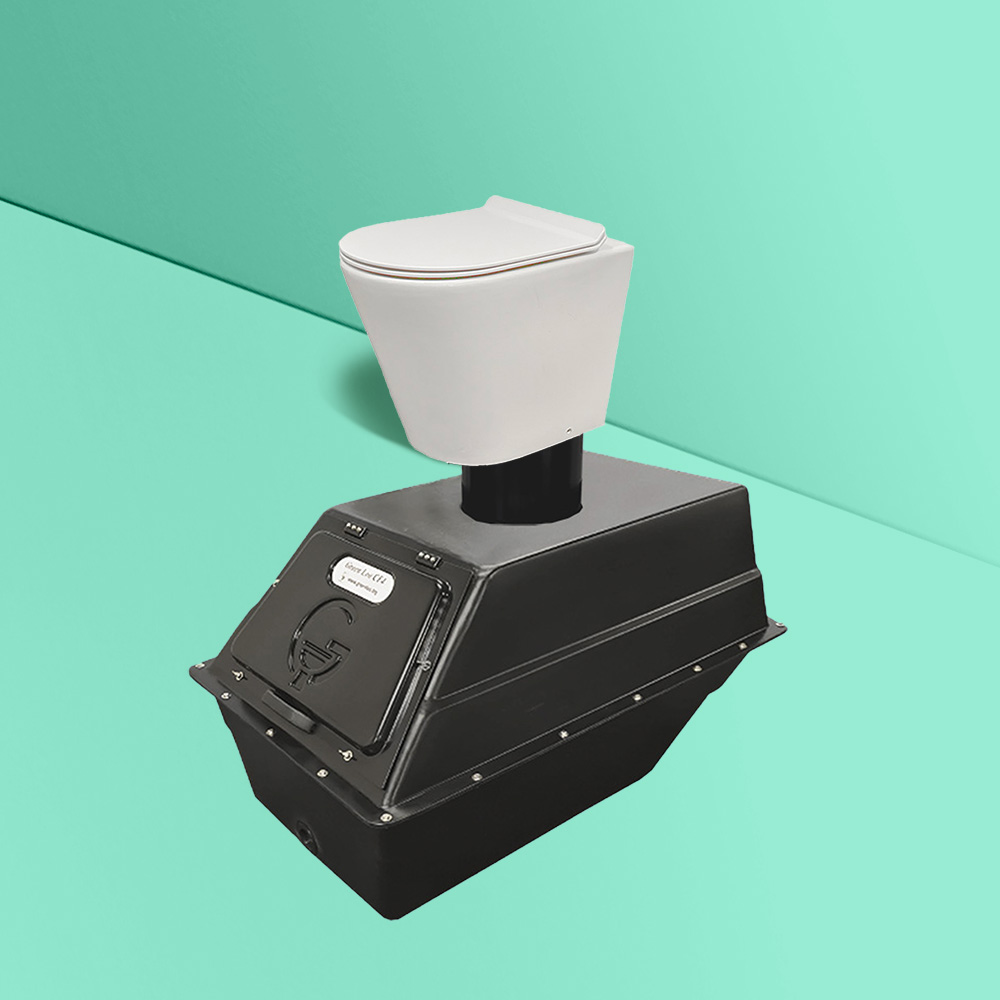
CF 4 continuous composting toilet with porcelain pedestal green background CF 4 Continuous composting toilet 13″ (when partially buried)
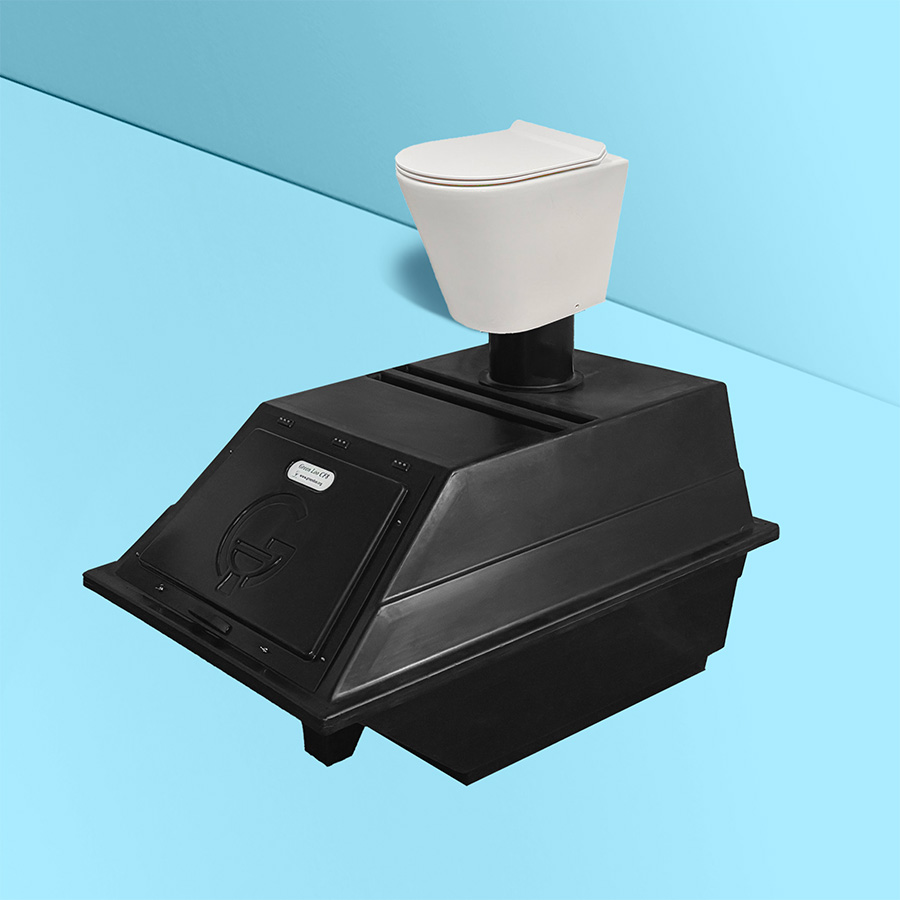
gl 90 batch composting toilet package GL 90 Batch composting toilet 18″
CF 8 continuous composting toilet with non separating porcelain pedestal blue background CF 8 Continuous composting toilet 18″ (when partially buried)
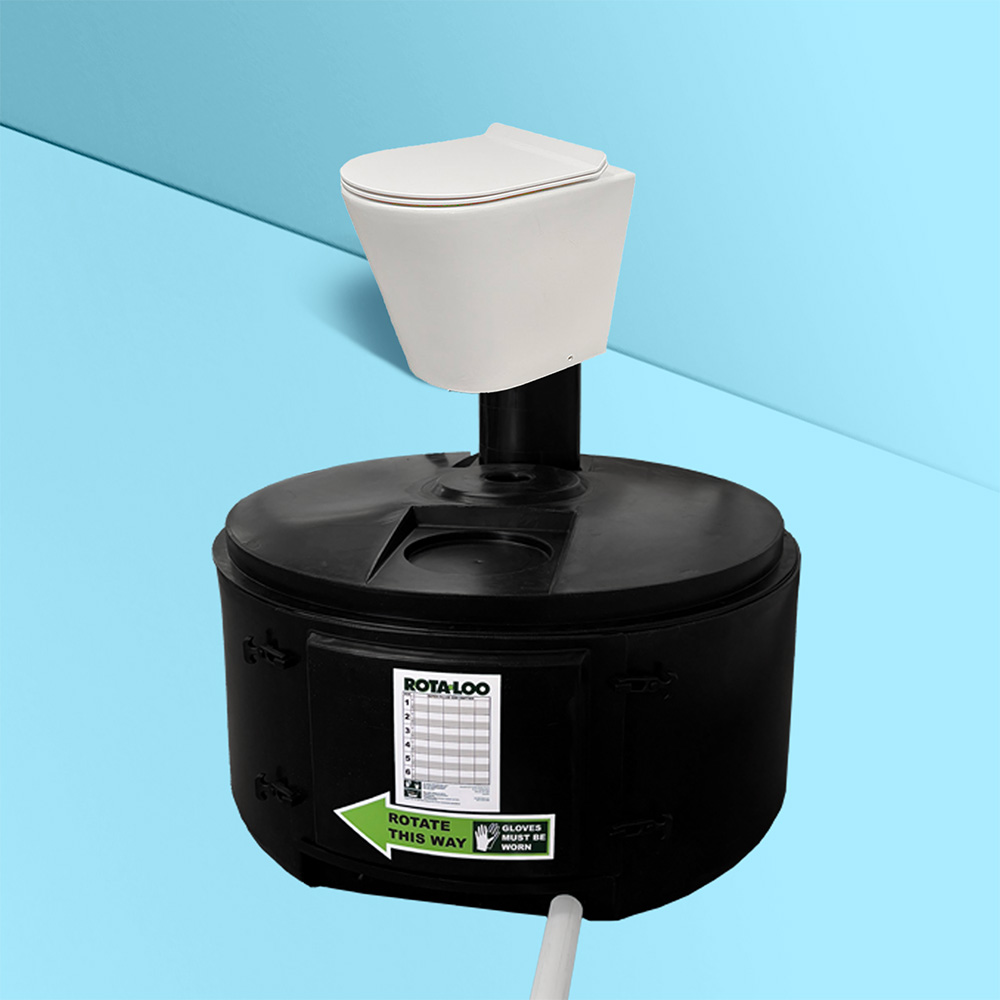
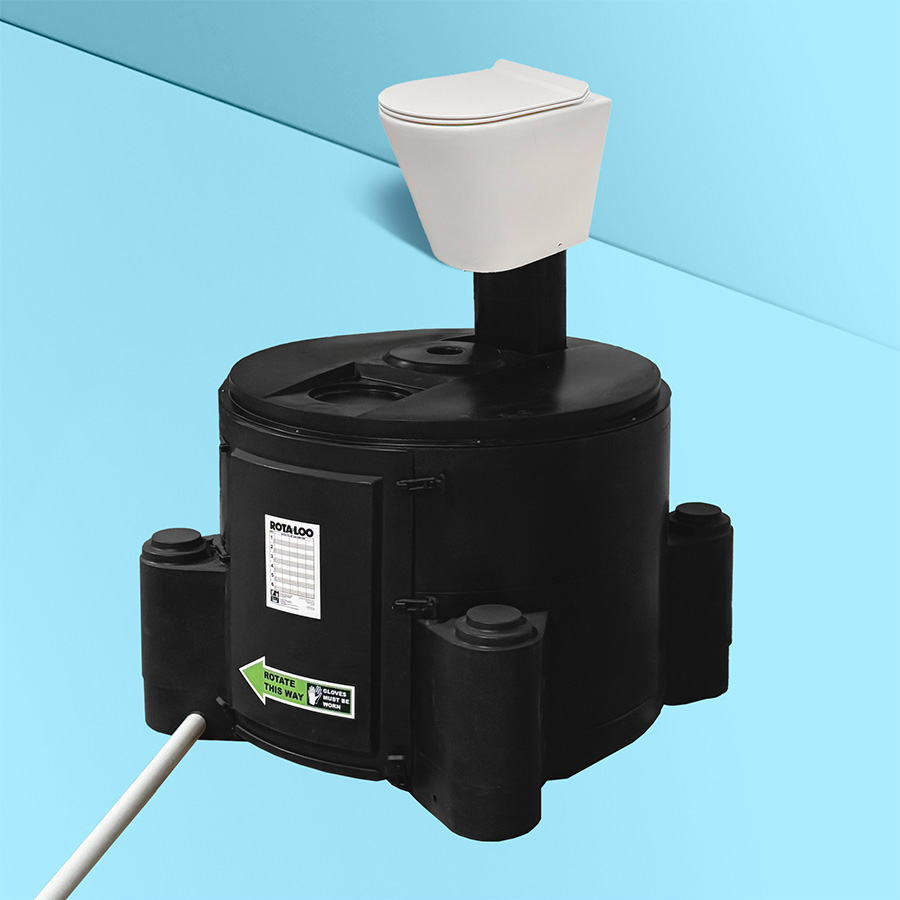
Rota-Loo 650 Split-system Batch Composting Toilet Rota Loo 650 Batch composting toilet 26″
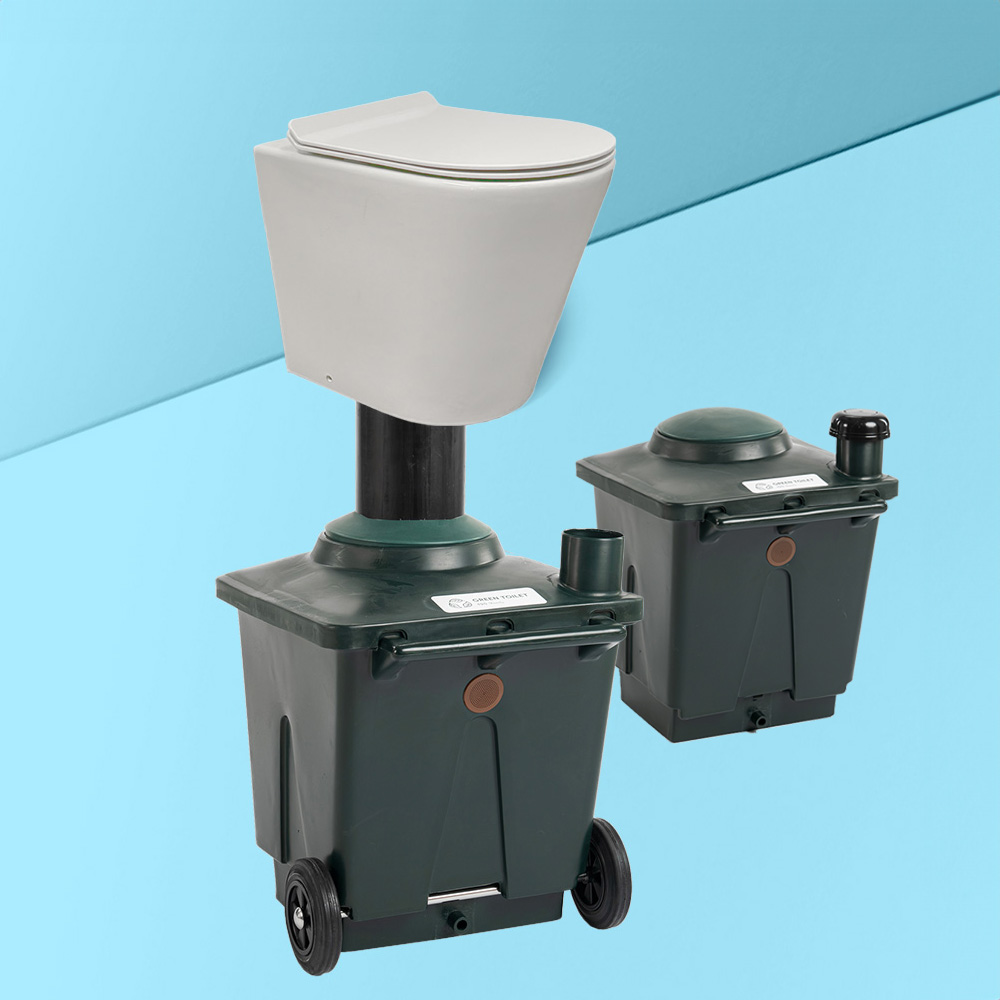
Green Toilet Lux 120 Composting toilet with spare container package Green Toilet Lux 120 Batch composting toilet 28″
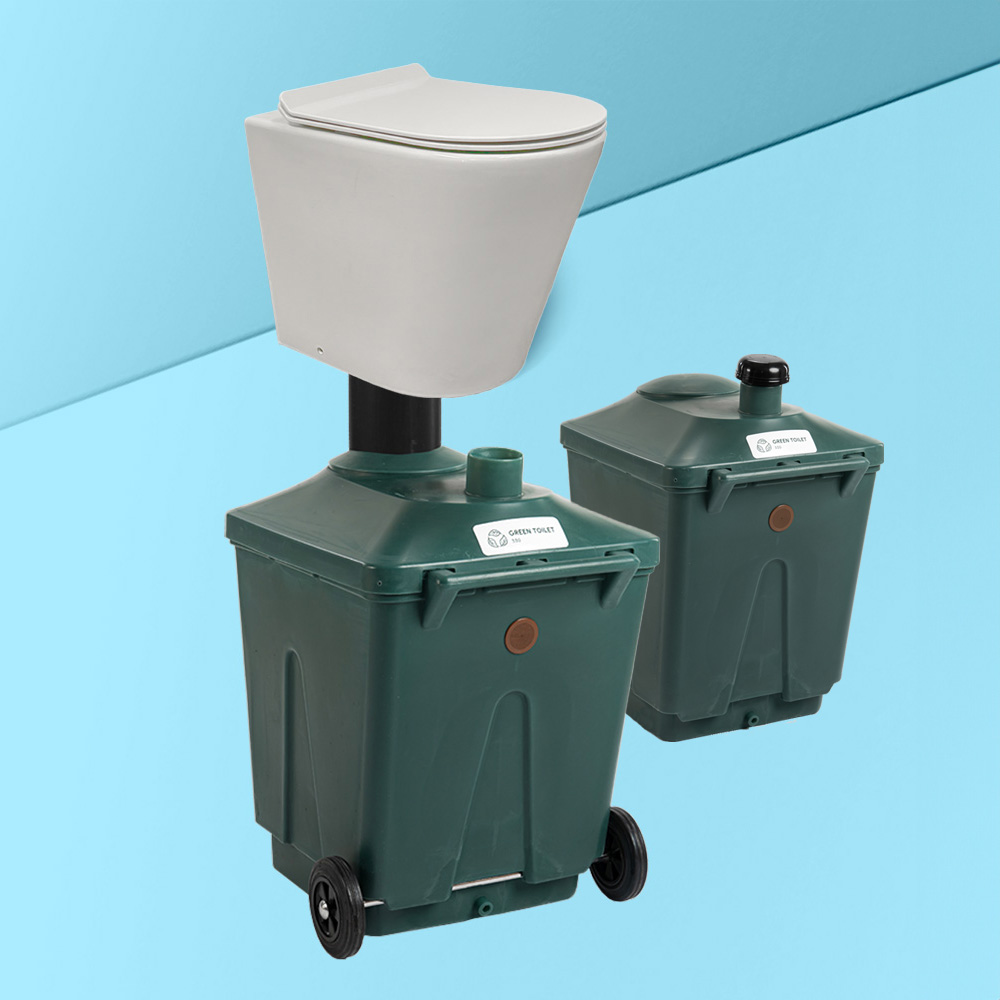
Green Toilet Lux 330 Composting toilet with spare container package Green Toilet Lux 330 Batch composting toilet 37″
Rota Loo 950 batch composting toilet blue background Rota Loo 950 Batch composting toilet 38″

📞 Customer Service Hours
We’re here to help!

📱 Phone: 1-702-328-0689
💬 Live Chat: Start a Chat Now

Our team is always available to assist you during the following hours:

Monday – Friday: 6:00 AM – 2:00 PM Pacific Time
Saturday – Sunday: Closed
Holidays: Closed

Have a question outside of our service hours?
Feel free to leave us a message through our contact form or email us at info@waterlesstoiletshop.com.

We’ll get back to you as soon as possible on the next business day.

WTS Logo

Urine Separation in Composting Toilet Article

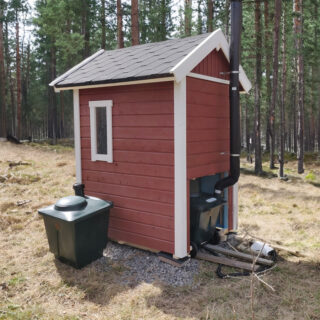
outhouse next to winter cottage (1)

outhouse next to winter cottage


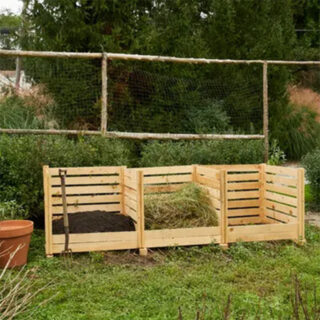
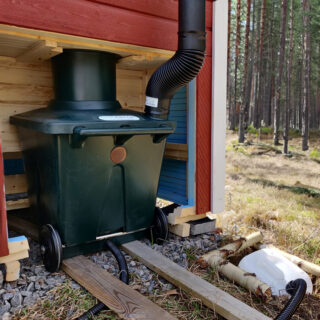
open compost bin outdoors

open back bench-type-of seat
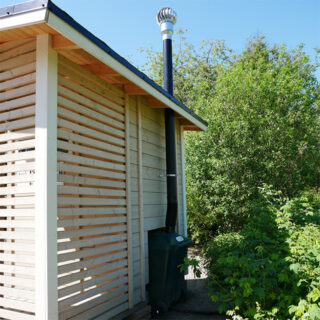
Installation principle of Green Toilet 120 and 330

Green Toilet 120 Family composting toilet installed

Green Toilet 120 Family installed underneath outhouse seat

Green Toilet 330 outhouse inside flat seat

Green Toilet 330 ventilation pipes

Green Toilet features ventilation pipes.

On top of the vent pipe stack here is a Whirlybird

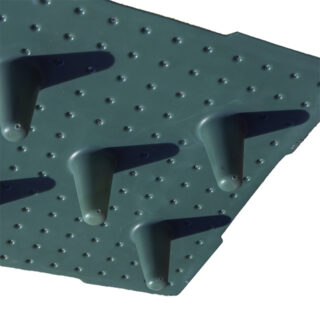
Green Toilet double base from below

Green Toilet’s double base from below

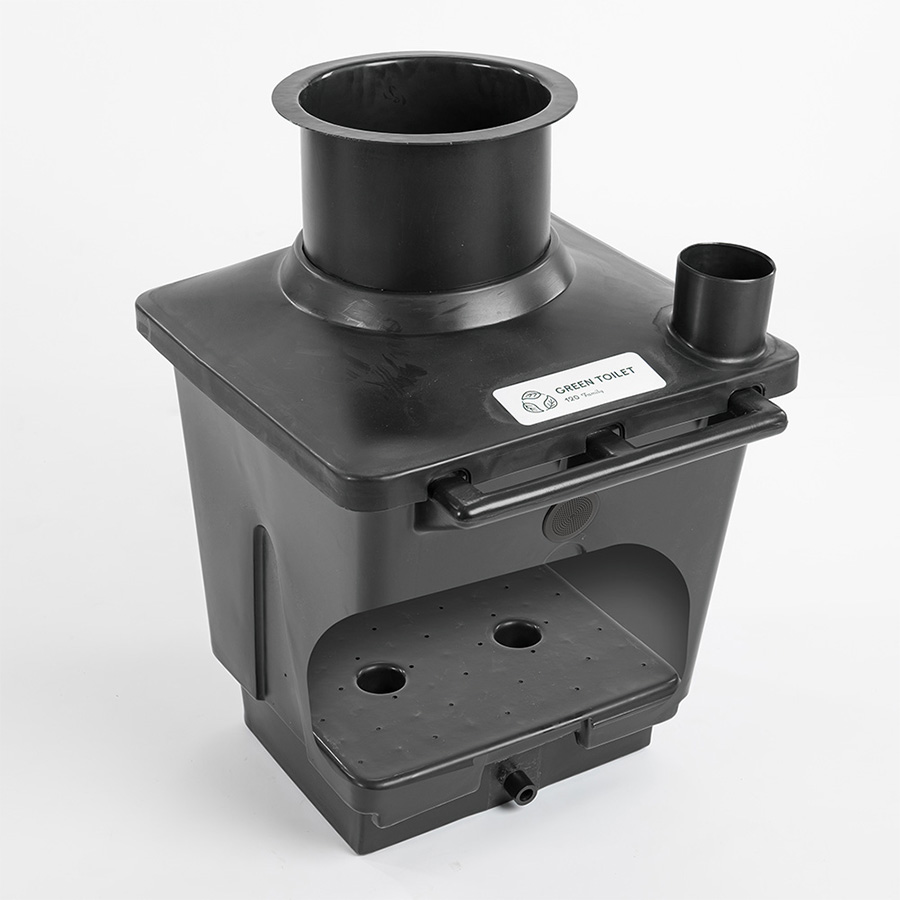
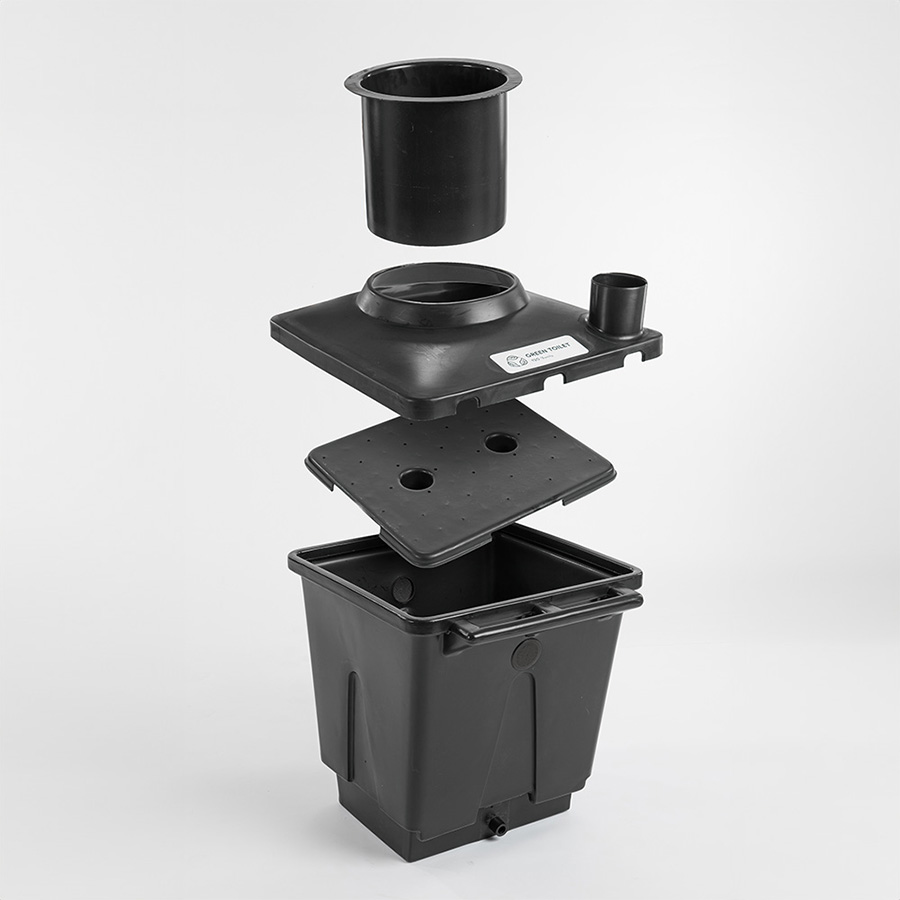
Green Toilet 120 Family double base photo Green Toilet 120 compost bin parts photo updated black bin

My cart
Your cart is empty.

Looks like you haven't made a choice yet.