 Composting
 Off-Grid
 Indoors
 Premium
 Floor-standing
 Tiny House
 ADU
ADU Urine-diverting
 Year-around
 Luxurious
 Cabins
 RVs
RVs Large capacity
 Cold climate
 Glamping
 Outhouses
 Batch toilets
 Public use
 Single-chamber
 Toilet Pedestals
 Accessories
7 Problems with Incinerating Toilets — and the Simpler Off-Grid Alternative
If you’re researching toilets for a cabin or off-grid home, incinerating toilets sound almost magical: no water, no plumbing, and your waste literally disappears into a spoonful of sterile ash.
We’ll be upfront: we sell waterless composting toilets, and we made a deliberate decision not to sell incinerating toilets. This article explains why — not with opinions, but with manufacturers’ own published figures and documented owner experiences. Every claim is numbered and sourced at the end. Read it, check the sources, and decide for yourself.
How incinerating toilets work
An incinerating toilet burns waste at high temperature — around 800°F [1]. Before every use, you drop in a paper bowl liner. After use, the waste falls into a chamber and a burn cycle runs for 30–60 minutes, powered by electricity or propane [2]. The ash pan needs emptying regularly — for a family of four, daily to weekly [2].
The main brands sold in the US are Incinolet (electric), Cinderella (electric and propane) and EcoJohn (propane/diesel). Here is what the brochures do not lead with.
Problem 1: The purchase price is only the entry fee
Expect roughly $2,000–$4,500 for an electric Incinolet [2], $4,299 for a Cinderella Comfort [3] and $3,695–$6,495 for EcoJohn models [4].
That is two to five times the price of a complete waterless composting system — for a machine that then keeps charging you.
Problem 2: Every single visit costs money
- Electric models: the manufacturer’s own US FAQ states electric models use 0.8–2 kWh per use — about 1 kWh on average [5]. At typical US rates that is roughly $0.15–0.30 per visit [6].
- Propane models: one popular gas model uses up to 180 g of propane per use — about 75 flushes per 20 lb tank [7]. At $12–20 to refill a tank, or $20–30 to exchange one [8], that works out to roughly $0.16–0.40 per visit.
- Paper liners: one before every use, about $20 per 200 [9]. Real-world use runs higher: one two-person household reports a $70 box lasting only two to three weeks [10]. Run out of liners — or the manufacturer’s web shop goes down, as that same owner experienced — and the toilet should not be used.
A family of four can easily make 20 visits a day. On an electric model that is several kilowatt-hours daily — a real line on the power bill, and a serious load on any solar system.
Problem 3: The off-grid paradox
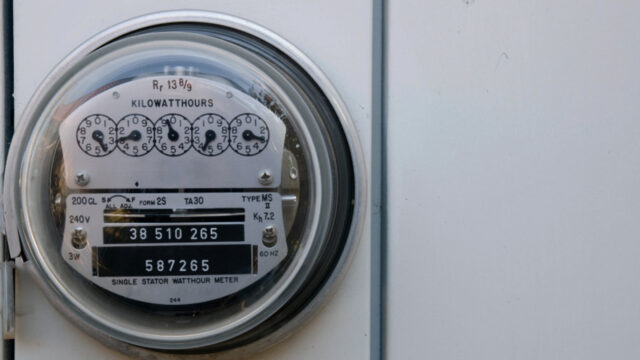
Here is the irony: the toilet marketed for off-grid living is one of the most power-hungry appliances you can put in an off-grid home. A leading electric model requires a dedicated 20-amp circuit [11], and its heating element draws around 2,300 watts — owners on off-grid forums discuss breakers tripping when anything else runs at the same time [12]. On solar, you end up sizing your inverter and battery bank around your toilet.
Propane models avoid the big electric draw — but still need 12V power for the fan, and they chain you to a new chore: hauling and swapping propane tanks year-round, one 20 lb tank per roughly 75 uses [7].
Problem 4: When it breaks, you have no toilet
This is the problem we consider the most serious — and the least talked about. An incinerating toilet is a complex appliance: heating elements, catalysts, blowers, augers and control electronics, all wear parts that need replacement over time [2]. And this appliance’s job is to handle urine and feces at 800°F, every day.
Think through the failure case. When a regular appliance breaks at the cabin, you live without it for a while. When your only toilet breaks, you have an emergency. And the owner record here is not encouraging.
What owners report when it fails
On Trustpilot, one of the main US manufacturers holds a 2.5 out of 5 rating, with 80% one-star reviews [10]:
- One buyer paid $3,100 for his unit: “After 20 uses, it failed.” The 36-month warranty went unhonored on the eight-month-old toilet, and customer service’s only answer was a new heating coil at his own cost.
- Another owner was left with a non-working unit after the company stopped accepting repair returns — hunting for a technician for a niche appliance on her own.
- A long-time customer describes years on a parts treadmill: heating coils, thermocouples, ash pans and thermometers, order after order.
- A cabin owner whose blower fan had corroded paid dearly for the replacement motor, then waited on unresponsive customer service.
- And the most telling one: a full-time RV owner tallied up her “$3,000+ lesson” and announced she was switching to a composting toilet next.
Service technicians for these niche machines are hard to find in rural areas, parts come from the manufacturer, and repairs on a $2,000–6,500 appliance are priced accordingly.
Mixing bodily waste with high-temperature electronics is, bluntly, a fragile combination. A waterless composting toilet has no heating element to burn out, no control board to fail, no auger to jam. There is nothing to break — and a toilet that cannot break is exactly what a remote cabin needs.
Problem 5: You’re burning fertilizer
Human waste contains nitrogen and phosphorus — the same nutrients the world mines and manufactures fertilizer from. A composting toilet turns them into compost for your trees and shrubs. An incinerating toilet destroys them completely and spends electricity or propane doing it; what is left is a pan of ash headed for the trash.
Phosphorus deserves a closer look, because it is not a renewable input. It cannot be manufactured or substituted in food production — it is mined from finite phosphate rock. Researchers place peak global production somewhere between 2035 and 2075 [13], with high-quality reserves increasingly concentrated in a handful of countries [14]. Every incinerated visit sends a small amount of a genuinely finite resource up the vent pipe.
For anyone choosing an off-grid toilet partly for environmental reasons, this is worth sitting with: one option closes the nutrient loop in your own yard, the other burns fuel to make those nutrients disappear.

Problem 6: The smell moves outside — it doesn’t vanish
Modern incinerating toilets do not usually stink up the bathroom itself. The smell happens outside, at the vent, during every burn. A long-term owner compares the exhaust on still days to “french fries cooked in rancid cooking oil” [15]. A full-time RV owner is blunter: the stench of burning urine was, in her words, not containable no matter how it was vented [10].
The blower itself runs at roughly 55 dB — like a percolating coffee maker — for 30–60 minutes after uses [2]. In a small, quiet cabin, you will hear your toilet working.

Problem 7: Burn queues and ash chores
Electric models typically need a burn cycle after every 1–6 uses [2], and in some models the toilet is out of commission during the cycle [16].
With a full house on a holiday weekend, the burn queue and the ash pan both fill up fast. One owner describes wrestling the pan out from floor level, waiting for it to cool enough that it will not burn through the bag [10]. Add the liner before every visit, and “maintenance-free” starts to look like a chore list.
Side by side: the numbers
| Incinerating (electric) | Incinerating (propane) | Waterless composting (swappable bins) | |
|---|---|---|---|
| Purchase price | ~$2,000–4,500 | ~$3,700–6,500 | $895–$1,989 |
| Cost per visit | ~$0.15–0.30 + liner | ~$0.16–0.40 + liner | ~$0 (a scoop of cover material) |
| Power needed | Dedicated 20 A circuit (~2,300 W) | 12V fan + propane tanks | None (optional solar fan) |
| Noise | Blower ~55 dB, 30–60 min cycles | Blower | Silent |
| What can break? | Heating element, catalyst, blower, electronics | Burner, fan, electronics | Nothing to break |
| Toilet available if power or fuel runs out? | No | Only while propane lasts | Always |
| Routine chores | Liner every visit, ash daily–weekly | Same + tank swaps | Swap a bin once or twice a year |
| End product | Ash to the trash | Ash to the trash | Compost for your yard |
| Nutrients | Burned | Burned | Recycled |
The simpler alternative
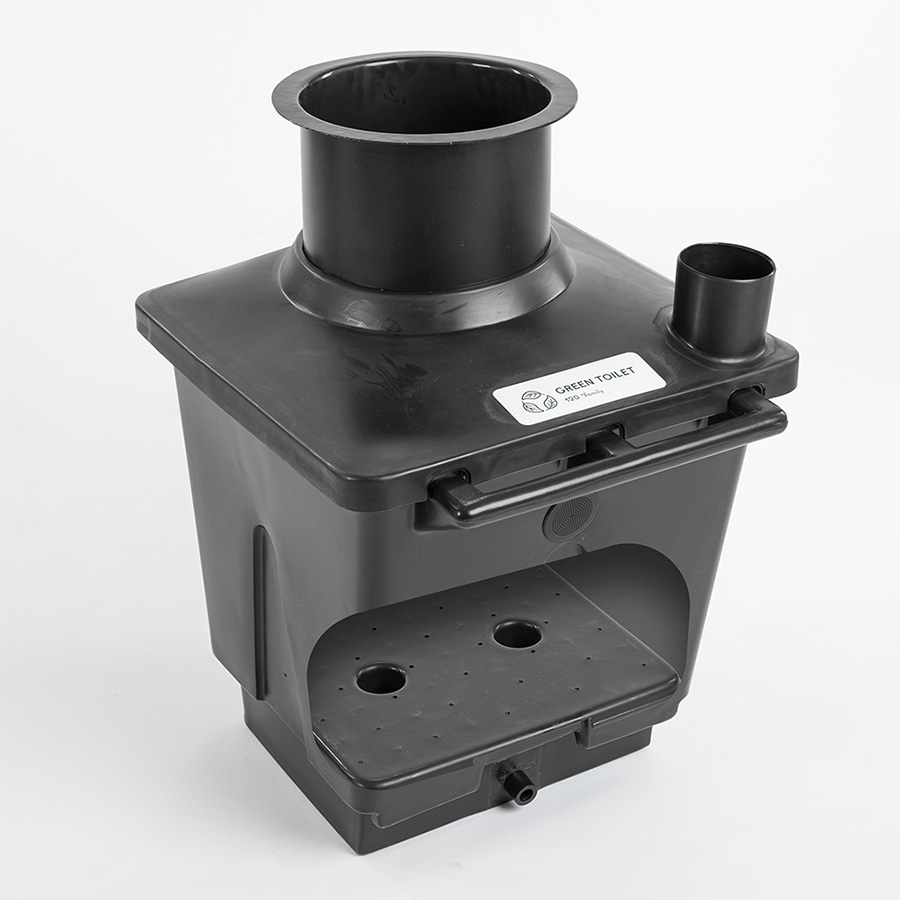
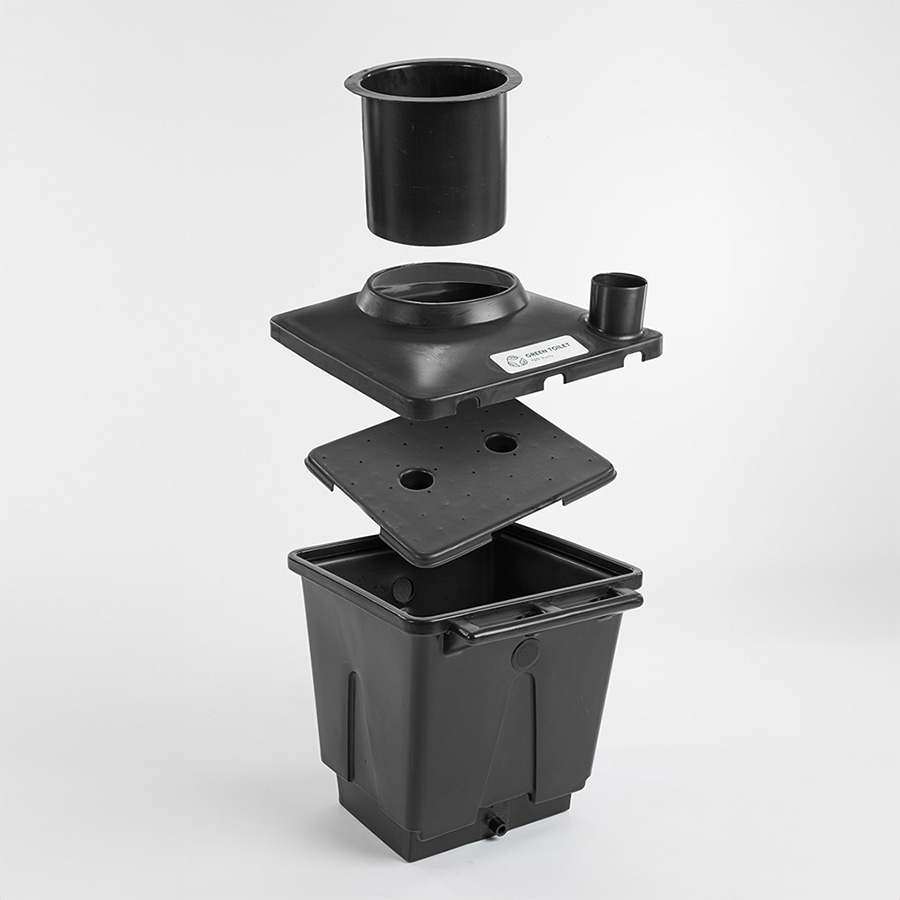
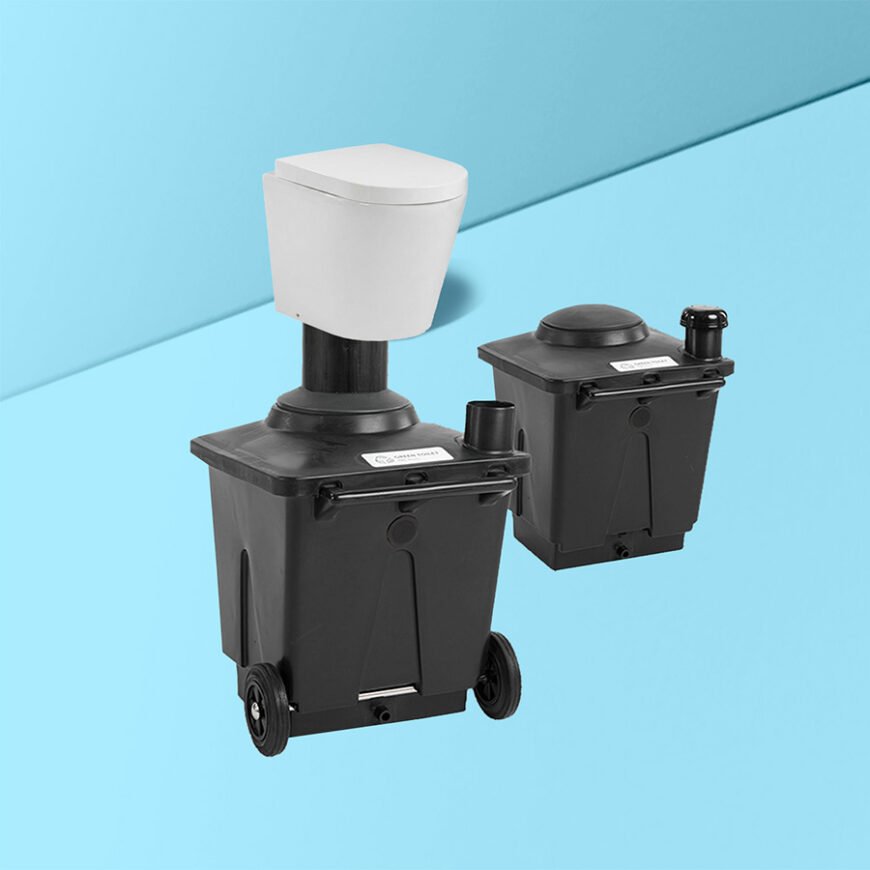
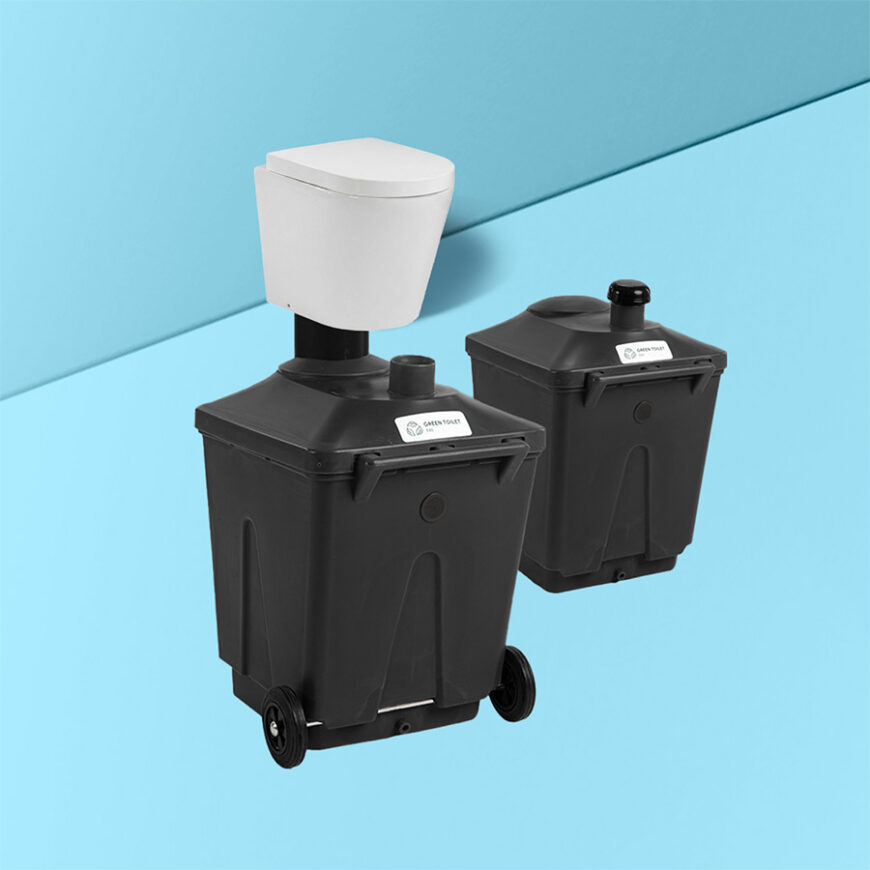
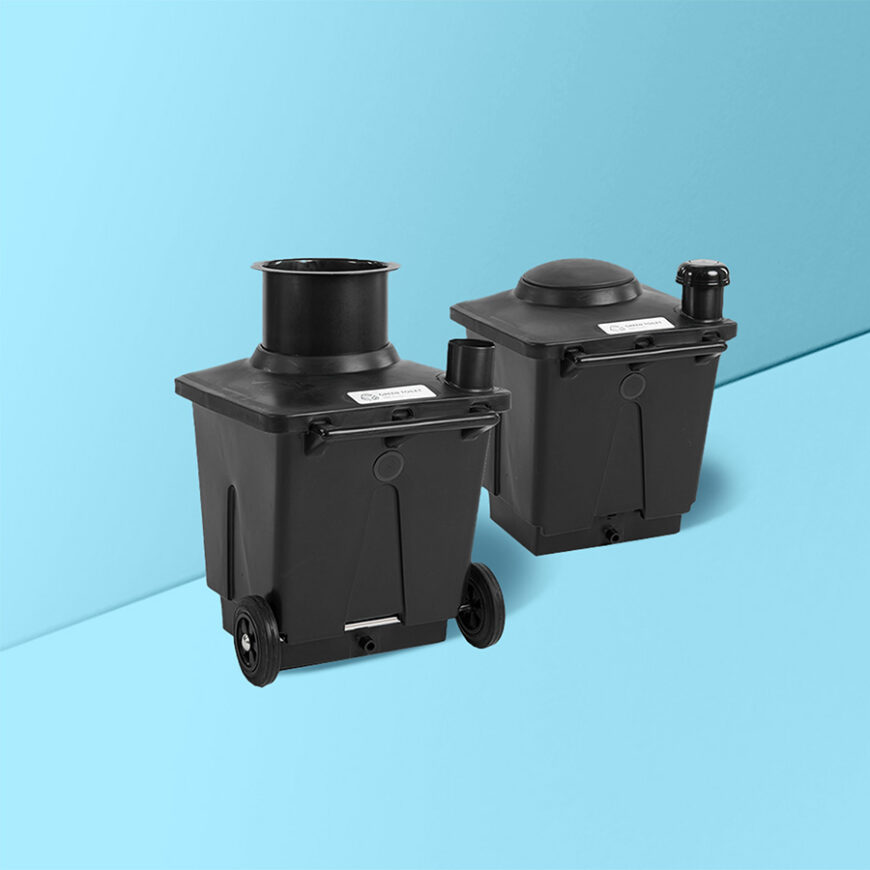
For cabins and off-grid homes, a waterless composting toilet with swappable bins solves the same problem — no water, no plumbing — without the appliance attached:
- Zero running costs. No burn cycles, no liners, no propane runs. A visit costs nothing.
- True off-grid independence. No circuit, no fuel. Ventilation works with a solar fan or a wind-driven Whirlybird.
- Nothing to break. No heating elements, no electronics, no service calls. The toilet is always available.
- Silence. Nothing hums, nothing burns.
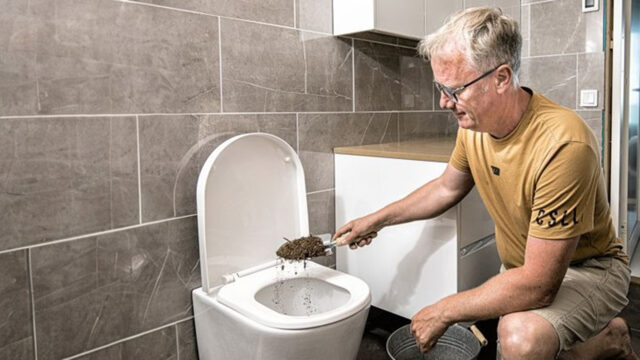
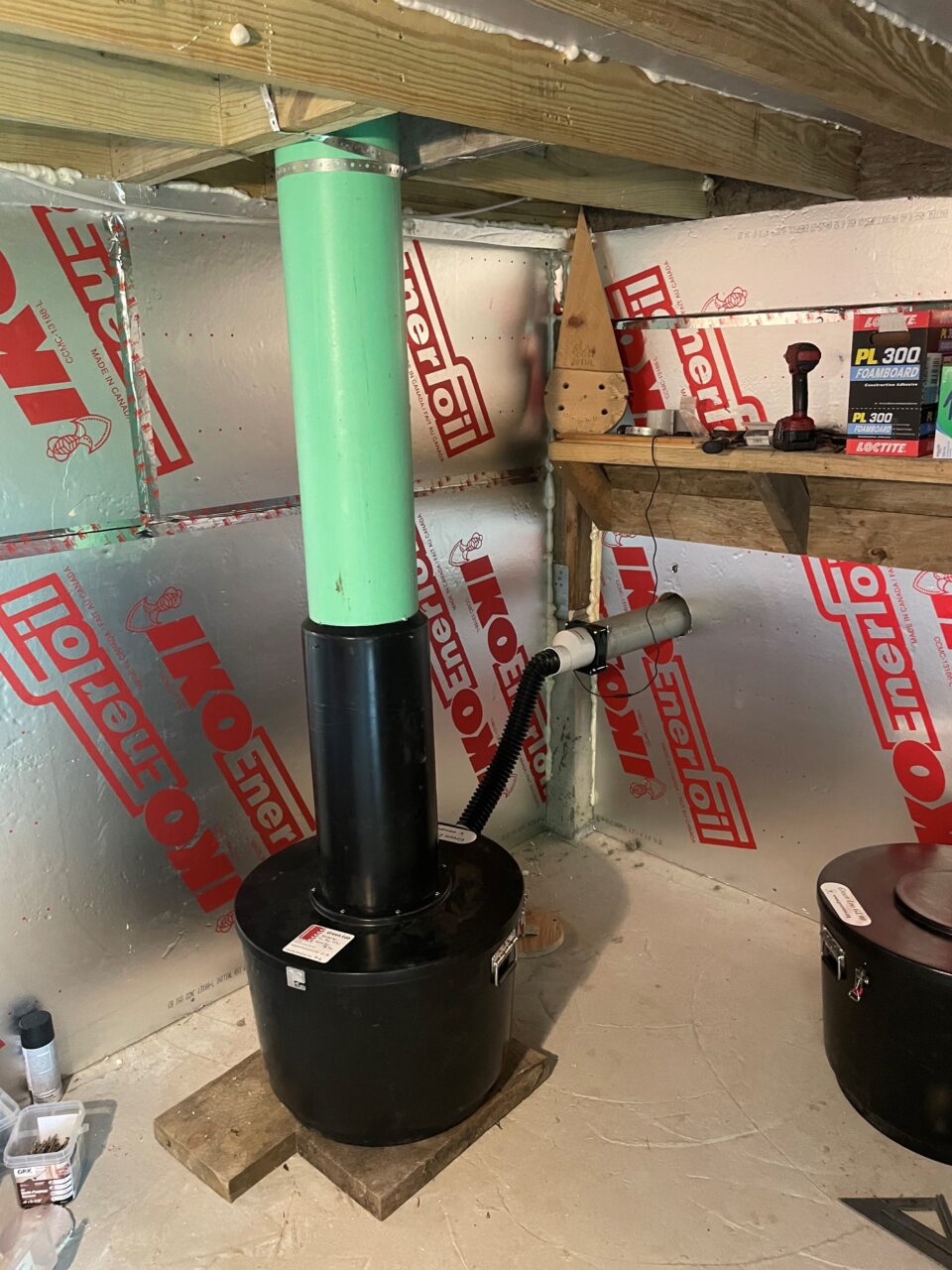
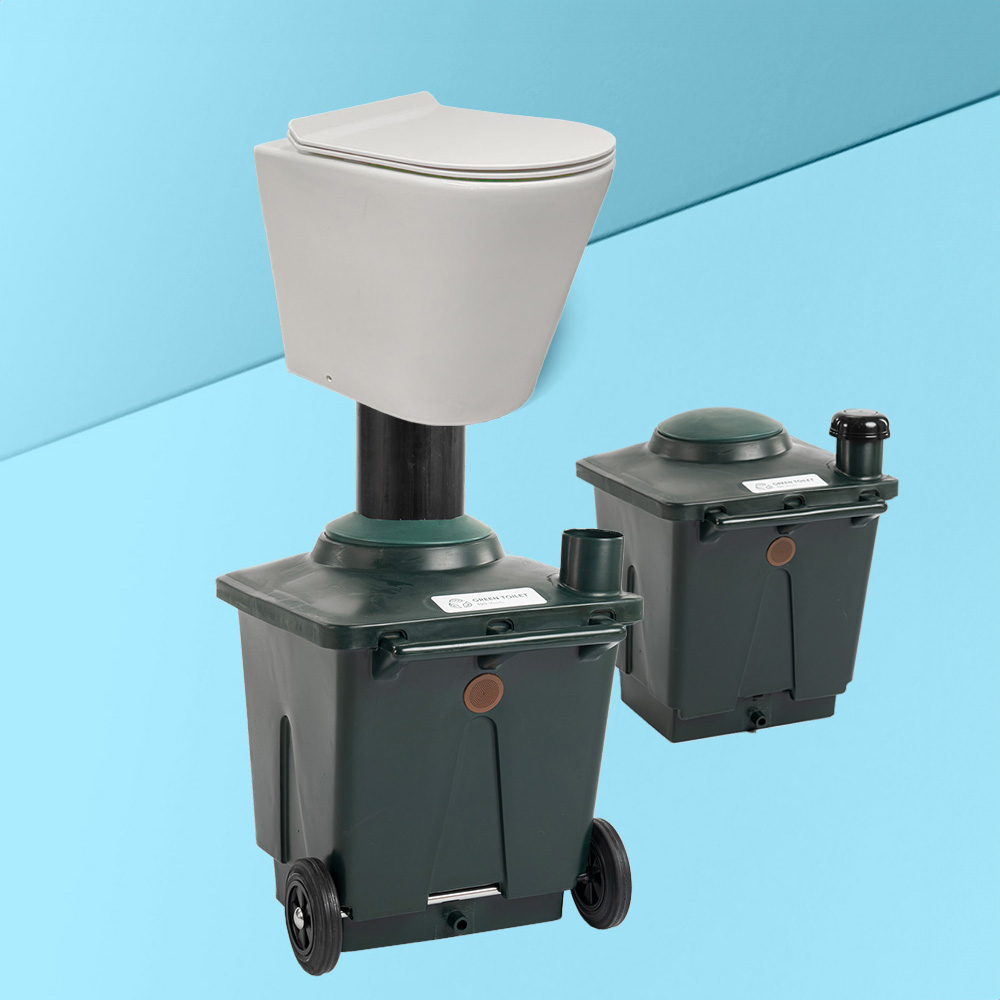
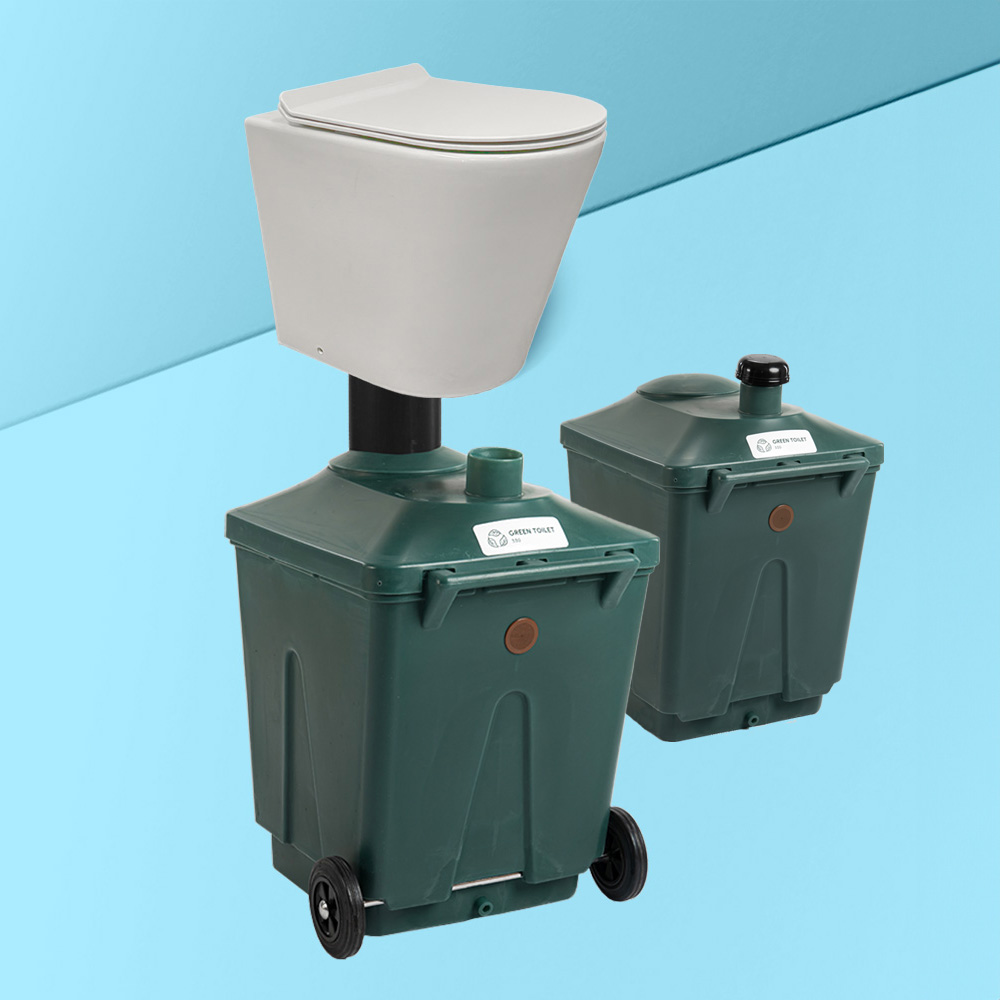
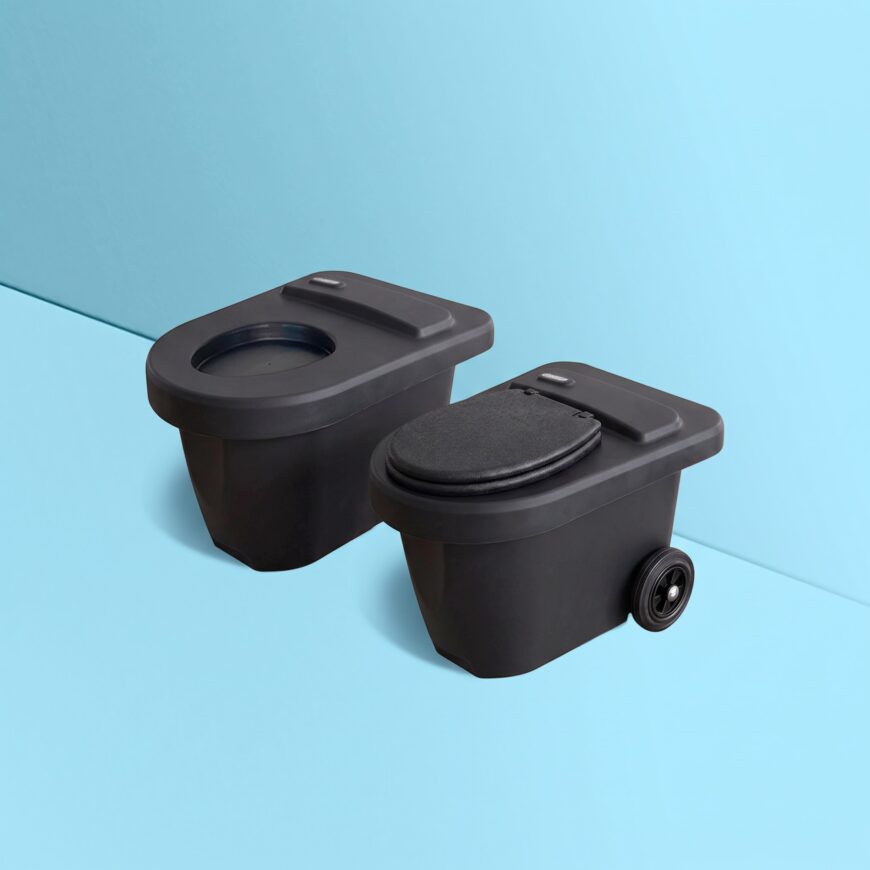
- Minimal chores. Instead of an ash pan every few days, you wheel out a full bin and swap in the spare. The full bin finishes composting on its own, closed, outside.
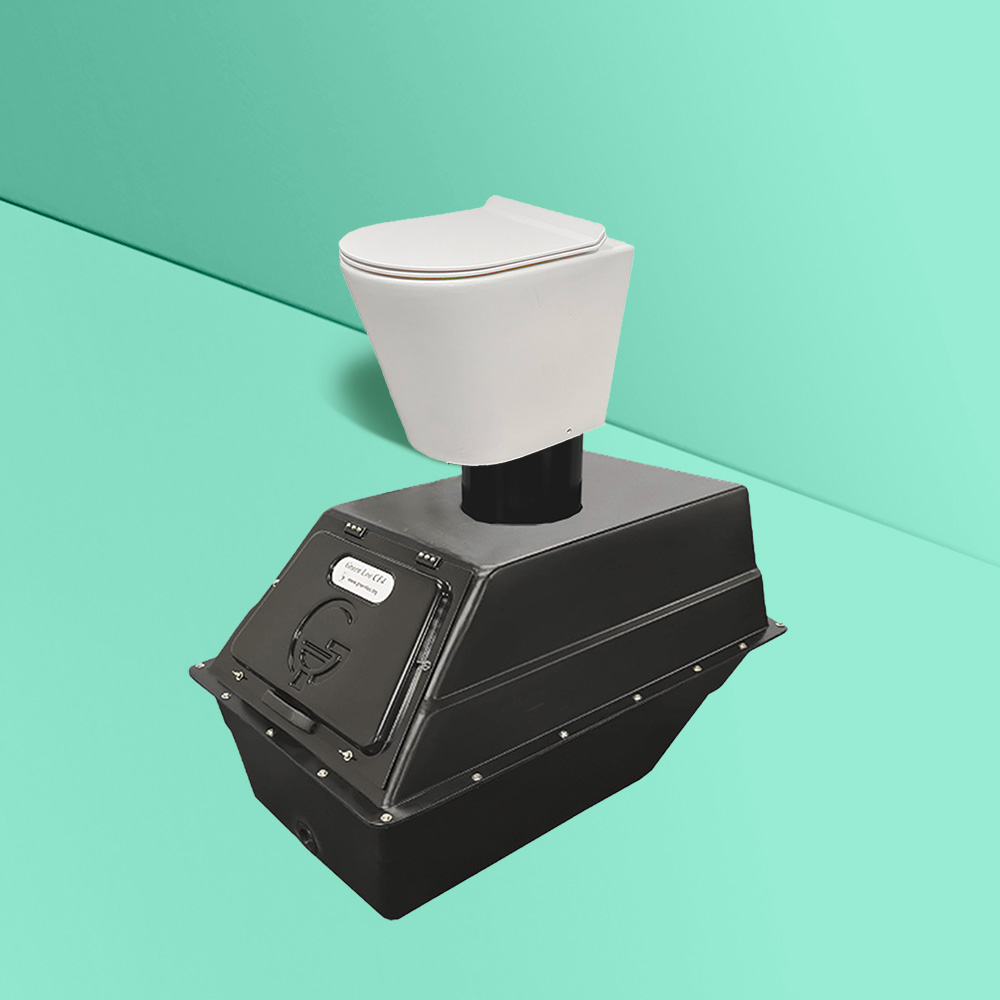
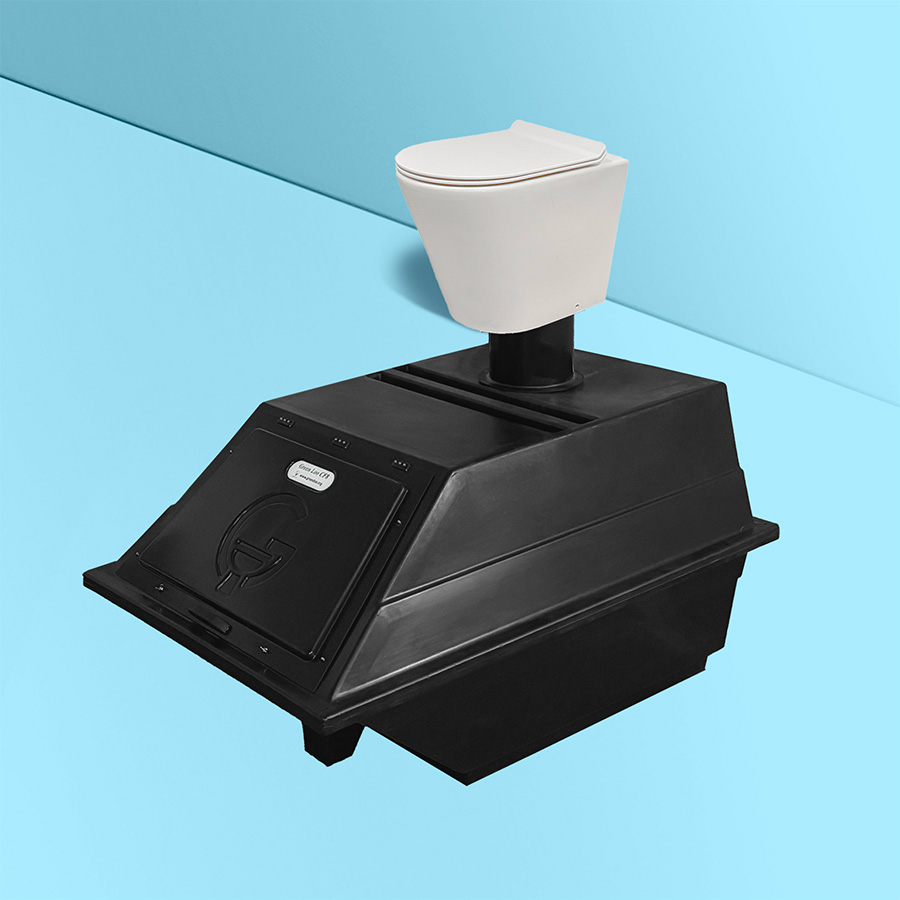
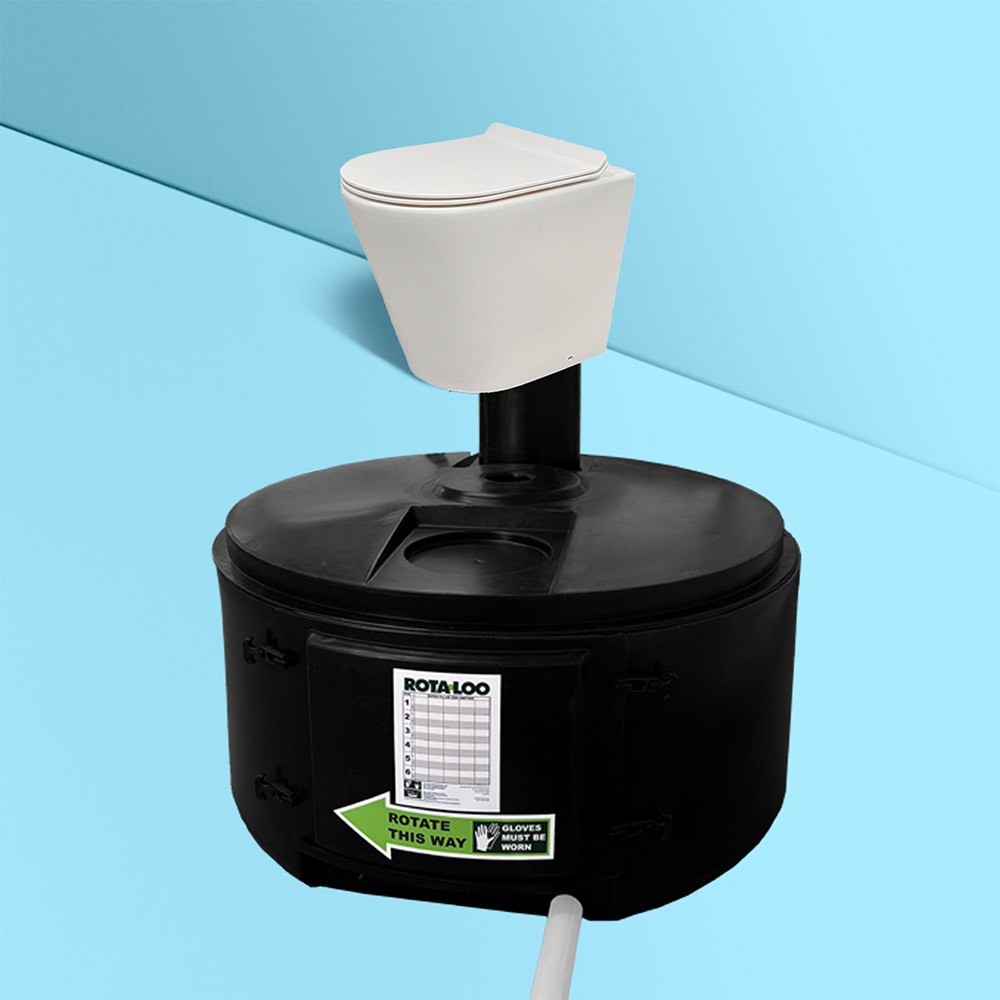
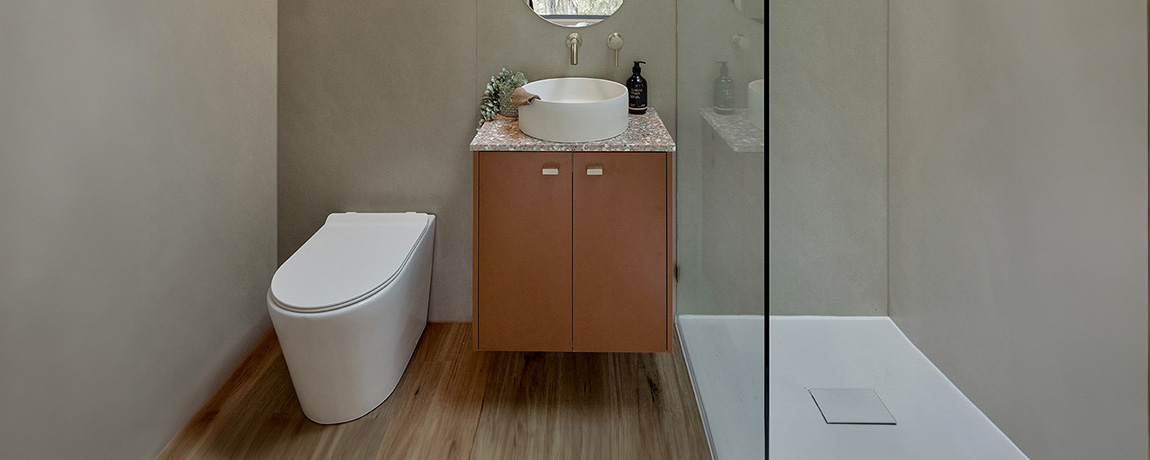
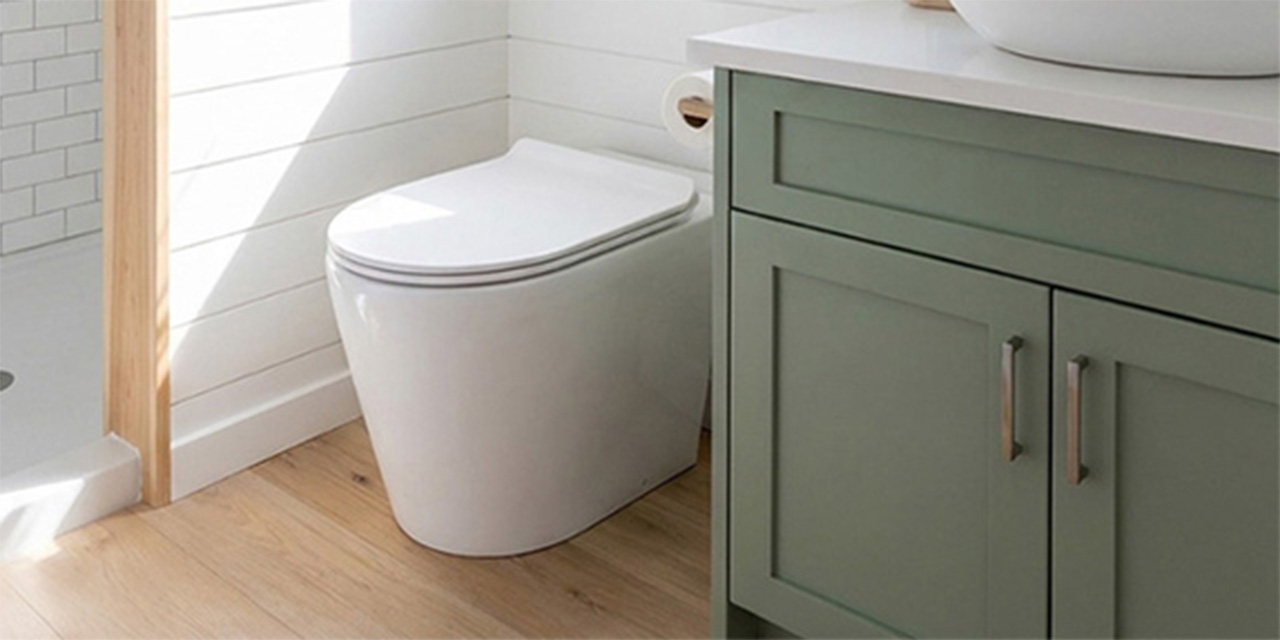
- A real bathroom. Our premium models come with a porcelain pedestal — Green Toilet Lux 120 for family use, Green Toilet Lux 330 for full-time households.
- Something back. The nutrients feed your trees instead of going up the vent pipe.
And winter? You can keep using a composting toilet below freezing — the composting simply pauses until spring.
Waterless toilets for cabins and off-grid homes
The bottom line
An incinerating toilet is a $2,000–6,500 appliance that charges you for every visit, demands more power than anything else in an off-grid home, burns nutrients that belong in the soil — and when it breaks, you are left without a toilet. A waterless composting toilet costs less to buy, nothing to run, has nothing to break, and gives something back.
Planning your cabin bathroom? Tell us about your place and we will help you pick the right model — and we will say so if we are not the right fit. Contact us or browse our waterless toilets.
1. HowStuffWorks — How waterless toilets work (incineration temperature, propane fuel cost)
science.howstuffworks.com/environmental/green-tech/sustainable/waterless-toilet2.htm
2. Today’s Homeowner — Incinerating Toilets guide (prices, cycle times, ash emptying, noise, wear parts)
todayshomeowner.com/bathroom/guides/incinerating-toilets/
3. The Cabin Depot — Cinderella Comfort product listing (price)
thecabindepot.com/products/cinderella-comfort
4. Propane Products — EcoJohn Sr. pricing
propaneproducts.com/ecojohn-sr.-34-1.html
5. Manufacturer’s official US FAQ — electricity consumption per incineration
incineratingtoilets.com/us/faq-items/how-much-electricity-do-the-electric-models-consume-per-incineration/
6. Family Handyman — What is an incinerating toilet and how does it work (running cost per visit)
familyhandyman.com/article/what-is-an-incinerating-toilet-and-how-does-it-work/
7. Cinderella Eco Group — Cinderella Freedom propane consumption
cinderellaeco.com/products/cinderella-freedom
8. US propane refill and exchange price guides, 2026
propanetankrefillcost.com
9. The Cabin Depot knowledge base — Composting vs. incinerating (liner cost)
support.thecabindepot.com/knowledge-base/composting-vs-incinerating
10. Trustpilot — verified customer reviews of a leading US incinerating toilet manufacturer
trustpilot.com/review/incinolet.com
11. Manufacturer’s official site — dedicated 20-amp circuit requirement
incinolet.com
12. permies.com — off-grid forum discussion on incinerating toilet power draw
permies.com/t/30860/urine-incinerator-toilets
13. Phosphorus Futures — Peak Phosphorus: the sequel to Peak Oil
phosphorusfutures.net/the-phosphorus-challenge/peak-phosphorus-the-sequel-to-peak-oil/
14. Argus Media & International Fertilizer Association (2023) — Phosphate Rock Resources and Reserves
fertilizer.org
15. WombatNation — long-term owner review of an electric incinerating toilet
wombatnation.com/2003/09/14/return-of-the-incinerating-toilet/
16. Mortons on the Move — What is an incinerator toilet
mortonsonthemove.com/what-is-an-incinerator-toilet/