 Composting
 Off-Grid
 Indoors
 Premium
 Floor-standing
 Tiny House
 ADU
ADU Urine-diverting
 Year-around
 Luxurious
 Cabins
 RVs
RVs Large capacity
 Cold climate
 Glamping
 Outhouses
 Batch toilets
 Public use
 Single-chamber
 Toilet Pedestals
 Accessories
Treehouse Toilet: A Real Bathroom Up a Tree, With the Composter on the Ground
A treehouse solves almost everything on its own. You get the view, the quiet, the feeling of being somewhere else entirely — and then one practical question stops the whole project: what do you do about a toilet?
Climbing down a ladder at two in the morning is the answer most treehouses settle for. It does not have to be. In fact, a treehouse is one of the best buildings there is for a waterless composting toilet — for a reason most people never think of.
Why plumbing up a tree rarely works
Running a conventional bathroom into a treehouse means solving four problems at once: getting pressurised water up, getting waste down to a septic system, protecting both against freezing, and doing all of it on a structure that moves. A tree sways, grows and shifts with the seasons. Rigid pipe and a living, moving host are a bad combination.
Every one of those problems disappears when the toilet does not use water in the first place.
The trick: keep the composter on the ground
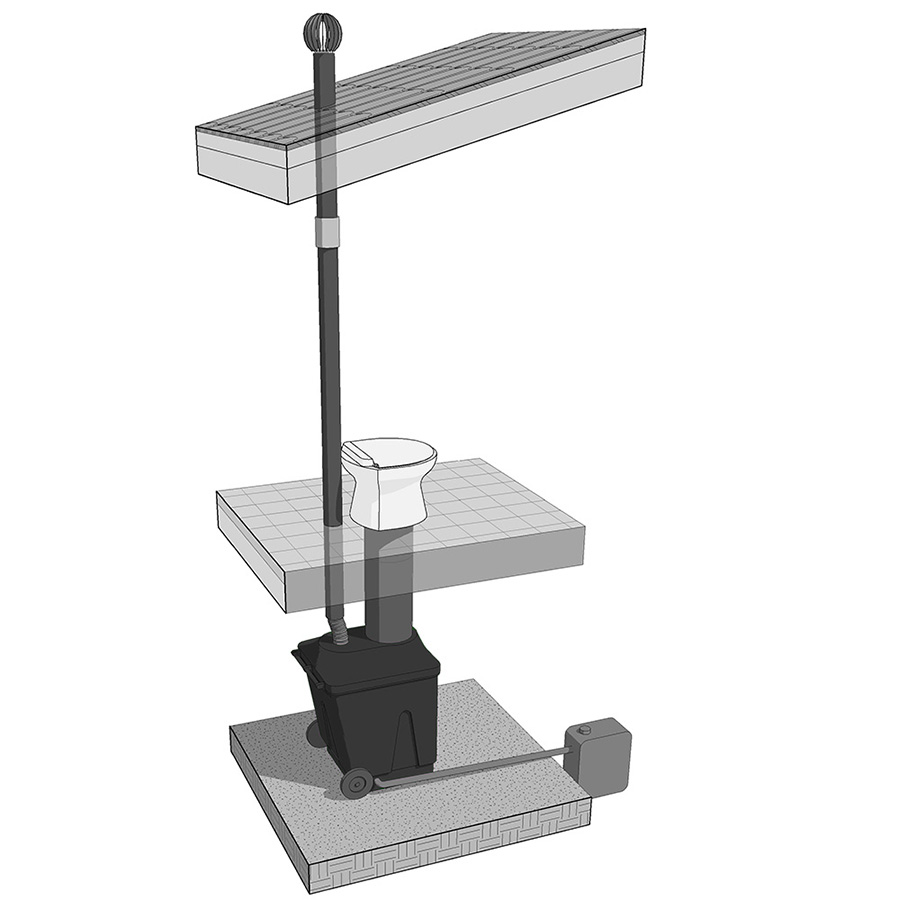

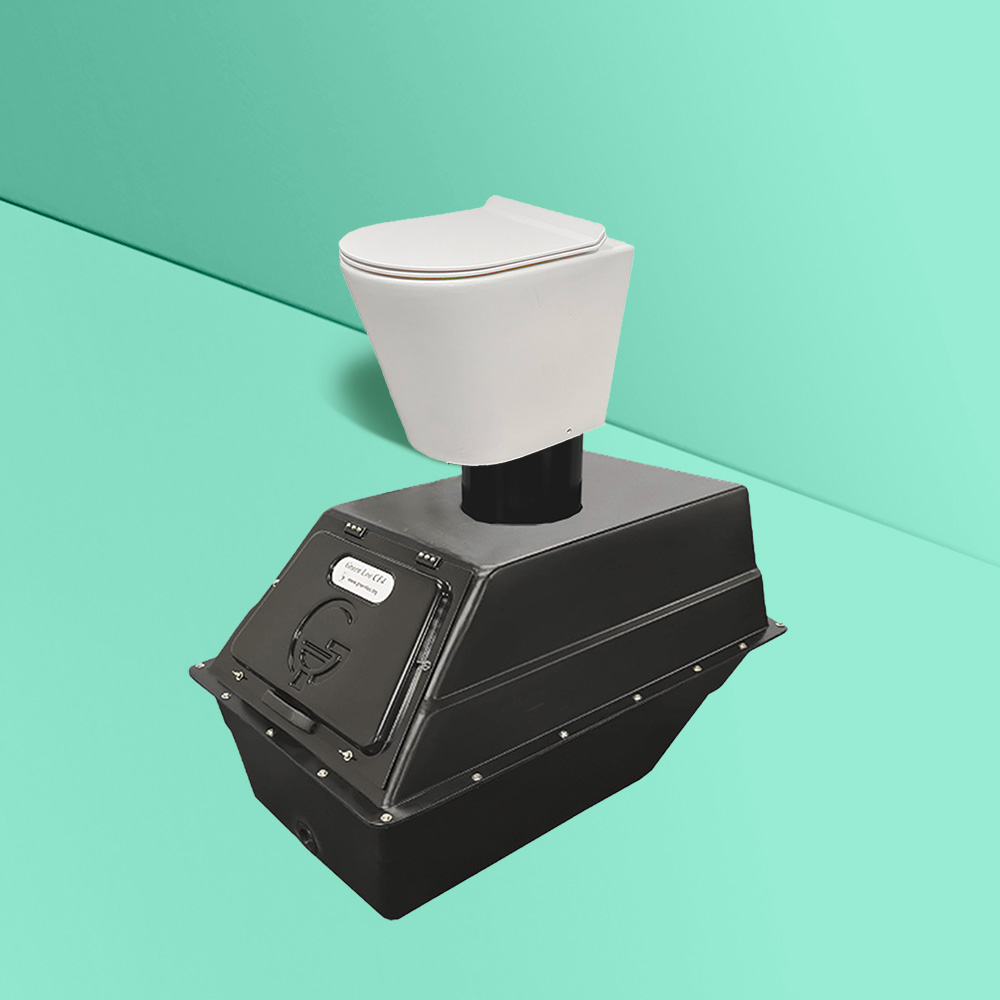
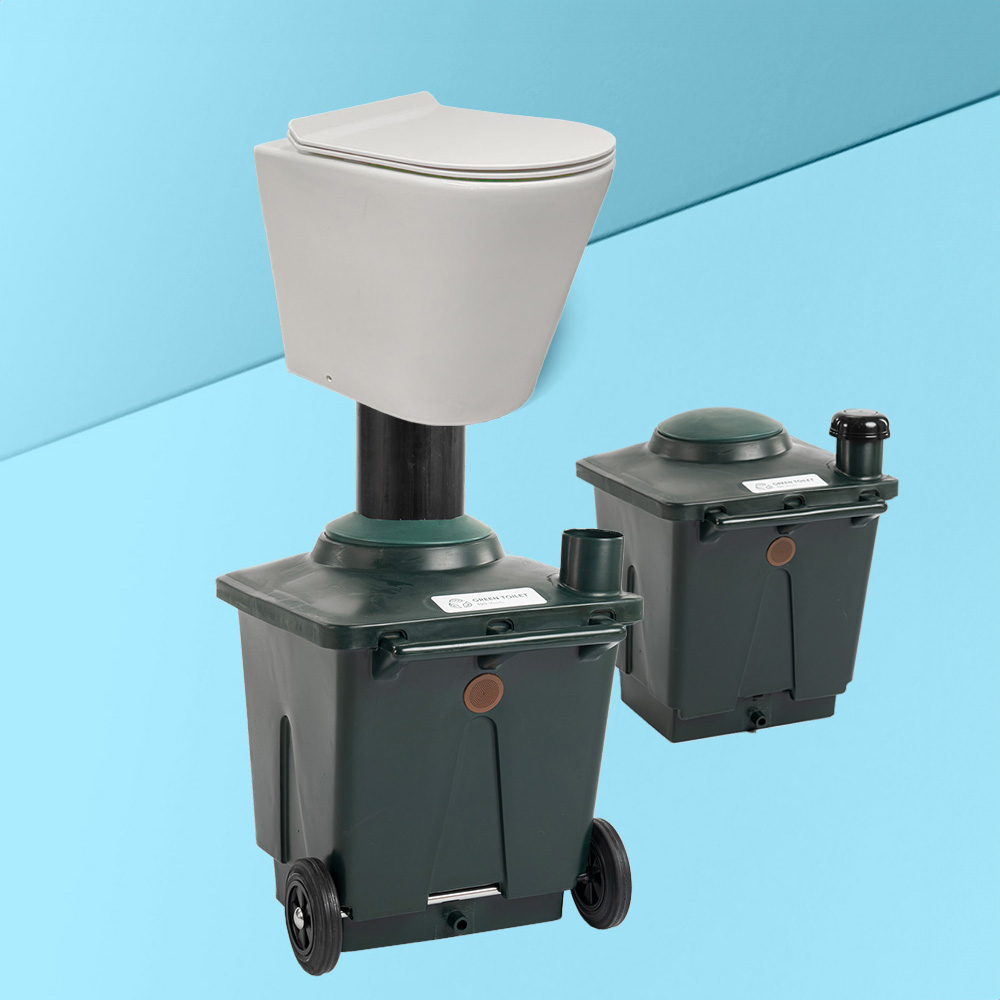
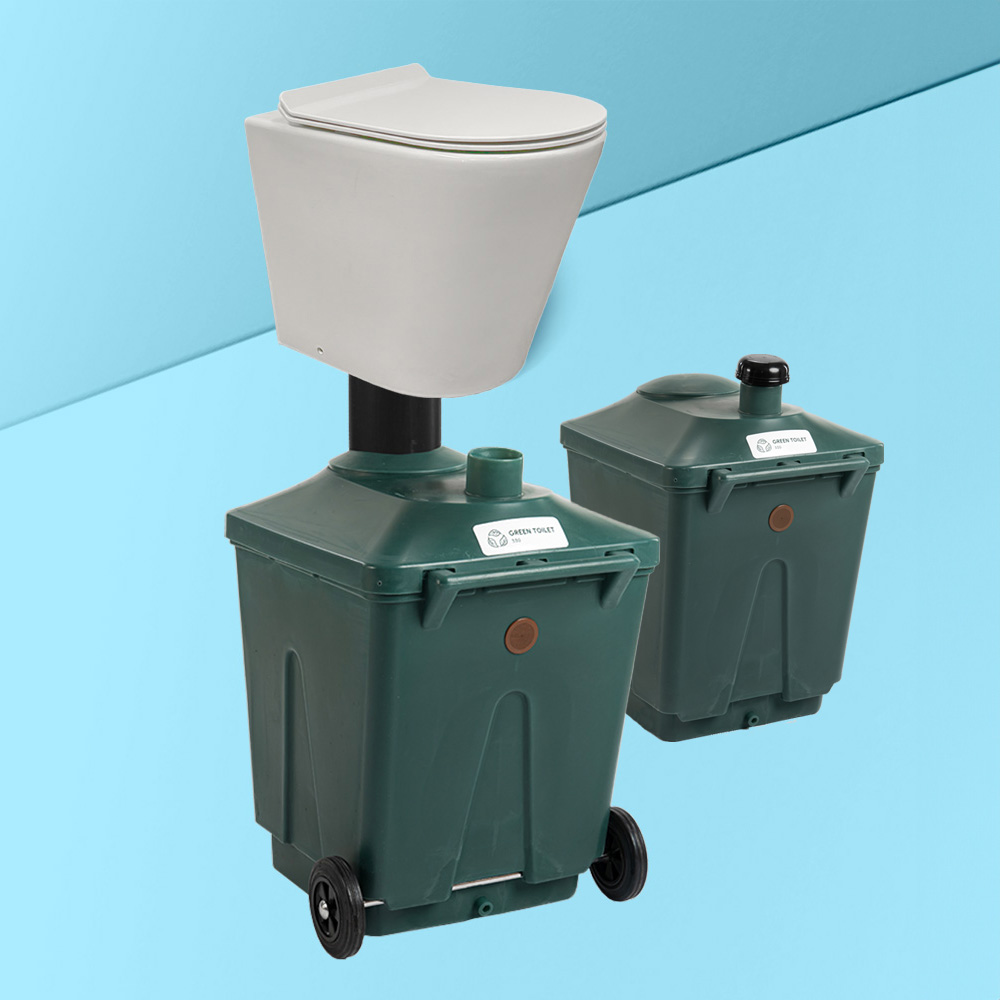
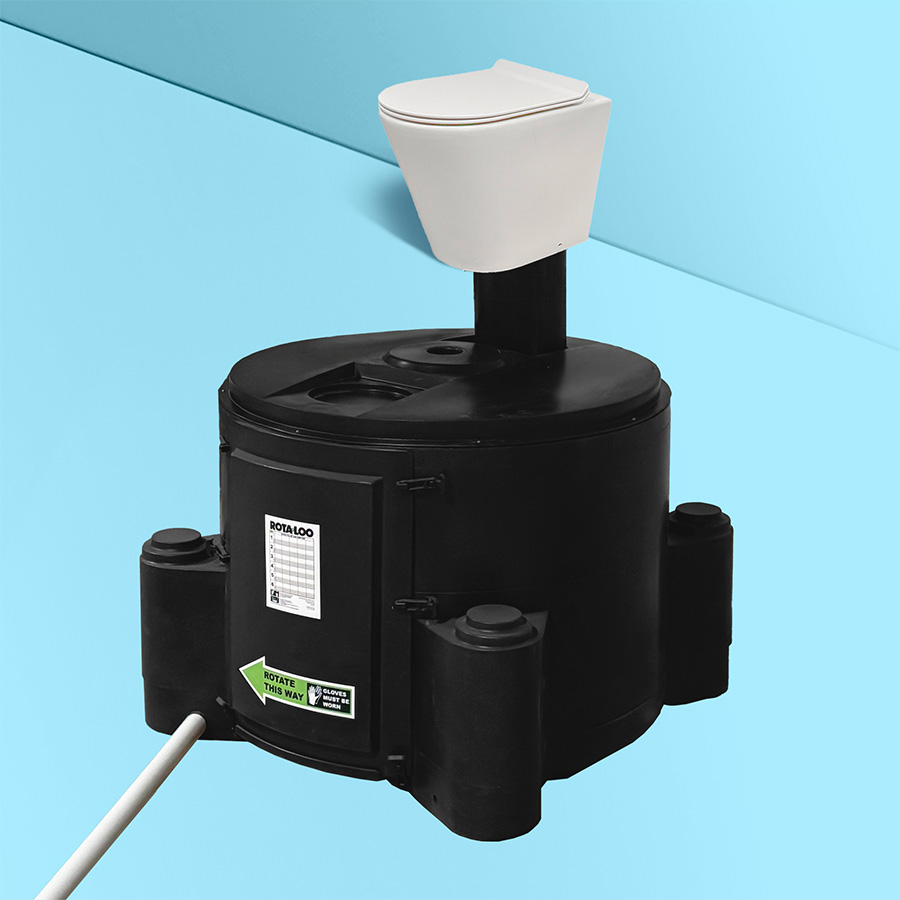
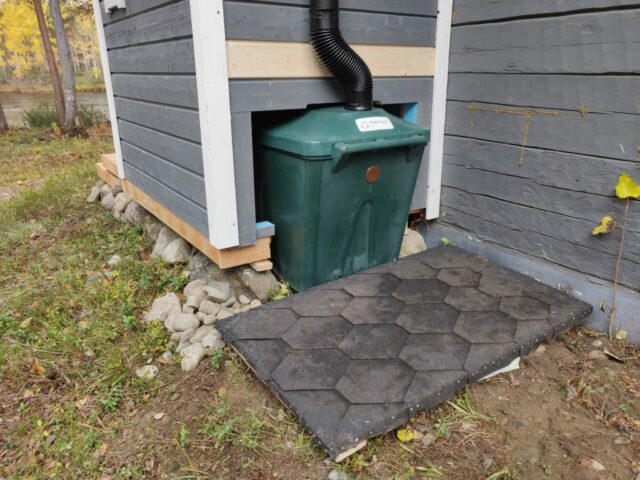
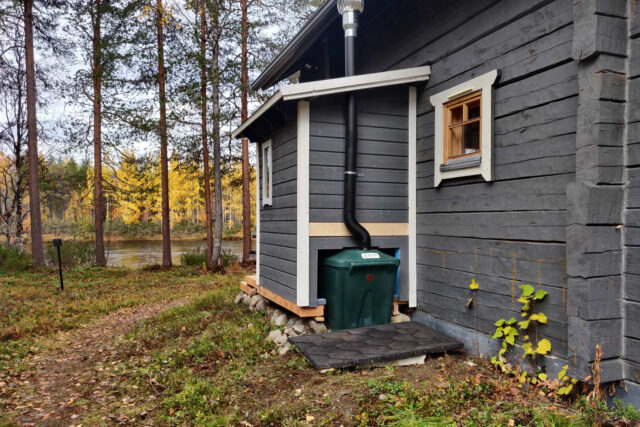
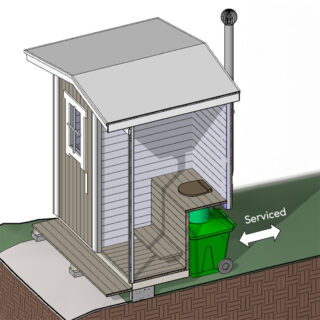
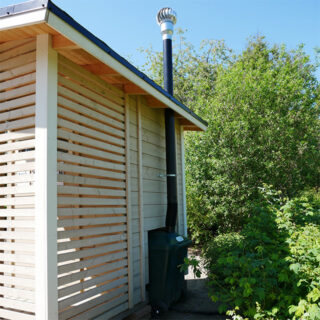
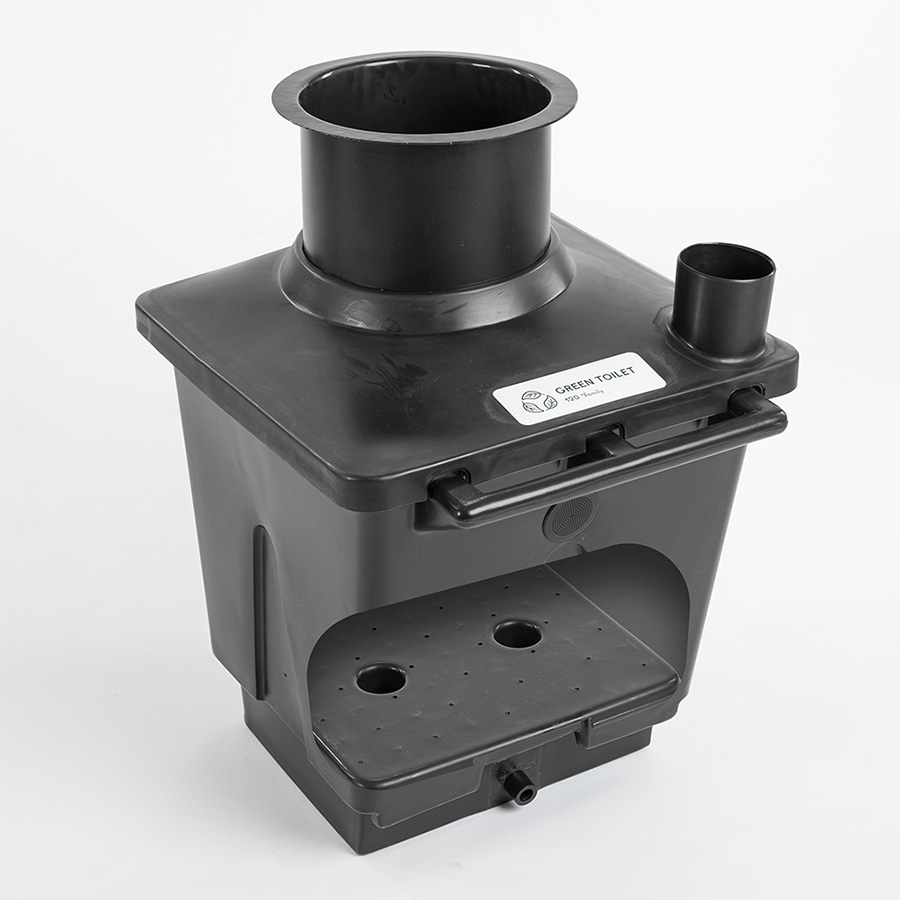
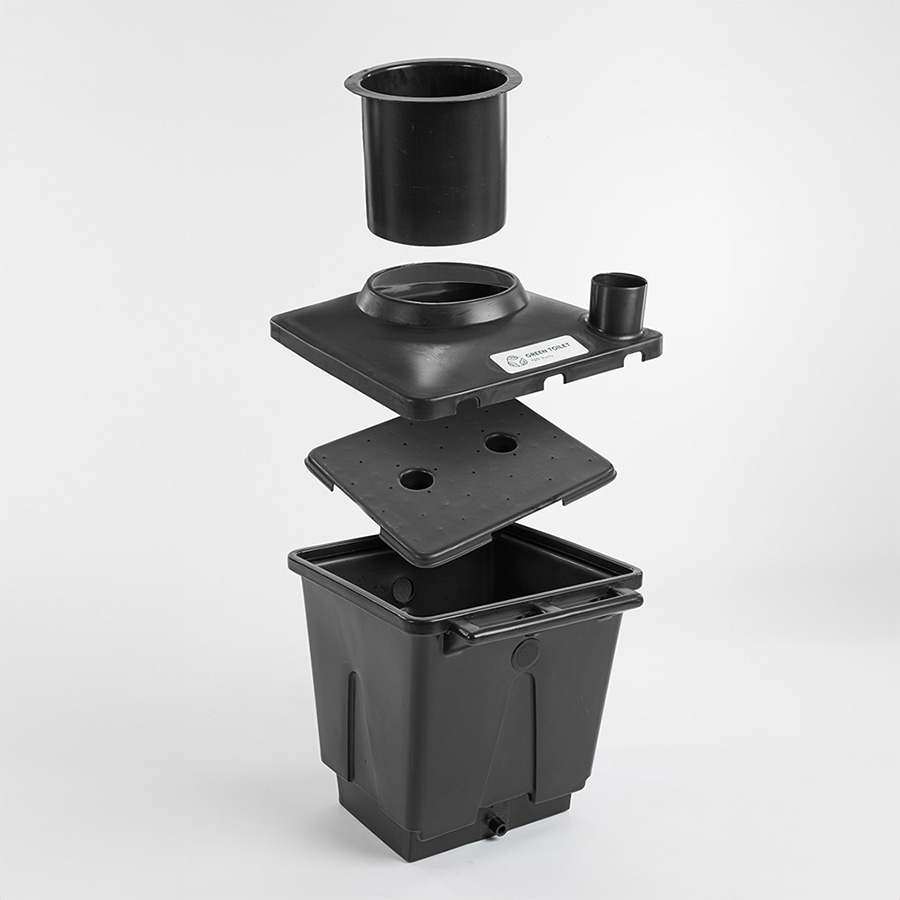
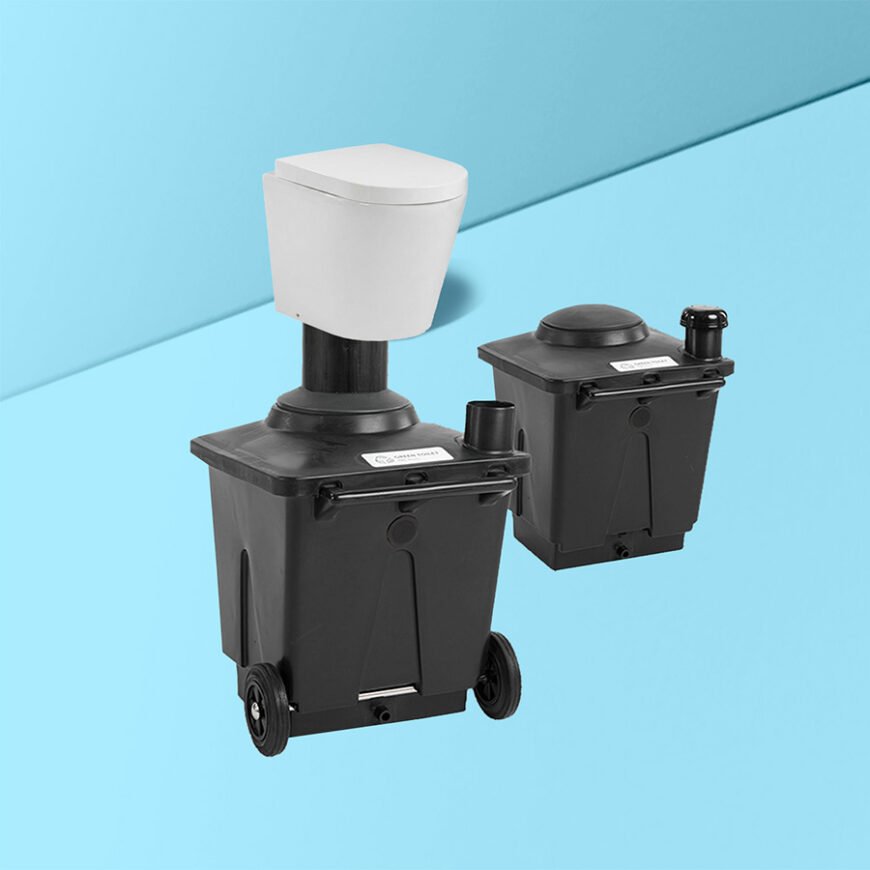
The Green Toilet Lux is a split-system composting toilet. That means it comes in two parts that live on two different levels: a porcelain pedestal inside, and the composting container directly below it, outside the room. Waste simply falls straight down into the container. There is no tank under the seat and no mechanism in between — just gravity.
In an ordinary house, that design has one requirement: you need vertical space beneath the bathroom floor. The Lux 120 needs at least 28 inches below floor level, and the larger Lux 330 about 37 inches. In a normal build that is a real constraint, and it is why split systems usually end up in cabins with a crawl space or a slope to work with.
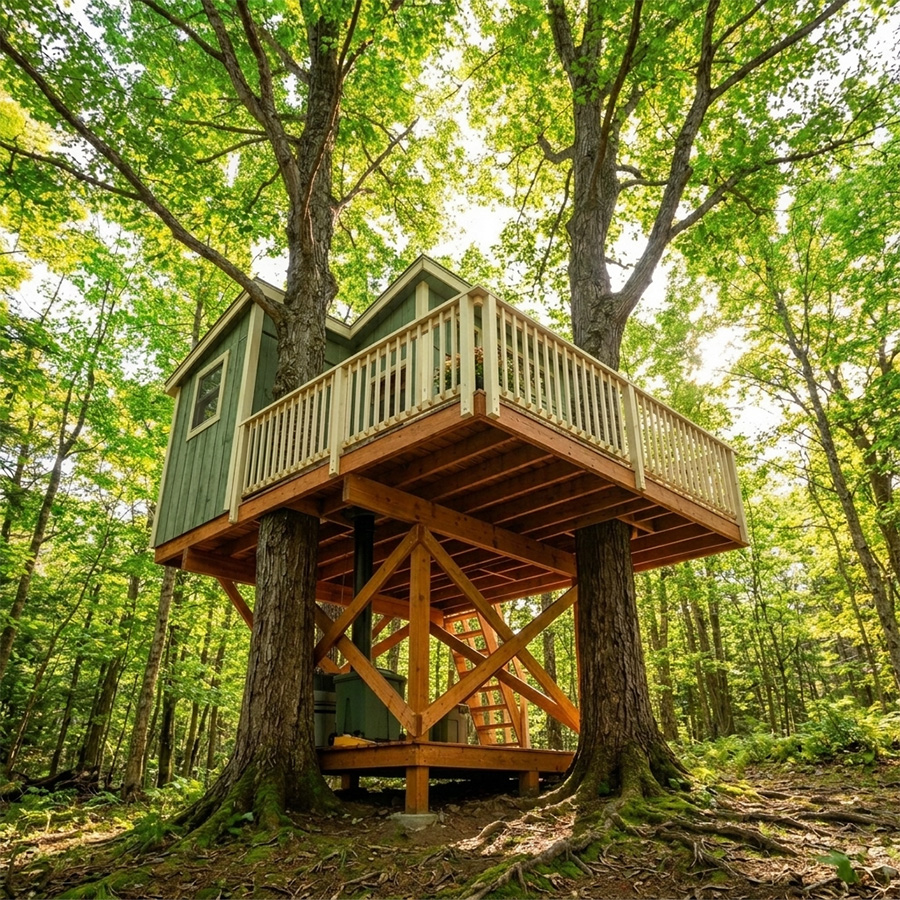
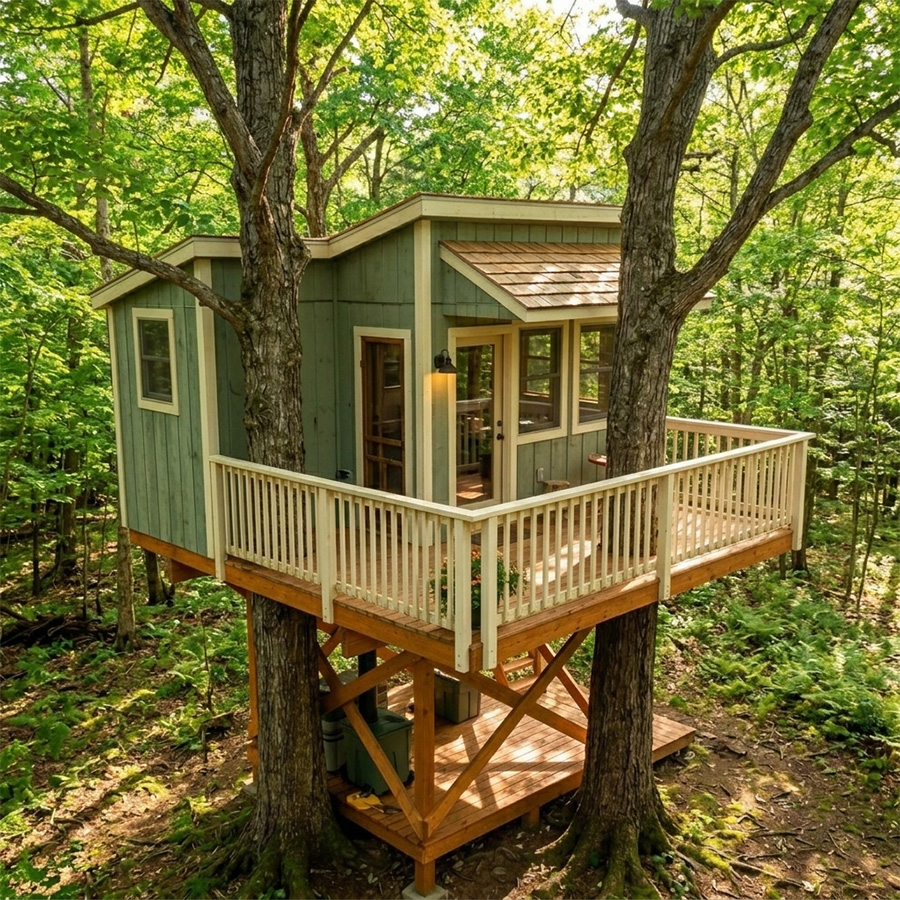
A treehouse turns that constraint into an advantage. You are not looking for 28 inches under the floor — you have the entire height of the tree. The pedestal goes in the treehouse; the composting container stands on the ground below; the drop between them can be as long as your build needs. Installations with a 10-foot (3 m) drop are already in use.
Why this suits a treehouse so well
- Nothing heavy goes up the tree. The composting container — the bulky part — never leaves the ground. Only the pedestal is installed up in the treehouse.
- It takes up very little floor space. A porcelain pedestal has a footprint no bigger than the toilet in your house, which matters when every square foot is carried up a ladder.
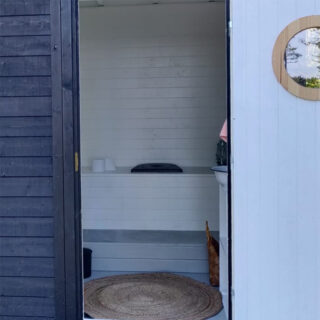
- It looks like a real bathroom. Guests sit down on porcelain and generally have no idea it is waterless until you tell them.
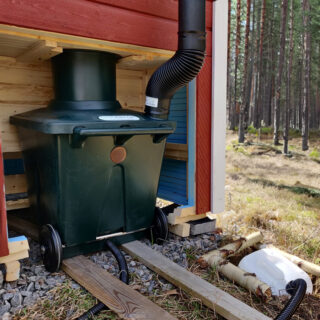
- Service happens at ground level. You never carry a container down a ladder. The containers roll on wheels, right there on the ground where they already are.
- The composting happens outside the living space. Nothing is composting under your feet while you sleep.
Which model for which treehouse
For a treehouse, the two Lux models are the natural choice, and the difference between them is simply how much use the toilet gets.
| Model | Suited for | Container volume | Drop needed below floor | Seat |
|---|---|---|---|---|
| Green Toilet Lux 120 | 2–4 people (the family model) | 31 gal | 28 in minimum | Porcelain pedestal |
| Green Toilet Lux 330 | Full-time homes, larger groups, public sites | 87 gal | ~37 in (3 ft) minimum | Porcelain pedestal |
The Lux 120 covers the great majority of treehouses: a family, a weekend cabin in a tree, a guest space. The Lux 330 is for treehouses that run close to full time, take larger groups, or sit on a public or commercial site — its 87-gallon container stretches the service interval a long way.
Planning the drop
The one thing the system does need is a clear vertical line. The composting container has to sit directly below the pedestal so waste drops straight down, so the chute route is worth deciding early — before the floor goes in, not after.
Because the tree will move and grow, leave slack and use flexible sections where the chute, ventilation pipe and liquid hose are fixed to the structure. Nothing should be under tension in a storm or after a few seasons of growth.
Ventilation, power and liquids
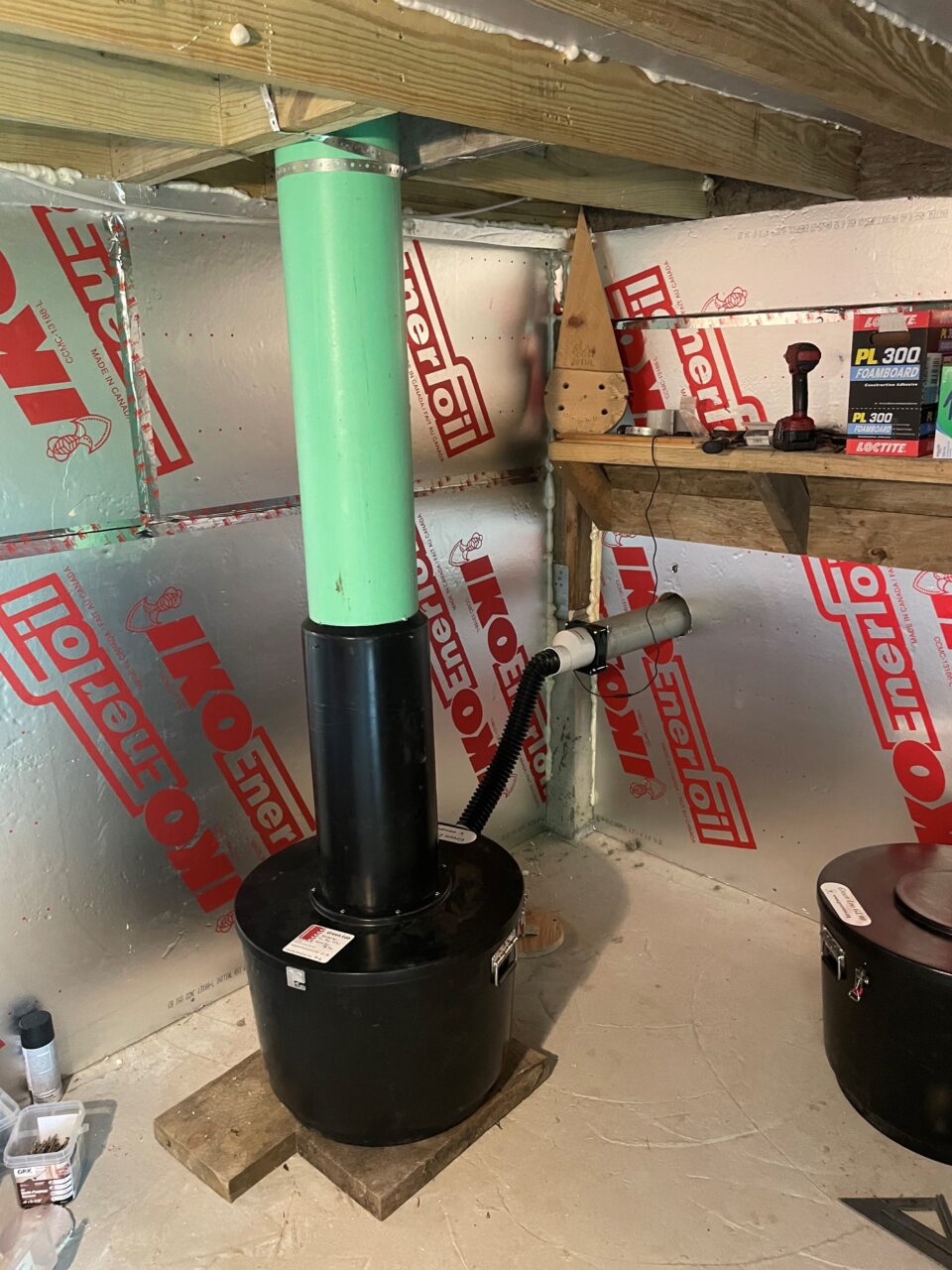
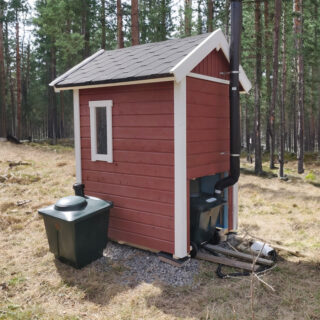
The composting container is ventilated with a low-consumption fan that keeps the airflow moving from the container down and out through a pipe, which is what keeps the bathroom space odorfree. Because air is drawn away from you, the smell never has a route back up.
If there is no mains power at your treehouse — which is usually the case — a solar power kit with a built-in battery runs the fan, or a wind-driven Whirlybird can do the job without any electricity at all.
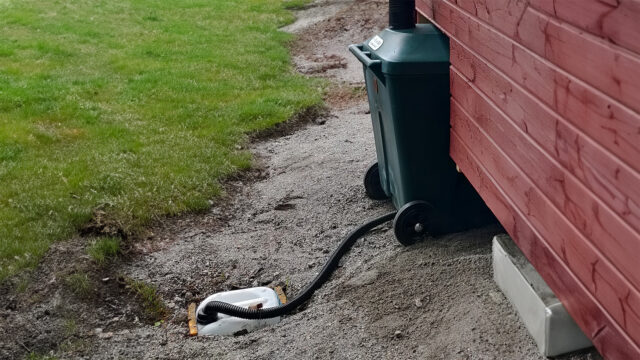
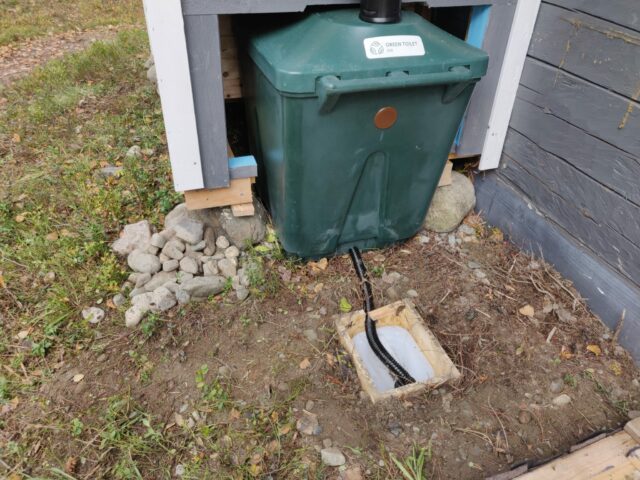
Liquids are handled at the same ground level as everything else. The double base inside the container separates excess liquid from the compost, and a hose leads it into a canister or a filter beside the container. You check it when you are down there anyway.
Servicing it without touching a ladder
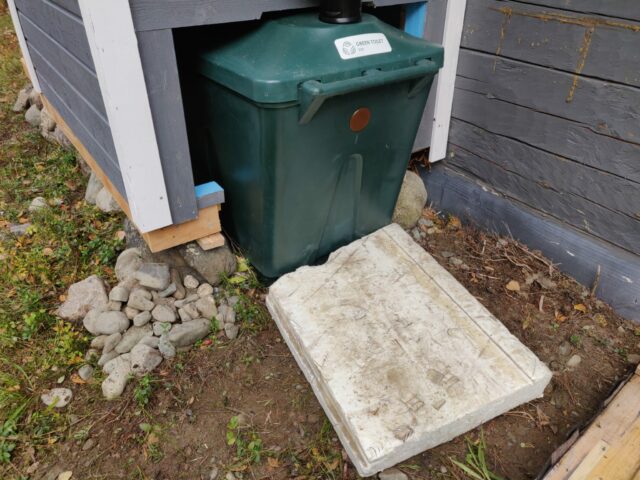
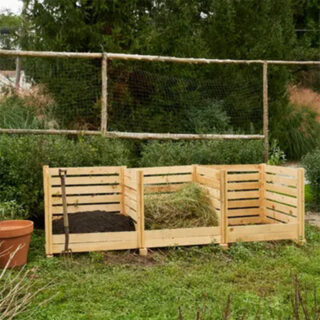
This is where a split system earns its place in a treehouse. When the container in use fills up, you swap it for the spare — both stand on the ground, both roll on wheels. The full one is sealed with its lid and left aside, where the compost matures into rich mulch over roughly 6 to 12 months depending on conditions.
You handle a closed container, never the contents. And unlike a self-contained toilet in a small cabin, there is no stage where you are carrying anything down a ladder.
Split-system composting toilets for treehouses
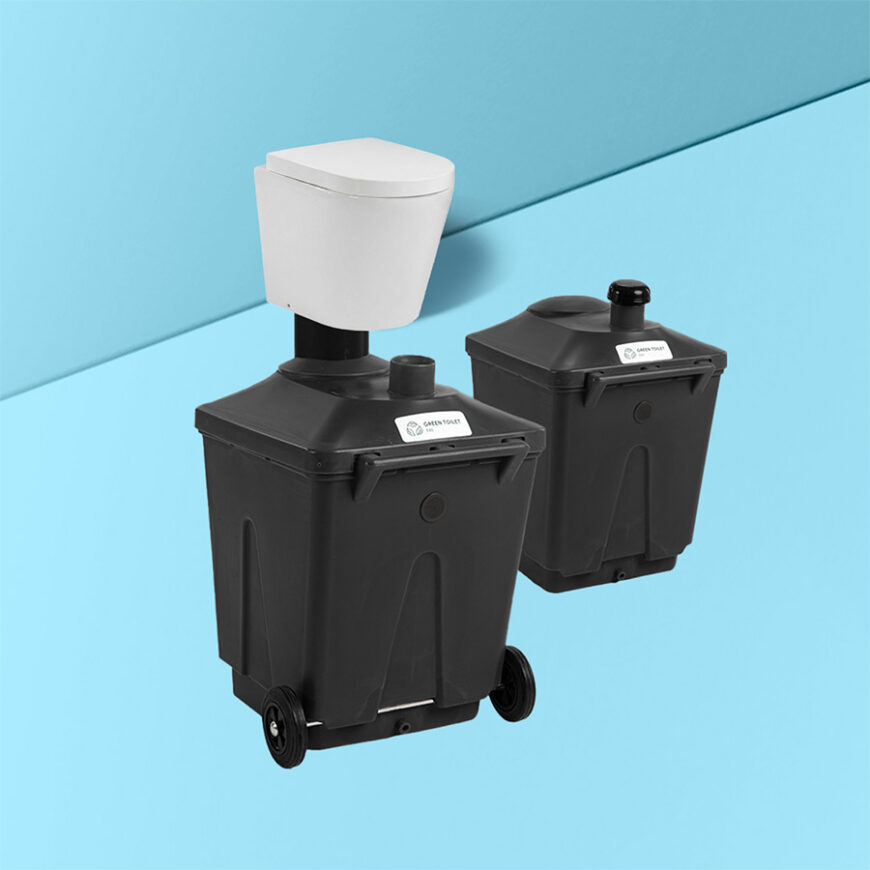
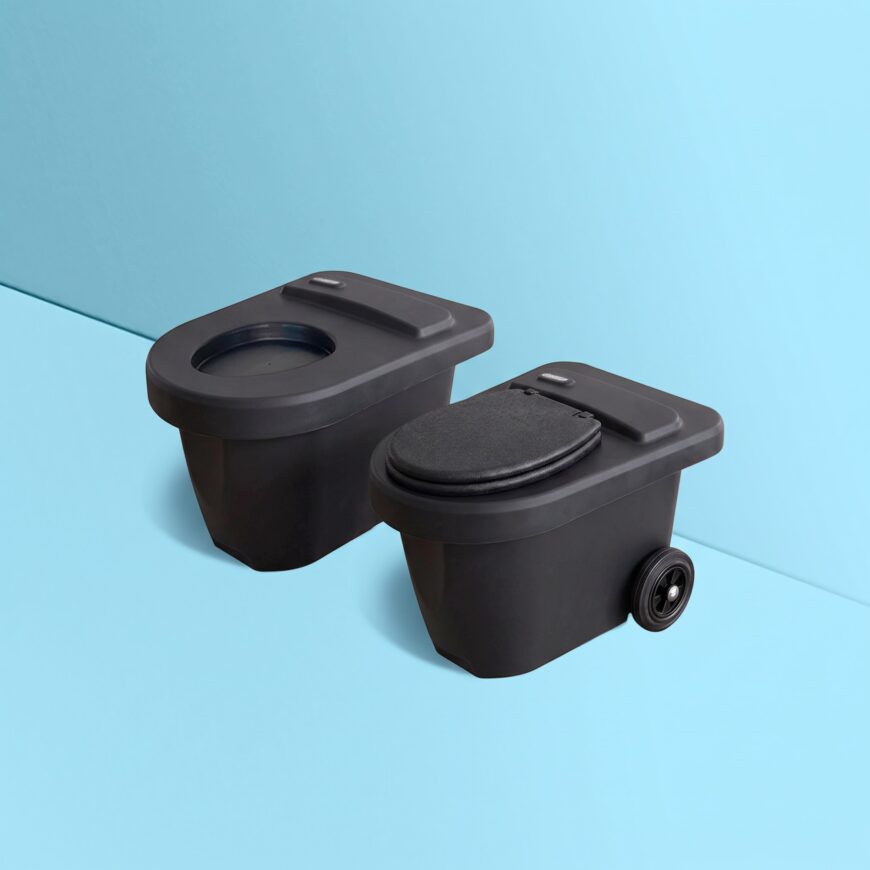
If you rent your treehouse out
Treehouse rentals live and die on the bathroom. Guests will forgive a ladder and a small bed; they will not forgive a toilet that feels like camping, and it shows up in the reviews.
A porcelain pedestal is what closes that gap. The room reads as a real bathroom, there is no visible container and no smell, and the part that needs servicing is out of sight on the ground.
Planning a treehouse build?
Tell us the height of the platform, how many people will use it and whether it is private or rented, and we will help you plan the drop and pick the right model. We will say so if a simpler setup would serve you better.
Contact us or browse all waterless toilets.
Length is not the limiting factor — installations with a 10-foot (3 m) drop are already in use, and the chute can run as far as the build needs. What matters is that the container sits vertically below the pedestal so waste falls straight down, with nothing in the way.
No, when it is set up correctly. The container is ventilated with a low-consumption fan that draws air down and away from the treehouse and out through a pipe, so the room stays fresh. The composting itself happens outside the living space entirely, on the ground.
Far less often than people expect, and never up a ladder. When the container in use fills, you swap in the spare — both are at ground level and roll on wheels. The full one is sealed and left to mature into compost over roughly 6 to 12 months.
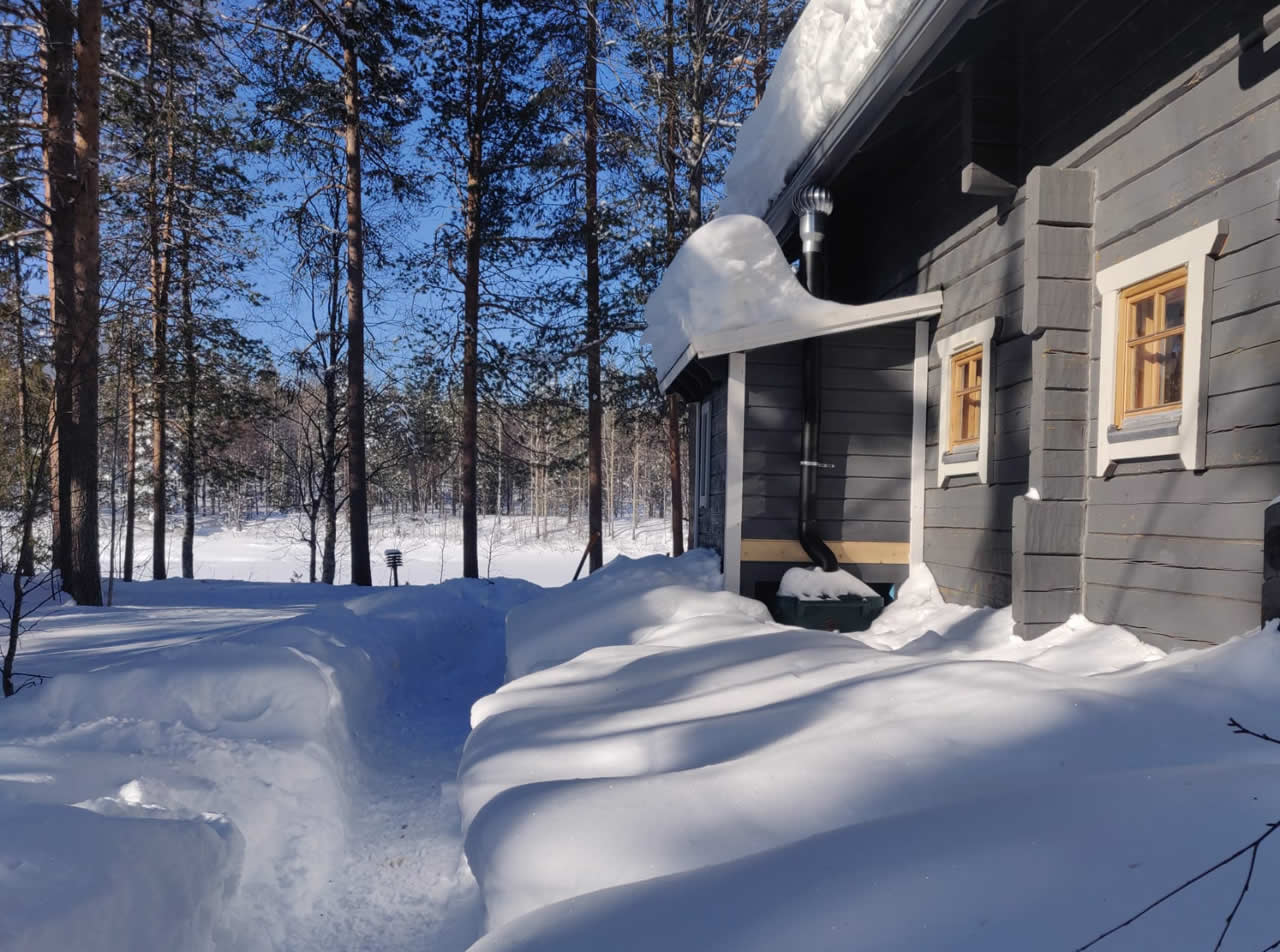
Yes. There is no water to freeze and nothing to burst, so the toilet keeps working in freezing weather. The composting process slows or pauses while it is cold and picks up again when temperatures rise.