 Composting
 Off-Grid
 Indoors
 Premium
 Floor-standing
 Tiny House
 ADU
ADU Urine-diverting
 Year-around
 Luxurious
 Cabins
 RVs
RVs Large capacity
 Cold climate
 Glamping
 Outhouses
 Batch toilets
 Public use
 Single-chamber
 Toilet Pedestals
 Accessories
Compost Toilets for Campgrounds
Composting toilets provide a great alternative to traditional, expensive septic systems at campgrounds across the U.S. They do not require any water to be used, and many models can also operate without electricity. This makes composting toilets a perfect choice for both small campgrounds and very popular ones. They are environmentally friendly, preserving the precious nutrients in our waste by safely and hygienically recycling them back into nature.
In this article, we focus on different options for bringing composting toilets to campgrounds. We also provide useful tips for campground hosts on how to manage and service composting toilets when guests are using them.
Questions to Ask Before Choosing a System
To keep composting toilets odor-free, pleasant to use, and easy to maintain, several things must be considered upfront. Ask yourself:
- How many people will approximately use the composting toilet(s) on average per day?
- Are the toilet(s) at the campground used every day throughout the year, or only part-time?
- How many toilet compartments are needed at the campground, and can they all be placed side by side, or do they need to be distributed across the campground?
- Is there electricity and/or water available for ventilation and cleanup purposes?
- What kind of restroom building structure can we provide for the campers?
Determining these details is essential because composting toilets generally have a capacity limit for a certain number of people — although in many cases, capacity can be increased indefinitely (for example, by using so-called batch composting toilets). A composting toilet used by 10 people on weekends from April to September might work well with a much lighter setup compared to a system used by 100 people seven days a week, all year round.
Planning for Different Campground Sizes
Unlike conventional flush toilets, composting toilets are limited by capacity. For example, the GL 90 composting toilet is best suited for 1–3 people in full-time everyday use or up to 4–5 people in part-time use. Even though capacity can easily be extended with batch composting systems by adding spare composting containers, it must always be considered carefully. The GL 90, for instance, would not be a good fit as the only toilet for 10+ people in a campground open 365 days a year. The composting containers would fill up with solid waste too quickly, leaving insufficient time for the decomposition process to treat the waste.
Here are some suggestions for different size campgrounds.
Small Campgrounds: Simple, Effective Solutions
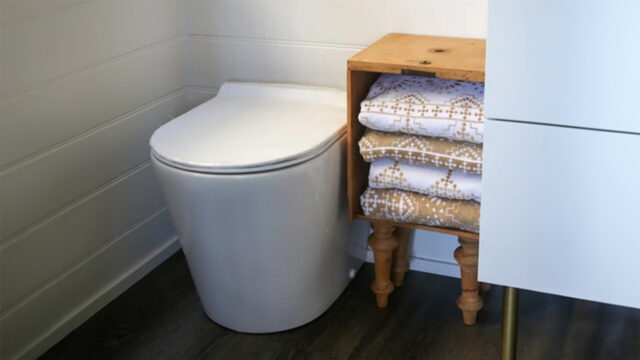
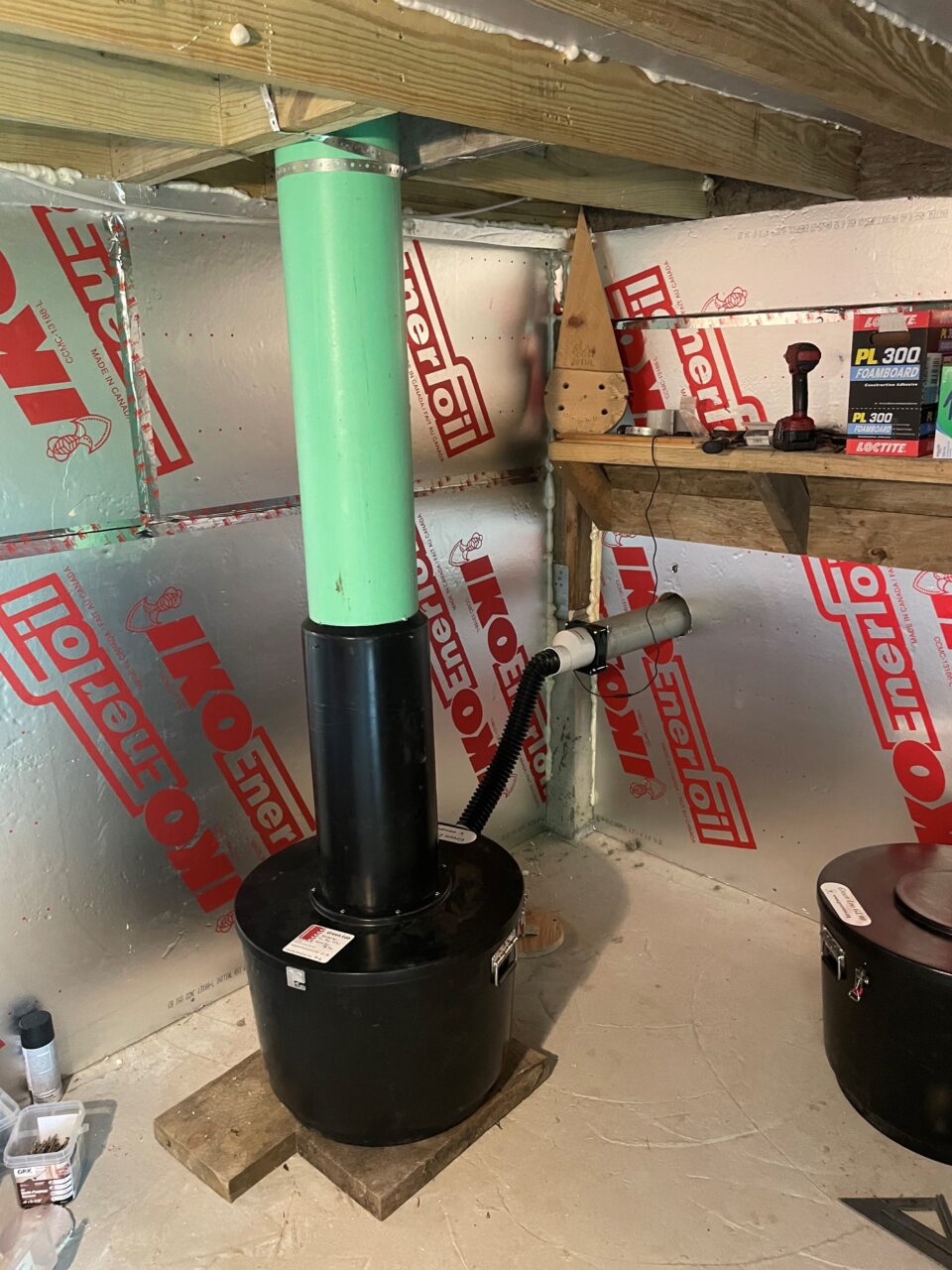
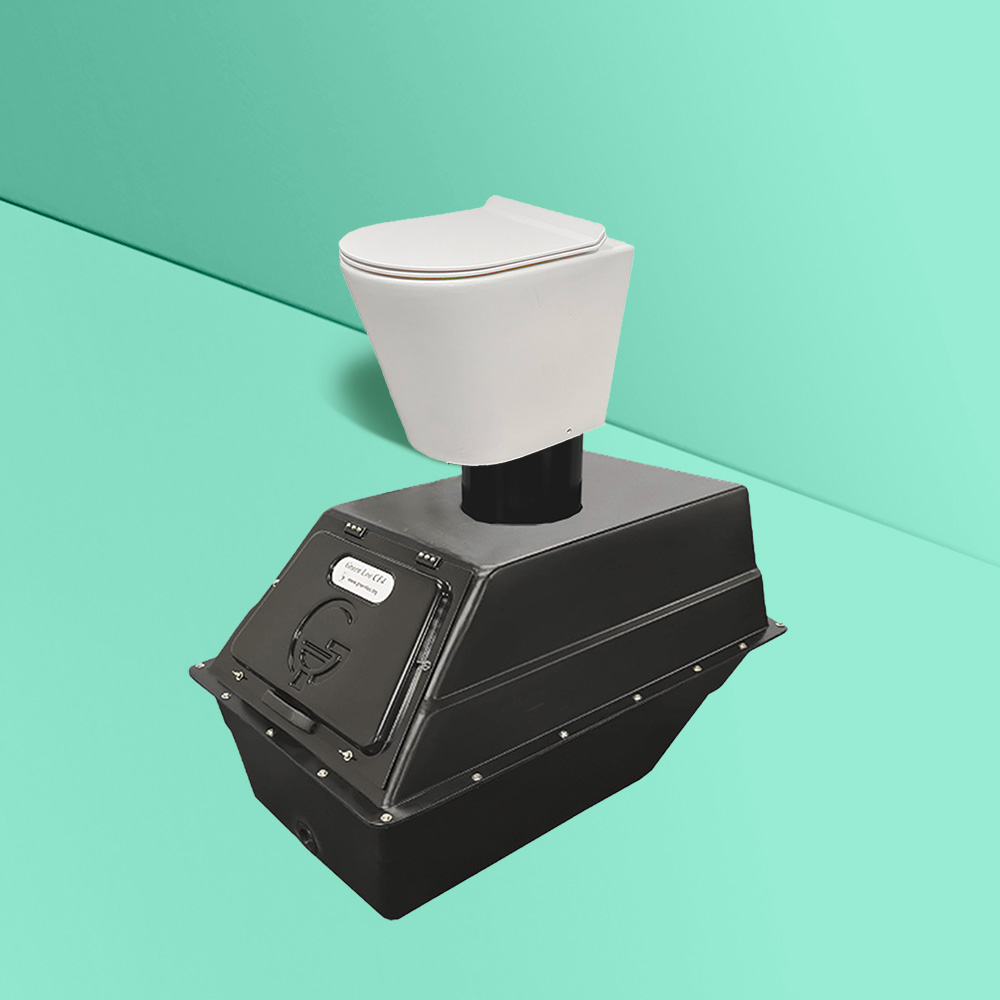
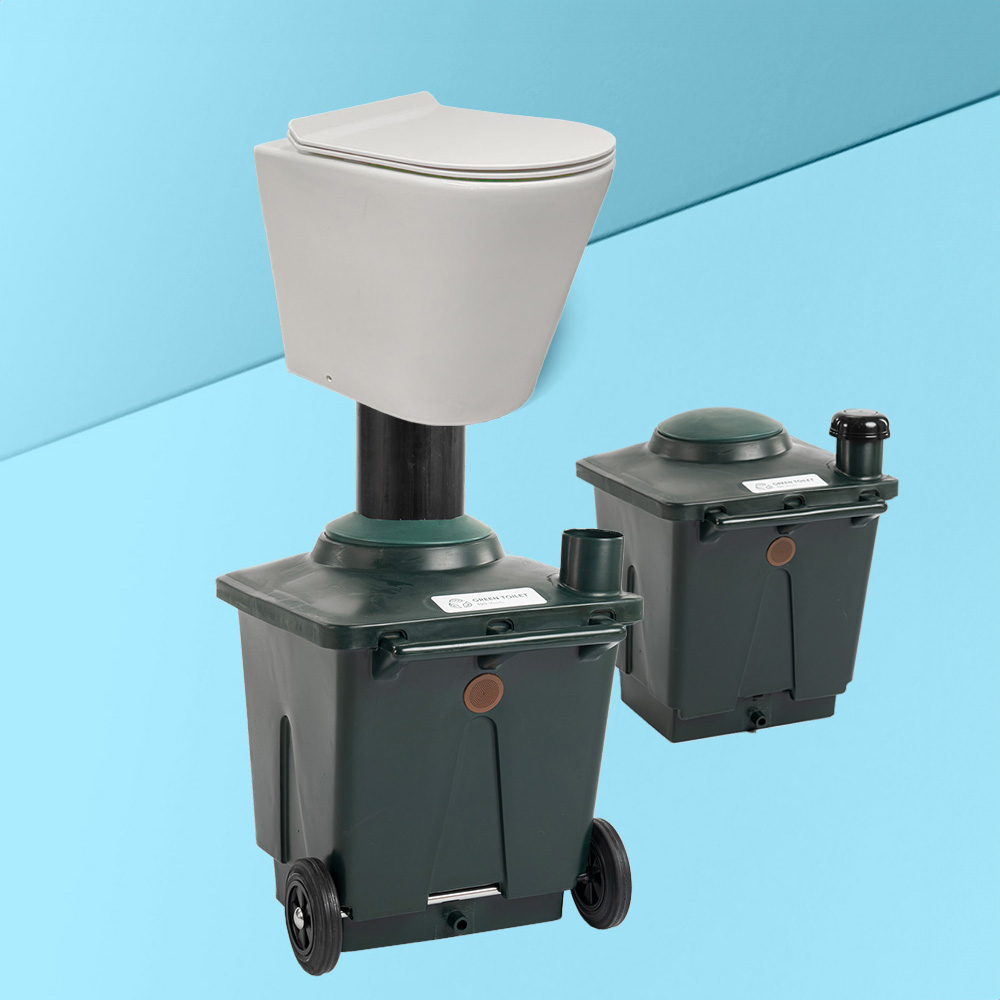
In smaller campgrounds (10–20 people), usually just one or two shared composting toilets are enough to avoid queues and keep the system operating smoothly. The restroom building can be a simple outhouse or another shed-like structure. Ideally, there would be underfloor space below the building to support the use of a split-system composting toilet. These composting toilets come with a porcelain toilet that looks and feels very much like a regular toilet — except it is not flushed after use. Underneath the floor is the composting unit, or units, into which all waste simply falls.
Have a look at the CF 4 and CF 8 composting toilets, for example.


A split-system composting toilet like this works very well in a small campground. The system typically requires attention or emptying only a few times a year, depending on use. Later in this article, we discuss in more detail how to manage the waste from a composting toilet in a campground setting.
Busy Campgrounds: Handling Heavy Use
When planning composting toilets for busier campgrounds with, say, 100+ guests using the toilets, even more attention must be given to the chosen system to ensure its capacity doesn’t fall short. Essentially, the composting toilet must have enough volume not only to collect, but also to compost the solid waste inside the units. (Plural is important here because no single composting toilet can handle more than a hundred people using it daily.)
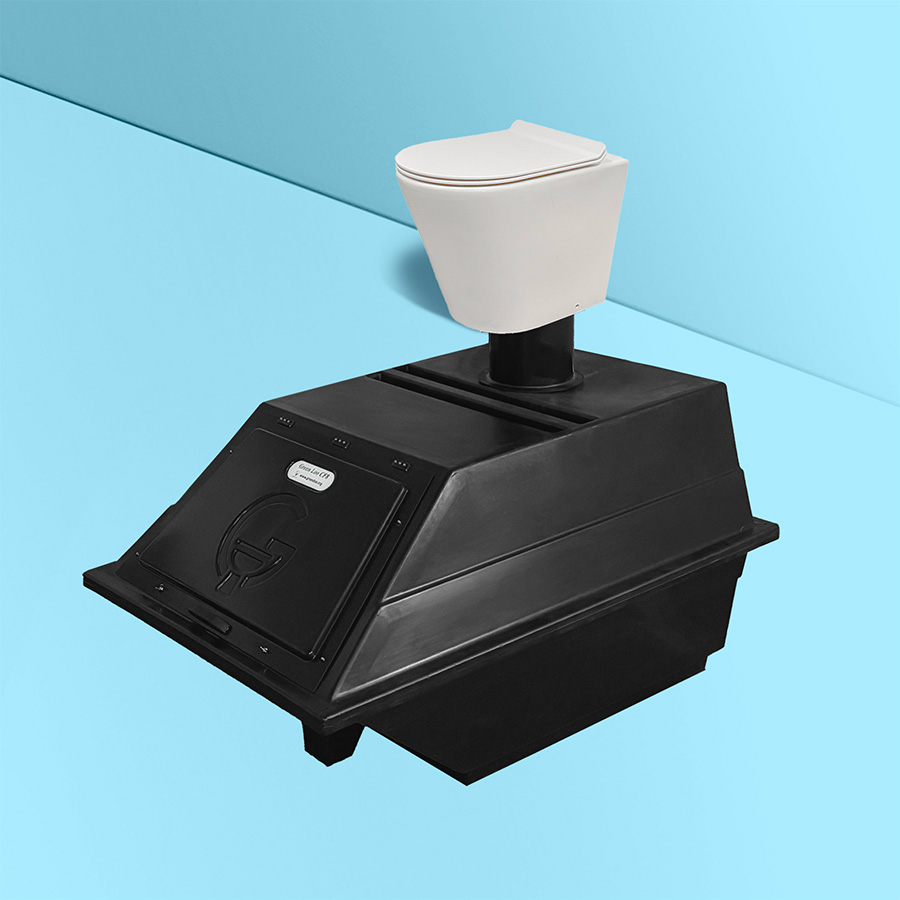
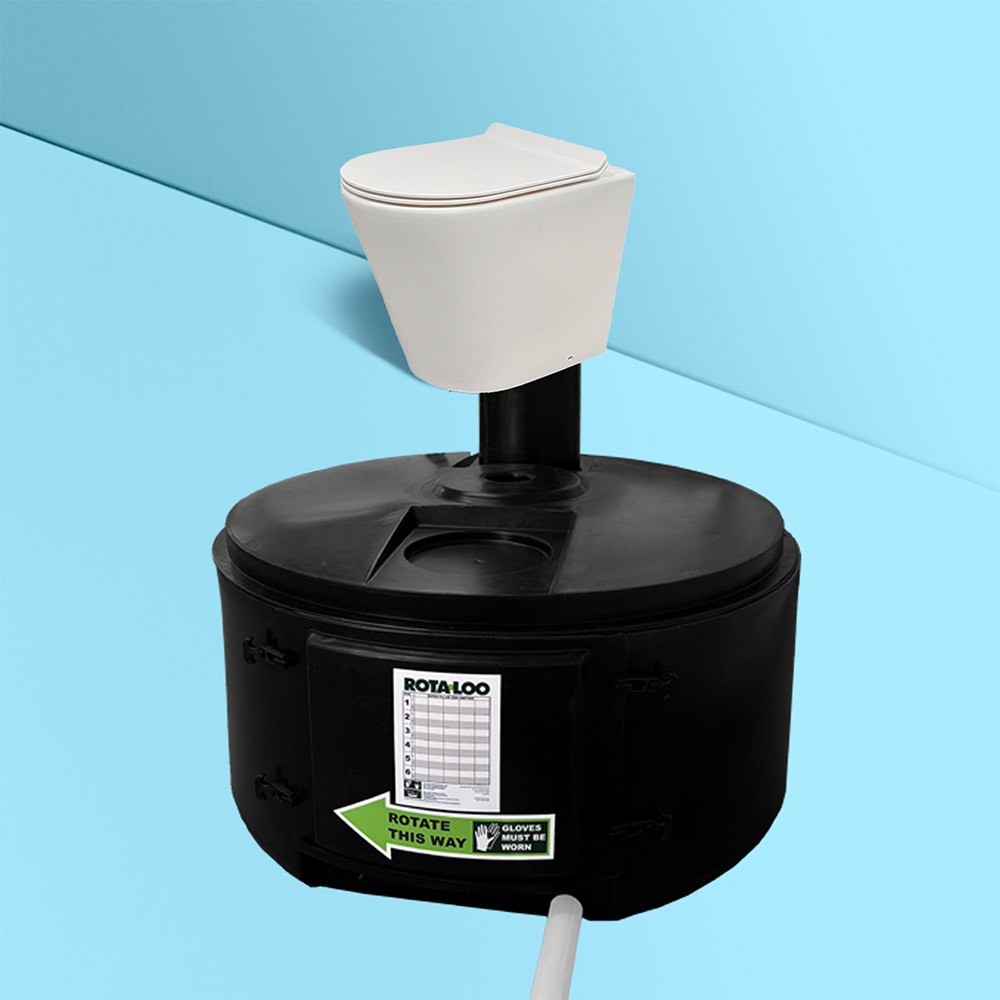
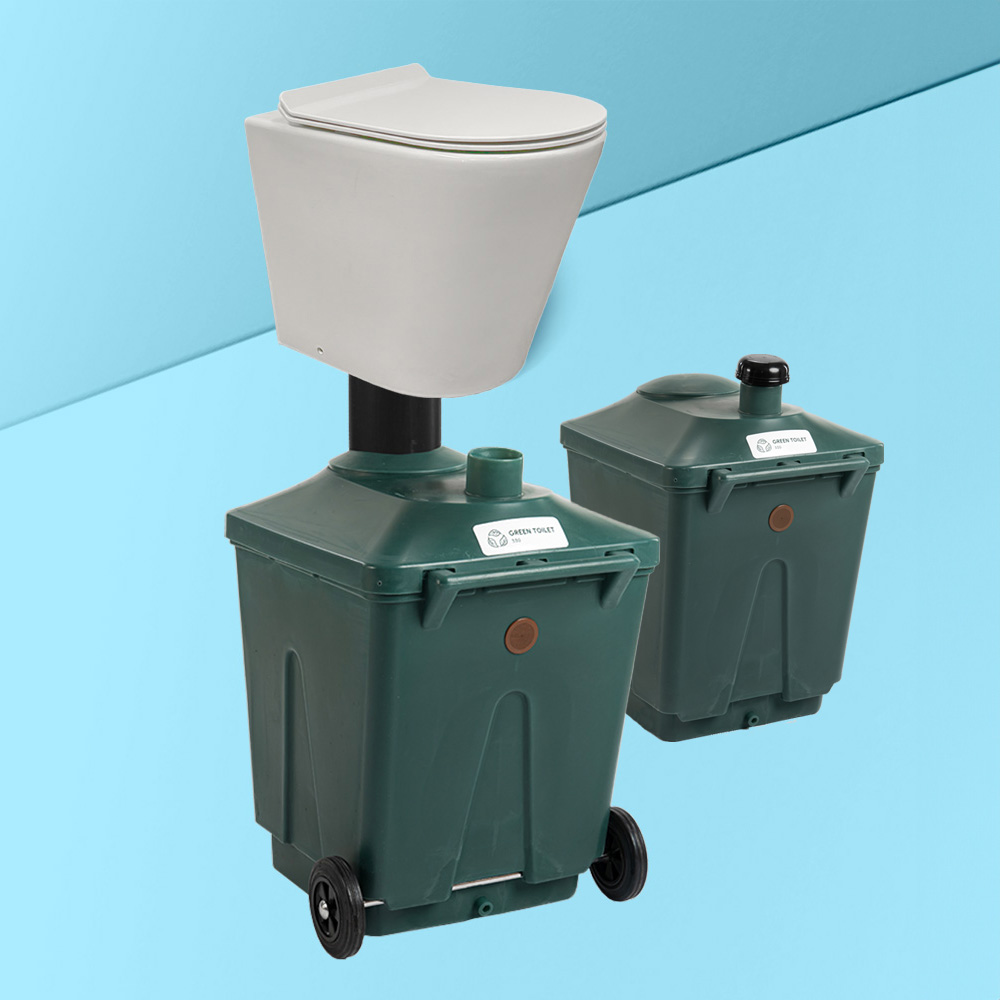
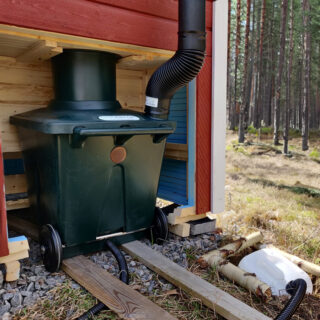
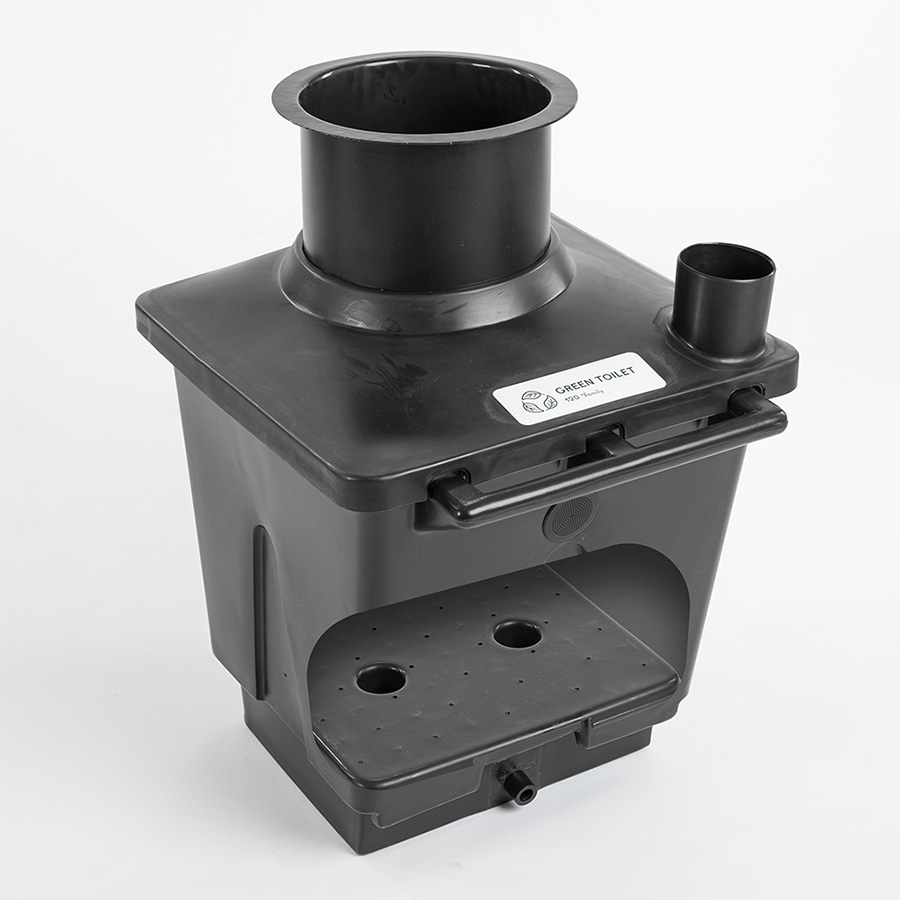
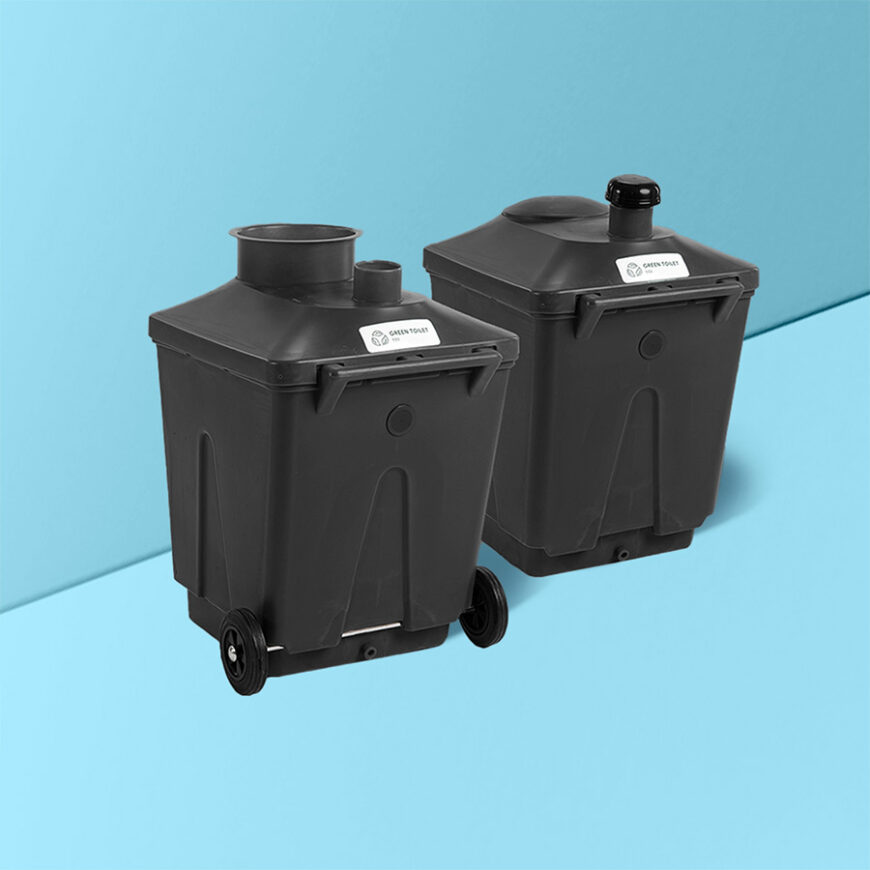
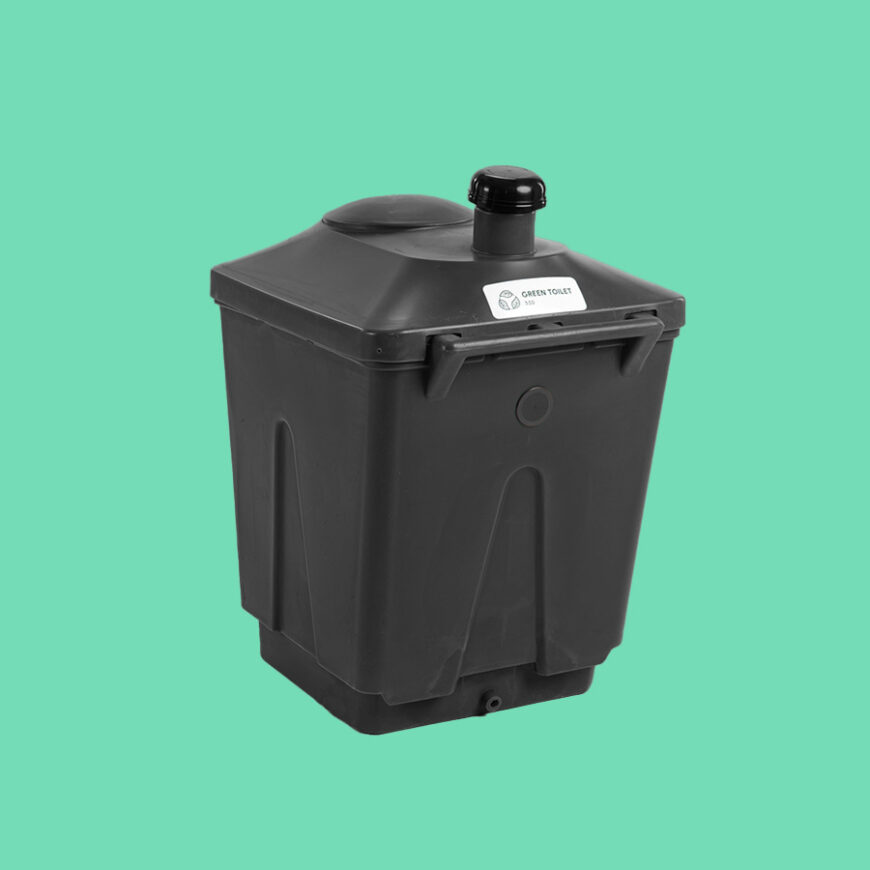
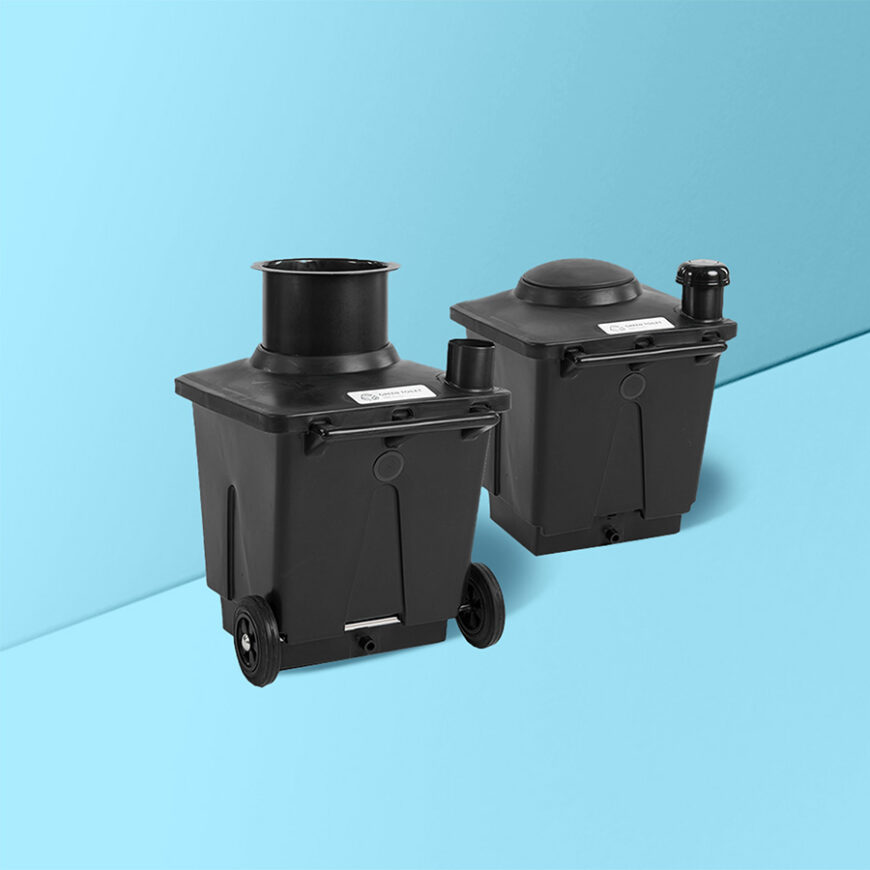
For busy campgrounds, we warmly recommend choosing a batch composting toilet system. These systems allow you to easily extend capacity by using multiple additional spare containers. Have a look at the Green Toilet Lux 330 batch composting toilet, for example. This system comes with two sizable 87-gallon composting containers. However, in busy public or commercial use, it’s not uncommon to add even more containers to ensure each new batch of solids has enough time to compost fully before the container needs to be emptied and put back into use.
Managing the waste
Collecting waste is only part of the on-site waste management cycle — the waste also has to be recycled safely and ecologically. With composting toilets, it’s natural to divide waste management into solids and liquids, because almost all composting toilets separate the two in some way.
Composting Solids
True composting toilets are fundamentally designed to collect and compost solid waste within the system itself until it can be safely reused as fertilizer for non-edible plants and trees. In a campground setting, this is often easy because many campgrounds are located near natural sites with ample vegetation and land.
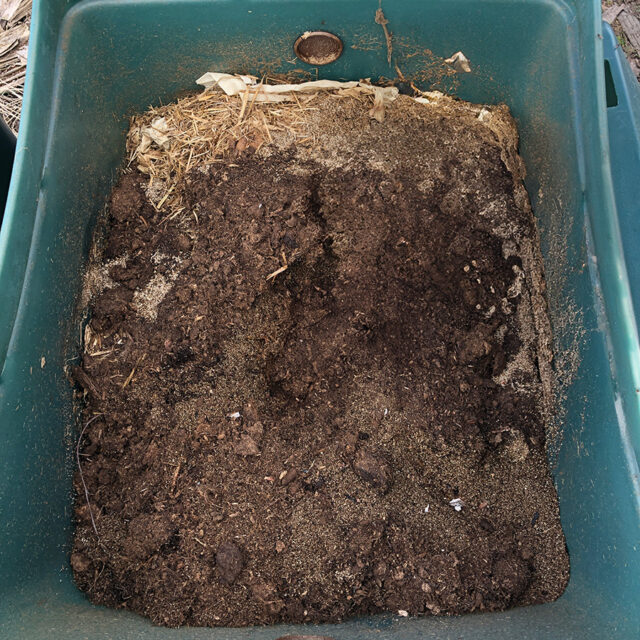
How long it takes for the waste to become safely reusable fertilizer depends greatly on the local climate. In warm climates, the composting process can be as fast as a few months. However, in northern states where winters are much colder, the process may take up to 12 months. Usually, the compost needs to sit for at least one full summer in northern states because the process halts when it freezes in winter. This is also why climate affects the capacity needed to treat the waste at a campground.
Learn more how to empty a composting toilet.
Managing Liquid Waste
Managing the liquid waste from a composting toilet is another story. You might be surprised to learn that 80–90% of human waste is liquid urine. An average person urinates 800–2,000 ml per day (27–68 fl oz). That’s a considerable amount of liquid to manage. For example, a busy campground of 100 people would produce 21–53 gallons of urine a day.
So, what do you do with all that liquid? The answer is: it depends.
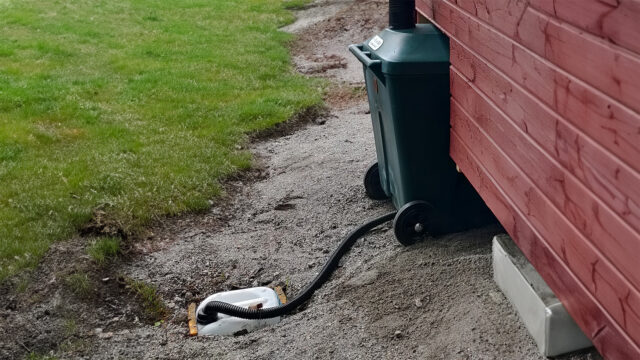
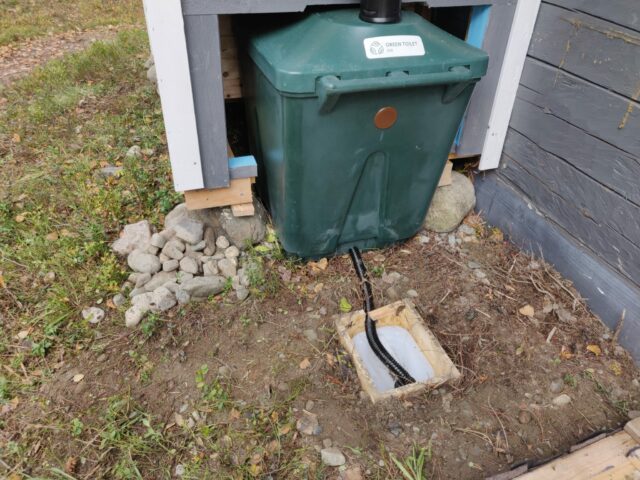
If your local regulations (which vary by state and county) and surrounding environment (such as not having a high water table) allow for a small underground soakaway, that is the simplest solution. We also encourage using a composting toilet system that allows some of the liquid to be absorbed into the compost within the unit and evaporated through the system’s ventilation.
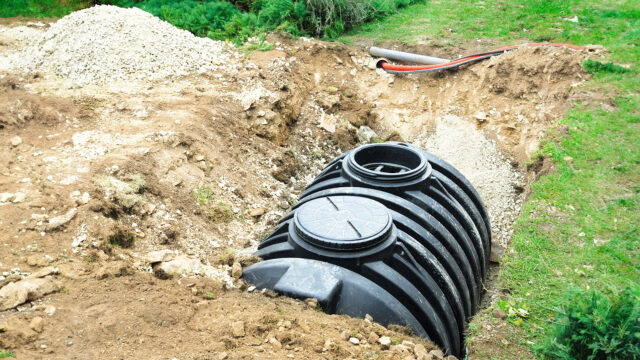
If liquid waste cannot be drained into a soakaway or similar, the only option is to collect it in a large underground holding tank (e.g., 1,000 gallons) or several smaller containers (e.g., 5 gallons each). The larger option is usually the only practical choice for busy campgrounds, while smaller sites may be fine with hand-carried containers.
One big advantage of composting toilets is that because they don’t use water to flush, they produce far less liquid compared to conventional systems. For example, an average flush toilet in the U.S. uses about 1.5 gallons per flush. With 100 people flushing several times a day, you could easily reach 800 gallons per day — 15–30 times more liquid than with purely waterless composting toilets. Check the math yourself.
Learn more about liquid separation with composting toilets.
Building and Layout Tips for Campground Restrooms
Building a campground restroom or washroom naturally depends on the specific site and usage. What works in one place might not work in another. Here are some general tips.
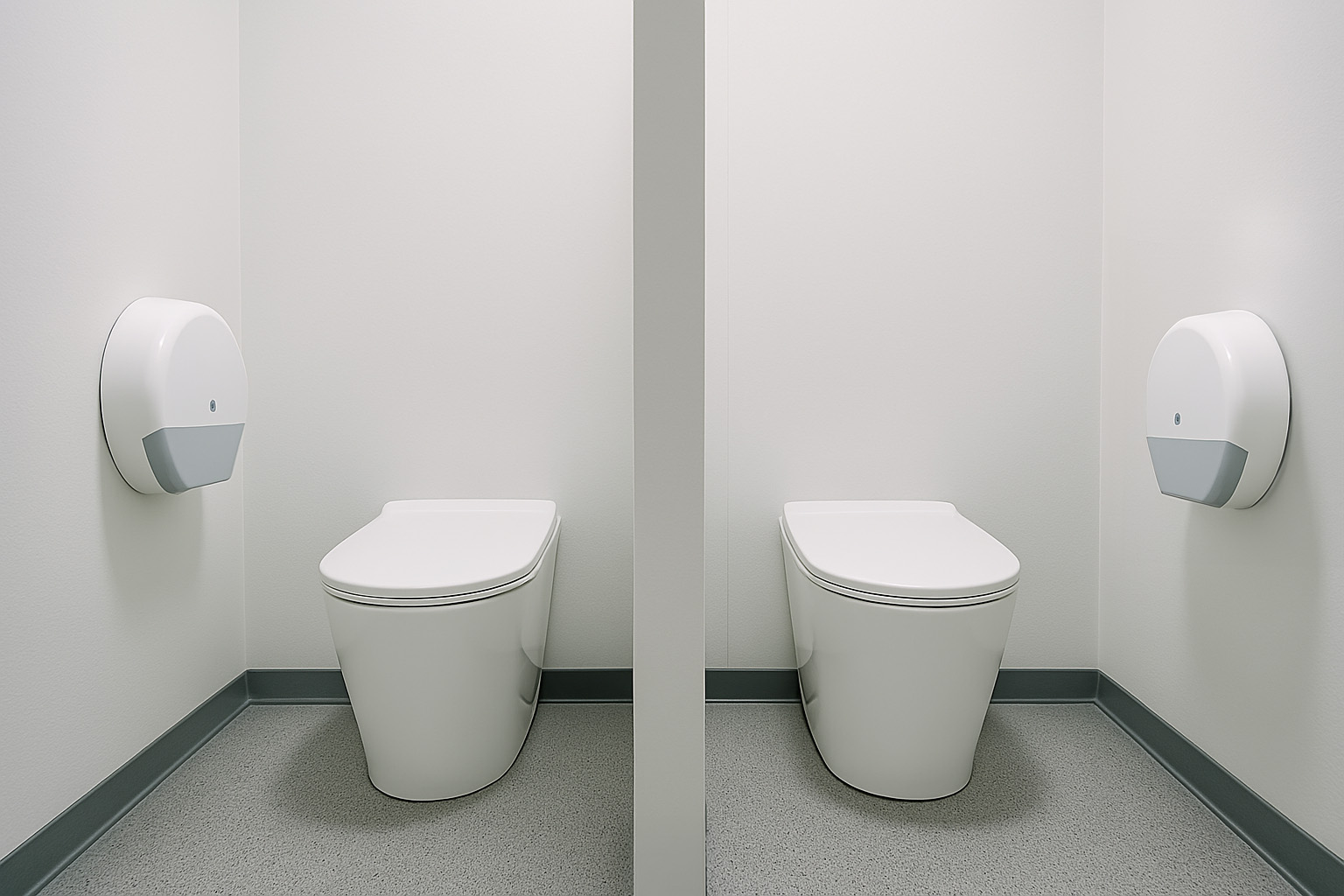
One helpful idea is to build restroom spaces side by side, with entrances on the opposite side from where the composting systems are serviced. This creates a modular structure that can easily be extended to add more compartments.
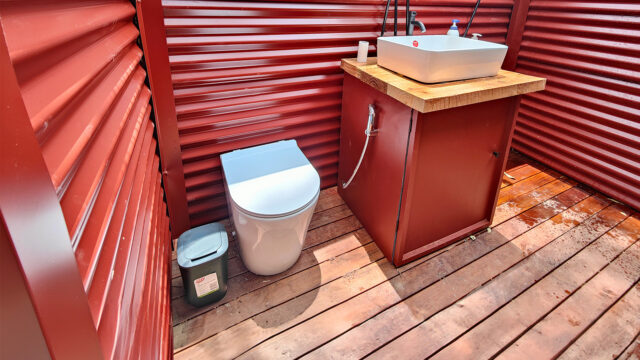
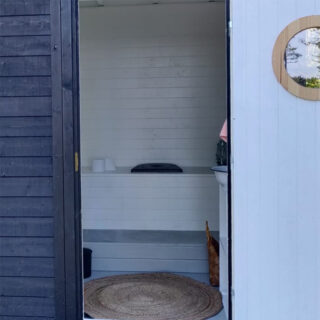
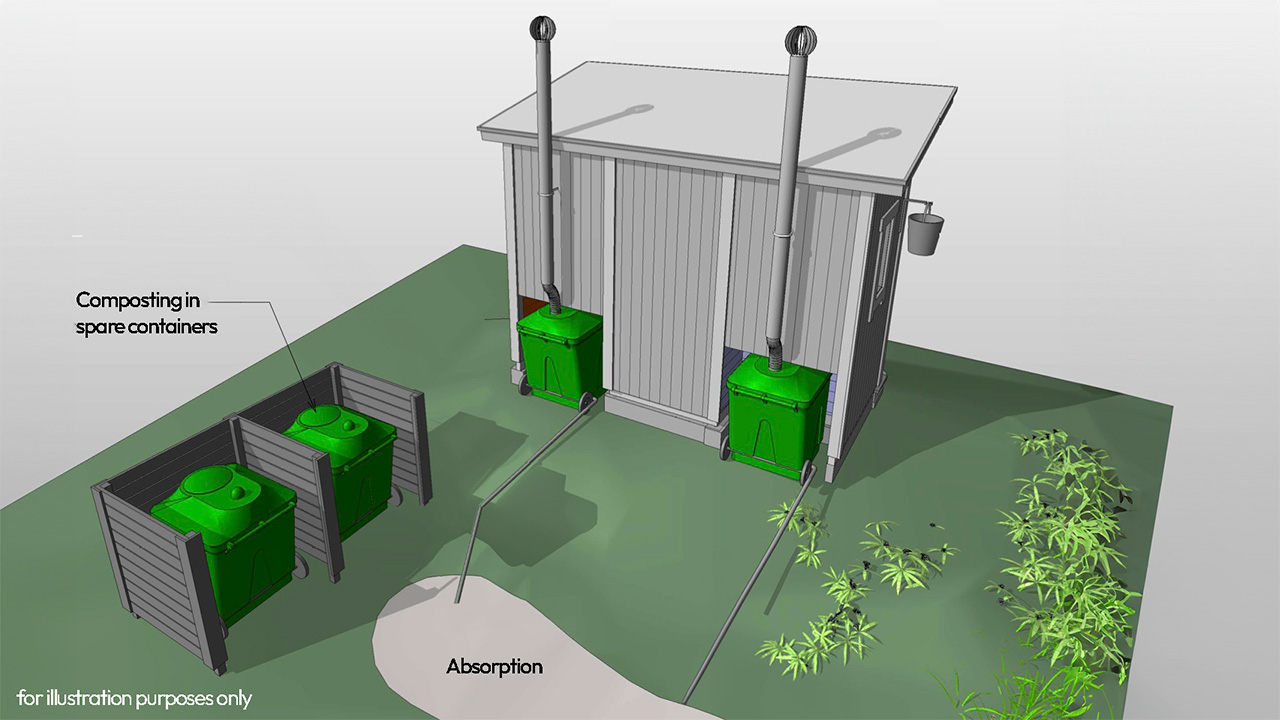
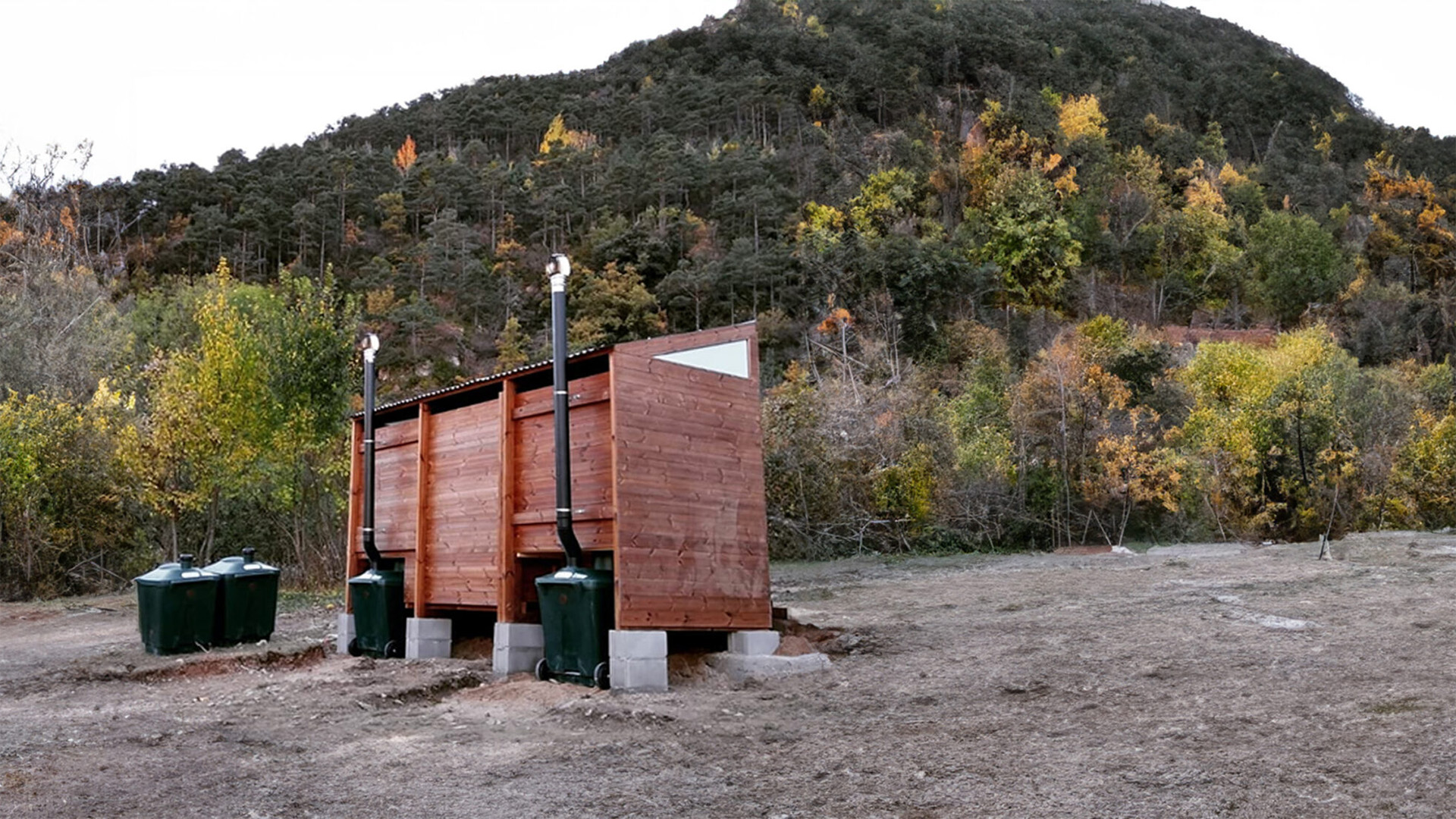
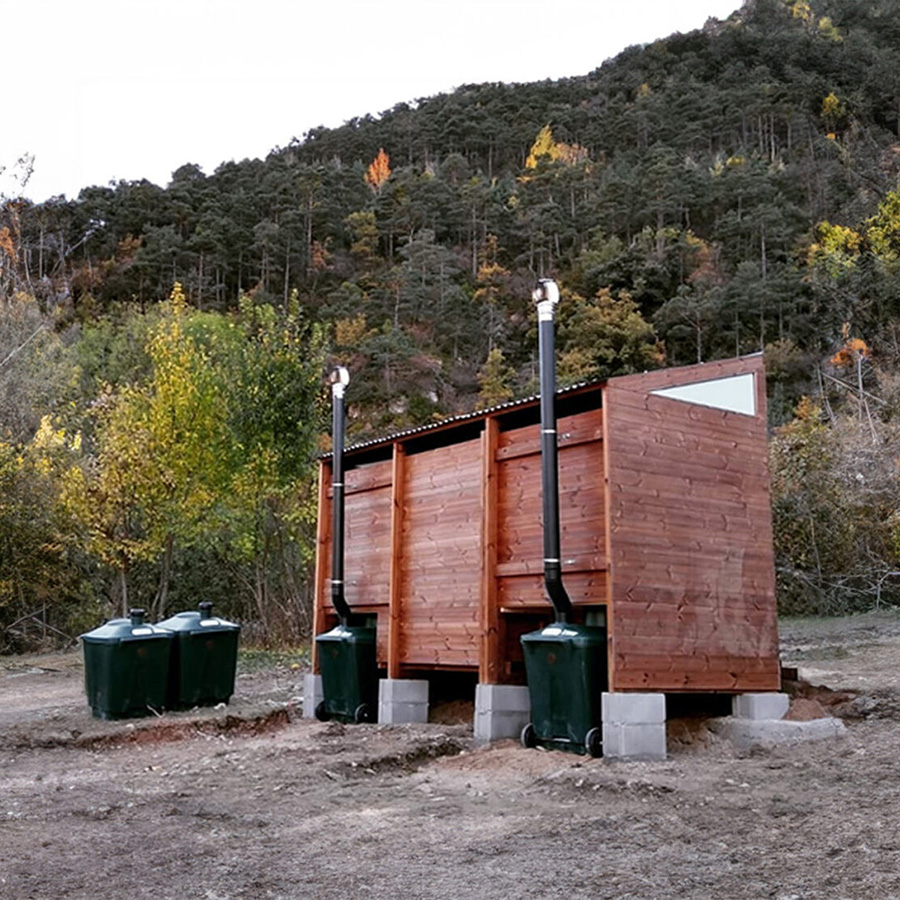
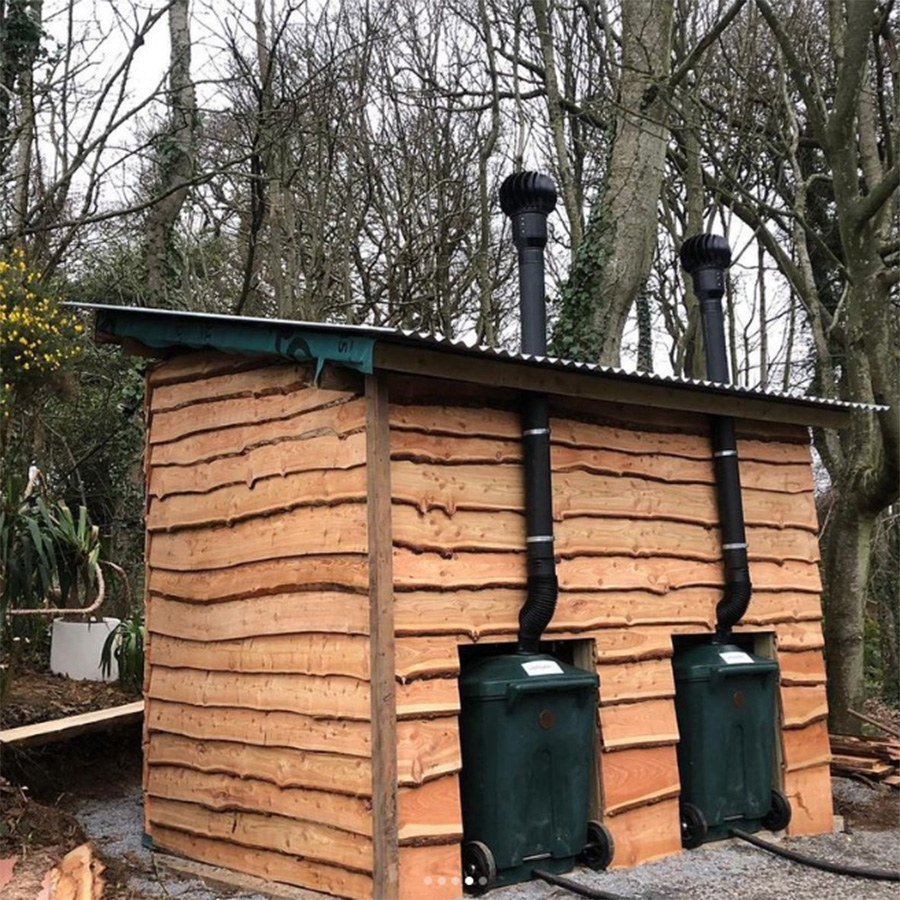
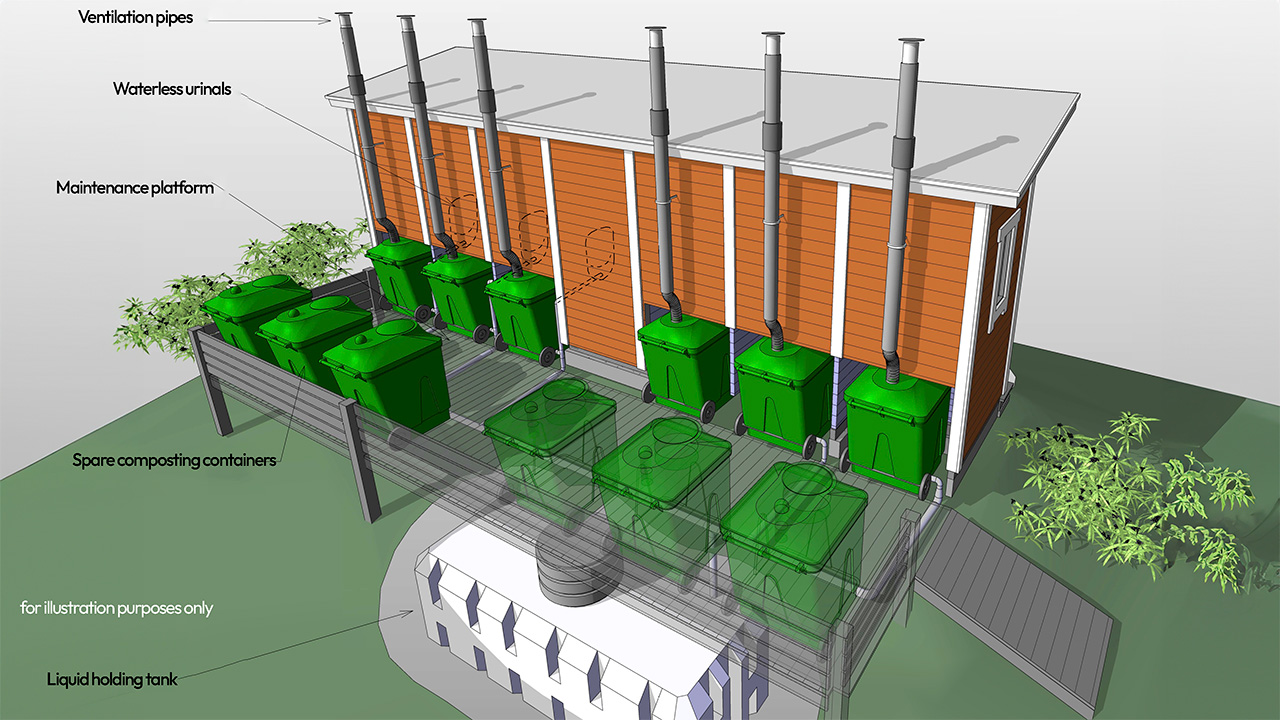
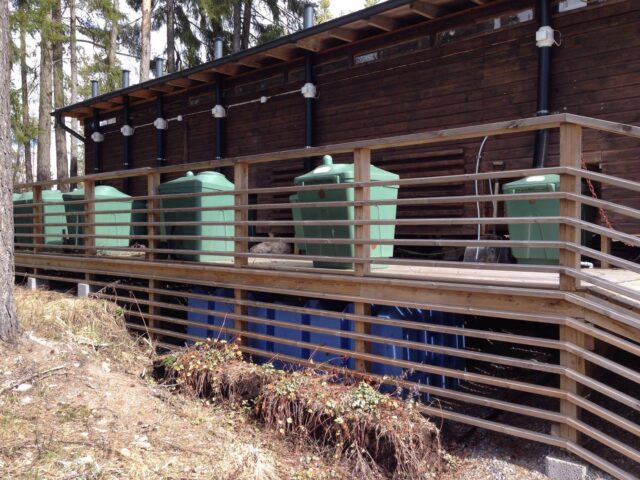
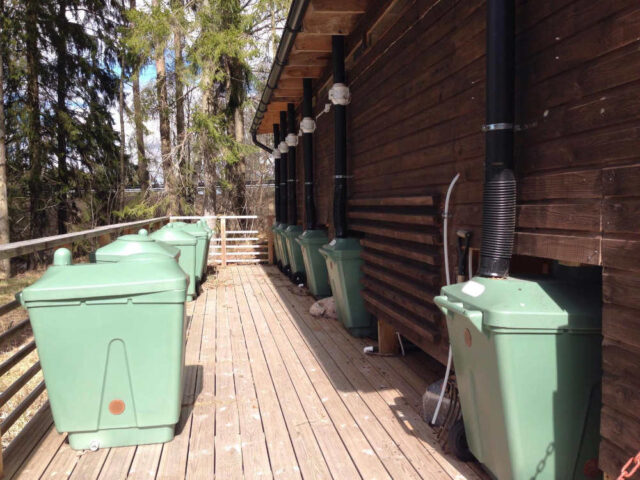
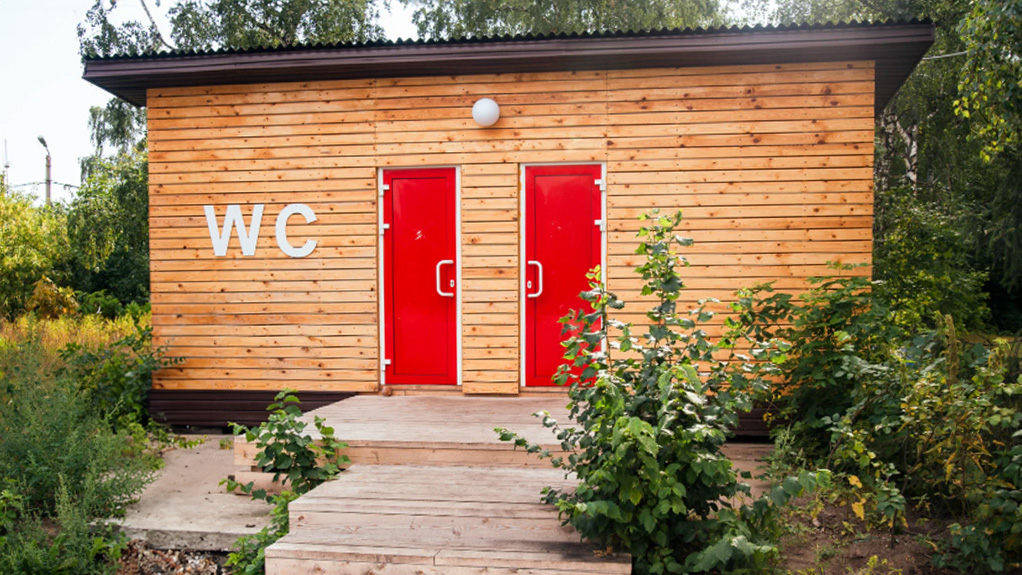
Below are illustration photos of two restroom setups: one with two toilet compartments, the other with six. These examples look like traditional outhouses inside but can just as easily be designed to include porcelain toilets and even showers.
Two-sided restroom building
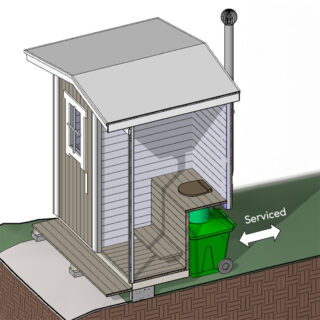
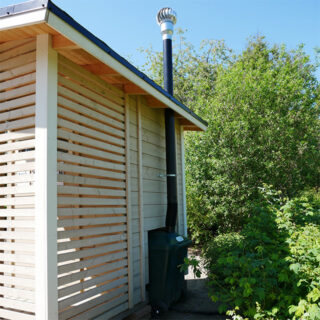
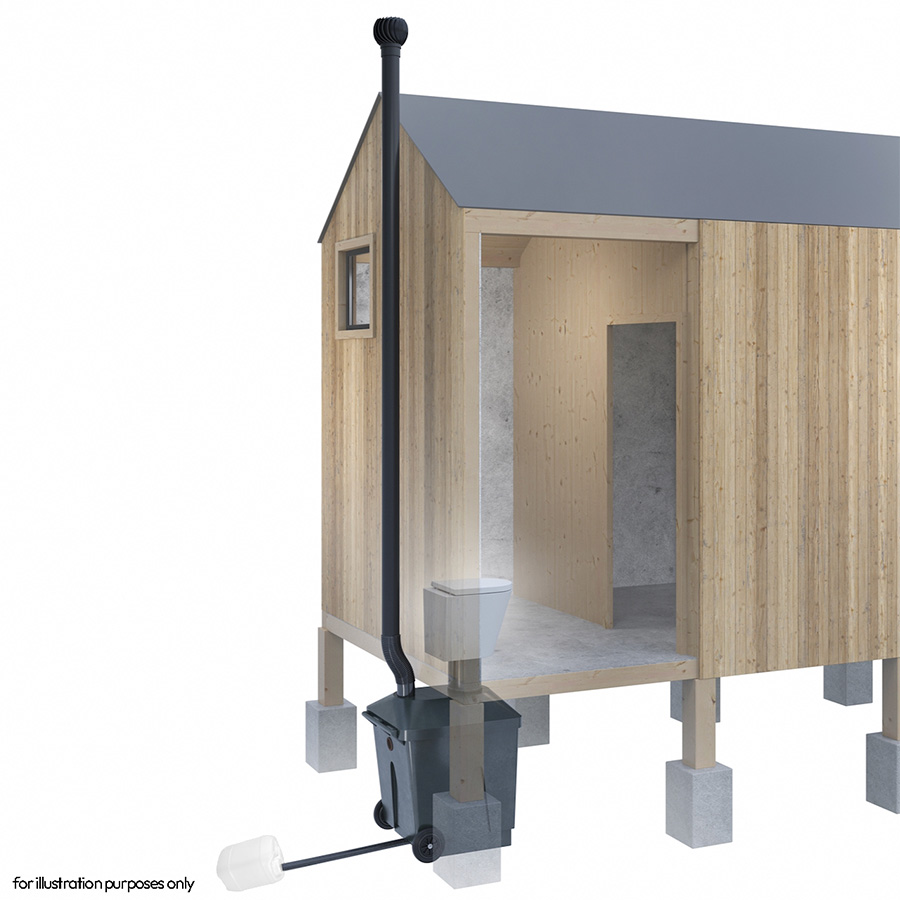
For a smaller campground (10–20 people), a two-sided restroom building may be a good choice. In this illustration, there are two Green Toilet 330 composting toilet packages, each including two spare containers. When a container fills up, it’s pulled out from underneath the toilet, sealed with a lid, and set aside to finish composting. Meanwhile, the other container is put into use. The liquid waste is led into a soakaway behind the building. The amount discharged is typically very limited because a significant portion of urine gets absorbed into the solids and evaporates through the Whirlybird-powered ventilation.
Although these drawings use Green Toilet 330 systems, the same layout could work just as well with other models, such as the CF 4.
Six-sided restroom building
A busier campground needs more capacity. For example, a site serving around 60 people might use a six-compartment restroom building. Again, the illustrations show Green Toilet 330 batch systems, but other composting toilets like the CF 8 could also be used. Here, liquid waste is collected in a holding tank below the maintenance platform. Waterless urinals are also provided, which reduce the liquid load on the composting containers and add convenience for guests.
Interior Design
Ideally, the restroom building has enough underfloor space for composting units to sit directly below the toilets. This split-system design allows guests to use regular-looking porcelain toilets, which are comfortable and familiar. The two-story approach also leaves space for showers, with room underneath for a liquid holding tank and other maintenance supplies.
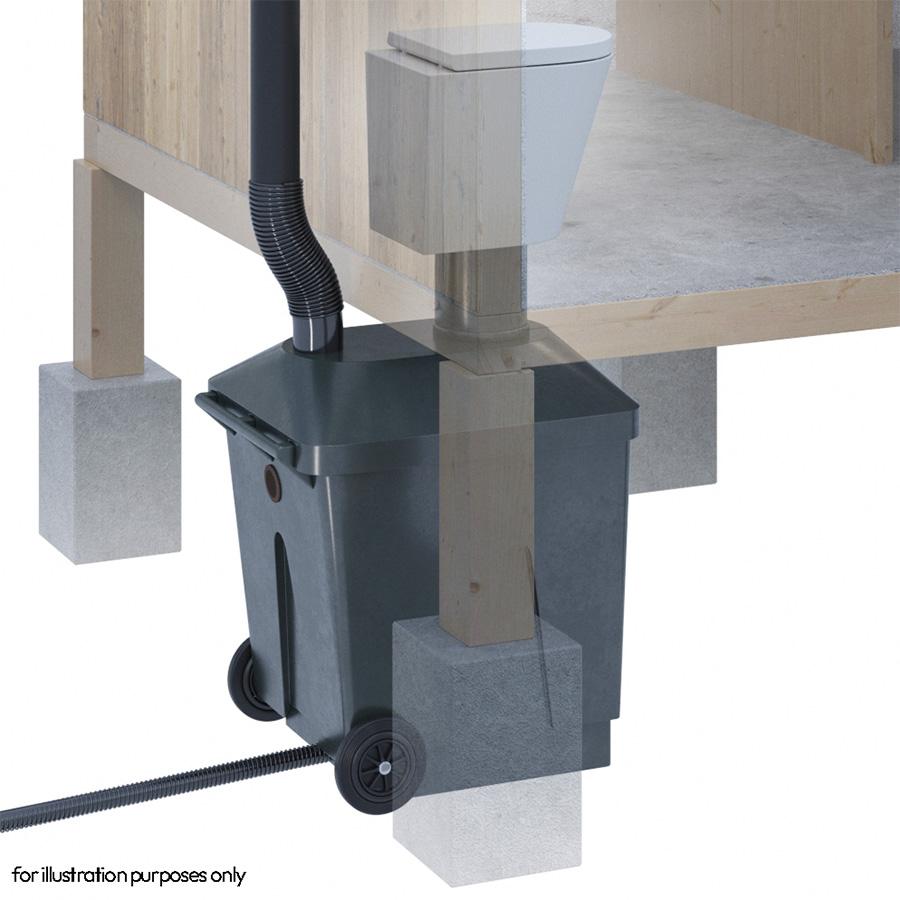
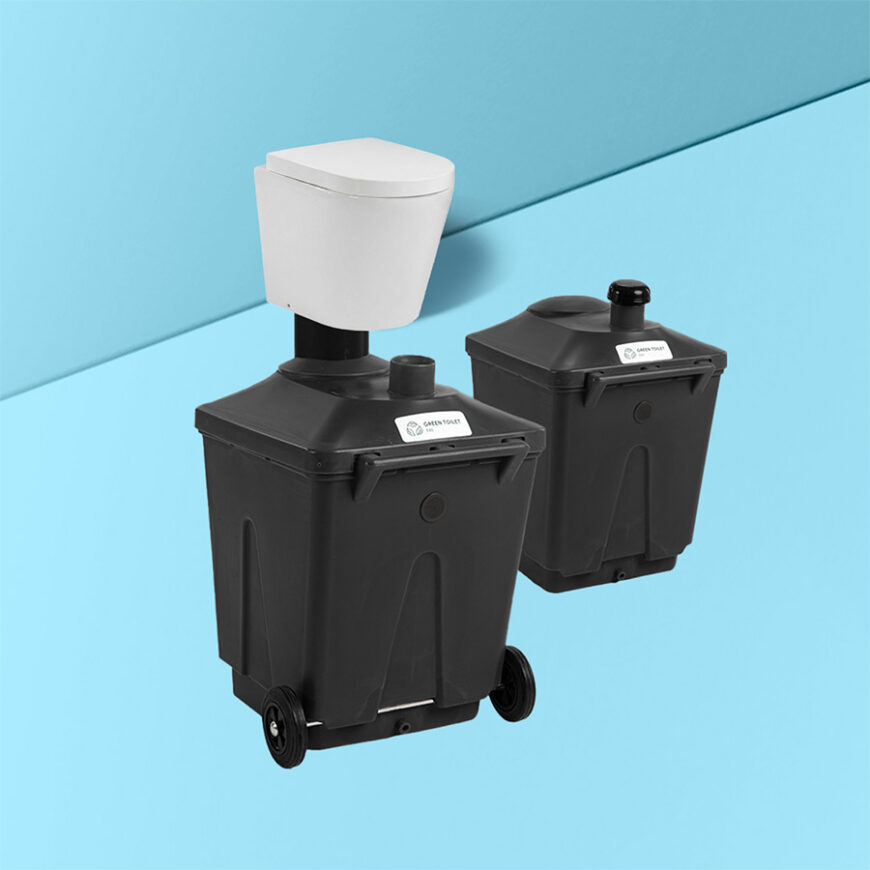
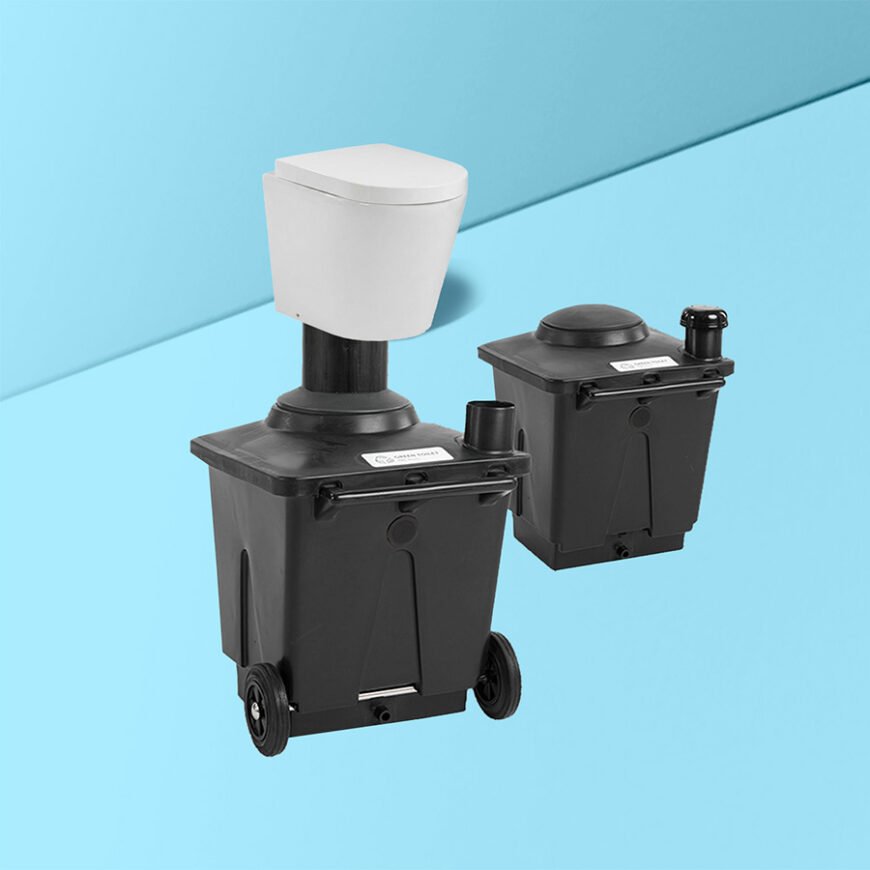
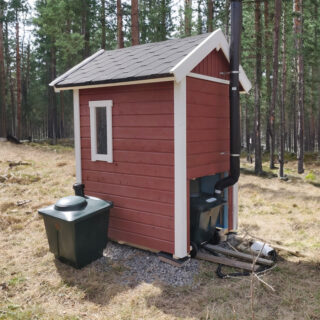
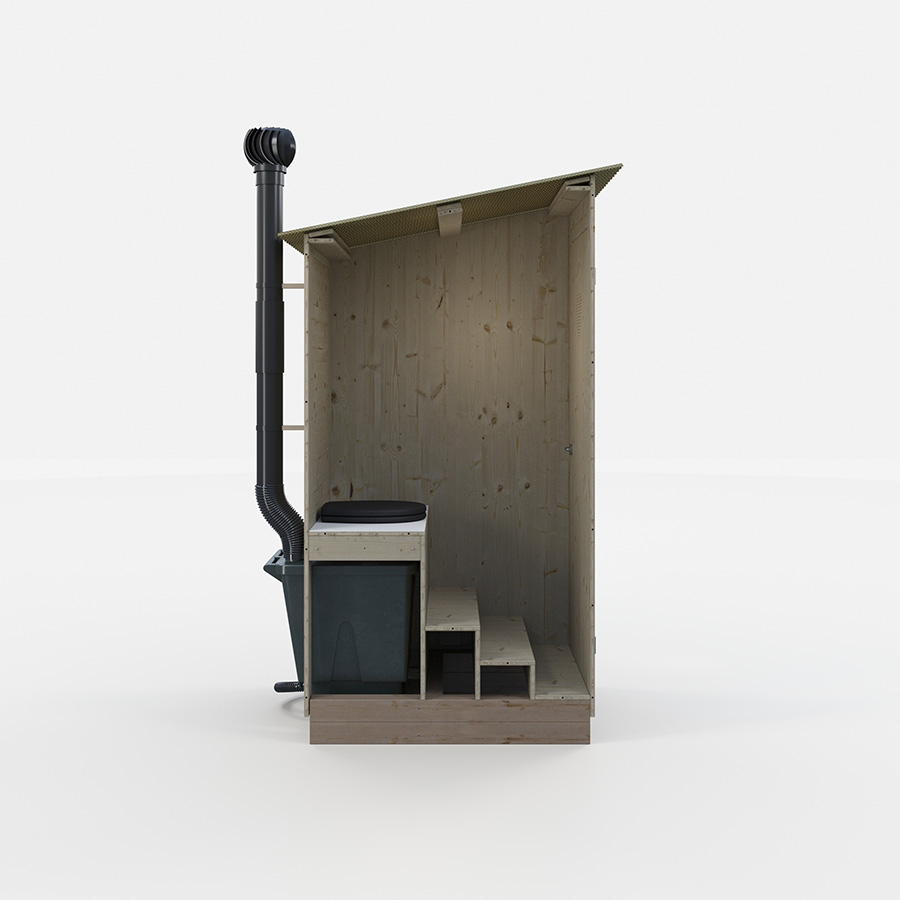
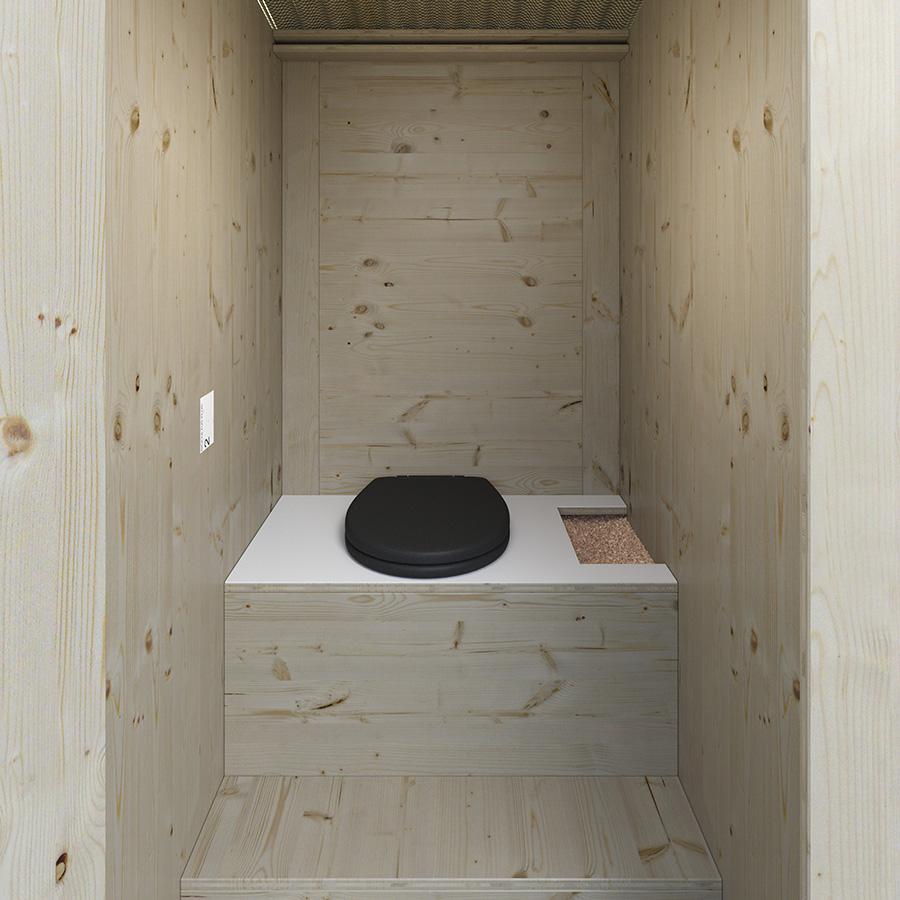
If there is no underfloor space available, composting units must be serviced from behind. This setup looks more like a traditional outhouse and works just as well, though it typically doesn’t allow for showers in the restroom spaces.
Helpful Tips for Campground Hosts
-
If you’re unsure about the capacity needs, choose batch systems.
It’s often hard to predict exactly how many people will use the toilets. Batch composting systems are a flexible choice — you can always add more containers if usage is higher than expected, ensuring smooth operation without surprises.
-
Always provide the right toiletries.
Make sure campers have access to toilet paper and hand sanitizer or a handwashing station. It’s also wise to post a small sign reminding guests not to throw anything other than toilet paper into the toilet.
-
Pay close attention to ventilation.
Proper ventilation is key to an odor-free experience. A good vent pipe or a small fan helps air circulate through the system, speeding up composting and keeping the restroom pleasant.
-
Keep up with regular maintenance.
Even the best composting toilet needs occasional checks. Empty containers or rotate batches when they’re full, check vent pipes for obstructions, and add bulking material (like wood shavings) as needed. A little regular care goes a long way.
-
Don’t hesitate to ask for help.
If you’re in the planning stages or run into questions down the road, reach out to us. We’re happy to help you figure out the best composting toilet solution for your campground’s unique needs.
Conclusion
Composting toilets are a great alternative to traditional septic systems. They’re pleasant to use, easy to maintain, conserve water, restore nutrients to the soil, and save money. Choosing the right model based on your campground’s size and use is crucial to ensuring the system works as expected.
Don’t tackle your campground toilet project alone — contact us for help today!
📱(702) 328 0689
✉ info@waterlesstoiletshop.com
[jgm-featured-carousel title=’carousel title’]
[jgm-all-reviews]

Who We Are
At Waterless Toilet Shop we are a dedicated team of dry toilet experts based in Henderson, Nevada. As a family-owned company with deep roots in Scandinavia and Australia, we bring a blend of global insights and local expertise to every product we create.
At Waterless Toilet Shop, we do more than just design and manufacture innovative composting toilets; we also use them daily. This hands-on experience allows us to continuously improve our products and ensure they meet the high standards of functionality and sustainability that our customers expect.
We are committed to living the eco-friendly principles we teach, making our solutions not just part of our business, but a part of our lives. Join us in embracing a more sustainable future, one flush at a time.
Read Our Story