Off-Grid and On the Farm: Why Composting Toilets Make Sense for Homesteads
In the world of homesteading, self-reliance isn’t just a goal—it’s a way of life. Whether you’re living off-grid, growing your own food, or raising animals, every part of the homestead is about living in harmony with the land. That’s why composting toilets have become a natural fit for modern homesteads and small farms. These waterless systems offer an eco-friendly, low-maintenance alternative to traditional plumbing, helping families stay sustainable while reducing waste. In this article, we’ll explore how composting toilets support the homesteading lifestyle, their practical benefits on the farm, common use cases, and how to choose the right system for your setup.
Why Composting Toilets Fit the Homestead Lifestyle
Composting toilets align naturally with the core values of homesteading: sustainability, simplicity, and self-sufficiency. Here’s why they’re a great match:
Off-grid ready – No need for plumbing or electricity, making composting toilets ideal for remote cabins, tiny homes, or off-grid properties.
Water-saving – Composting toilets use little to no water, helping to conserve this valuable resource, especially in dry regions or on properties using wells.
Low environmental impact – Waste is transformed into compost rather than flushed away, reducing pollution and recycling nutrients back into the soil.
Easy to manage – With the right setup, maintenance is straightforward and fits naturally into the hands-on, DIY lifestyle of homesteaders.
Cost-effective – Composting toilets eliminate the high costs of installing septic systems or connecting to municipal sewage, which is especially helpful when building in stages.
Aligned with homestead values – These systems support a lifestyle based on reducing waste, working in harmony with nature, and living more self-sufficiently.
Practical Benefits for Farms
On a working farm, convenience, durability, and functionality are key—and composting toilets deliver on all fronts. Here’s how composting toilets add value to farm life:
No septic system needed – A great solution for rural areas where installing a septic system is costly or not feasible.
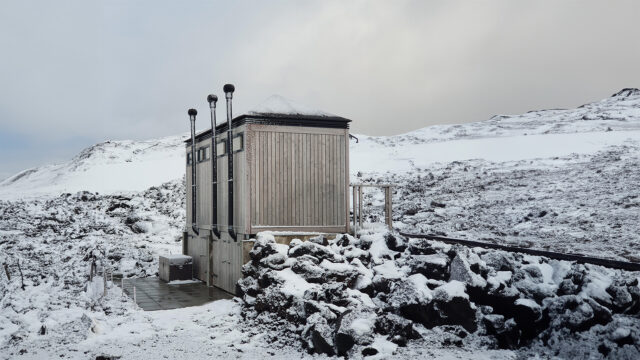
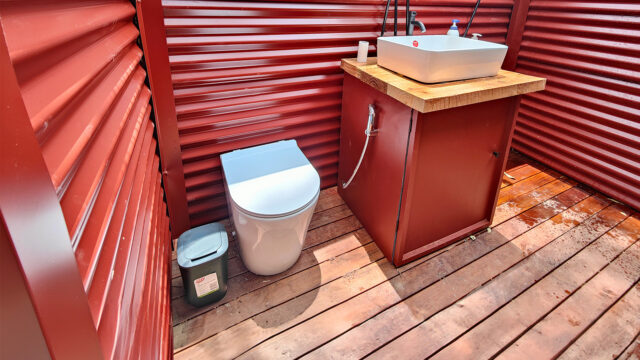
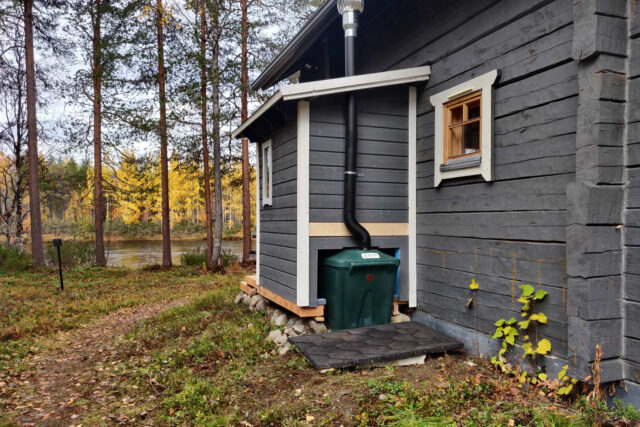
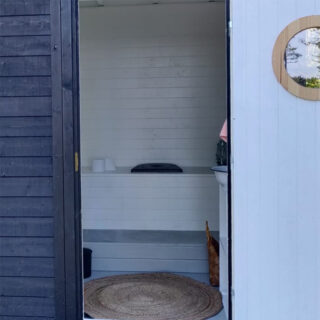
Flexible placement – Can be set up in barns, outhouses, sheds, or anywhere a toilet is needed, without requiring underground plumbing.
Time-saving – Helps avoid trips back to the house during long workdays, which is especially convenient for family members and seasonal workers.
Supports soil health – Some systems allow composted waste to be safely used on trees or non-edible plants, returning nutrients to the land.
Works year-round – Many composting toilets are designed to perform well in all seasons, including cold winter conditions.
Resilient and low-maintenance – Built to withstand frequent use by multiple people with minimal upkeep required.
Composting toilets offer flexibility that fits the varied routines of farm life. Here are a few common ways they’re used across homesteads and small farms:
Field and Barn Toilets
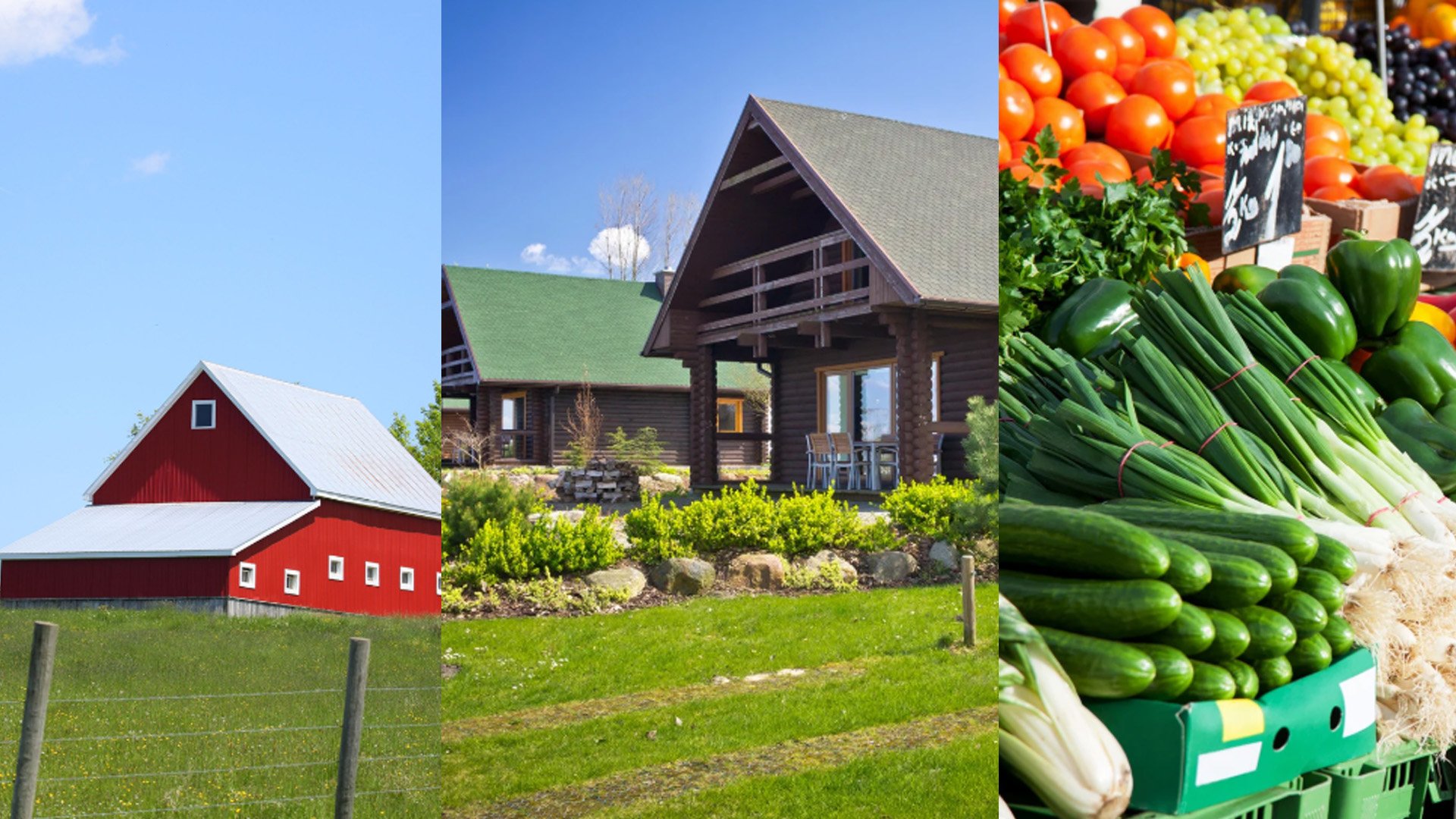
Installing a composting toilet near fields, animal pens, or barns saves time during long workdays. There’s no need to walk back to the main house for toilet.
Toilets for Guest Cabins and Workers
Whether it’s a rustic cabin for visitors, a trailer for seasonal workers, or a tiny home for extra living space, composting toilets provide an independent solution without needing plumbing or septic hookups.
On-Farm Shops and Markets
If you sell produce from a roadside stand or host weekend markets, adding a toilet nearby can make your space more inviting and accessible for both customers and workers.
Agritourism and Glamping
Many homesteaders are turning to short-term rentals, farm stays, or glamping as an extra income stream. Composting toilets are a perfect fit for eco-conscious accommodations—no septic required, and guests love the sustainability angle.
System Options and Recommendations
Choosing the right composting toilet system can make a big difference in comfort, maintenance, and long-term satisfaction. Here are a few recommended options that suit the needs of farms and homesteads especially well.
If you need help in finding the best composting toilet for your needs, please contact us at the Waterless Toilet Shop and we’re happy to help!
📱(702) 328 0689
✉ info@waterlesstoiletshop.com
Split-System Toilets with Ceramic Pedestals
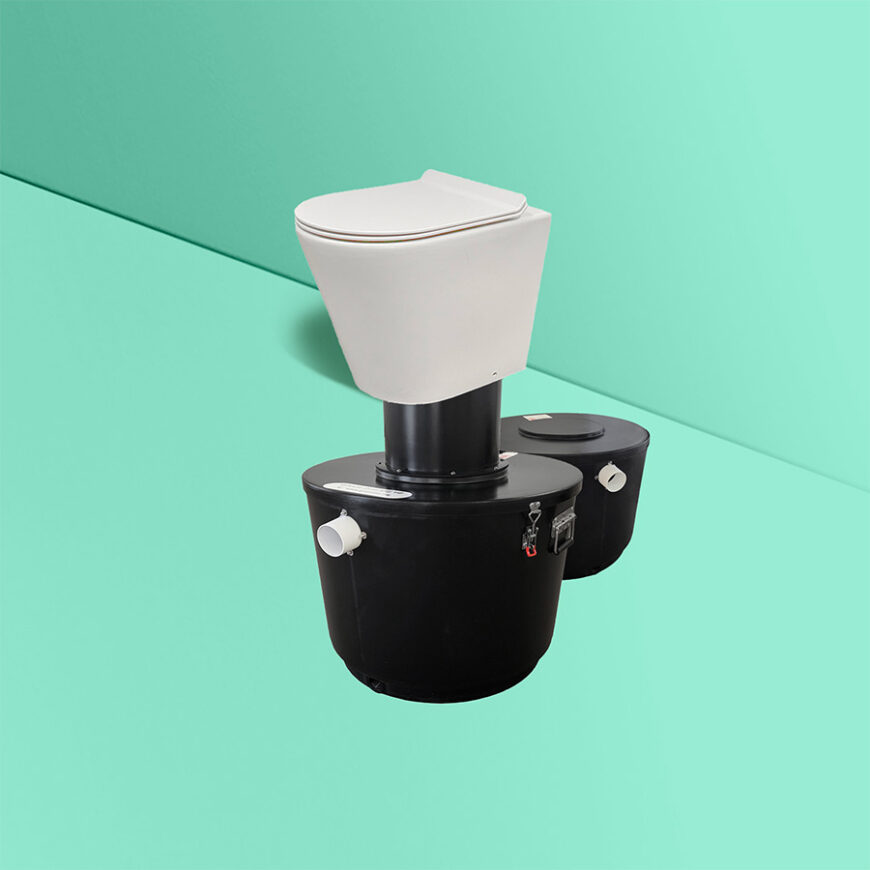
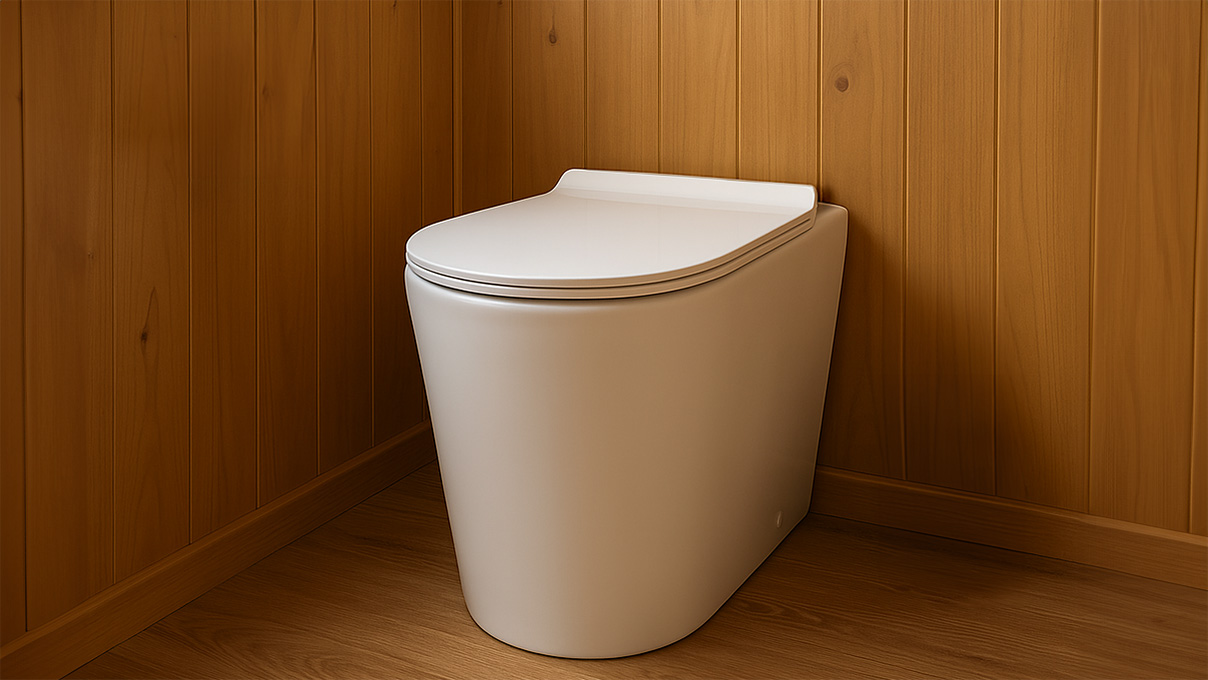
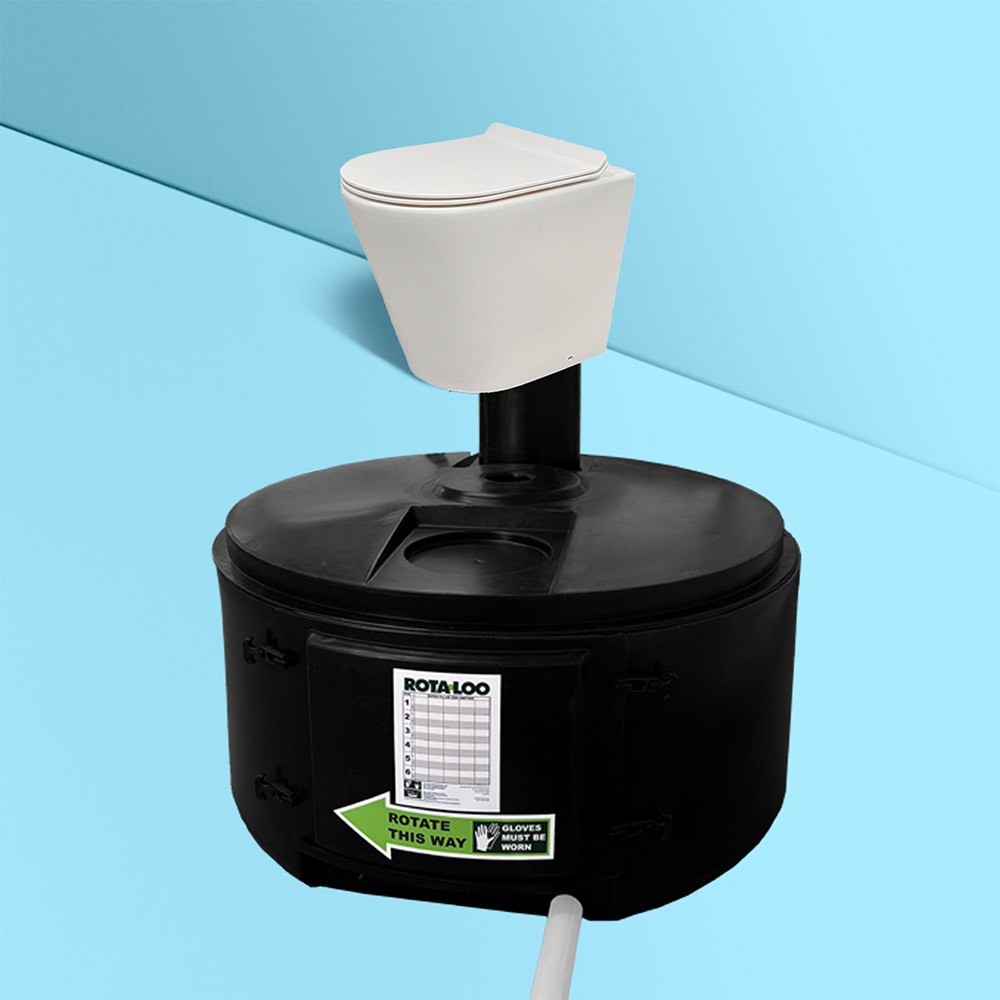
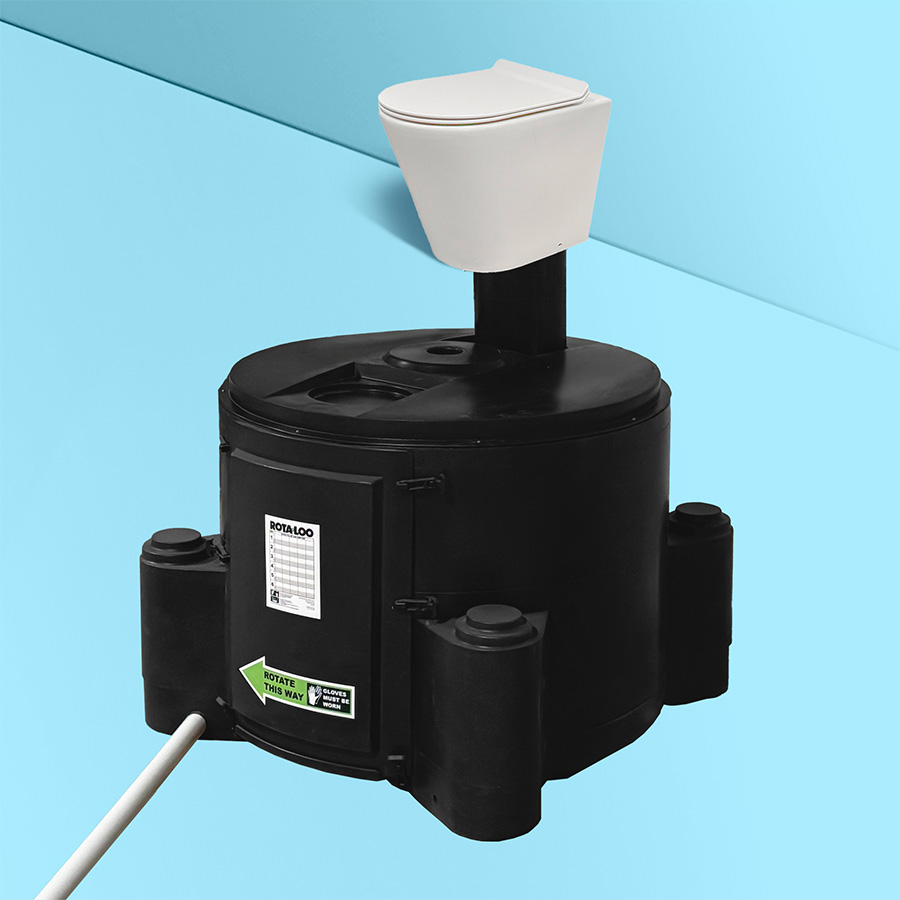
For homesteaders who want the toilet area to feel more like a modern indoor bathroom, split-system composting toilets with ceramic pedestals are an excellent choice. These systems separate the toilet pedestal (installed indoors) from the composting container (installed below the floor level), allowing for:
A clean, odorless user experience
A stylish and durable look, thanks to real ceramic fixtures
Higher capacity/volume and extended service intervals
They’re a great fit when comfort and aesthetics matter just as much as function.
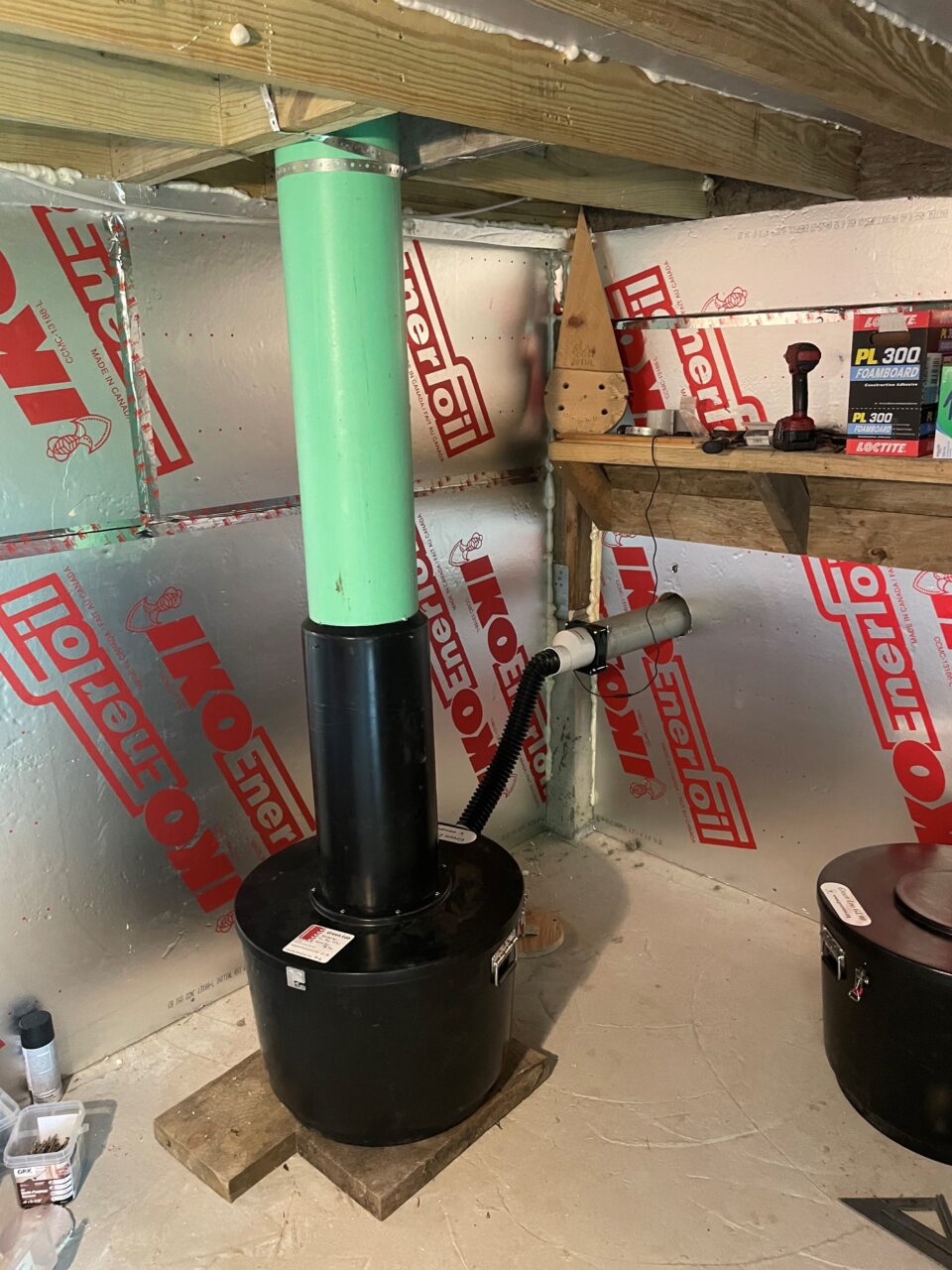
Batch Composting Systems with Multiple Bins
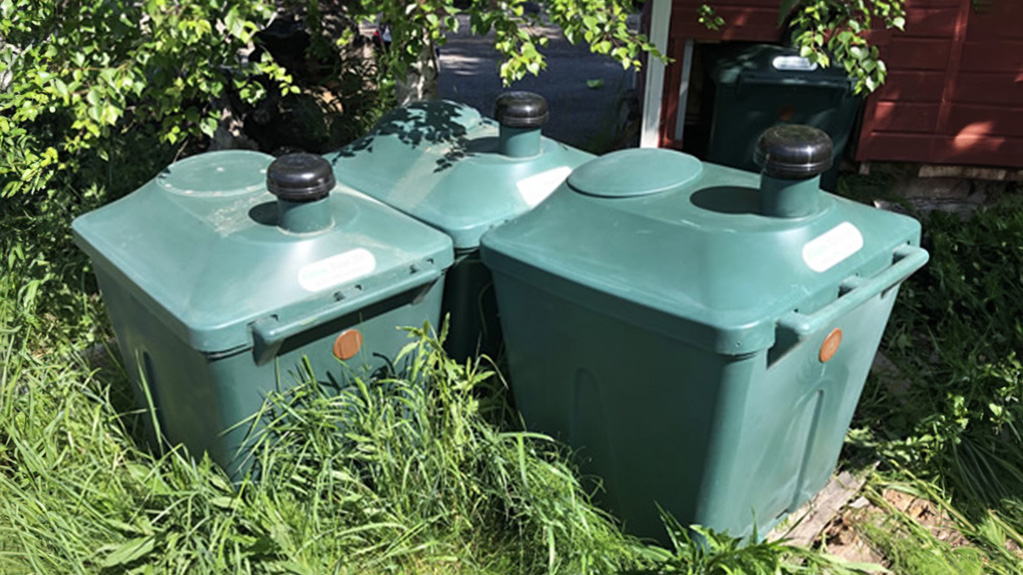
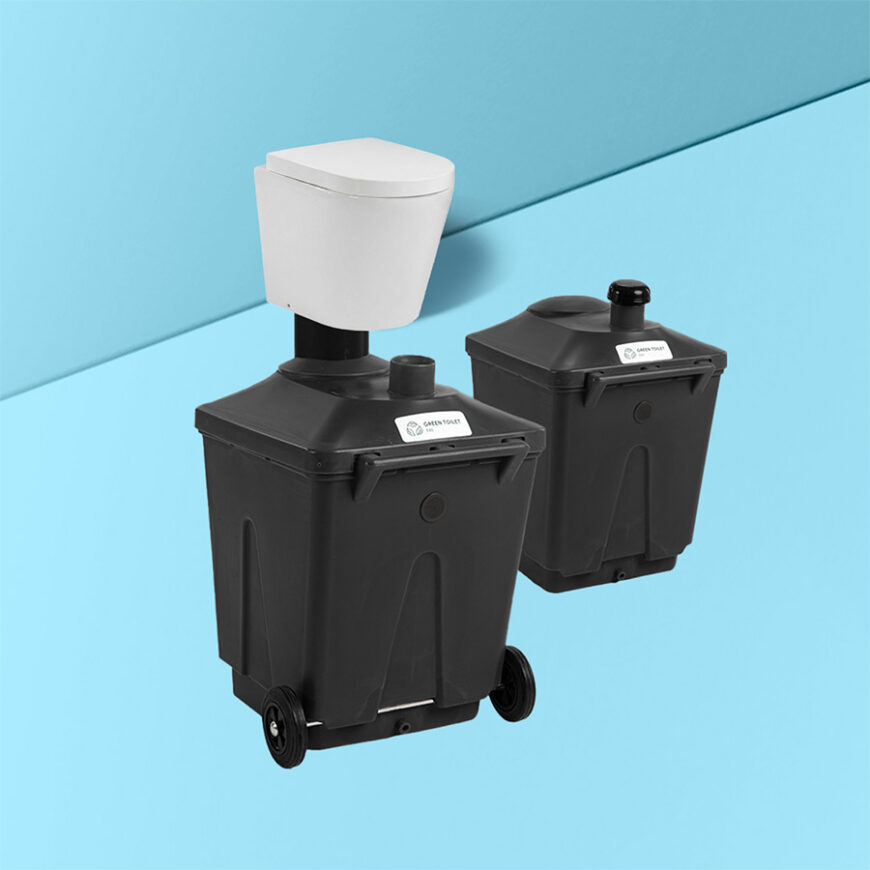
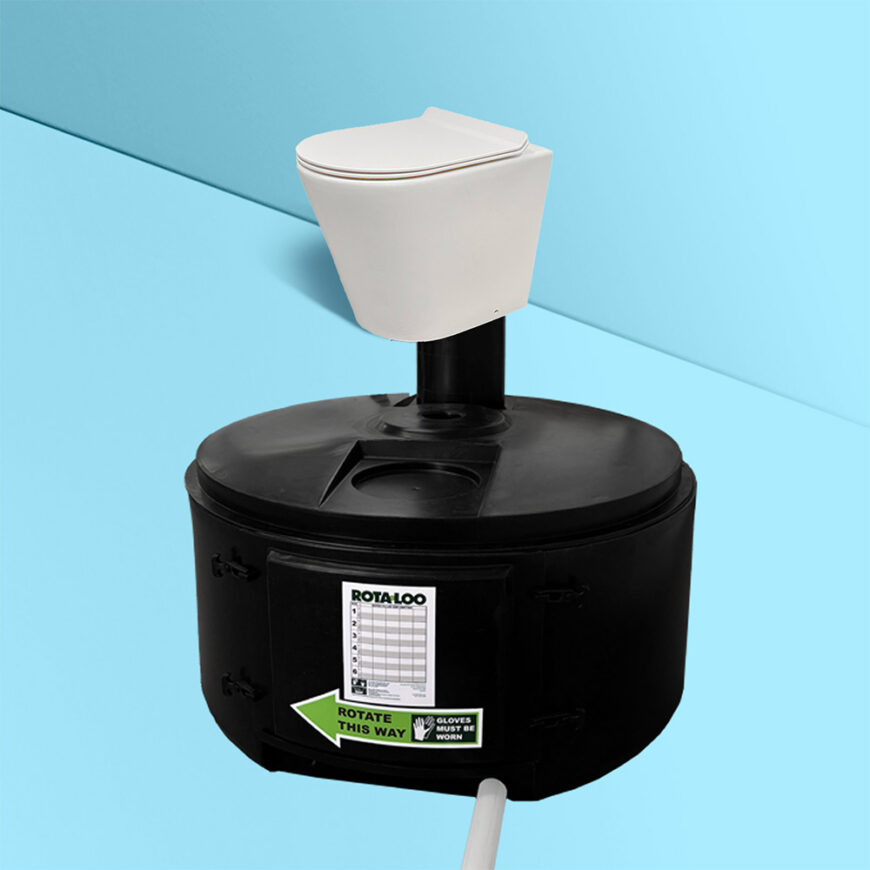
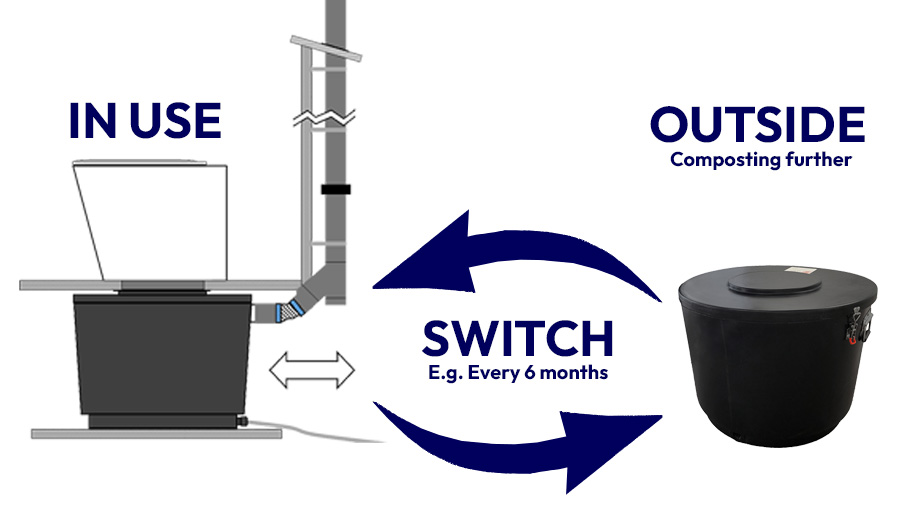
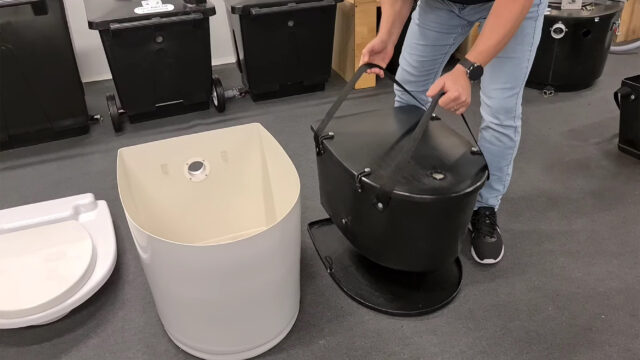
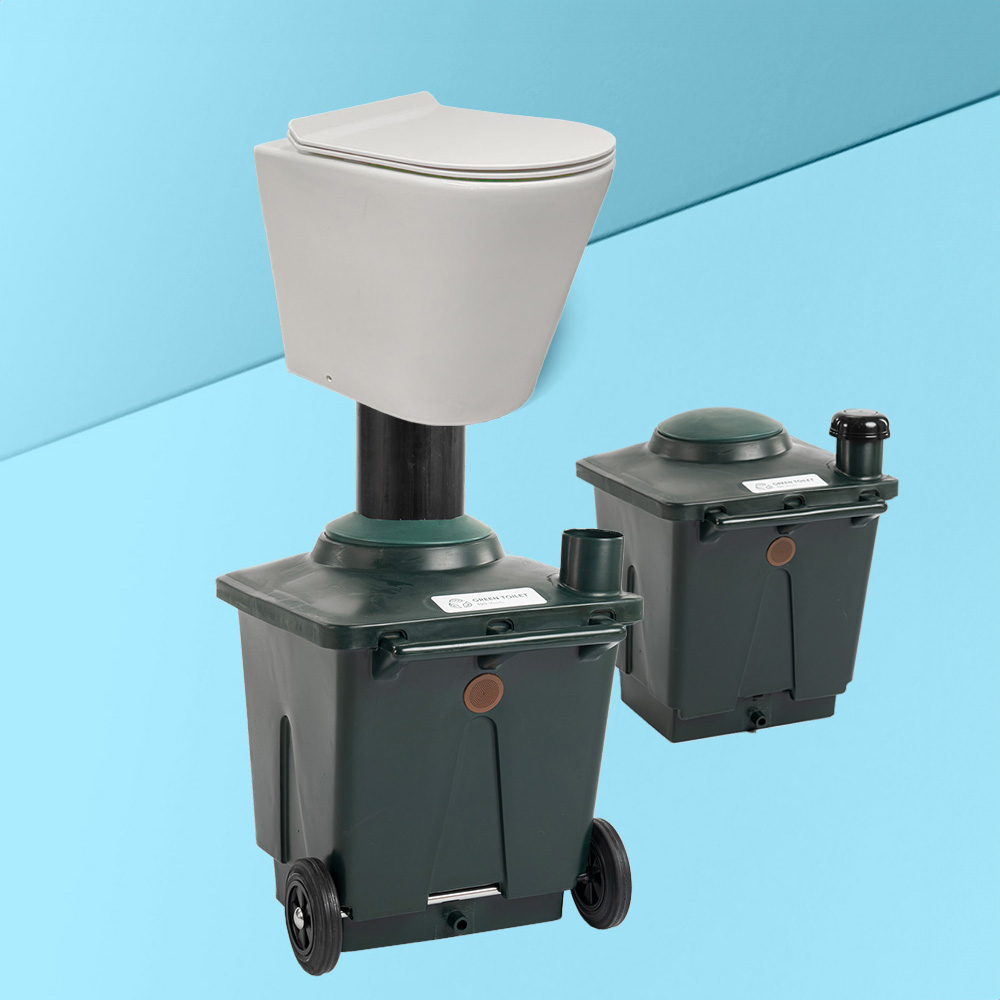
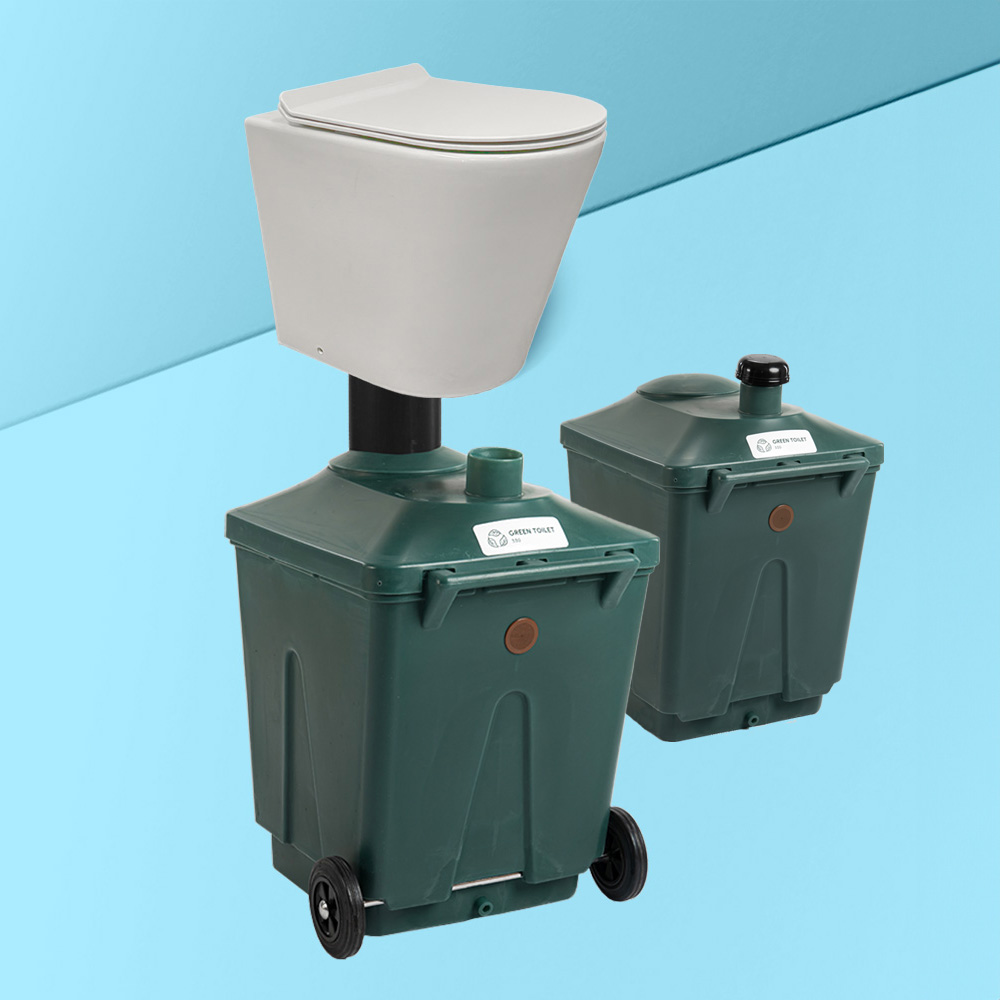
Batch composting toilets are ideal for farms with multiple users or anyone who wants to minimize contact with waste. These systems come with two or more interchangeable containers and offer several key benefits:
Safe and hands-off composting: Once a bin is full, it can be closed and set aside to finish composting without handling raw waste.
Easy maintenance: Swapping out containers takes just minutes and doesn’t require any special tools or heavy lifting.
Expandable capacity: If your farm grows—or if you host visitors or workers—extra containers can be added to meet demand.
Reliable year-round performance: Especially useful for off-grid setups where water and power use are limited.
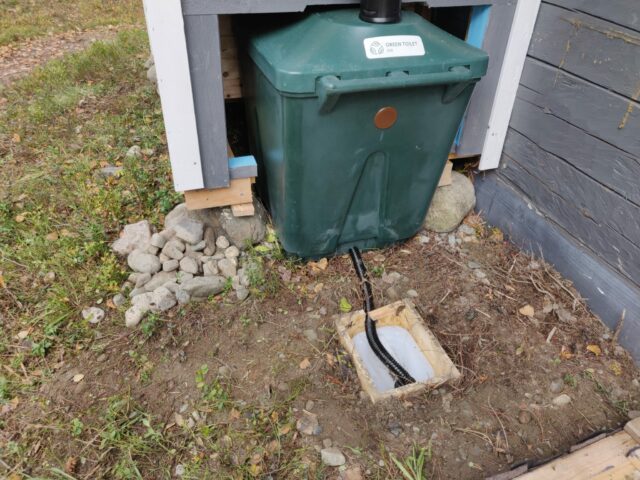
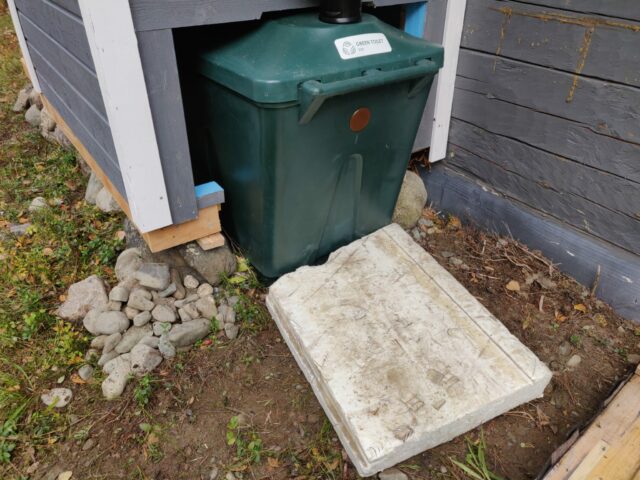
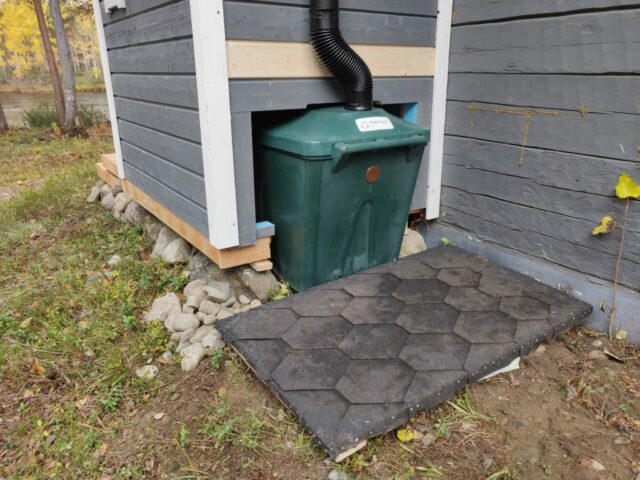
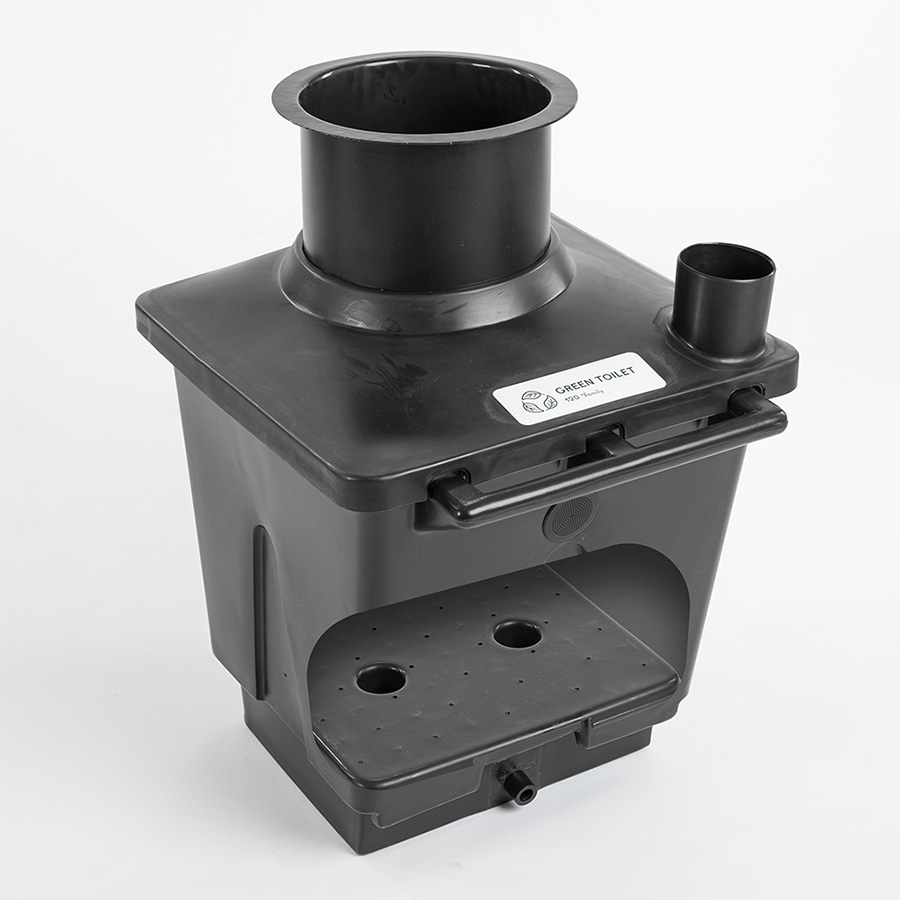
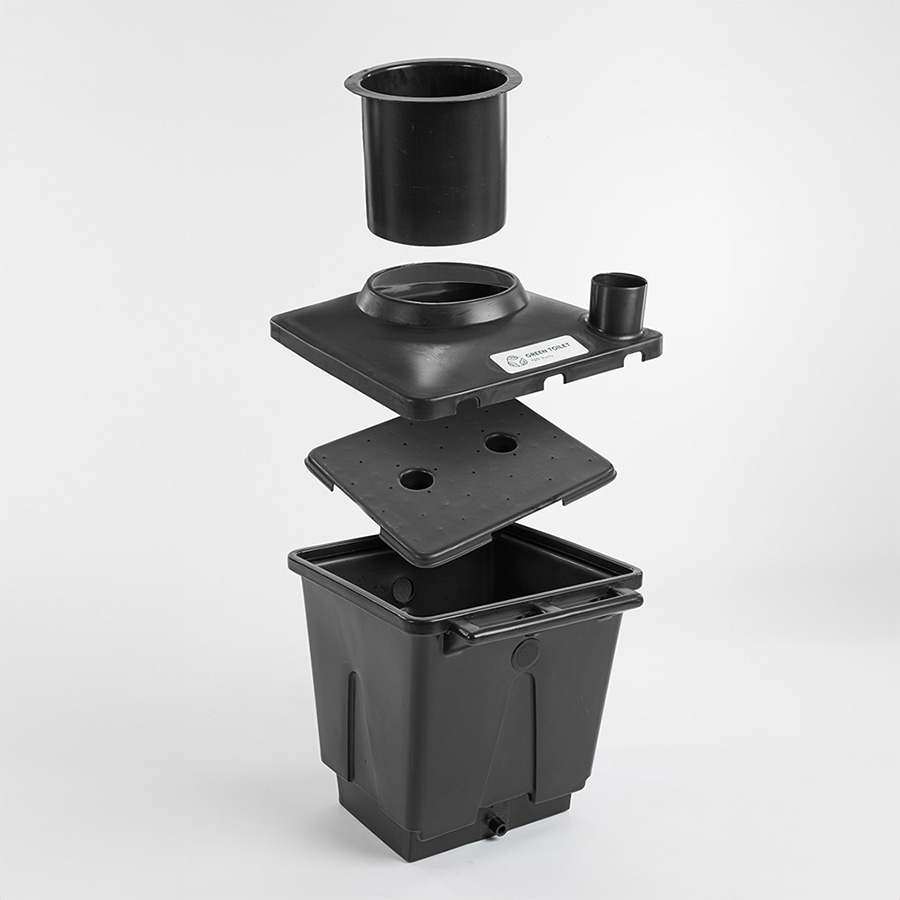
Batch systems like the Green Toilet 330 are especially popular due to their robust design and large composting volume.
Recommended Accessories
A few smart accessories can make your composting toilet system even more functional and comfortable:
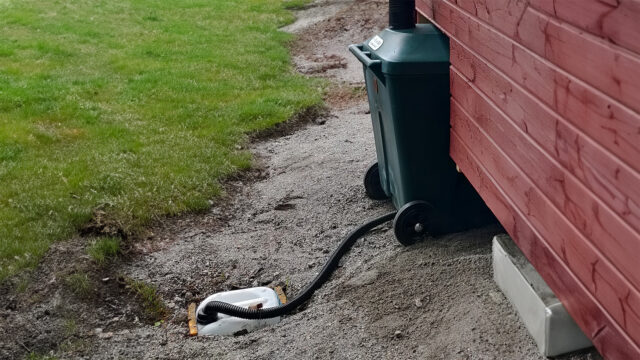
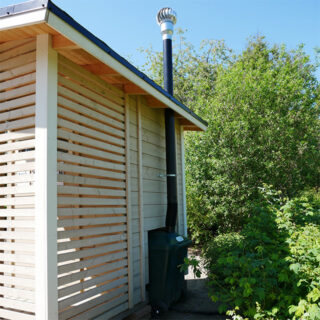
Whirlybird: These wind-powered vents are perfect for off-grid installations, helping to boost airflow and reduce odors without using electricity.
Waterless urinal: Great for men’s use, they provide convenience and reduce the liquid load on the main composting toilet.
Thermal toilet seat: For non-heated outbuildings, barns, or sheds, these warm seats add comfort during the colder months.
Composting toilets are a natural fit for homesteads and small farms, offering a practical, sustainable, and cost-effective alternative to traditional plumbing. Whether you’re living off-grid or just looking to live more in tune with the land, the right system can make a big difference.
Average Daily Capacity per 26-Gallon Composting Bin
(Based on approx. 150 uses involving a #2 — i.e., poop) – only the solids count!
Service Interval
#2 Visits per Day (involving a #2)
30 days (1 month)
~5.0 visits/day
60 days (2 months)
~2.5 visits/day
90 days (3 months)
~1.7 visits/day
180 days (6 months)
~0.8 visits/day
365 days (1 year)
~0.4 visits/day
👥 Roughly how often will I service a bin?
Full-Time Users
Time Before a Bin Swap
1 person
about 4–5 months
2 people
about 2–3 months
3 people
about 1.5–2 months
4 people
about 1–2 months
🟢 What counts as a “#2 visit”?
Only visits that involve pooping (i.e., going number two) — urine-only visits don’t contribute to filling the composting bin and are not included in the estimate.
🔄 Why two bins?
The Green Toilet Compact Lux comes with two composting bins. The figures above are per bin: when one fills up you swap in the empty one, and the full bin is left to compost undisturbed until you next need it. The second bin doesn’t make the interval longer — it means you never have to empty a bin in a hurry. Additional bins can be added at any time.
⚠️ Disclaimer: These estimates are approximations. The actual number of solid uses per bin may vary significantly depending on climate, temperature, ventilation, user habits, and the amount of dry bulking material (e.g., wood shavings or peat) added after each use.
Our Customer Service team is currently closed on Thursday, June 11th, 2026 and will be back on Friday, June 12th, 2026.
Our phone customer service is closed today Friday, July 3rd 2026. We are back on Monday next week.
Email customer service remains available — please contact us at info@waterlesstoiletshop.com
, and we’ll get back to you as soon as possible.
Thank you for your understanding.
Pay with Klarna
We’re excited to now offer Klarna as a payment option at Waterless Toilet Shop!
Choose how you want to pay — all at once or with flexible installments that fit your budget.
💸 Pay in 4 — Interest-Free
Split your composting toilet purchase into four equal payments every two weeks.
No interest, no hidden fees — just a smarter way to pay over time.
Other Flexible Options
Klarna also offers monthly financing with 6–24-month plans and transparent APR rates based on your credit.
You’ll see all available payment options instantly when you select Klarna at checkout.
Klarna financing is issued by WebBank and available to eligible U.S. residents in most states.
Missed payments may incur late fees. For California residents, loans are made or arranged pursuant to a California Financing Law license. Review Klarna’s terms.
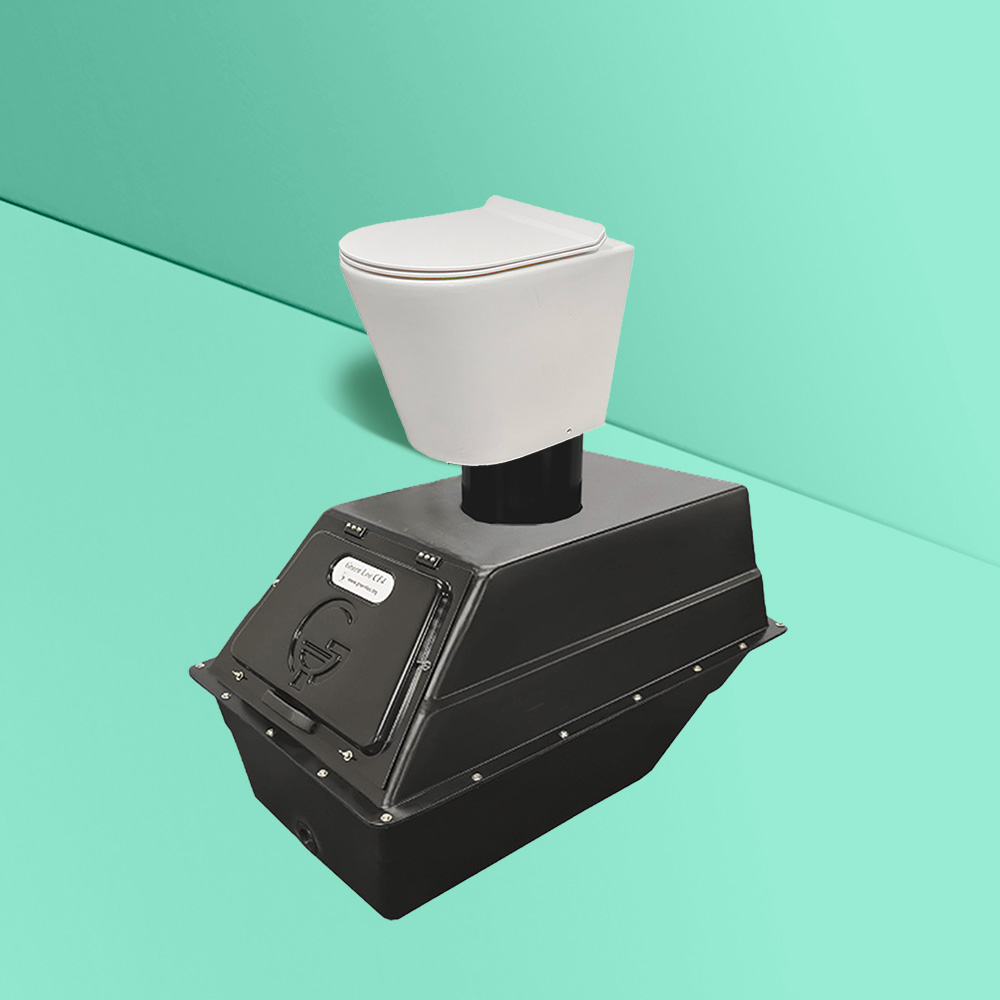
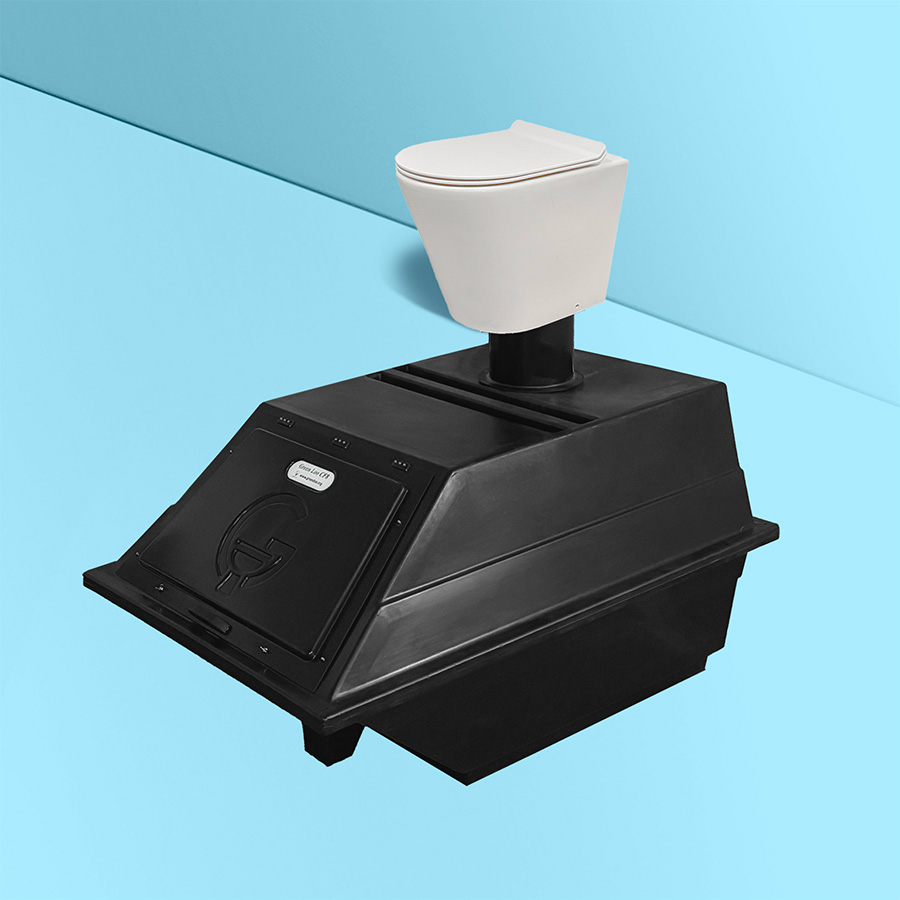
CF 8 Composting Toilet – Estimated Daily Capacity
The CF 8 is a continuous composting toilet system featuring a single large 250-gallon container. Like the CF 4, it is designed for gradual emptying rather than batch-style use. Solids are typically removed in thirds or sections, allowing earlier deposits time to fully compost inside the tank.
This setup allows for either:
Year-round use with gradual emptying, or
Seasonal use (e.g., 4–5 months/year) with full emptying once per year
🔁 Continuous Use: Gradual Emptying in Thirds
When used year-round, the CF 8 is typically emptied one-third at a time, effectively composting in three rotating “piles” within the container.
Because the CF 8 is more than twice as large as the CF 4, each pile can hold approximately 480–960 poops, depending on composting conditions and how much bulking material is used.
Service Interval (per pile)
Estimated #2 Visits per Day
30 days (1 month)
~17–32 visits/day
60 days (2 months)
~8–16 visits/day
90 days (3 months)
~5–11 visits/day
180 days (6 months)
~3–5 visits/day
365 days (1 year)
~1.2–2.6 visits/day
💡 These figures assume that one-third of the tank is in active use at a time, with older waste given time to compost before removal.
🌤 Seasonal Use: Full-Tank Emptying After Inactive Period
For cabins, cottages, or other sites used seasonally, the CF 8 can be used for a few months and then left idle to allow full composting. In such cases, the entire tank may be emptied once a year.
Full-tank capacity estimate: ~1,440–2,880 poops
Example: 120 days of use (approx. 4 months): → ~12–24 solid visits per day on average
⚠️ Disclaimer
These numbers are rough estimates based on typical use and conditions. Actual capacity will vary depending on:
Climate (temperature and humidity)
Ventilation and air flow
How much dry bulking material is added
User behavior and emptying practices
For best performance, ensure proper aeration, regular bulking material use, and consistent emptying of composted portions.
💡 Want to Maximize Capacity? Consider a Urine-Diverting Toilet — With Some Important Considerations
If you’re looking to maximize the capacity of the CF 8 system — aiming for 960+ poops per composting “pile” — we recommend using aurine-diverting (UD) toilet pedestal.
✅ Benefits of Urine Separation:
Reduces or eliminates the need for dry bulking material, which frees up valuable space in the composting unit
Helps keep the compost drier, more aerated, and better suited for natural decomposition
Increases the total capacity of the composting container
Can lead to faster and more efficient composting, especially in high-use environments
By diverting urine out of the solids container, the volume taken up by absorbent material (like peat or wood shavings) is significantly reduced. This can make a big difference in how often the system needs to be emptied.
⚠️ Downsides to Consider:
Urine-diverting toilets can take some time to get used to. Users need to sit or aim correctly to ensure proper separation, which might not happen consistently without experience or guidance.
For this reason, UD toilets are generally not ideal for public or commercial settings where the toilet is used by guests, tourists, or other first-time users. In these cases, misuse can reduce the effectiveness of the system and may even lead to unpleasant maintenance issues.
In short: A UD toilet is an excellent choice for maximizing capacity in private or family use, but for guest or public access composting toilets, a standard non-diverting model may be more practical and user-friendly.
Green Toilet 100 Easy – Estimated Daily Capacity
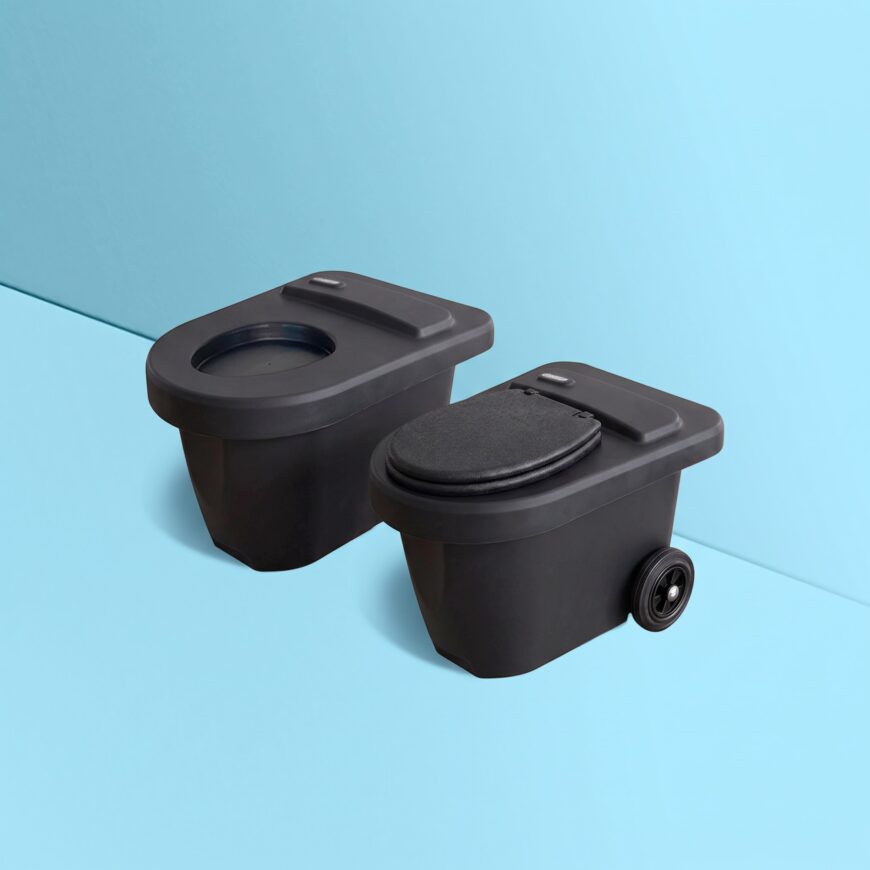
The Green Toilet 100 Easyis a compact and user-friendly batch composting toilet with a 26-gallon composting container. Its design makes it well-suited for outhouses, cabins, and even indoor use. A spare containeris available to expand capacity and simplify servicing.
Note: Due to the shape and internal structure of the container, the actual composting capacity is slightly lower than its raw volume might suggest, if you compare with Green Toilet 120 Family composting toilet for example.
📆 Average Daily Capacity per Bin
Service Interval
Estimated #2 Visits per Day
30 days (1 month)
~6–7 visits/day
60 days (2 months)
~3–4 visits/day
90 days (3 months)
~2.2 visits/day
180 days (6 months)
~1.1 visits/day
365 days (1 year)
~0.5 visits/day
Notes & Recommendations:
For seasonal or weekend use, one container often lasts a full summer.
For more frequent use, we recommend the package with a spare container. This allows one bin to rest and compost while the other is in active use.
Don’t forget to add dry bulking material (like wood shavings or peat) regularly to maintain airflow and prevent odors.
⚠️ Disclaimer: These estimates are intended as general guidance. Real-world performance may vary depending on:
Climate and temperature
Ventilation quality
How much dry bulking material is used
Number of users and usage patterns
CF 4 Composting Toilet – Estimated Daily Capacity
The CF 4 is a continuous composting toilet system featuring a single large 105-gallon container. Unlike batch composting systems (such as the Green Toilet models), the CF 4 is designed for gradual emptying — solids are typically removed in thirds or sections, allowing earlier deposits time to fully compost inside the tank.
This setup allows for either:
Year-round use with gradual emptying, or
Seasonal use (e.g. 4–5 months/year) with full emptying once per year
🔁 Continuous Use: Gradual Emptying in Thirds
When used year-round, the CF 4 is typically emptied one-third at a time, effectively composting in three rotating “piles” within the container. Depending on composting conditions and how much bulking material is used, each pile can hold approximately 200–400 poops.
Service Interval (per pile)
Estimated #2 Visits per Day
30 days (1 month)
~7–13 visits/day
60 days (2 months)
~3–7 visits/day
90 days (3 months)
~2–4 visits/day
180 days (6 months)
~1–2 visits/day
365 days (1 year)
~0.5–1.1 visits/day
💡 These figures assume that one third of the tank is in active use at a time, with older waste given time to compost before removal.
🌤 Seasonal Use: Full-Tank Emptying After Inactive Period
For cabins, cottages, or other sites used seasonally, the CF 4 can be used for a few months and then left idle to allow full composting. In such cases, the entire tank may be emptied once a year.
Full-tank capacity estimate: ~600–1,200 poops
Example: 120 days of use (approx. 4 months): → ~5–10 solid visits per day on average
⚠️ Disclaimer
These numbers are rough estimates based on typical use and conditions. Actual capacity will vary depending on:
Climate (temperature and humidity)
Ventilation and air flow
How much dry bulking material is added
User behavior and emptying practices
For best performance, ensure proper aeration, regular bulking material use, and consistent emptying of composted portions.
💡 Want to Maximize Capacity? Consider a Urine-Diverting Toilet — With Some Important Considerations
If you’re looking to maximize the capacity of the CF 4 system — aiming for 400+ poops per composting “pile” — we recommend using a urine-diverting (UD) toilet pedestal.
✅ Benefits of Urine Separation:
Reduces or eliminates the need for dry bulking material, which frees up valuable space in the composting unit
Helps keep the compost drier, more aerated, and better suited for natural decomposition
Increases the total capacity of the composting container
Can lead to faster and more efficient composting, especially in high-use environments
By diverting urine out of the solids container, the volume taken up by absorbent material (like peat or wood shavings) is significantly reduced. This can make a noticeable difference in how often the system needs to be emptied.
⚠️ Downsides to Consider:
Urine-diverting toilets can take some time to get used to. Users need to sit or aim correctly to ensure proper separation, which might not happen consistently without experience or guidance.
For this reason, UD toilets are generally not ideal for public or commercial settings where the toilet is used by guests, tourists, or other first-time users. In these cases, misuse can reduce the effectiveness of the system and may even lead to unpleasant maintenance issues.
In short: A UD toilet is an excellent choice for maximizing capacity in private or family use, but for guest or public access composting toilets, a standard non-diverting model may be more practical and user-friendly.
Green Toilet 120 Family
💩 Average Daily Capacity per 31-Gallon Composting Bin
(Based on approx. 356 uses involving a #2 — i.e., poop) – only the solids count!
Service Interval
#2 Visits per Day (involving a #2)
30 days (1 month)
~11.9 visits/day
60 days (2 months)
~5.9 visits/day
90 days (3 months)
~4.0 visits/day
180 days (6 months)
~2.0 visits/day
365 days (1 year)
~1.0 visits/day
🟢 What counts as a “#2 visit”? Only visits that involve pooping (i.e., going number two) — urine-only visits don’t contribute to filling the composting bin and are not included in the estimate.
⚠️ Disclaimer: These estimates are approximations. The actual number of solid uses per bin may vary significantly depending on climate, temperature, ventilation, user habits, and the amount of dry bulking material (e.g., wood shavings or peat) added after each use.
Green Toilet 330
💩 Average Daily Capacity per 87-Gallon Composting Bin
(Based on approx. 1,000 uses involving a #2 — i.e., poop) – only the solids count!
Service Interval
#2 Visits per Day (involving pooping)
30 days (1 month)
~33 visits/day
60 days (2 months)
~17 visits/day
90 days (3 months)
~11 visits/day
180 days (6 months)
~5.6 visits/day
365 days (1 year)
~2.7 visits/day
🟢 What counts as a “#2 visit”? Only visits that involve defecation (pooping) — urine-only visits don’t fill up the composting bin and are not included in the 1,000-use estimate.
⚠️ Disclaimer: These estimates are based on typical, steady use. The actual number of solid uses a composting bin can handle may vary significantly depending on climate, temperature, humidity, ventilation, and how much dry bulking material (like wood shavings) is added after each use.
💧 Liquid waste (urine) estimate
Average person produces about:
0.4 gallons of urine per day (≈1.5 liters ≈ 1.6 quarts)
So for 100 people:
0.4 gallons × 100 = 40 gallons of urine per day
🚽 Flush water use estimate
Average flush volume in the U.S. is about:
1.5 gallons per flush
Average person flushes ~5 times per day, so:
1.5 gallons × 5 = 7.5 gallons/person/day
So for 100 people:
7.5 gallons × 100 = 750 gallons of flush water per day

 Composting
 Off-Grid
 Indoors
 Premium
 Floor-standing
 Tiny House
 ADU
ADU Urine-diverting
 Year-around
 Luxurious
 Cabins
 RVs
RVs Large capacity
 Cold climate
 Glamping
 Outhouses
 Batch toilets
 Public use
 Single-chamber
 Toilet Pedestals
 Accessories