 Composting
 Off-Grid
 Indoors
 Premium
 Floor-standing
 Tiny House
 ADU
ADU Urine-diverting
 Year-around
 Luxurious
 Cabins
 RVs
RVs Large capacity
 Cold climate
 Glamping
 Outhouses
 Batch toilets
 Public use
 Single-chamber
 Toilet Pedestals
 Accessories
How Much Water Does a Flush Toilet Actually Waste?
The answer is staggering — and there’s a smarter alternative.
You do it without thinking about it. Multiple times a day, every day, for your entire life. You press a handle, water rushes in, waste disappears, and you walk away. The toilet has been the most invisible appliance in the home — invisible, that is, until you see the numbers.
Those numbers are striking. The average American household flushes away more than 30 gallons of perfectly clean, treated drinking water every single day — not on cooking, not on drinking, not on bathing. Just flushing.
This article breaks down exactly how much water a flush toilet uses, what that adds up to over a year, what it costs, and what a growing number of homeowners, cabin owners, and off-grid families are doing about it.
💧 Quick Answer
A standard toilet uses 1.6 gallons per flush. The average person flushes 5 times a day. A family of four flushes roughly 35,000 times per year — using approximately 56,000 gallons of water. Down the drain.
How Many Gallons Does a Toilet Use Per Flush?
The answer depends almost entirely on when your toilet was manufactured. Federal plumbing standards have changed dramatically over the decades:

According to the EPA’s WaterSense program, toilets are the single largest source of indoor water use in the home, accounting for nearly 30% of all household water consumption. That’s more than showers, laundry, or the kitchen sink.
A 2021 study by Flume — analyzing over 5.9 million flushes across tens of thousands of U.S. households — found the real-world average flush volume was 2.2 gallons per flush, reflecting the large number of pre-1992 toilets still in use across America. The EPA’s WaterSense program estimates the average person flushes 5 times per day, accounting for 24% of daily household water use.
The Annual Math: What Your Toilet Actually Costs
Let’s run the numbers for a typical household. The same Flume study found that Americans flush an average of 5.5 times per person per day. The EPA’s own research puts it at 5 times.
For a single person with a modern 1.6 GPF toilet:
For a family of four with a modern 1.6 GPF toilet:
🏠 If you have a pre-1992 toilet (3.5–5 GPF)…
That same family of four is flushing 25,550 to 36,500 gallons per year — potentially three times more water than a modern toilet. That’s the equivalent of a small backyard swimming pool, going down the drain annually.
The EPA calculates that if all old, inefficient toilets in the United States were replaced with WaterSense models, Americans could collectively save more than 260 billion gallons of water per year — roughly the amount of water that flows over Niagara Falls in 9 days.
What Does That Water Actually Cost?
Water costs vary significantly by location, but the EPA estimates the average family can save more than $170 per year in water costs simply by switching from an old toilet to a WaterSense model — and $3,400 over the lifetime of the toilets.
But those savings are from swapping one flush toilet for a more efficient flush toilet. What happens when you eliminate flushing entirely?
*Based on average U.S. water rates of $0.007–$0.011 per gallon, including sewer charges.
Wait — We’re Flushing Drinking Water?
Here’s the part that tends to make people pause.
The water used in your toilet is the same water that comes out of your kitchen tap. It has been collected, treated, pumped, pressurized, and delivered to your home — all to be used once, mixed with waste, and sent to a sewage treatment plant to be cleaned all over again.
In most of the developed world, we use potable (drinkable) water for toilet flushing. In a country where drought conditions affect growing portions of the West and Southwest, and where water infrastructure costs continue to rise, this is a choice that’s increasingly being questioned.
Consider: the average American uses about 80–100 gallons of water per day indoors. Toilet flushing accounts for nearly 30% of that. You could shower three times and still use less water than you flush.

The Alternative: What If You Simply Didn’t Flush At All?
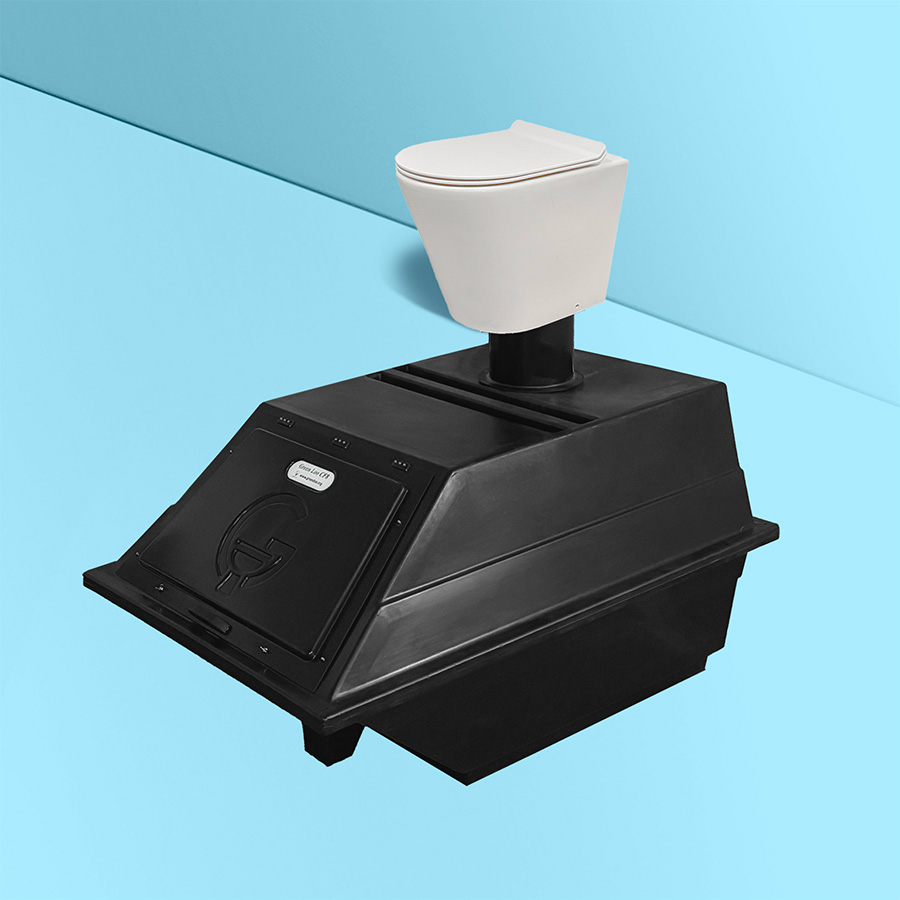
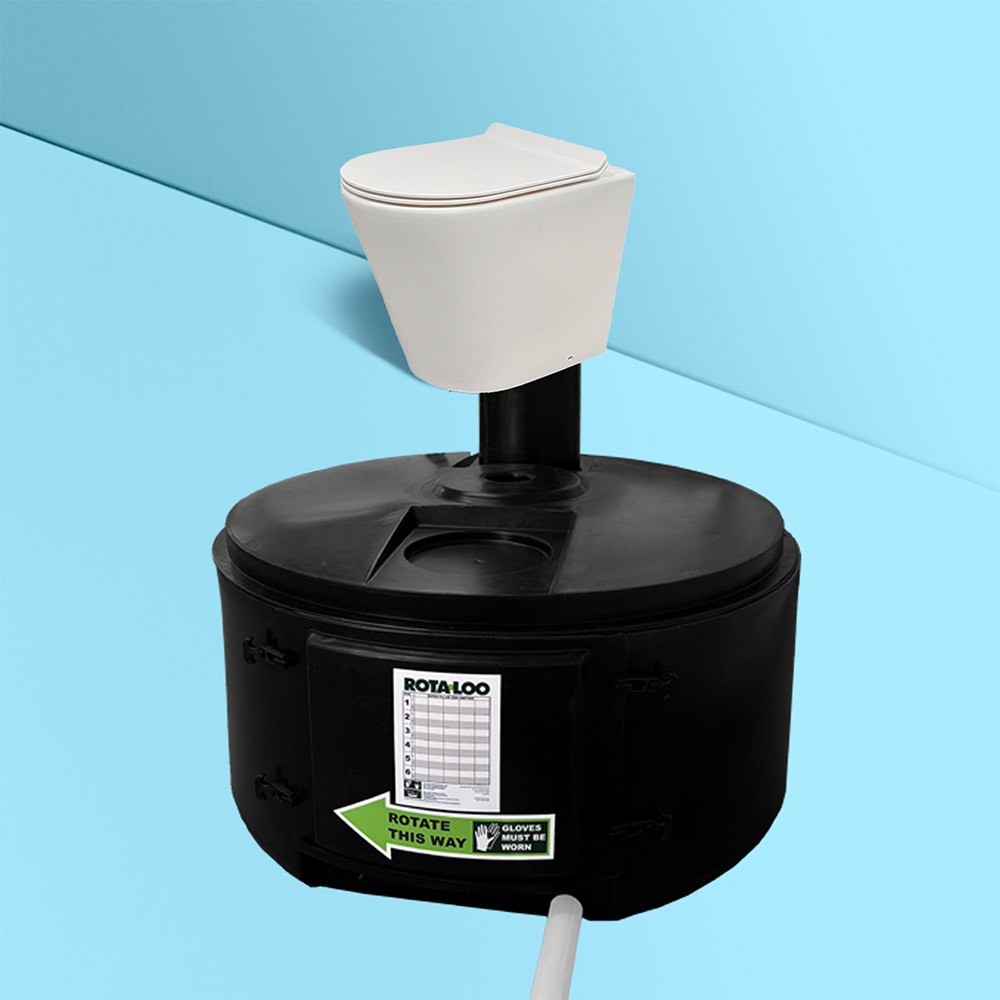
Composting toilets are the only type of toilet that eliminates water use entirely. Instead of flushing waste into a sewer system, they treat it on-site through natural biological decomposition — the same process that turns kitchen scraps into garden compost.
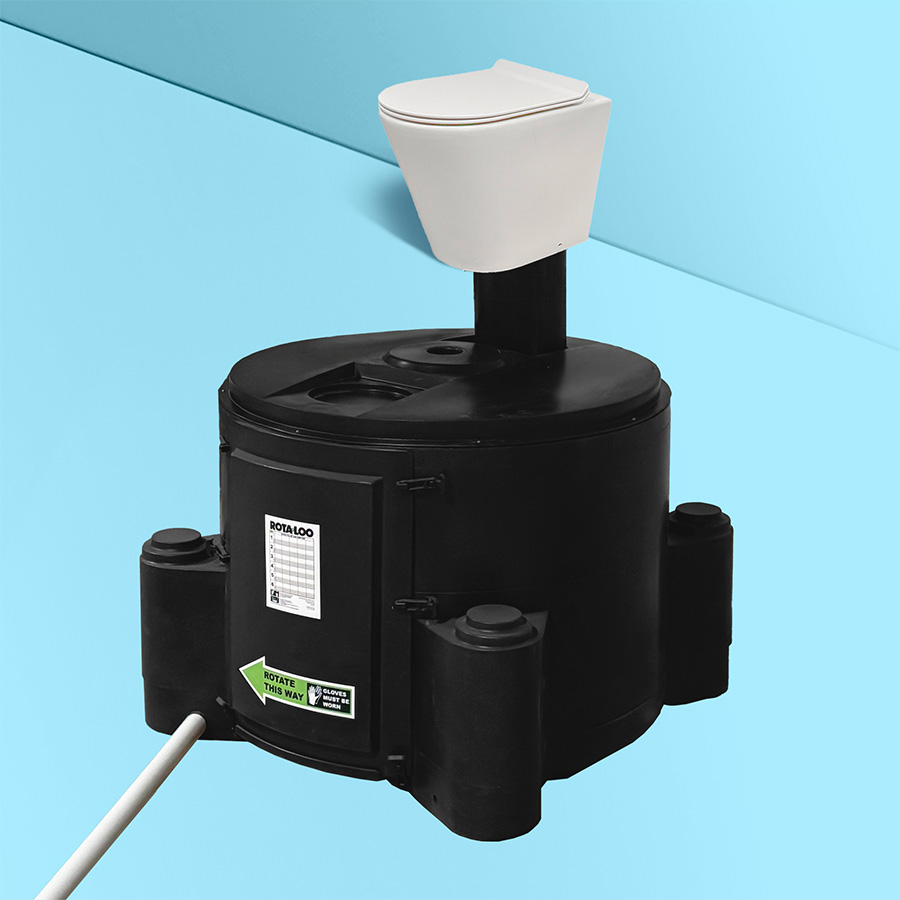
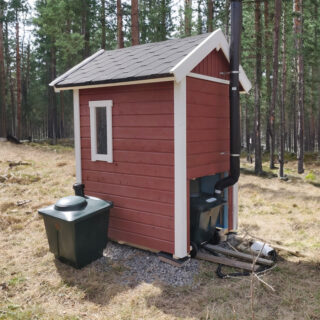
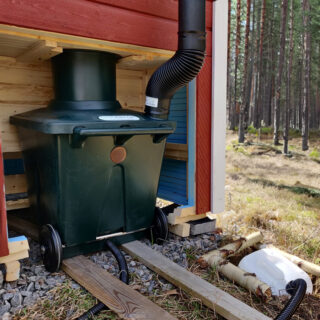
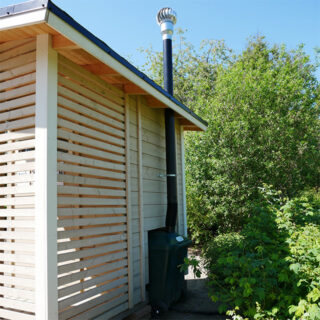
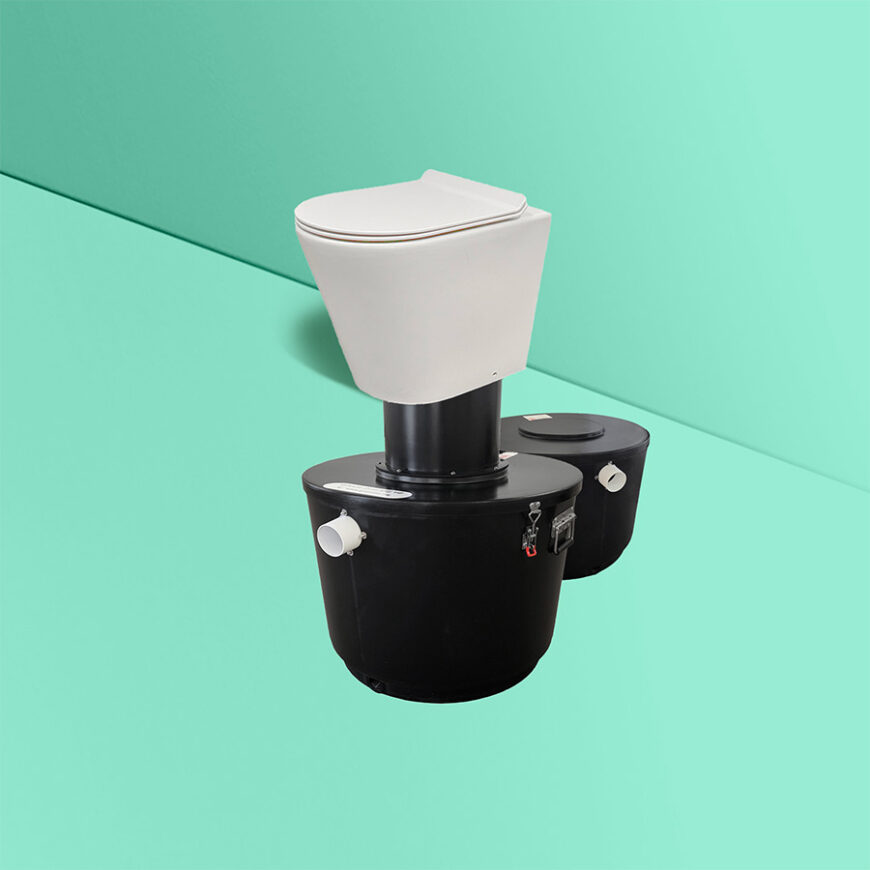
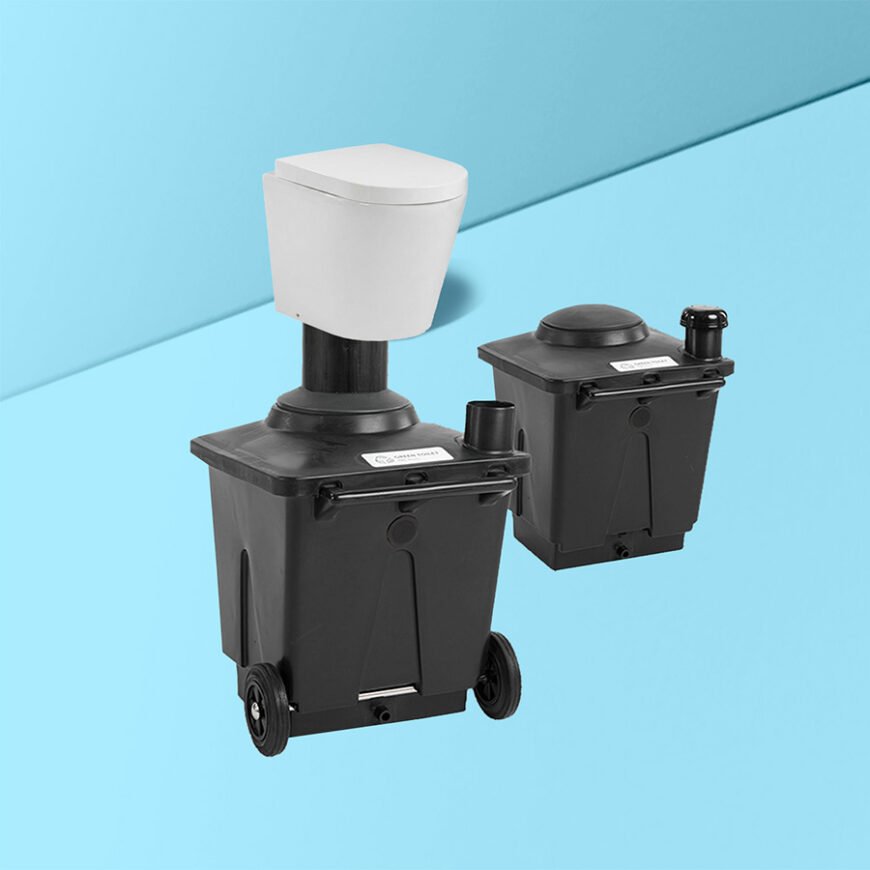
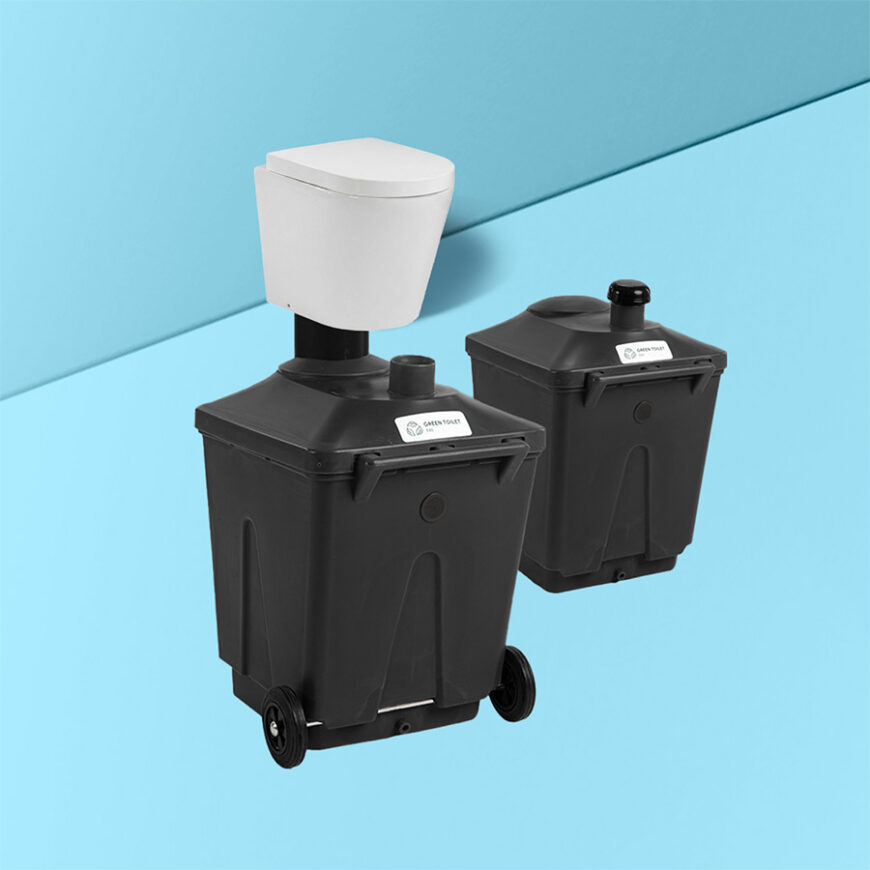
Modern composting toilets look nothing like the basic outdoor units people might imagine. The top-of-the-line models use a porcelain pedestal that looks and feels nearly identical to a conventional flush toilet. They use passive ventilation (often a wind-powered roof fan) to remain completely odor-free. And they produce a small amount of composted material — safe, hygienic, and useful as a soil conditioner — a few times a year.

What composting toilets save vs. a standard toilet (family of four):
*Based on average U.S. water rates of $0.007–$0.011 per gallon, including sewer charges.
Who Is Switching to Composting Toilets — And Why?
Water savings alone don’t explain the growing interest in composting toilets. The people making the switch tend to fall into a few distinct groups:
Cabin and off-grid property owners
For a cabin without existing plumbing, the alternative to a composting toilet isn’t a standard flush toilet — it’s a $15,000–$25,000 septic system installation. A composting toilet with a porcelain pedestal costs $1,000–$2,000 total. The math is clear.

Homesteaders and rural landowners
People who grow their own food increasingly see human waste as a resource rather than a problem. The composted output from a well-maintained composting toilet is a valuable soil amendment — the same nutrients that enter the toilet leave as something that improves the land.
Environmentally conscious homeowners
Flushing 12,000 gallons of treated drinking water per person per year is increasingly hard to justify for people paying attention to their household’s environmental footprint. Composting toilets eliminate that waste entirely.
Coastal and drought-affected communities
Cape Cod, Massachusetts has become a notable example: traditional septic systems there release nitrogen into the soil, which flows into the ocean and causes algae blooms and oxygen depletion. The region is actively adopting composting toilets as a remediation strategy, not just a lifestyle choice. Learn more

Common Questions
Do composting toilets really work indoors, in a normal home?
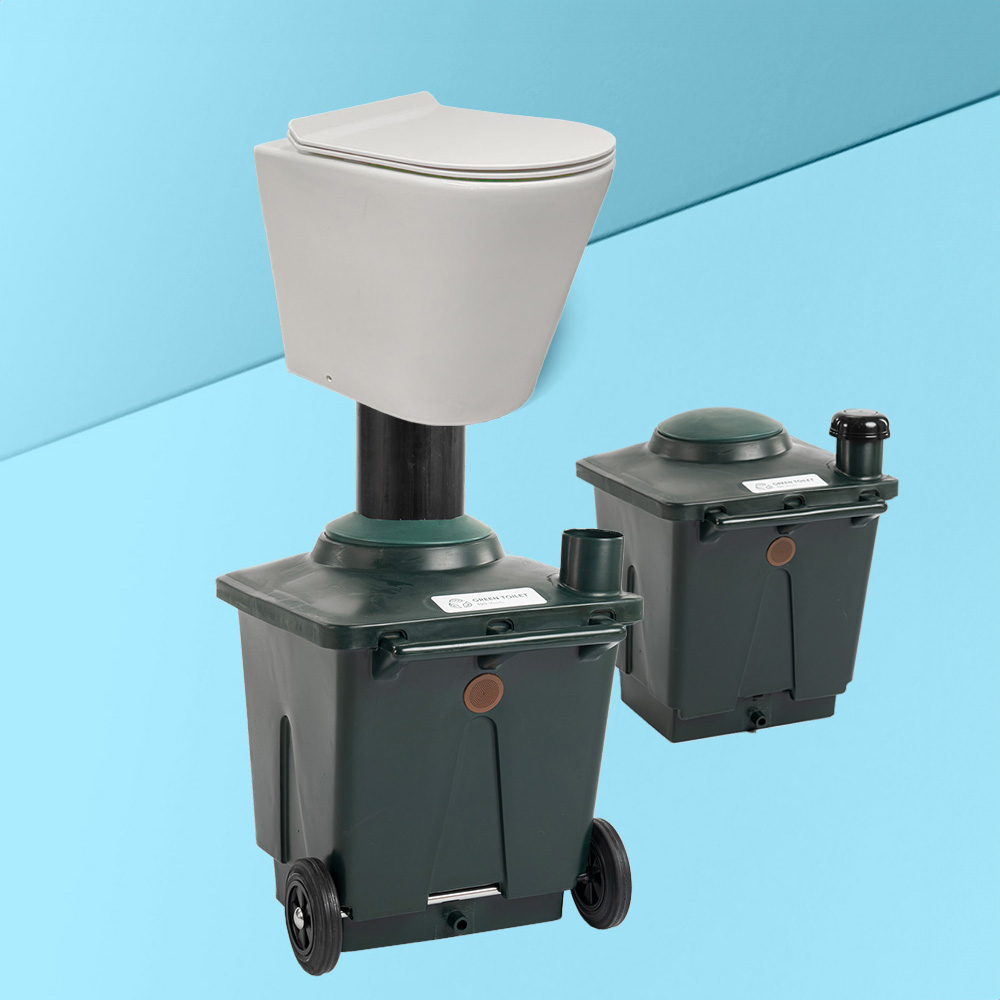
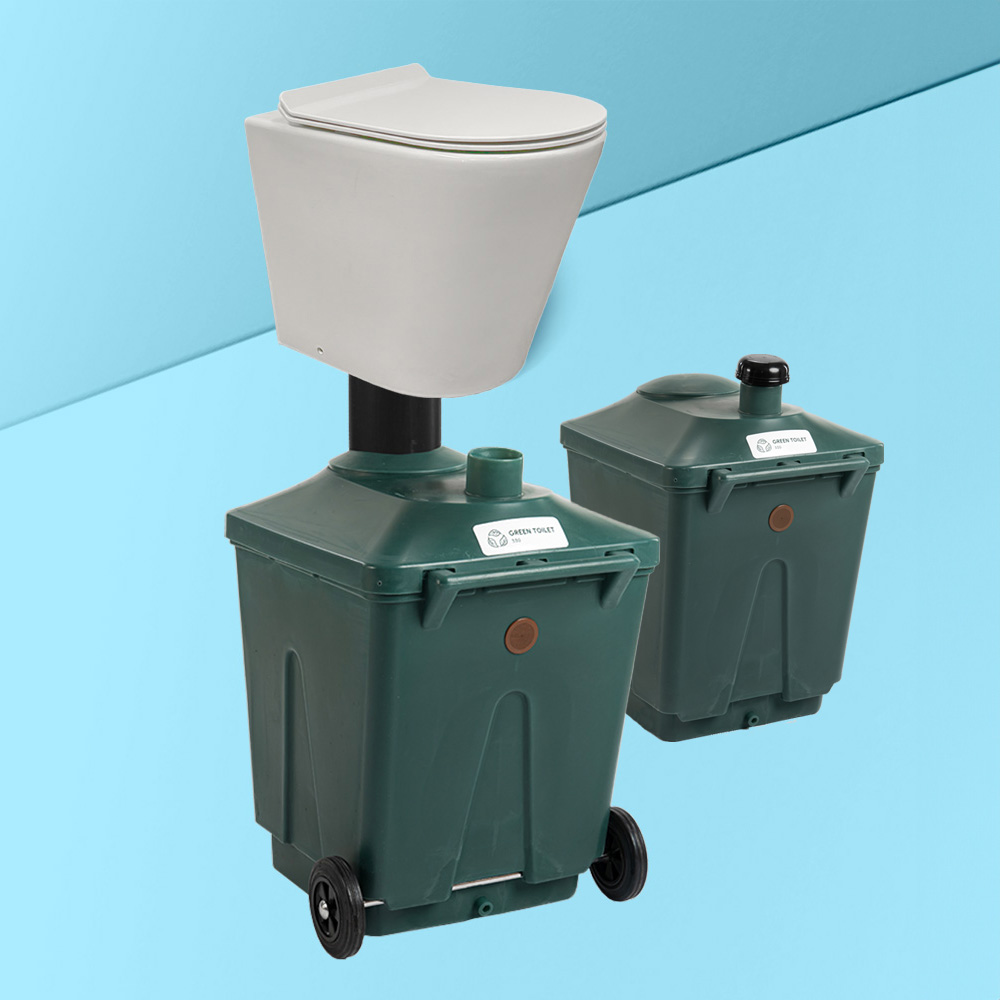
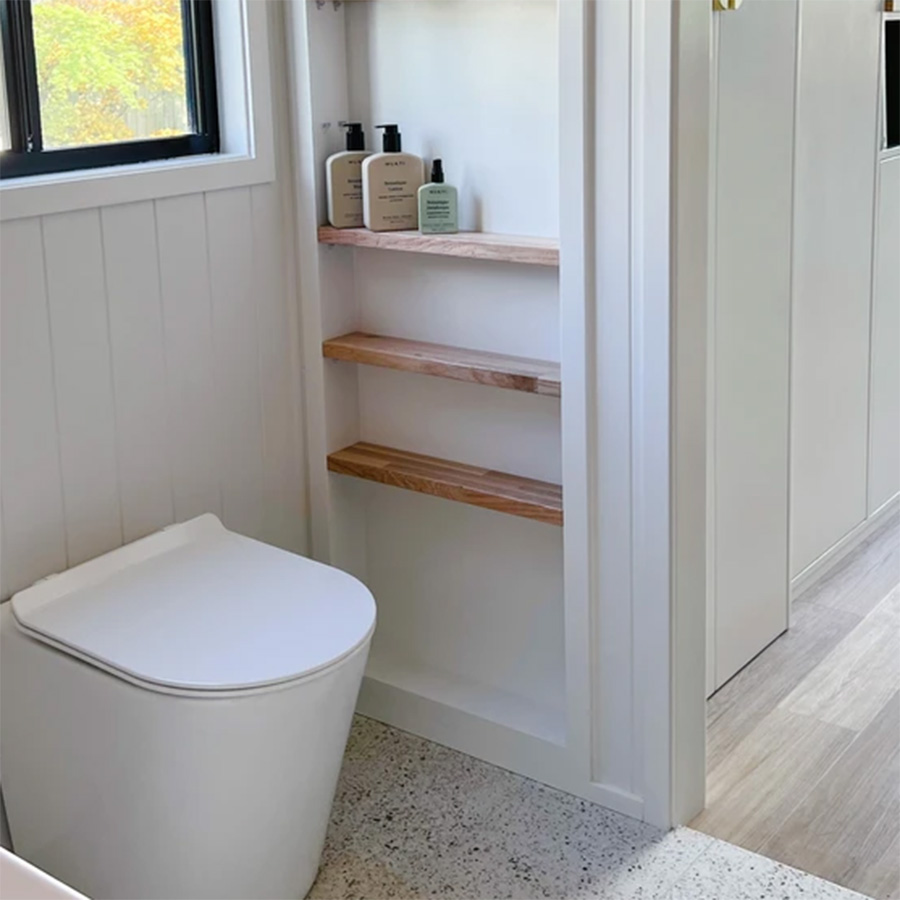
Yes. A split-system composting toilet — where a porcelain pedestal sits at floor level and connects to a composting unit below — is designed specifically for permanent residential use. The composting chamber is typically located in a basement, crawl space, or lower level. The toilet itself is indistinguishable from a conventional flush toilet.

Do they smell?
No — when the system is properly designed. Odors in any composting toilet arise from one cause: the compost becoming too wet. Excess moisture creates anaerobic conditions, which produce the unpleasant smells people fear. It’s a moisture problem, not a mixing problem — in fact, urine and solids composting together is often beneficial, as urine adds nitrogen that supports the composting process.
What matters is managing excess liquid — the urine that the composting material cannot naturally absorb and evaporate on its own. All systems at Waterless Toilet Shop are designed with built-in features that guarantee optimal moisture balance: continuous ventilation draws air through the composting chamber and out through a roof vent, evaporating moisture constantly, while excess liquid drains away before it can cause problems. The result is a composting environment that stays dry enough to remain completely odor-free. Learn more Do Composting Toilets Smell.
How often do they need to be emptied?
Large-capacity batch composting toilets designed for a family of four typically need to be serviced 1–2 times per year. The composted material is dry, greatly reduced in volume, and safe to handle with gloves — similar in character to garden compost. Learn more Do all composting toilets need to be emptied.
Are they legal?
Composting toilets are generally legal in the United States, though installation rules vary by state and county. Many jurisdictions require a certified system and a plan for managing liquid discharge. For off-grid cabins, rural properties, and locations without existing sewage connections, they are widely approved. Learn more about the rules and permits for composting toilets.


Ready to stop flushing water away?
At Waterless Toilet Shop, we specialize in helping homeowners, cabin owners, and off-grid families find the right composting toilet for their situation. Whether you need a simple self-contained unit or a full porcelain split-system, we can walk you through every option. Call us at (702) 328-0689 or browse our full range at waterlesstoiletshop.com.
U.S. EPA WaterSense Program — Residential Toilets (epa.gov/watersense)
Flume Household Water Use Index, Q3 2021 — 5.9 million flushes across tens of thousands of U.S. households
American Water Works Association — Residential End Uses of Water Study (2016)
EPA Energy Policy Act of 1992 — Federal 1.6 GPF toilet standard

Who We Are
At Waterless Toilet Shop we are a dedicated team of dry toilet experts based in Henderson, Nevada. As a family-owned company with deep roots in Scandinavia and Australia, we bring a blend of global insights and local expertise to every product we create.
At Waterless Toilet Shop, we do more than just design and manufacture innovative composting toilets; we also use them daily. This hands-on experience allows us to continuously improve our products and ensure they meet the high standards of functionality and sustainability that our customers expect.
We are committed to living the eco-friendly principles we teach, making our solutions not just part of our business, but a part of our lives. Join us in embracing a more sustainable future, one flush at a time.
Read Our Story